News
Minority demands withdrawal of military deployment to Ghana-Togo border towns

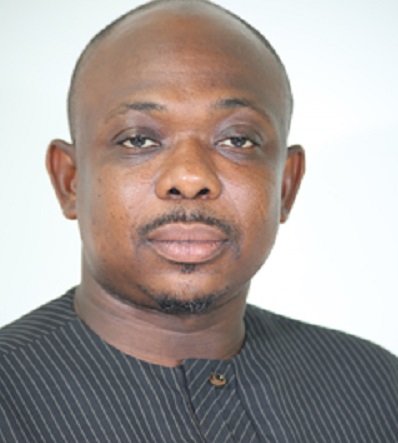
The Minority in Parliament is demanding the immediate withdrawal of military personnel deployed to some Ghana-Togo border towns.
The deployment comes just days ahead of the commencement of the voter registration exercise tomorrow.
Ghana’s land, sea air borders have remained shut since March 22 as a measure to stop the importation of coronavirus cases into the country.
According to the caucus, the deployment of the troops to border towns in the Volta, Oti, Northern, North East and Upper East regions is a ploy by government to instill fear into the people ahead of the exercise.
By this, the Minority is of the conviction that people in the affected areas would not be able turn out in their numbers to partake in the exercise.
Minority spokesperson on Defence and Interior, James Agalga, addressing journalists in Parliament on Friday said the deployment was intended to intimidate citizens in the affected regions which are considered strongholds of the opposition National Democratic Congress.
“There is a certain scheme which is designed by the government to intimidate our teeming supporters from coming out in their numbers to register and have their names on the new voter register,” Mr Agalga, MP, Builsa North said.
In James Agalga’s view, the deployment was uncalled for because “after all, we are all aware that our borders were shut down in the wake of the COVID-19 pandemic.”
“What is this second wave of deployment meant to achieve? Is there a threat of aggression from our neighbouring countries?” he asked.
Impressing on President Nana Addo Dankwa Akufo-Addo, the Commander-In-Chief of the Ghana Armed Forces, to immediately “Cause to be withdrawn the massive deployment we are witnessing along our borders,” James Agalga, a former Deputy Defence Minister said “COVID-19 did not start today.”
“The hotspots are not in the Volta Region. It is here in Accra,” he added.
Disclosing that the caucus had received a myriad of complaints from the people in the affected areas, especially in the Volta Region, that they were living in fear, James Agalga said “we know of no major security threat along that particular frontier” to warrant the deployment.
Volta Regional Minister, Dr Archibald Yao Letsa, has however dismissed the suspicions of the opposition lawmakers.
Even though Dr Letsa, Chairman of the Regional Security Council, admitted to the deployment, he said it was to enforce the closure of the country’s eastern borders in line with steps taken by government to stop the importation of coronavirus cases into the country from neighbouring countries.
Speaking on Joynews on Friday night, Dr Letsa who said the deployment was at the behest of the Regional Security Council was not a novelty.
“We are only enforcing the closure of the borders which remain closed till otherwise directed,” he stated.
Source: Ghanaian Times


The Diaspora Affairs Office at the Office of the President has hosted a delegation of African diaspora women who are in Ghana ahead of a planned Presidential Conferment of Citizenship ceremony.
The Director of Diaspora Affairs, Kofi Okyere Darko, explained in a Facebook post that the visit was a gesture of appreciation by the delegation to the Government of Ghana for its continued efforts to reconnect Africans in the diaspora with their ancestral homeland.
He indicated that the ceremony, scheduled for next Monday, will officially grant Ghanaian citizenship to members of the delegation as part of the country’s broader engagement with the African diaspora.
The delegation was led by Erica Bennett, Founder of the Diaspora Africa Forum.
According to Mr Okyere Darko, her years of advocacy have played an important role in strengthening ties between Africa and people of African descent living abroad.
He noted that the group’s journey towards citizenship represents not only a legal process but also a cultural and spiritual return to their roots.
Also present at the meeting was Natalie Jackson, an attorney who is also expected to receive Ghanaian citizenship during the ceremony. She works closely with renowned civil rights lawyer Ben Crump.
Mr Okyere Darko emphasised that Ghana remains committed to strengthening relationships with the African diaspora and promoting unity, identity, and shared heritage among people of African descent worldwide.
By: Jacob Aggrey

Ghana has signed a debt restructuring agreement with the Kingdom of Belgium as part of efforts to restore the country’s economic stability after the financial crisis that hit the nation in 2022 and 2023.
The Minister of Finance, Cassiel Ato Forson, today disclosed that he signed the agreement on behalf of the Government of Ghana.
He explained that Ghana experienced a very difficult period during the crisis, which forced the government at the time to declare a debt default.
However, he indicated that the country is now recovering and witnessing a significant economic turnaround.
According to him, stronger systems are also being put in place to ensure that Ghana does not return to such a situation again.
Dr Forson noted that the agreement with Belgium is the eighth deal Ghana has concluded with countries under the Official Creditor Committee as part of its external debt restructuring programme.
He expressed appreciation to the Government of Belgium for its support and partnership with Ghana during the process.
The Finance Minister thanked Carole van Eyll, Ambassador of Belgium to Ghana, for her role in strengthening relations between the two countries.
The agreement forms part of Ghana’s broader effort to restructure its external debts and stabilise the economy following the crisis.
By: Jacob Aggrey

 News1 week ago
Finance Minister outlines new gold policies to boost reserves and curb smuggling
- News1 week ago
Sam George launches the 2026 Meteorological Awareness Month; presents the 2026 seasonal forecast for southern Ghana
- Hot!1 week ago
Breaking: Footballer who killed two children in Abesim handed lifetime sentence