News
Military intervention in Niger won’t solve coup problem – Ablakwa reiterates

- /home/u249204778/domains/spectator.com.gh/public_html/wp-content/plugins/mvp-social-buttons/mvp-social-buttons.php on line 27
Warning: Trying to access array offset on false in /home/u249204778/domains/spectator.com.gh/public_html/wp-content/plugins/mvp-social-buttons/mvp-social-buttons.php on line 27
&description=Military intervention in Niger won’t solve coup problem – Ablakwa reiterates', 'pinterestShare', 'width=750,height=350'); return false;" title="Pin This Post">
- Share
- Tweet /home/u249204778/domains/spectator.com.gh/public_html/wp-content/plugins/mvp-social-buttons/mvp-social-buttons.php on line 72
Warning: Trying to access array offset on false in /home/u249204778/domains/spectator.com.gh/public_html/wp-content/plugins/mvp-social-buttons/mvp-social-buttons.php on line 72
&description=Military intervention in Niger won’t solve coup problem – Ablakwa reiterates', 'pinterestShare', 'width=750,height=350'); return false;" title="Pin This Post">
The Member of Parliament for North Tongu and a member of the Foreign Affairs Committee of Parliament, Samuel Okudzeto Ablakwa, has reiterated calls for plans to reinstate Niger’s ousted president using the military to be aborted.
ECOWAS leaders met in Accra on August 17 and reiterated their commitment to act if diplomatic dialogue fails.
The ECOWAS Commissioner for Political Affairs, Peace, and Security, Abdel-Fatau Musah, described appeals to revoke its decision as unwarranted.
During an interview on Eyewitness News on Citi FM, Mr. Ablakwa said, “I will renew the call that we have always made that war, violence, and military intervention is not going to help us in this situation”.
“The position of the NDC caucus in Parliament has not changed…we don’t endorse coups, we want democracy to be entrenched.
We must be looking at what is causing these coups, there are issues that ought to be addressed – bad governance, state capture, massive unemployment, and neocolonial entanglement.
These matters have to be confronted head-on. If they are not confronted, it thus appears we shall return to the era of coups”. He raised concerns about the decision taken by ECOWAS suggesting constructive diplomatic dialogue as the key solution to solving the political tension.
“Listening to the ECOWAS chief of defence staff, you are right that the communication is somewhat confusing. Sometimes you get the impression they are ready, they are going all out, they’re descending into Niger. Other times, like after today’s meeting, they’re putting together their logistics”.
He stressed, “It is our view that the heads of state should have deepened the diplomacy dialogue, but they seem to have rushed. Everybody is saying that don’t use military intervention, it’s not a simple matter. The real solution lies in diplomacy and constructive dialogue.
We will urge ECOWAS to stop all these confusing signals. We insist that instead of sending our soldiers to a slaughterhouse, where there will be a massacre as all the pundits have predicted, let us go for what our constitution enjoins us by perceiving a peaceful resolution”.
Source:Citinewroom


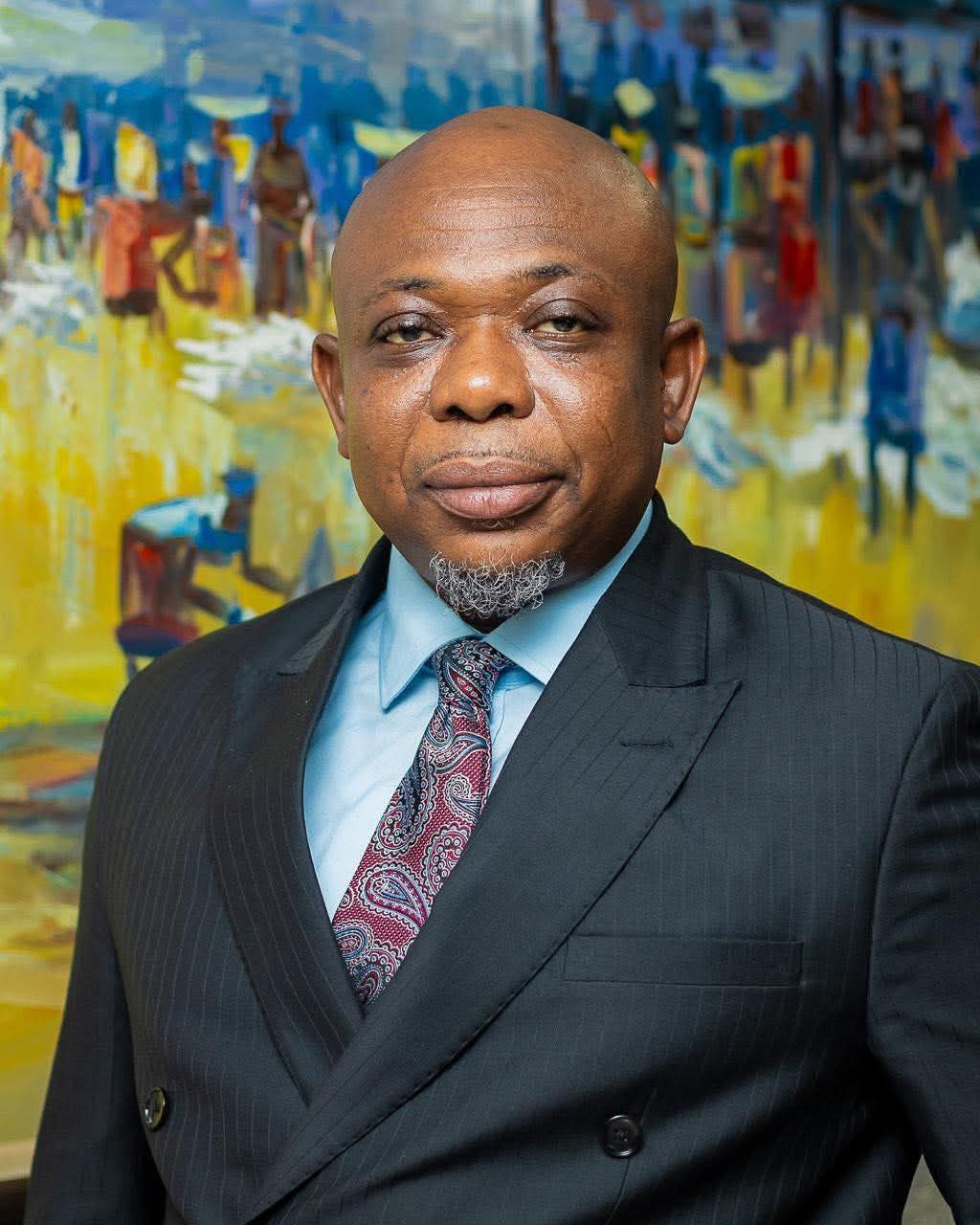
Majority Leader of Parliament, James Agalga, has expressed gratitude to Ghanaians for the confidence reposed in him following his elevation to the position.
Mr Agalga thanked Ghanaians who had sent him congratulatory messages and expressed appreciation to President John Dramani Mahama, the leadership of the National Democratic Congress (NDC), members of the Majority Caucus and the people of Builsa North.
In a statement posted on his socials, he also extended his gratitude to Ghanaians across the country for their support and confidence.
He pledged to work with other stakeholders to advance the government’s Reset Agenda and support the passage of legislation that would improve the lives of Ghanaians.
“We remain committed to working together to drive the government’s RESET Agenda and to champion legislation that delivers real benefits to every Ghanaian,” he said.
Mr Agalga called for continued cooperation as he begins his new role as Majority Leader.
By: Jacob Aggrey
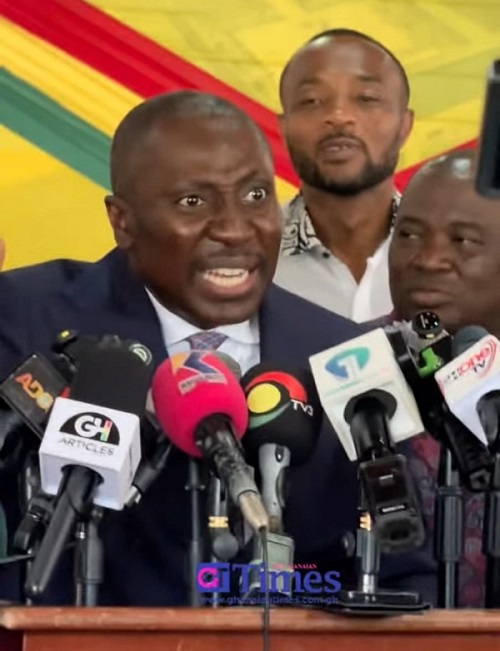
Minority Leader in Parliament, Alexander Afenyo-Markin, has maintained that the Minority’s concerns over the reported GH¢22 billion loss linked to the Ghana Gold Board (GoldBod) are not politically motivated.
He made the remarks at a press conference in Parliament on Tuesday, August 18, 2026, where he defended the Minority’s position on the financial implications of GoldBod’s domestic gold purchasing operations.
Mr Afenyo-Markin stated that the Minority was raising the concerns because Ghanaians deserved clear information about how public funds were used in the gold purchasing programme.
He explained that the figures being cited by the Minority were contained in the International Monetary Fund’s (IMF) report on Ghana and were therefore not figures manufactured by the opposition.
According to him, the IMF identified losses of about US$1.7 billion, equivalent to approximately GH¢22 billion, from the domestic gold purchasing programme in 2025.
He said the IMF attributed the losses to service and assay fees, discounts on gold sold to off-takers and exchange-rate differences between the rates used to purchase gold and the reference rate used by the Bank of Ghana for accounting purposes.
Mr Afenyo-Markin argued that the losses should be subjected to public scrutiny because GoldBod played a central role in buying, aggregating, assaying and exporting the gold, while the Bank of Ghana provided the financing.
He questioned why GoldBod should receive fees from the transactions while the associated losses were reflected on the books of the Bank of Ghana.
The Minority Leader stressed that the location of a loss in an institution’s accounts did not change its economic impact on the country.
He therefore called for answers on the prices paid for gold, how the prices were determined, the selection of off-takers, discounts applied to gold sales and the fees earned by GoldBod.
Mr Afenyo-Markin questioned the risk-sharing arrangement between GoldBod and the Bank of Ghana, arguing that the institution carrying out the commercial activity should not be able to benefit from transaction fees while another institution bears most of the financial risk.
He said the Minority was not seeking to trade insults with GoldBod officials but was focused on holding institutions accountable for the management of public resources.
He urged the government and GoldBod to address the concerns raised by the IMF and provide Ghanaians with clear explanations about the reported losses.
Mr Afenyo-Markin maintained that the Minority would continue to scrutinise the programme because the financial consequences ultimately affected Ghanaian taxpayers.
By: Jacob Aggrey