News
Local rice farmers lose 84% of harvest – Research


- /home/u249204778/domains/spectator.com.gh/public_html/wp-content/plugins/mvp-social-buttons/mvp-social-buttons.php on line 27
https://spectator.com.gh/wp-content/uploads/2026/07/Some-students-planting-a-tree-after-clean-up-exercise-599x600.jpg&description=Local rice farmers lose 84% of harvest – Research', 'pinterestShare', 'width=750,height=350'); return false;" title="Pin This Post">
- Share
- Tweet /home/u249204778/domains/spectator.com.gh/public_html/wp-content/plugins/mvp-social-buttons/mvp-social-buttons.php on line 72
https://spectator.com.gh/wp-content/uploads/2026/07/Some-students-planting-a-tree-after-clean-up-exercise-599x600.jpg&description=Local rice farmers lose 84% of harvest – Research', 'pinterestShare', 'width=750,height=350'); return false;" title="Pin This Post">
Ghana’s rice farmers are losing as much as 84 per cent of their harvests to invasive weeds, researchers revealed at a stakeholder workshop on Wednesday.
The findings, presented by the CSIR‑Crops Research Institute (CSIR‑CRI) and the Korea Partnership for Innovation of Agriculture (KOPIA), underscored the urgent threat to food security and the need for coordinated national action.
The workshop, attended by more than 50 farmers, extension officers, and officials, marked the close of the first year of the three‑year KOPIA Rice Weed Management Project.
Scientists reported that five major weed species — including Echinochloa spp. (Ashaiman killer), Leptochloa chinensis (Black Jerry), Urochloa humidicola (Aguda), Ischaemum rugosum (Ogo), and Cyperus spp. (Atadwe) — are entrenched in rice fields, capable of slashing yields by 50 to 80 per cent while also hosting destructive rice diseases.
Dr Stephen Arthur, Project Coordinator at CSIR‑CRI, warned that farmers were spending GH₵1,600 to GH₵2,000 per acre on hand‑picking weeds, a cost he described as ‘unsustainable.’
He urged adoption of integrated weed management practices combining timely herbicide use with improved agronomic methods.
Other experts highlighted the wider consequences. Pathologist Dr Atta Aidoo linked weed infestations to increased incidence of blast, sheath blight, and brown spot, while entomologist Dr Kofi Frimpong‑Anin documented shifts in pest dynamics.
Agronomist Mr Kofi Lelabi Kota examined crop‑weed competition and the economics of current control practices.
Senior CSIR officials called for stronger government support. Prof. Marian Dorcas Quain, Deputy Director‑General, stressed the need to back local seed production to reduce risky imports.
Prof. Maxwell Darko Asante, Director of CSIR‑CRI, urged the National Food Buffer Stock Company to purchase Dawhenya’s seeds to secure progress while Dr Young Jin Kim, Director of KOPIA Ghana Centre, emphasised Korea’s experience in building resilient rice systems and pledged continued partnership.
Following the presentations, participants toured the fields to witness the difference between managed and unmanaged plots. Farmers expressed readiness to adopt the recommended strategies in the upcoming season. “What we have seen and heard is exactly what we needed,” said lead farmer Richard Affleh.
The KOPIA Rice Weed Management Project will continue monitoring and documenting farmer practices over the next two years, with the goal of delivering sustainable solutions to protect Ghana’s rice sector from the silent but devastating threat of weeds.
FROM KINGSLEY E.HOPE, KUMASI








News
Our intelligence agencies will not be reduced to chasing citizens for insulting me – Dr.Bawumia jabs gov’t
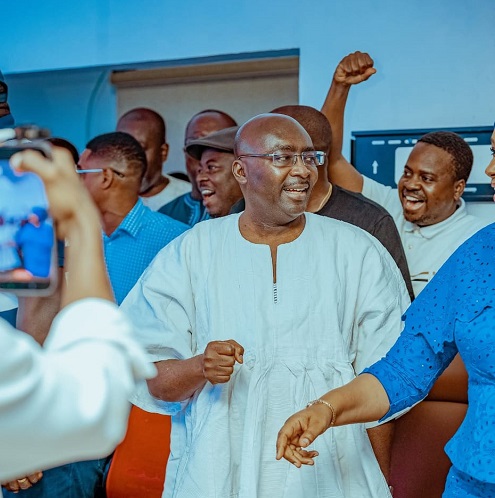
New Patriotic Party flagbearer, Dr Mahamudu Bawumia, has condemned the arrest and remand of Techiman-based nurse and mother of three, Salomey Bafor Awiti, over allegations of abetting the publication of false news.
In a statement, Dr Bawumia described as worrying reports that the nurse, who has a 4-year-old child, was picked up in the middle of the night by national intelligence officers and remanded for two weeks.
“This is not the Ghana we want to build. I can assure Ghanaians that when given the opportunity, our intelligence agencies will not be reduced to chasing citizens for insulting the President or anyone else,” he said.
Dr Bawumia said while he has always disavowed politics of insults and will continue to remind political actors to be decorous, criminalizing speech pushes democracy backwards.
“The ideas we need to transform our nation won’t come from insults. But I also remind the NDC government that any infringement on the right to free speech pushes our democracy backwards. Free speech, as unpalatable as it may be sometimes, is the foundation of our democracy,” he stated.
He also accused government of selectively applying the law, where some citizens insult and walk free while others are jailed because government does not like the target of their insults.
He called for the release of Salomey Bafor Awiti and others who have been similarly charged and jailed.
“God bless our homeland Ghana and help us to resist oppressors rule!,” he concluded.
By Edem Mensah-Tsotorme
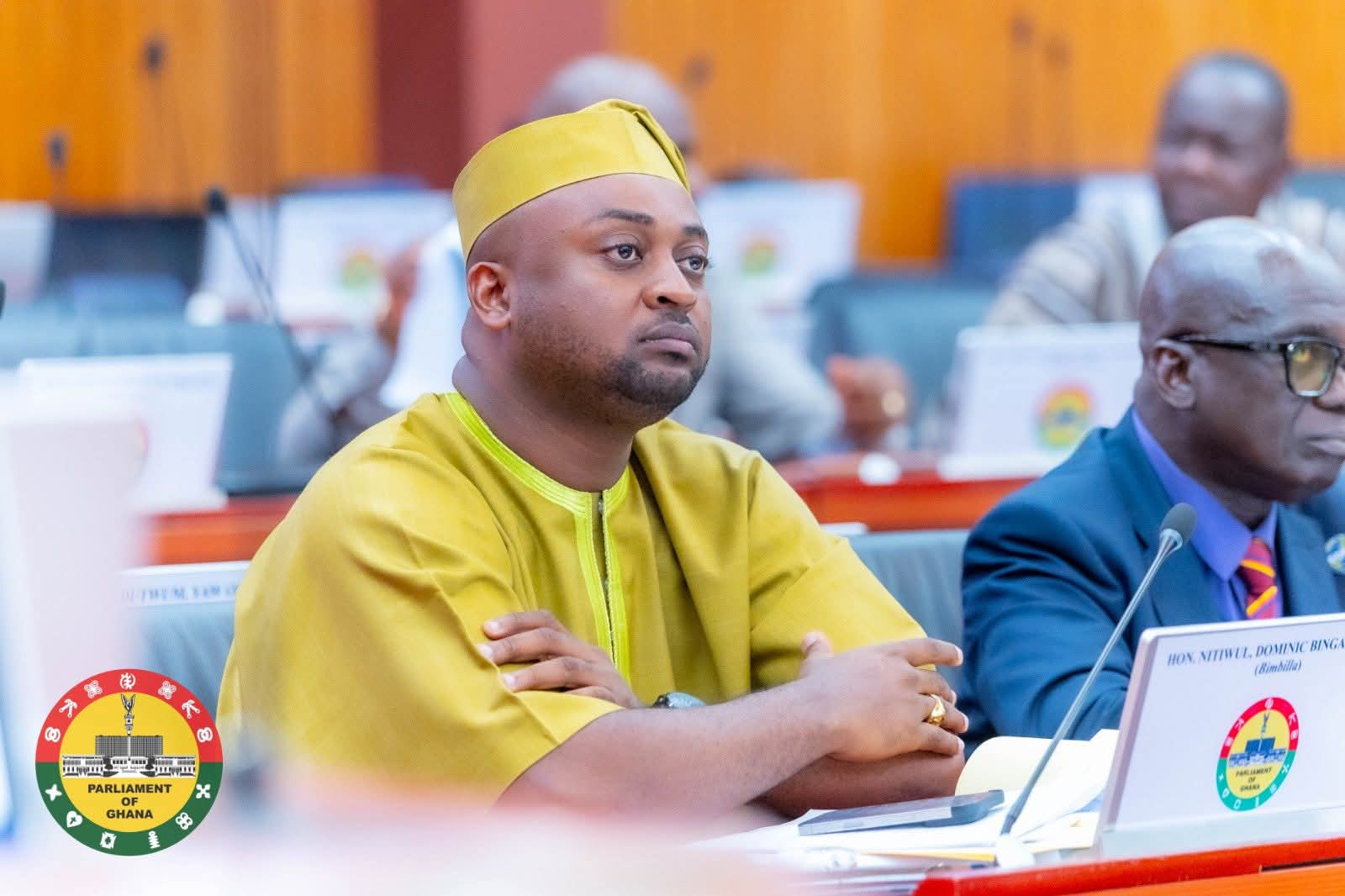
The Minority in Parliament is demanding answers from the Ghana Football Association (GFA) and the Ministry of Sports and Recreation over reports that Thomas Partey was denied entry into Canada for Ghana’s opening 2026 FIFA World Cup match against Panama.
Ranking Member of Parliament’s Youth, Sports and Culture Committee, Vincent Ekow Assafuah, said the issue goes beyond the player’s personal legal situation.
“This is not about determining Mr Partey’s guilt or innocence. He is entitled to the presumption of innocence,” he said.
“Our concern is whether the GFA and the Ministry carried out the necessary administrative and legal due diligence,” Assafuah stated.
He concluded by adding, “What did they know, when did they know it, and what steps did they take before including Partey in Ghana’s final World Cup arrangements?”
By Edem Mensah-Tsotorme

 News4 days ago
48 Engineer Regiment to be major sub-contractor on Accra-Kumasi Expressway, $2bn ready- Prez Mahama
- Entertainment7 days ago
Fiifi Coleman Productions adapt ‘I Told You So’ stage play into feature film
- News1 week ago
Ghanaian journalist celebrates Texas town’s ‘Eden of the Far West’ tag after mayor’s nod