News
Lands Ministry grants 55 small scale mining licences this month

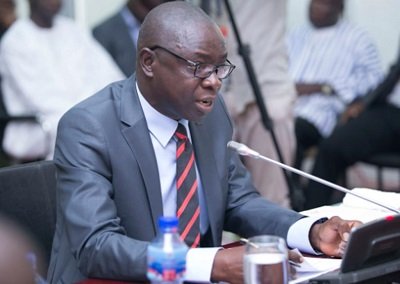
The Ministry of Lands and Natural Resources has, in this month, issued 55 small scale mining licences to beneficiaries of the Community Mining Scheme.
Twenty-two of them were at Nsiana and Manso-Nkwanta in the Ashanti Region, covering an area of 554 acres and 17 at Akoase in the Eastern Region covering 428 acres of land.
Also, seven licences have been issued at Mempehia in the Ahafo Region covering 176 acres, six at Tinga in the Savannah Region covering 151 acres and three at Abosso in the Western Region covering an area of 75 acres.
The scheme is a new mining model introduced by government to allow host mining communities engage in lawful mining and address underlying causes of illegal mining within mining areas across the country.
Launching the scheme at Nsania in the Amansie West District on June 3, Minister of Lands and Natural Resources, Kwaku Asomah-Cheremeh, said the scheme, was a novel intervention that encourages persons in mining communities to undertake meaningful mining ventures and ensure sustainable livelihoods for the beneficiaries.
“As provided for within the small scale mining, the scheme is reserved for only Ghanaian citizens but with an emphasis on host mining communities. Simply put, the scheme is of the people, by the people, for the people of the community,” he stated.
One key benefit of the scheme, he said, was the creation of 16,000 jobs which could positively impact local and rural economies.
The scheme would stimulate wealth creation and improve the local economy through the generation of value within local economies and further create horizontal, vertical as well as other linkages with other sectors of the Ghanaian economy, he added.
Additionally, the minister stated, that the scheme would enable community involvement in mining in response to the legitimate desire by host communities to participate in the mining industry value chain.
To ensure a successful implementation, Community Mining Oversight Committees have been formed while Small-Scale Miners Code of Practice have been adopted, he said.
He noted that the community miners would also be provided with support services to enable them work effectively.
Mr Asomah-Cheremeh urged the beneficiaries to take advantage of the scheme improve their livelihoods and promote community development.
BY CLAUDE NYARKO ADAMS


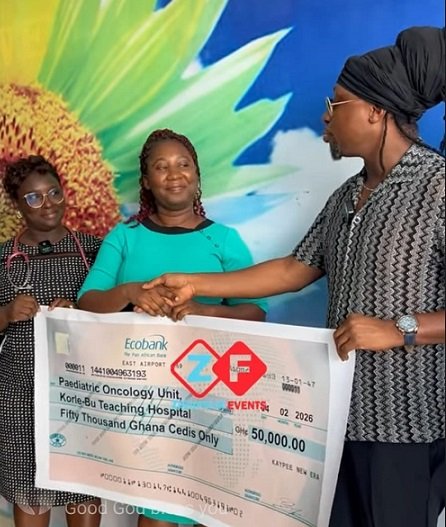
Ghanaian music icon, Akwasi Poku Addae, known in Showbiz circles as Kwaisey Pee has honoured his promise to children suffering from cancer.
Ahead of his 25th anniversary event held at the D’ Icon Event Centre at East Legon last year, he made a promise to donate some funds to children suffering from cancer.
True to his word, the musician has recently made a donation of GHC50,000 to the Paediatric Oncology Unit of the Korle-Bu Teaching Hospital.
He told the Ghanaian Times that children are so dear to him, and was optimistic the support would go a long way too impact lives.
The music dynamo also promised that the gesture will not be the last,” it will be a continuous feature from me.”
He also called on Ghanaians home and abroad to lend a helping hand to children suffering from cancer.
According to him, children with cancer have many needs, and a helping hands will go a long way ease the suffering.
“Cancer treatment is very expensive, and leaving that to parents of the children alone, will be a huge burden, with support from you and myself, we can make some changes in other people’s lives,” he concluded.
By Edem Mensah-Tsotorme

A disagreement has emerged between Member of Parliament for Berekum West, Dickson Kyere-Duah, and energy consultant Kwadwo Poku over government funding for Ghana’s participation in the 2026 FIFA World Cup.
The debate centred on government’s decision to budget about 13 million dollars to support the national team, even though FIFA is expected to provide an appearance fee of about 10.5 million dollars if Ghana qualifies for the tournament.
During the discussion on Joys news , Mr Poku questioned why the government should allocate such an amount when FIFA already provides funds to participating countries.
According to him, the appearance fee alone should help cover some of the country’s expenses.
He argued that if FIFA is giving Ghana 10.5 million dollars simply for qualifying for the tournament, it raises questions about the need for the government to appropriate additional funds.
Mr Kyere Duah, however, explained that the government’s allocation was part of advance planning captured in the national budget even before the final qualification results were known.
He noted that the budget for the tournament period was prepared in November 2025, when it was not certain that Ghana would qualify.
He stressed that budgeting does not automatically mean the entire amount will be spent.
According to him, the funds are meant to prepare the team from the start of the competition period until the end of the tournament.
Mr Kyere Duah explained that if the team exits the tournament early, the full amount allocated in the budget will not be used.
Mr Poku maintained that FIFA already provides financial support to teams for participating in the World Cup and insisted that the government must clearly justify additional spending.
The discussion extended to the role of the Ghana Football Association in managing the national teams.
Mr Poku described the association as a private institution and argued that FIFA also operates as a private body that does not allow government interference.
He explained that FIFA provides funds to teams to support their preparation and participation in the tournament.
Mr Kyere Duah, however, maintained that national teams represent the country and require government support to operate effectively.
By: Jacob Aggrey

 News1 week ago
Finance Minister outlines new gold policies to boost reserves and curb smuggling
- News1 week ago
Sam George launches the 2026 Meteorological Awareness Month; presents the 2026 seasonal forecast for southern Ghana
- Hot!1 week ago
Breaking: Footballer who killed two children in Abesim handed lifetime sentence