News
KATH Psychiatric unit cries for space

Inadequate space at the Psychiatric unit of the Komfo Anokye Teaching Hospital (KATH) is having a negative effect on quality healthcare.
The unit has been seeing about 15,000 patients, every year, but has space for only 11 beds, something that is hampering quality care delivery.
Doctors and nurses are sometimes forced to sit in the corridors to provide services.
This, according to the Head of the Psychiatric unit, Dr Ruth Owusu-Antwi, “is too bad for patient-doctor confidentiality”.
The unit, established in 1981, has not seen any expansion over the years, and the continued increase in admissions and Out-Patients Department (OPD) cases are putting intense pressure on it.
Doctors, she said, were often compelled to discharge patients earlier than they should – before their full recovery.
In a chat with this Paper, Dr Owusu-Antwi indicated that prior to the outbreak of the coronavirus and subsequent imposition of the lockdown, daily reported cases were between 12 and 15, but this has shot up to about 20 and 25 cases.
Making a passionate appeal to individuals and organisations to support the facility to complete an expansion project it had started, Dr Owusu-Antwi noted the unit had been recording more mental cases after the lifting of the partial lockdown in the greater Kumasi and other parts of Ghana.
Follow up cases had also increased to about 120 from the pre-lockdown figures which ranged between 80 and 100 cases.
She made reference to a recent study conducted at the Accra, Pantang and KATH Psychiatry, which showed that the latter “has the highest relapse rate” and said this was attributable to the situation where patients were made to go home when they were not fully recovered, and said “we need an expansion for quality health delivery”.
Dr Owusu-Antwi gave some causes of psychiatric problems as post-partum (depression that occurs after childbirth), psychosis, depression, anxiety disorder and substance dependency disorders.
She stressed the determination of the unit to continue to provide quality professional psychiatric services to improve the mental health of the people despite the constraints and called for more clinical psychologists to be employed by the government to assist in handling the rising cases of mental illness.
From Kingsley E. Hope, Kumasi



Thomas Partey, Ransford Yeboah Königsdörffer, Kojo Oppong Peprah, and Alexander Djiku trained with the Black Stars on Tuesday, March 23 as preparations intensify for the international friendly against Austria on Friday.
The newly arrived players—Partey, Königsdörffer, Oppong Peprah and Djiku—joined the group training Tuesday afternoon in readiness for the match.
Partey and Djiku bring valuable experience and dexterity to the team, having played a major role in securing Ghana a spot at the 2026 FIFA World Cup in Mexico, Canada, and the United States of America.
All 25 players participated in Tuesday’s training session, each aiming to catch the eye of head coach Otto Addo.
The full squad present at training included Lawrence Ati-Zigi, Benjamin Asare, Joseph Anang, Patrick Pfeiffer, Derrick Luckassen, Derrick Kohn, Jerome Opoku, Caleb Yirenkyi, Kojo Oppong Peprah, Jonas Adjetey, Marvin Senaya, Gideon Mensah, Elisha Owusu, Ibrahim Sulemana, Kwasi Sibo, Jordan Ayew, Prince Kwabena Adu, Christopher Bonsu Baah, Abdul Fatawu Issahaku, Antoine Semenyo, Kamal Deen Sulemana, Daniel Agyei, Thomas Partey, Alexander Djiku, and Ransford Yeboah Königsdörffer.
Training will continue on Wednesday and Thursday ahead of the match on Friday, March 27, 2026.
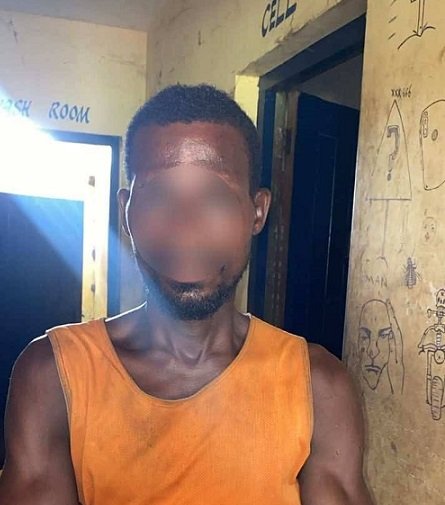
The Kadjebi District Police Command, through a sustained intelligence-led operation, has arrested a suspect, Chalim Madzaton, also known as Peter Tano, 36, a farmer.
He was apprehended at his hideout in Kpaya, a suburb of Ahamansu, in connection with the murder of 80-year-old Dakolor Semaka.
On March 24, 2026, police received a report that the suspect had allegedly attacked his girlfriend, Yaa Tugbenyo, 55, and her mother, the deceased, at their residence in Mangoase near Kadjebi During the incident, Yaa Tugbenyo managed to escape but later returned to find her mother lying motionless on the floor.
Police Officers visited the scene and found the body of the deceased lying in a supine positior with isible signs of violence.
The scene was processed, and photographs were taken for evidential purpose.
The deceased was pronounced dead by a medical officer at St. Mary Theresa Hospital and the body has since been deposited at the hospital’s morgue for preservation and autopsy.
The suspect is currently in Police custody assisting with investigations and will be arraigned before court.