News
INDIVIDUAL INVOLVEMENT IN POLITICS

- /home/u249204778/domains/spectator.com.gh/public_html/wp-content/plugins/mvp-social-buttons/mvp-social-buttons.php on line 27
https://spectator.com.gh/wp-content/uploads/2020/08/Joyce-Aryee.jpg&description=INDIVIDUAL INVOLVEMENT IN POLITICS', 'pinterestShare', 'width=750,height=350'); return false;" title="Pin This Post">
- Share
- Tweet /home/u249204778/domains/spectator.com.gh/public_html/wp-content/plugins/mvp-social-buttons/mvp-social-buttons.php on line 72
https://spectator.com.gh/wp-content/uploads/2020/08/Joyce-Aryee.jpg&description=INDIVIDUAL INVOLVEMENT IN POLITICS', 'pinterestShare', 'width=750,height=350'); return false;" title="Pin This Post">
I urge, then, first of all, that petitions, prayers, intercession and thanksgiving be made for all people— for kings and all those in authority, that we may live peaceful and quiet lives in all godliness and holiness.— 1 Timothy 2:1-3.
When we talk about a Christian’s political movement, we should realize. that not all involvement is physical. For example, a group of people may meet everyday to pray for the street people. From the world’s perspective they are skirting the real task, withdrawing from the misery on the street. But praying for street ministries is both biblical and a vibrant spiritual involvement. The power of prayer is immeasurable and vital.
Each individual has to seek his or her calling from God. Christ calls people to different ministries. We cannot assume that everyone must have our calling, nor can we prescribe a calling for another individual. Another person’s role within the body of Christ will be different from ours.
Some of us are called to reform politics from within the structure. Others of us are called to be part of a citizen endeavour. Some of us are called to serveon a local school body board or city council. Others may be involved in acitizen group to fight child abuse.
As Christians called to involvement in politics in whatever form, our real mission is to affirm our love and obedience to Christ. Our long-term commitment and our immediate commitment are one and the same – to serve as ambassadors of Jesus Christ; to be the voice, the healing, and the reconciling and liberating force of Jesus. We have Christ in us, the hope of glory (Colossians 1:27). We are witnesses of redemption, of the Good News. As Christians, that mission must undergird our role in politics, just as it is evidenced in our family lives and our role in the marketplace.
Sin manifests itself in evil, in oppression, in injustice, in jealousy, in rivalry, in hate, in poverty. The basic Christian values are the exact opposite – healing, reconciling, encouraging, feeding the poor, visiting the sick and the prisoners. We have the message of the Good News that indeed God has dealt with the forces of injustice and evil. We have the armour of the Word of God and the energizing of the Holy Spirit. We must be involved in both ministry and politics – in the unique way God has called each of us to serve.
THE DYNAMICS OF DIVERSITY
We are responsible to bring the message of Christ into every facet of life. We can join a political party, write to ourparliamentarians, march, hold a vigil or do other things that call attention to what needs to be done for the betterment of peoples’ lives. But while we do these things, we have to be careful that our political agendas do not become a divisive force within the Body of Christ.
There is great danger when someone says, “This is the Christian position on a certain political issue.” That implies that any other viewpoint is not Christian. Political standsdo not determine our salvation; our relationship to the person of Jesus Christ does. I think that relationship alone determines our right to be called a Christian.
What Can We Do When We Disagree with Other Christians Politically?
We can retain our political convictions and still be united with other Christians. To experience that, a basis of love is required. We discuss the issue we disagree on, but we realize that hey are secondary to our love for each other and our love for Christ.
How can Christians Agree to Disagree on Political Issues?
1. Listen to one another. Too often we jump to conclusions about the opposite side of an issue without listening to what the people on it have to say.
2. Make the Bible your anchor. We must hold one another to the biblical context and theological norms. We must remember the church’s tradition of moral reflection.
3. Dig into discussion. We need to present the different options and urge all sides to discuss the issues. That’s how our consciences are formed.
4. Love, don’t leave. There will be times when, after we have discussed all sides of an issue, we will not be able to agree with other Christians. Then we accept them, remembering not what divides us, but what binds us together – Christ’s love.
CONCLUSION
Christians will often disagree on political matters. But we should not disagree on the underlying moral principles, and we most definitely should not interpret moral principles from the vantage point of our own self-interest. When this happens, we discredit ourselves and the wonderful gospel for which we claim to stand.
Source:Adapted from the book “Practical Christianity” – The Down to Earth Guide to Heavenly Living.
Stay Blessed!
For further inquiries please contact us on Tel Nos. 0302-772013 or 0268130615
Email: saltnlightministries@gmail.com
Website: saltandlightgh.org


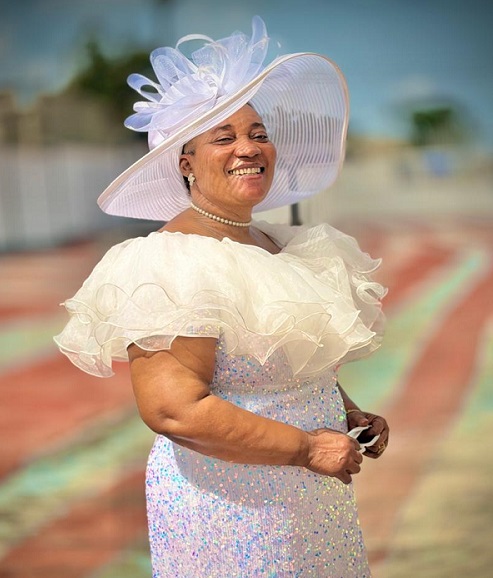
A Prophet and General Overseer of Jesus Prayer Ministry at Ejisu Asuasi, Kumasi, and Pig Farm, Accra, Rt. Rev. Dr Mrs Grace Frimpong-Boateng, has urged Ghanaians to pray fervently to avert any disaster that would endanger many.
“God hears prayers, and intercessory prayers will provide your family safety and protection so you can live long and enjoy life in this world,” she added.
Rt. Rev. Dr Mrs Frimpong-Boateng was speaking with The Spectator in an interview last week.
According to her, she had a revelation that there would be a tragedy that will harm many people, however, effective prayers can avert it.
She said that the Ghana Meteorological Agency (GMet) predicted another heavy downpour from Thursday to Sunday following the recent torrential rain that devastated Accra and other areas. However, strong intercessory prayers prevented the prediction, which would have been catastrophic.
She claims that whenever she shares something that God has revealed to her, she does not receive widespread support from people to join her in effective intercession.
As a result, she has urged everyone including members of parliament, cabinet ministers, traditional authorities, religious leaders, and other citizens to exercise caution and pray fervently in order to avoid premature death.
According to Rt. Rev. Dr Mrs Frimpong-Boateng the recent downpour in Accra which claimed lives and destroyed property was unusual.
“The sea was irritated because of certain rituals performed and caused it to spew forth, exposing the dirt.” There are still some rites in the sea, and they will definitely surface,” she disclosed.
“Let’s pray that God would burn and destroy the things that have contaminated the sea,” she indicated.
By Spectator

The Adentan Circuit Court has convicted a mason for stealing a four-year-old boy from Kpedze in the Volta Region and bringing him to Accra.
David Kpandoyo, 25, a Togolese national, pleaded guilty to a charge of child stealing.
The court, presided over by Mrs Angela Attachie, convicted him on his own plea and adjourned sentencing to July 14, 2026.
Kpandoyo told the court that he had gone to a drinking spot to consume alcohol when the child approached him.
He said he gave the boy some money, took him home, and could not remember what happened afterwards because he was intoxicated.
Assistant Commissioner of Police (ACP) Patience Mario, assisted by Chief Inspector Jacob Nyarko, led the prosecution.
The prosecution said the complainant, Mr Bismark Gbago, is a 52-year-old painter residing at New Legon in Accra.
The victim’s mother, Ms Patience Ablordefey Afefa, is a 25-year-old hairdresser living at Kpedze in the Volta Region with the victim, a Kindergarten One pupil.
The prosecution said Kpandoyo also resided at New Legon, where he worked as a mason.
It said the victim went missing at Kpedze on July 1, 2026, at about 18:00 hours.
On July 3, at about 6:30pm, the complainant reported to the New Legon Police that he had found the four-year-old boy wandering around the area and that the child was unable to identify his home.
The prosecution said that on July 4, at about 4 p.m., the complainant informed the Police that after announcements were made within the community, Kpandoyo came forward claiming that the boy was his son.
The complainant and Kpandoyo subsequently went to the police Station to identify the child.
However, Kpandoyo was unable to produce the child’s birth certificate or lead the Police to the child’s mother.
Later that day, the police received a flyer bearing the name and telephone numbers of the victim’s mother, together with the child’s photograph, indicating that he had gone missing from Kpedze.
The police contacted the victim’s mother and asked her to report to the New Legon Police Station with the child’s birth certificate and weighing card because another person was claiming to be the child’s parent.
On July 6, the victim’s mother and her relatives reported to the Police Station and stated that they did not know Kpandoyo.
During investigations, Kpandoyo admitted in his cautioned statement that the victim was not his child.
He further confessed that while working at Kpedze, he stole the boy and brought him to Accra. –GNA