News
Increasing birth rate among adolescents alarming

- /home/u249204778/domains/spectator.com.gh/public_html/wp-content/plugins/mvp-social-buttons/mvp-social-buttons.php on line 27
Warning: Trying to access array offset on false in /home/u249204778/domains/spectator.com.gh/public_html/wp-content/plugins/mvp-social-buttons/mvp-social-buttons.php on line 27
&description=Increasing birth rate among adolescents alarming', 'pinterestShare', 'width=750,height=350'); return false;" title="Pin This Post">
- Share
- Tweet /home/u249204778/domains/spectator.com.gh/public_html/wp-content/plugins/mvp-social-buttons/mvp-social-buttons.php on line 72
Warning: Trying to access array offset on false in /home/u249204778/domains/spectator.com.gh/public_html/wp-content/plugins/mvp-social-buttons/mvp-social-buttons.php on line 72
&description=Increasing birth rate among adolescents alarming', 'pinterestShare', 'width=750,height=350'); return false;" title="Pin This Post">
Proof’d
The Department of Gender has described as a tragedy the high adolescent birth rate in the Volta Region, saying “the trend is taking serious toll on the human resource of the area.”
“An adolescent birth rate of 103 per 1000 which is far above the national average of 75 is, indeed, a great cause for worry for the country,” Madam Lena Alai, Volta Regional Director of Gender, has said.
Speaking at the opening of a four-day mentorship camp at Ho for 100 girls and 20 boys selected from the Central Tongu, Afadzato South, North Dayi and South Dayi districts last Thursday, she said that an immediate action was required to curb the trend.
Madam Alai said that apart from the adolescent birth rate, the large number of reported cases of sexual abuse in the region was also undermining efforts to attain the fifth Sustainable Development Goal which focused on gender equity, with emphasis on the participation of women in politics.
In 2018, for instance, a total of 511 of such cases, including 93 defilement and 17 rape cases were recorded in the region, in addition to many other cases of assault against young women being investigated by the Domestic Violence and Victim Support Unit (DOVVSU), the Regional Director revealed.
She further disclosed that in 2017, a total of 664 of such cases, including 152 defilement and seven rape cases were reported in the region.
Madam Alai pointed out that early sexual relations and marriages among adolescents gave rise to gender-based violence and abuse because they were not mentally developed to face the challenges of marriage.
“They also lack the skills to negotiate for safe sex for which reason they often become victims of unsafe relationship or marriage with its consequences of unplanned birth and other health challenges,” she said.
The Volta Regional Director of Education, Madam Enyonam Afi Amafuga also told the participants that the adolescent stage was a critical period to learn everything as they had the capacity to explore the world around them.
She, therefore, urged the participants to make good use of their youthfulness by studying hard towards a bright future, not to engage in vices which would destroy their future.
“May you find your way into adulthood with little or no regrets because you made the right choices as an adolescent boy or girl,” Madam Amafuga added.
The participants were taken through Adolescent Reproductive Health, Sexual and Gender-Based Violence at Schools and in the Community; and Healthy and Responsible Adolescent among other topics.
Pix: 1. Volta Regional Director of Gender – Madam Lena Alai
2. The camp participants


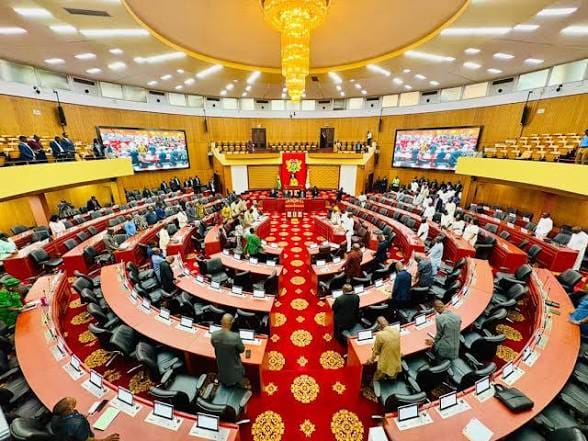
Parliament has clarified public commentary on social media regarding a notice on its notice board that read “No Vacancy for National Service Personnel 2026/2027. Kindly go for reposting.”
In a statement, signed by the Director of Media Relations, David Sebastian Damoah, Parliament said the notice has been misconstrued and was not a policy statement, a freeze on national service placements, or a change in its support for the National Service Scheme.
According to Parliament, the notice was a routine administrative message to prospective personnel who reported to the House, informing them that it has received more personnel than it can accommodate for the 2026/2027 service year and that they should seek reposting to other institutions.
It said it remains committed to the National Service Scheme and values the contribution of service personnel to its work, and regrets any confusion or inconvenience the wording may have caused.
By Edem Mensah-Tsotorme
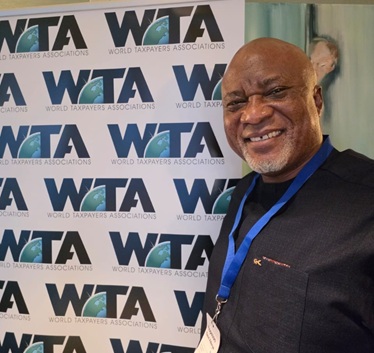
Ghanaian public advocate Hopeson Yaovi Adorye has been elected to the Board of Directors of the World Taxpayers Association (WTA).
The election took place on Sunday, October 5, 2026, during the Association’s conference in Kraków, Poland.
His election marks a significant addition to his international leadership portfolio and provides a platform for Ghanaian and African perspectives to contribute to global discussions on taxpayer rights, responsible taxation, transparency and prudent management of public resources.
Reacting to his election, Mr. Adorye expressed appreciation to the leadership and members of the WTA for the confidence reposed in him.
“I am deeply honoured by this confidence and conscious of the responsibility that comes with it. Taxpayers are at the heart of every economy, and they deserve fairness, transparency, accountability and value for the taxes they pay. I look forward to working with colleagues from across the world to strengthen the voice of taxpayers and promote responsible fiscal governance,” he said.
According to him, taxation should not be viewed solely as a mechanism for raising government revenue, but also as an important component of the social contract between citizens and the state.
Mr. Adorye said governments have a responsibility to ensure taxes are collected fairly and public resources are utilised efficiently to deliver quality infrastructure, healthcare, education, security and other essential services.
His election also creates an opportunity to bring African experiences into international conversations on taxation and public expenditure.
Mr. Adorye, who is Executive Director of Taxpayers League Ghana, has previously served as Global Board Chairman of the International Youth Network for UN Security Council Resolution 2250, an NGO associated with the United Nations Economic and Social Council (ECOSOC).
He is expected to use his new role to champion fiscal accountability, taxpayer education, good governance and stronger citizen participation in public financial management.