Features
‘I survived a kidnapping but part of me died that day’


After a surge in the number of abductions in recent years, South Africa has one of the highest rates of kidnapping in the world, as Mpho Lakaje reports from Johannesburg.
Lesego Tau did not panic at first when a stranger opened the back door of her grey Mercedes C-Class and climbed in.
She had parked outside a shopping mall in Johannesburg and was focused on texting a friend before going in to grab a few items for a get-together that evening.
“In my rear view mirror, I was looking and still thinking: ‘This person is going to be so embarrassed when they realise they are in the wrong car’,” she told the BBC, recounting the events of last June.
But this was not an innocent mistake.
“Our gazes locked and I realised what was happening.”
This was a kidnapping.
Six months earlier, businessman Yasin Bhiku was grabbed in the driveway of his home, near Johannesburg, just after returning from the mosque.
CCTV footage that was widely seen on social media shows Mr Bhiku dressed in a blue T-shirt and black trousers calmly chatting to a friend.
Two men can be seen getting out of the car parked opposite. At first they stroll towards him, but then rush at him after Mr Bhiku realises what is going on and tries to flee.
He was overpowered and forced into the vehicle at gunpoint. The businessman was later found unharmed and rescued by the police.
Ms Tau, who runs her own cleaning company in Pretoria, also tried to flee once she had figured out that she was about to be abducted.
She said she tried opening the door of her car, but another man, dressed as a parking attendant in a hi-vis jacket, blocked the door.
The man in the back seat showed that he had a gun and ordered Ms Tau to drive out of the shopping complex.
Along the way, she was told to stop and someone else jumped into her car.
Four-hour ordeal
Once in the countryside, about 15km (nine miles) into the terrifying journey, the kidnappers ordered Ms Tau to stop.
A red car then arrived at the scene and someone got out, took her bank cards and forced her to reveal her security codes.
“The other people from the car… started going through all my different cards. They were withdrawing [money].”
At the same time, her captors were repeatedly hitting her on the head with the gun, ordering her to increase her withdrawal limit.
The ordeal went on for over four hours.
At one point she heard someone on the other end of a phone call say: “Just finish her off. We are done.”
“I made peace that they were going to kill me, but I thought, I need to fight. I have to fight. If they are going to kill me, I might as well fight,” Ms Tau said.
She fought her way out of the car, but the kidnappers grabbed her and started hitting and scratching her. She got away and ran across the road into the oncoming traffic.
This story and that of Mr Bhiku are not isolated.
In February, Police Minister Bheki Cele revealed that 2,605 kidnapping cases had been reported to the authorities in the last three months of 2021.
In the decade from 2010, kidnapping more than doubled in South Africa and there are now 10 kidnappings per 100,000 people, according to the South African think-tank the Institute for Security Studies. This is one of the highest rates in the world.
In 2018, Mr Cele promised to make dealing with kidnapping a priority.
Victims have been kept against their will either for a ransom, to have their bank accounts cleaned out or be sexually assaulted.
Some did not make it out alive, though it is not clear how frequent this outcome is.
In an attempt to deal with these kind of crimes, the police launched a kidnapping task team, combining intelligence gathering with tactical response.
Crime syndicates target South Africa
One thing that has been established is that kidnappers tend to work in teams and the abductions follow a pattern with each gang member having a set role, police spokesperson Col Athlenda Mathe told the BBC.
“The spotters are those that would follow the target. The pickers are those who move in to kidnap the victim.”
The kidnappers often drive high-performance vehicles and are usually heavily armed.
“Then we have the guards that would take over and keep the victim… until a ransom is paid.”
But in the background, there is a mastermind who does thorough research and pulls the strings.
“The kingpin would be someone who lives a high-end life and wouldn’t do the dirty job,” Col Mathe says.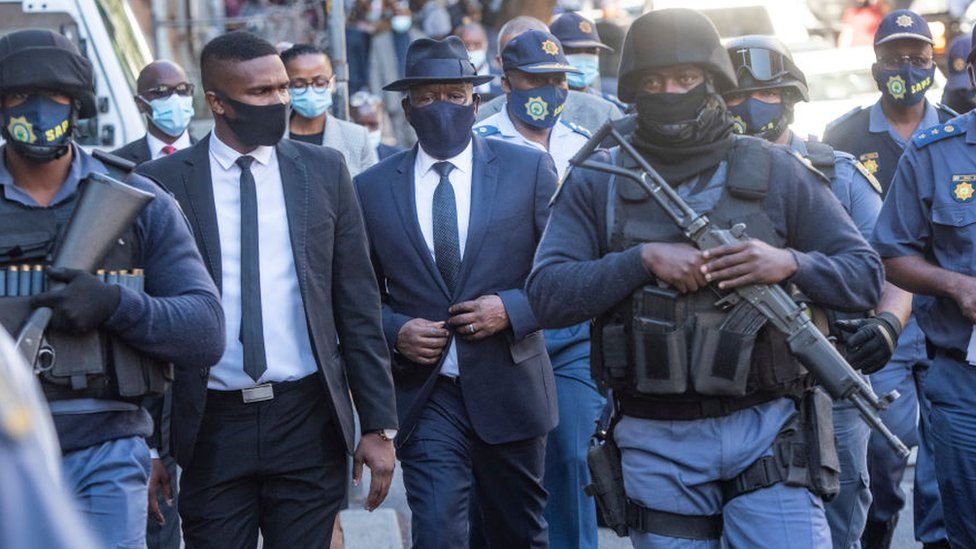
These criminal syndicates have tentacles in countries like neighbouring Mozambique and as far afield as Pakistan.
They tend to mostly target wealthy business people with the means to pay a ransom, but some victims have been from low-income areas and children are not spared.
Private hostage negotiator Gérard Labuschagne says there has been an increase in very high-value cases. Ransoms can be set at up to $3m (£2.3m)
“Organised groups operating in Mozambique and other parts of Africa have now decided, for whatever reason, that South Africa is ripe for this type of crime and they’ve been committing it very successfully,” Mr Labuschagne says.
Some social commentators believe general lawlessness has made South Africa attractive to organised criminals from around the world.
In the face of public anger, the police acknowledge that more work needs to be done but Col Mathe says they have made progress.
“Since the identification of these syndicates, we have arrested 115 suspects, consisting of Pakistanis, Mozambicans as well as South Africans.”
One of the suspects is 43-year-old Faizel Charloos, who was taken into custody in March.
He is believed to be the mastermind behind a spate of recent kidnappings.
During police raids in several Johannesburg properties linked to him, drugs, cash and a high-powered vehicle were recovered.
Mr Charloos recently appeared in court, along with several others, on kidnapping charges. He has made no comment.
It emerged that he has dual citizenship in South Africa and Mozambique.
‘Police don’t rescue victims’
In a separate case in April, police successfully rescued a four-year-old girl who was snatched at a school in Johannesburg, by a woman pretending to be her childminder.
Her kidnappers had earlier demanded thousands of dollars for her safe return.
But four people were arrested when they arrived outside a shopping centre to collect the ransom.
Despite such breakthroughs, Mr Labuschagne is not convinced the police are winning.
“We have had one or two arrests. But in the overwhelming majority of these cases, the police don’t rescue the kidnapped victims from where they’ve been kept. They are released after a payment.”
Ms Tau was lucky that she managed to get away, but her kidnappers took $1,400 (£1,100).
The ordeal has damaged her psychologically and left her family distressed.
“My father is not a man who cries, but he got teary. He kept on feeling like he could have protected me.
“There’s still a part of me that actually died on that day.”
Source: bbc

Conflict at work is more common than you might think. According to 2022 research by The Myers-Briggs Company, more than a third of the workforce reports dealing with conflict often, very often, or all the time in the workplace. The same report found that managers spend an average of four hours per week dealing with conflict, and nearly 25 per cent of people think their managers handle conflict poorly or very poorly.
Addressing a dispute might feel tense or awkward, but resolving the conflict is typically well worth it in the long run. Whether you’re trying to mediate conflict between colleagues or are directly involved, here are seven steps you can take to manage workplace conflict.
1. Don’t put it off
Facing conflict head-on is hard. However, waiting too long to address it can negatively impact your emotional well-being, focus, and the entire office environment. If you’re feeling angry, letting that emotion fester can also escalate it over time. This can make you less responsive to other points of view and make it harder to resolve the issue.
The sooner you can address the conflict, the better it will be for you, the person you disagree with, and your entire team.
2. Learn all you can about the problem
It’s important to determine the type of conflict you’re dealing with. Begin by considering the cause of the conflict. For example, ask yourself whether someone said something that upset you or if you have emotions of anger and resentment that stemmed from something that happened.
Then try to identify if it’s a task, relationship, value, or team conflict. Once you know what type of conflict it is, you can work to resolve it with specific tactics for that situation.
If you skip this step, you may waste time or escalate the situation further by trying to address issues irrelevant to the real conflict.
3. Actively listen
Listen attentively when people share their side of the story. Active listening is one of the most valuable professional skills you can possess. This type of listening involves not only hearing what the other person is saying but also listening to understand their point of view.
No matter your role in conflict, it’s easy to begin sharing your opinion with little regard for the other people involved. However, it’s important to learn about all sides of a disagreement to make well-informed decisions before drawing conclusions.
To reach a resolution, you must step back and prioritize listening over talking. Ultimately, that will encourage the other person to do the same when it’s your turn to speak. –source: betterup.com
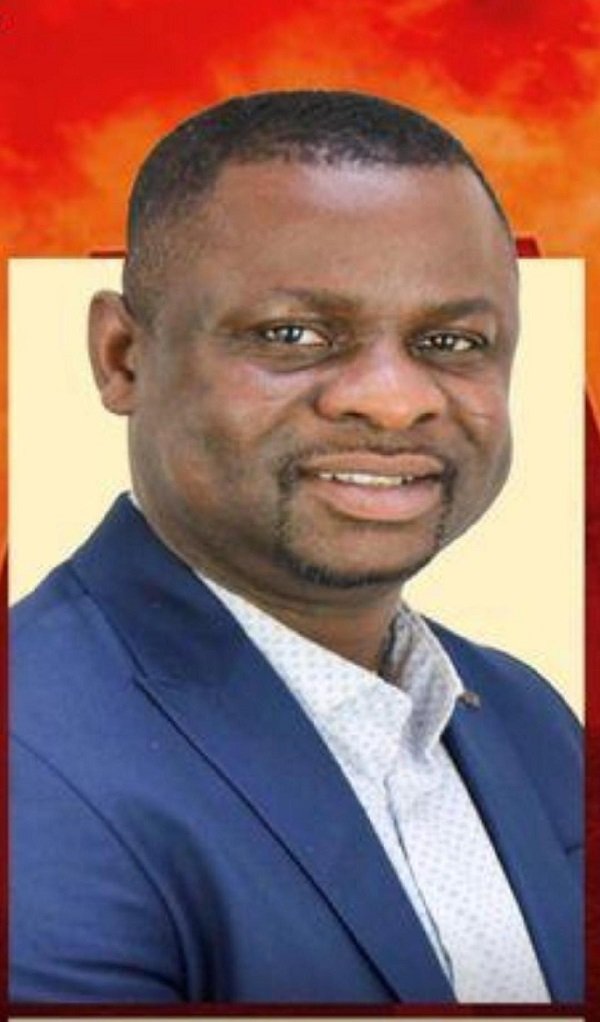
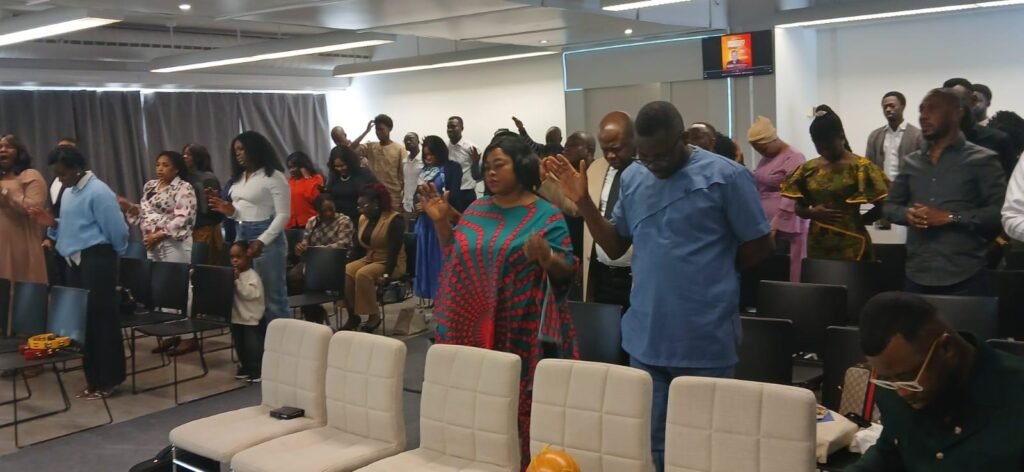
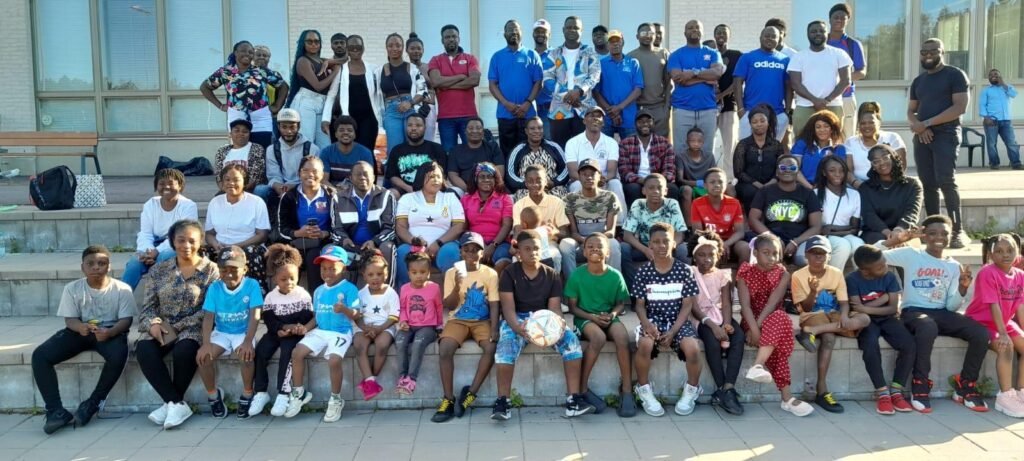
Today, I focus on the Temple Of Praise Ministries International (TOP Church) in Helsinki, as I continue my description of personalities or institutions and their accomplishments as members of the Ghanaian Diaspora in Finland.
The TOP Church in Finland has seen significant strides and accomplishments that must be made known to the public. 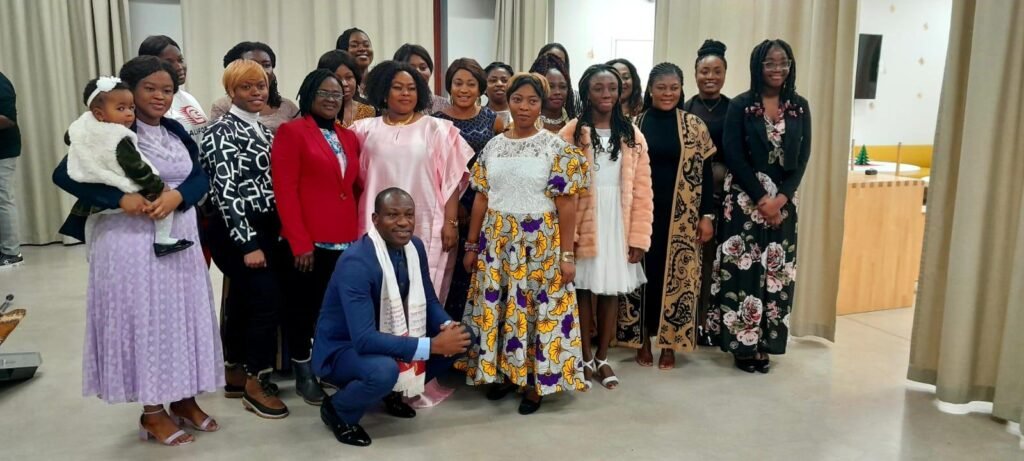
Some history
The Church was established in Finland in September 2016. Since its inception, it has steadily grown both spiritually and numerically, by the grace of God, as disclosed to me by Mr Matthew Anini Twumasi, the Presiding Elder of TOP’s branch in Finland. The TOP Church has other branches across Africa, Europe, and America.
The Church in Finland was founded with a vision to create a welcoming and dynamic community where people could experience God’s love and grace (see, www.topchurchfinland.org). According to Presiding Elder Matthew, the TOP Church operates within a unique environment where Christianity coexists with what is seen as a largely secular society.
Despite this, he submits, there are significant opportunities for outreach, unity, and demonstrating the love of Christ through service and community engagement.
Activities
Church services at the TOP Church are typically held on Sundays for the main worship. In addition, there are mid-week prayer sessions, Saturday prayer services, and a half-night service held on the last Friday of every month. “We also organise quarterly programs”, Elder Matthew added.
His impression of the Church so far has been positive. “It is a vibrant and welcoming community where members are committed to worship, fellowship, and supporting one another in faith”, he stated.
In sum, Elder Matthew said the Church continues to grow by God’s grace. “We remain hopeful and committed to spreading the Gospel, strengthening the faith of our members, and making a positive impact in society”, he continued.
Achievements
The TOP Church has a number of achievements and achievements. Some of the strengths include strong community bonds, cultural diversity, and deep commitment to spiritual growth.
I also remember that during the COVID-19 period, I heard that the TOP Church was one such bodies that hugely supported its members and others to cope with the situation.
According to Elder Matthew, the challenges facing the church include “adapting to cultural differences, engaging the younger generation, expanding outreach in a secular society, and securing a permanent place of worship”.
Role in the Ghanaian community in Finland
The TOP Church plays a prominent role as a religious group that serves Ghanaian migrants and others in the Finnish society.
Thus, the TOP Church is a religious body for Ghanaian migrants in Finland and other nationalities who want to worship with them for diversity and better intercultural and multicultural understanding.
The Church also has mechanisms in place to support its members who are bereaved as a way to commiserate with them in times of death and funerals.
The Ghanaian community has played a vital role in the growth of the Church. Their strong sense of fellowship, dedication to worship, and active participation have helped build a solid foundation and attract others to the ministry, according to Elder Matthew.
Integration
By its activities, the TOP Church is helping to ensure integration of its members well into the Finish society.
This is important since social interaction and citizens’ well-being are an important part of the integration process.
The role of migrant associations and groups such as TOP Church acting as bridge-builders for the integration and inclusion of migrants through participation in the decision making process and by acting as a representative voice is highly appreciated in Finland. Thank you!
GHANA MATTERS column appears fortnightly. Written in simple, layman’s terms, it concentrates on matters about Ghana and beyond. It focuses on everyday life issues relating to the social, cultural, economic, religious, political, health, sports, youth, gender, etc. It strives to remind us all that Ghana comes first. The column also takes a candid look at the meanings and repercussions of our actions, especially those things we take for granted or even ignore. There are key Ghanaian values we should uphold rather than disregard with impunity. We should not overlook the obvious. We need to search for the hidden or deeply embedded values and try to project them.
With Dr Perpetual Crentsil