Fruitful Living
Hifz al-‘Aql (Protection of Intellect) (Part 2)

Islam seeks to protect the human mind because the intellect distinguishes human beings from other creatures.
Allah repeatedly commands: “Will you not then use your reason?” (Repeated throughout the Qur’an)
This objective requires:
• Quality education
• Literacy
• Critical thinking
• Professional development
• Protection from drugs and intoxicants
The growing menace of narcotics, alcohol abuse, cyber fraud, and gambling among some youth threatens the intellect and future of our communities.
Linking the Maqāṣid Shari’ah to the social issues confronting us
Everything we discuss today falls under one or more of these higher objectives:
Contemporary Issue Relevant Maqṣad
Sanitation Protection of Life
Immunization Protection of Life
HPV Vaccination Protection of Life
Child Protection Protection of Lineage
Birth Registration Protection of Lineage
NHIS Registration Protection of Life and Wealth
Ghana Card Acquisition Protection of Wealth and Rights
Passport Processing Protection of Wealth and Welfare
Education Protection of Intellect
Anti-Drug Campaigns Protection of Intellect
Family Stability Protection of Religion and Lineage
Therefore, by participating in these initiatives, Muslims are not merely complying with government policies; they are fulfilling the higher objectives of the Shari’ah and serving the interests of humanity.
The Muslim who protects life, preserves intellect, safeguards family, secures wealth and strengthens religion is actively implementing Islam in its most comprehensive form.
May Allah enable us to uphold the Maqāṣid al-Sharī’ah in our personal lives, our families, our communities and our nation.
Equipping the Muslim Ummah to Address Contemporary Social Issues – The Practical Approach.
We begin by remembering Allah’s guidance: “Whoever saves a life, it is as if he had saved all of humanity”. This high value on preserving life underscores our duty to promote health and welfare in the community. The Prophet Mohammad (pbuh) also said, “The best of people are those who are most beneficial to others.” As Jum‘ah Imams and community leaders, we must therefore guide our Ummah in practical social matters, not only spiritual ones. Today at 1BN Michel Camp, Tema, we focus on concrete steps—rooted in Islam and Ghana’s laws—that protect our families and strengthen society.
Health and Sanitation
Islam places great emphasis on cleanliness and public health. The Prophet Mohammad (pbuh) said, “Cleanliness is half of faith”, showing that personal and environmental hygiene is part of our
Iman. This means keeping homes, mosques and streets clean to prevent disease. Ghana’s Public Health Act (2012, Act 851) likewise mandates sanitation and disease control. For example, the Act
provides for proper waste disposal, clean water and safe food (Part V on Environmental Sanitation). By fulfilling both the religious injunction and the law, we protect our children and neighbors from illnesses like cholera or typhoid. Good sanitation enables children to attend school and parents to work, improving everyone’s livelihood. In Islam, taking care of one’s health is a trust; we should “tie our camel and then trust in Allah” by taking practical steps (clean water,
vaccinations) while relying on Allah’s help.
Child Protection and Immunization
Islam condemns harming children in any way. Allah warns us: “Do not kill your children for fear of poverty… We provide for them and for you”. This verse forbids infanticide and emphasizes
Allah’s provision. The Children’s Act 1998 (Act 560) in Ghana similarly enshrines a child’s rights – for example, the right to a name and nationality, and to education and well-being. As Muslims,
we must care for orphans and vulnerable children. The Prophet Mohammad (pbuh) promised: “Iand the one who looks after an orphan will be like this in Paradise,” indicating great reward.
Practical protection includes immunizing children against preventable diseases. Ghana’s health authorities run national immunization programs (e.g. for polio, measles). Seeking vaccinations is in line with Islamic principles: preserving life and preventing harm. It is not in conflict with tawakkul (trust in Allah); rather, it is “tying the camel.” By vaccinating our children, we save lives – a deed Allah equates to saving all humanity. This also reduces medical costs and keeps families healthy, contributing to socio-economic stability. Imams should encourage parents to register their children at the clinic for the free vaccines the government provides.
Human Papillomavirus (HPV) Awareness
What is Human Papillomavirus (HPV)?
Human Papillomavirus (HPV) is a group of more than 200 related viruses that infect the skin and mucous membranes of humans. It is one of the most common viral infections worldwide and is primarily transmitted through intimate skin-to-skin contact, including sexual contact.
According to the World Health Organization, most HPV infections do not cause symptoms and resolve on their own. However, some types of HPV can persist in the body and lead to serious
diseases, including cervical cancer, anal cancer, penile cancer, vulvar cancer, vaginal cancer, and certain cancers of the throat and mouth.
What Causes HPV?
HPV is caused by infection with the Human Papillomavirus. The virus spreads mainly through:
1. Sexual contact (vaginal, anal, or oral sex).
2. Close skin-to-skin genital contact with an infected person.
3. In rare cases, mother-to-child transmission during childbirth.
It is important to note that a person can carry and transmit HPV even when they have no visible symptoms.
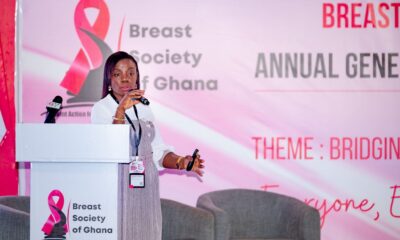
Cervical cancer is a serious health challenge in Ghana. Recently, Ghana launched a nationwide HPV vaccination campaign for girls aged 9–14 (free of charge) to prevent cervical cancer. Islam
teaches us to remove harm and seek cures. The Prophet Mohammad (pbuh) said “There is no disease Allah has created, except that He also has created its treatment” (Sunan Abu Dawud). By raising awareness and accepting the HPV vaccine, we protect the lives and futures of our daughters. Cervical cancer kills over 1,800 women yearly in Ghana. Preventing this harm honors the Islamic ethos of “la darar wa la dirar” – no harming oneself or others. Imams can explain that
safeguarding girls’ health allows them to learn, work and contribute to society, fulfilling Allah’s encouragement to care for the vulnerable.
National Health Insurance (NHIS) Registration
Ghana’s National Health Insurance Scheme (NHIS) provides affordable healthcare. By law (Act 852, 2012), every Ghanaian resident must belong to the NHIS by registering. Once registered, a
family gains access to a wide range of medical services. From an Islamic perspective, having health coverage is part of fulfilling one’s social responsibility: the Prophet Mohammad (pbuh) taught that
one who provides for a sick or needy person is like one who worships in solitude (in reward). An Imam might cite the hadith “Whoever relieves a believer’s distress of the distressful aspects of this world, Allah will rescue him from a difficulty of the difficulties of the Hereafter” (Muslim).
Encouraging congregants to obtain NHIS cards ensures children can get vaccines and families can afford clinic visits, fulfilling the Quranic ideal of community care. Imams can organize special
registration drives after Jumu‘ah, so the poor and elderly receive help signing up, noting that Act 852 even allows community agents to assist citizens.
Author: Imam Alhaji Saeed Abdulai, Kpone Katamanso Municipal Chief Imam, GPC Certified Counsellor and Governance Expert

4. Correct the falsehood
If someone misrepresents Muhammad (pbuh), teach people who Muhammad (pbuh) really was.
Tell them about his mercy.
Tell them about his justice.
Tell them about his patience.
Tell them about his forgiveness.
5. Report genuine offences
Use lawful channels.
The Muslim does not become the police, prosecutor, judge and executioner.
6. Protect the innocent
If one Christian insults Islam, do not attack another Christian who knows nothing about it.
If one Muslim makes an offensive statement, do not blame all Muslims.
7. Restore peace
After the controversy, bring responsible Muslim and Christian leaders together.
Talk.
11 | P a g e
Clarify.
Forgive where forgiveness is appropriate.
And rebuild trust.
Ghana must not become a battlefield of religious provocation
My dear brothers and sisters in Islam,
Let us look around Ghana.
Muslims and Christians have lived together for generations.
We have Muslim fathers with Christian in-laws.
Christian mothers with Muslim sons-in-law.
Muslim and Christian business partners.
Muslim and Christian neighbours.
Muslim and Christian classmates.
Muslims and Christians serving together in the military, police, public service, universities, hospitals, markets and businesses.
This is Ghana.
We must protect this peace.
Religious freedom is precious.
But religious freedom comes with religious responsibility.
A microphone is not a weapon.
A pulpit is not a battlefield.
A smartphone is not a licence to spread hatred.
A viral video is not a fatwa (religious decree).
And anger is not evidence.
12 | P a g e
A word to Muslim scholars
To my fellow Imams and Islamic scholars:
Allah has placed a trust upon our shoulders. You are the best of generations selected for the guidance of mankind. Quran chapter 3:110.
When people are angry, we must calm them.
When people are confused, we must educate them.
When people want revenge, we must teach justice.
When people want violence, we must remind them of Allah.
Our microphone should extinguish fire—not pour petrol upon it.
The Prophet said:ِ
لَيْس َ الشَّدِيد ُ بِالصُّرَعَةِ، إِنَّمَا الشَّدِيد ُ الَّذِي يَمْلِك ُ نَفْسَه ُ عِنْد َ الْغَضَب
“The strong man is not the one who can overpower others; rather, the strong man is the one who controls himself when angry.” (Sahih al-Bukhari, 6114; Sahih Muslim, 2609)
This is strength.
Self-control is strength.
Restraint is strength.
Wisdom is strength.
Justice is strength.
A word to Christian preachers
And to our Christian brothers and sisters, especially those who preach:
We Muslims deeply revere Jesus (peace be upon him)
He is not an ordinary man in Islam.
He is ʿĪsā ibn Maryam عليه السالم, a mighty Messenger of Allah.
The author is the Chief Imam of Katamanso Municipal and Certified Counsellor and Governance Expert.
SKIP THE QUEUE, TAP THE NEWS
You can now read the Ghanaian Times and The Spectator newspapers from the comfort of your device via TimesNewsPlus.
Join our WhatsApp Channel: https://whatsapp.com/channel/0029VbBElzjInlqHhl1aTU27
When Paul tells us that our “attitude should be the same as that of Christ Jesus,” he had summarized in the previous two verses what such an attitude was: selflessness, humility, and service. “Do nothing out of selfish ambition or vain conceit, but in humility consider others better than yourselves. Each of you should look not only to your own interests, but also to the interests of others” – Philippians 2:3-4.
In other words, the attitude a Christian should reflect is one that focuses on the needs and interests of others. Without question, that does not come naturally to us. When Christ came into the world, He established a whole new attitude to relationships with others. One day when His disciples were arguing among themselves regarding who was to be greatest in His kingdom, Jesus said, “You know that the rulers of the Gentiles lord it over them, and their high officials exercise authority over them. Not so with you.
Instead, whoever wants to become great among you must be your servant, and whoever wants to be first must be your slave – just as the Son of Man did not come to be served, but to serve, and to give his life as a ransom for many” – Matthew 20:25-28. Jesus is teaching us that, when we become preoccupied with our own things, it can cause conflicts and other problems with people we know. Instead, God wants us to have an attitude of serious, caring involvement in the concerns of others.
Paul speaks more about this Christ-like attitude in his letter to the church in Ephesus: “that you put off, concerning your former conduct, the old man which grows corrupt according to the deceitful lusts, and be renewed in the spirit of your mind, and that you put on the new man which was created according to God, in true righteousness and holiness.– Ephesians 4:22-24. Many religions of today, including the New Age philosophies, promote the old lie that we are divine or that we can become gods. But the truth of the matter is that we will never become God, or even a god. Satan’s oldest lie was promising Adam and Eve that, if they followed his advice, “- and you will be like God, knowing good and evil.” Genesis 3:5, NKJV.
Each time we try to control our circumstances, our future, and the people around us, we’re only demonstrating that we want to be a god. But we must understand that, as creatures, we will never be the Creator. God doesn’t want us to try to become gods. Instead, He wants us to become like Him, taking on His values, His attitudes, and His character. We are meant to “be made new in the attitude of your minds; and to put on the new self, created to be like God in true righteousness and holiness” – Ephesians 4:23-24.
Finally, we must always keep in mind that God’s ultimate goal for His children is not our comfort, but the transformation of our minds into the attitude of godliness. He wants us to grow spiritually, to become like Christ. This doesn’t mean losing our personalities or becoming mindless clones. Christlikeness is all about transforming our minds. Again, Paul tells us, “Do not conform any longer to the pattern of this world, but be transformed by the renewing of your mind. Then you will be able to test and approve what God’s will is—his good, pleasing and perfect will” – Romans 12:2.
It is God’s will that we develop the kind of mindset described in the Beatitudes of Jesus – Matthew 5:1-12, that we exhibit the fruit of the Spirit – Galatians 5:22-23, that we emulate the principles in Paul’s great chapter on love – 1 Corinthians 13, and that we strive to pattern our lives after Peter’s characteristics of an effective and productive life – 2 Peter 1:5-8.
Establishing our actions in righteousness
Every person is commanded to live up to divine standards.
a. In the words of Jesus
“ For I say to you, that unless your righteousness exceeds the righteousness of the scribes and Pharisees, you will by no means enter the kingdom of heaven. Be ye, therefore, perfect, even as your Father, who is in heaven, is perfect” – Mt. 5:20, 48.
Every person in the world is required to live up to that standard. You say, “You’ve got to be kidding!” No, I’m not. You are obligated to live up to that standard with a pure inside as well as a right outside. But you say, “I can’t!” You are absolutely right. That’s why we are given the solution…
b. In the words of Paul
As it is written: “There is none righteous, no, not one; But now the righteousness of God apart from the law is revealed, being witnessed by the Law and the Prophets, even the righteousness of God, through faith in Jesus Christ, to all and on all who believe. For there is no difference;– Rom. 3:10, 21-22a.
Though you can’t obtain on your own the righteous standard Christ set, you can receive His righteousness if you are one of those who believe. Isn’t that great? God set the holy standard. And when you acknowledge that you can’t live up to it, He says, “My Son is not only the Lawgiver, but He is the Redeemer as well, who makes it possible for you to live on that level.” Beloved, it’s a fantastic thing! The standard is so high we can’t obtain it. But Christ met that standard and imputes to us His righteousness. Oh, what a blessed thing!
SKIP THE QUEUE, TAP THE NEWS
You can now read the Ghanaian Times and The Spectator newspapers from the comfort of your device via TimesNewsPlus.
Join our WhatsApp Channel: https://whatsapp.com/channel/0029VbBElzjInlqHhl1aTU27