
News
Harsh soaps, pills harmful to children’s skin — Public Health Nurse


A disturbing practice in which some mothers and caregivers use skin-lightening creams, harsh soaps and even pills on children in an attempt to make their skin lighter has come under strong criticism from a public health nurse.
Mr Jonathan Kwame Quarshie, a Public Health Nurse at the Ho Teaching Hospital, has cautioned mothers and caregivers to desist from bleaching the skin of children, describing the practice as unnecessary and potentially harmful to their health.
He said it was worrying that some caregivers were exposing children to cosmetic products meant to alter their natural complexion, despite the delicate nature of children’s skin.
According to him, the situation becomes even more concerning when pills or tablets are given to children with the promise that the products would make their skin lighter “from within”.
“There is no justification for giving a baby or child an unprescribed substance for cosmetic purposes,” he cautioned.
Mr Quarshie stressed that “a baby is not a beauty project” and urged parents to appreciate and protect the natural complexion of their children rather than trying to change it to conform to perceived standards of beauty.
He explained that children’s skin was delicate and could be adversely affected by inappropriate cosmetic products, particularly those containing potentially harmful substances.
Some skin-lightening products may contain substances such as mercury, hydroquinone or potent corticosteroids, which could cause skin irritation, damage and other health complications depending on the substance and level of exposure, he said.
Of particular concern, he said, was mercury exposure, which could affect the nervous system and kidneys.
He therefore warned parents against treating children as “laboratories for beauty experiments” and urged them to consider the long-term health implications of exposing children to unnecessary chemicals and medicines.
Mr Quarshie said children did not need to have lighter skin to be considered beautiful, adding that what they needed was love, acceptance, proper nutrition, safe, age-appropriate skincare and appropriate medical care when necessary.
He advised parents whose children had skin conditions, unusual pigmentation, persistent rashes or other skin concerns to consult qualified health professionals rather than attempting to lighten or treat their skin with unprescribed products.
He also urged caregivers who had already used skin-lightening products on their children to stop further use and seek medical advice, particularly where a child developed irritation, swelling, skin thinning, changes in skin colour or other unusual symptoms.
He said it was worrying that children, particularly girls, were increasingly facing pressure to conform to certain standards of beauty from an early age.
He appealed to parents and families to create an environment in which children would grow up appreciating their natural appearance and understanding that their skin colour was not a problem that needed to be corrected.
“Every shade deserves protection. Every child deserves safe care,” he said, urging society to focus on protecting the health, dignity and wellbeing of children rather than changing their natural complexion.
He said children needed protection, not bleaching.
From Ama Tekyiwaa Ampadu Agyeman, Koforidua
SKIP THE QUEUE, TAP THE NEWS
You can now read the Ghanaian Times and The Spectator newspapers from the comfort of your device via TimesNewsPlus.
Join our WhatsApp Channel: https://whatsapp.com/channel/0029VbBElzjInlqHhl1aTU27









News
Education Minister announces two-year BECE ban for JHS 1 and 2 students who write exams ahead of schedule
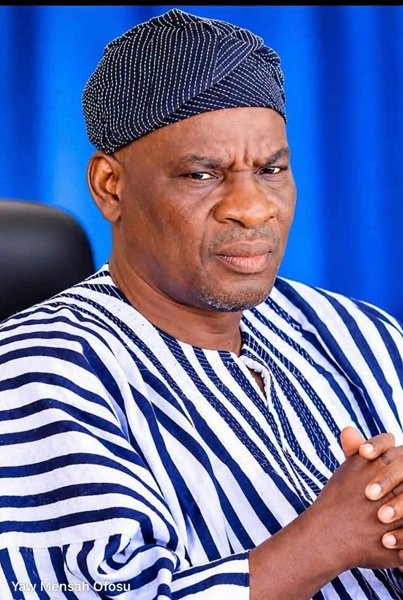
The Minister for Education, Haruna Iddrisu, has announced a two-year ban for students in Junior High School (JHS) 1 and 2 who attempt to write the Basic Education Certificate Examination (BECE) ahead of their scheduled year.
The minister said the directive takes immediate effect and is aimed at preventing students from advancing to JHS 3 before completing the required period of basic education.
Speaking during National Education Week, Mr Iddrisu directed the Director-General of the Ghana Education Service (GES) to ensure that all regional directors and headteachers are informed about the new directive and enforce it.
Mr Iddrisu explained that the decision was necessary to instil discipline in the education system and allow authorities to plan effectively for the number of candidates expected to complete basic education and sit for the BECE each year.
According to him, the practice of allowing some pupils to skip academic levels to write the examination earlier creates difficulties for education authorities in determining the actual number of students expected to graduate from basic school annually.
He expressed concern about parents who encourage their children to move ahead of their classmates and write the examination before the appropriate time.
The minister argued that such a practice undermines fairness and equal opportunities among pupils, stressing that children should follow the approved academic progression rather than being pushed to complete their education ahead of others.
“Some parents want to force their children to go ahead of others. That is not equity,” he stated.
By: Jacob Aggrey

Ghana’s High Commissioner to Nigeria, H.E. Baba Sadiq Abdulai Abu, has accompanied the Speaker of Ghana’s Parliament, Rt. Hon. Alban Sumana Kingsford Bagbin, on a courtesy visit to the President of Nigeria’s Senate, H.E. Senator Godswill Akpabio.
The visit, described as a powerful demonstration of Ghana-Nigeria solidarity and shared democratic values, reaffirmed the historic bonds between the two countries and the importance of sustained parliamentary diplomacy.
Speaker Bagbin, who is also Chairman of the Conference of Speakers and Presidents of African Legislatures (CoSPAL), and Senator Akpabio discussed ways of strengthening democratic governance, deepening bilateral relations, and expanding economic cooperation.
Both leaders underscored the responsibility of political institutions to protect democracy, restore public confidence in governance, and promote peaceful political processes across West Africa.
By Edem Mensah-Tsotorme