News
The Case for More Lawyers in Ghana

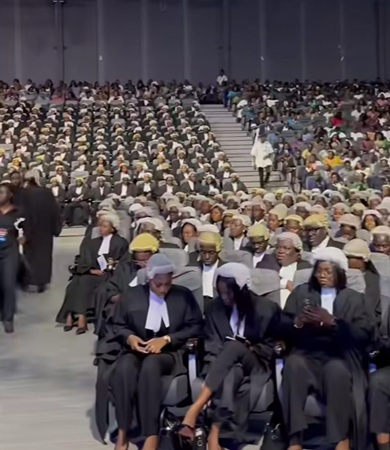
Emmanuel Amponsah’s commentary defending senior lawyer Ace Ankomah’s position argues that Ghana does not truly have a surplus of lawyers, noting that a population of 30 million has seen fewer than 15,000 registered lawyers throughout its history. The text emphasises that the central issue is not the number of legal professionals, but rather how effectively the state trains, deploys, and utilises them for national development
Every year, like clockwork, a deeply moving national ritual takes place in Ghana. No, I am not talking about the budgeting for a new national cathedral, nor am I referring to the periodic resurrection of stable electricity. I am talking about the annual call to the Bar, a solemn occasion when hundreds of enthusiastic citizens finally earn the right to wear itchy 18th-century horsehair on their heads in 32-degree tropical heat.
And right on cue, as soon as the first camera flashes hit Instagram and TikTok, the familiar chorus of national grief begins.
If social media commentary is to be believed, the legal profession is the single greatest threat to Ghana’s development since the invention of the mosquito. Suddenly, everyone becomes a certified demographic expert and an economic planner. From the comfort of their keyboards, critics launch into the annual tradition of predicting our imminent doom under the crushing weight of too many advocates.
Let us, for a moment, dissect this seasonal performance of economic anxiety with the gravity it truly deserves.
The Myth of the Overcrowded Courtro
The most common lamentation echoing through our digital streets is a simple one: “There are too many lawyers!”
It is a fascinating observation. We look around our country, see land guards terrorising homeowners, contract breaches treated as a standard business practice, public funds vanishing into thin air, and citizens spending decades trying to resolve basic inheritance disputes. Yet, the logical conclusion we arrive at is: “Ah, yes. The real problem here is that we have an oversupply of people who understand the law.”
If you truly believe we have too many lawyers, I challenge you to test that theory the next time life hands you a crisis. When your landlord decides to lock you out of your apartment because his cousin needs a place to stay, or when you find yourself in a messy divorce court, whom do you intend to bring along as your shield? Your quantity surveyor? Your favorite structural engineer? Perhaps you can bring your plumber to argue the finer points of contractual estoppel.
The reality is that we only complain about the number of lawyers until we desperately need one to rescue us from the consequences of our own spectacular lapses in judgment.
The Zero-Sum Beauty Contest
Then comes the classic pivot to the sciences: “The country needs more engineers and doctors, not people who read big books!”
This is undoubtedly true. We do need more doctors. We need more engineers to fix our roads and build our bridges. But nation-building is not a zero-sum beauty contest where one profession must starve so another can thrive. It is not an either-or proposition.
More importantly, let us look at how these professions interact in the wild. When that brilliant engineer builds a bridge that collapses due to a poorly negotiated, inflated state contract, or when a medical professional commits a tragic act of malpractice, who steps into the arena? The local pastor? A team of herbalists?
No. We call the lawyers. We call them to interpret the building codes, to enforce regulations, and to hold institutions accountable. A society with brilliant engineers but no functioning legal framework to enforce standards is simply a society waiting for its infrastructure to collapse with absolute impunity.
The “Arts Student” Delusion
There remains a lingering, highly amusing arrogance among some science enthusiasts who believe that studying law is merely a default setting for arts students who “couldn’t hack it” in chemistry or physics.
It is a comforting myth, usually whispered by people who think legal practice consists entirely of standing up in court and shouting “I object!” in a dramatic voice. They conveniently overlook the reality of the modern world. Interpreting constitutional crises, untangling complex financial regulations, navigating intellectual property theft, prosecuting medical negligence, and drafting frameworks for the law of artificial intelligence apparently require zero cognitive effort.
Some people consistently confuse choosing a different discipline with failing at their own. Rest assured, analysing a complex web of corporate fraud requires just as much brainpower as balancing a chemical equation—only the lawyer’s equation can land someone in Nsawam prison if they misplace a decimal point.
Wigs, Gowns, and Colonial Wardrobes
Now, to be completely fair, the critics do get one thing absolutely right. The wigs and gowns are, without question, an absurd colonial relic.
On this specific point, I agree paaah. There is something profoundly surreal about watching a Ghanaian lawyer, sitting in a courtroom with a failing air conditioner, sweating profusely under a heavy black gown and a white horsehair wig designed for the chilly autumn mornings of London. We can easily modernise the wardrobe without abolishing the profession. The British left us the legal system, but they also left us the keys to our own tailors. Surely, we can improve the uniform to reflect a sovereign nation that experiences actual sunshine.
The Real National Challenge
The true problem facing Ghana is not that we have too many lawyers. In a country of over 30 million people, where legal services remain an inaccessible luxury for the vast majority of the population outside Accra and Kumasi, we actually need more.
The real question we should be asking every October is not about quantity, but about utility and competence. Are we producing professionals—be they doctors, engineers, teachers, entrepreneurs, or lawyers—who are highly competent and driven by integrity? And more importantly, are we building a system that puts them to good use?
So, let the new lawyers take their pictures. Let them post their scrolls. Even if, by some miracle of mass enrollment, everybody in Ghana eventually becomes a lawyer, you can sleep soundly tonight. At the very least, it means somebody will finally be available to obey the law.
By Emmanuel Amponsah
The writer is a former Editor of The Spectator

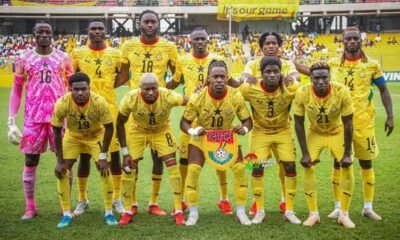





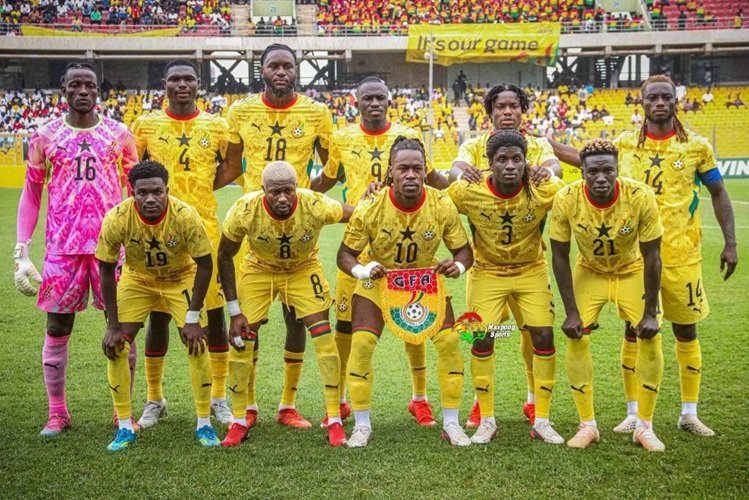
Ghana face Somalia again in the 2027 Africa Cup of Nations qualifier, the second game in the space of four days with the Black Stars looking to complete the double and take six points from the camp.
Ghana won the reverse fixture 2-0 on Thursday at the Sekondi Stadium, after goals from Jonas Adjetey and Felix Afena-Gyan, and will be looking for a repeat performance on Monday to continue their surge up the standings.
The first game was a tale of two halves. Ghana survived an early scare when captain Jordan Ayew missed a penalty in the 13th minute, before Adjetey scored his first international goal just before half-time. Afena-Gyan sealed the win in the 62nd minute after a brilliant combination play between Thomas Partey, Jordan Ayew and Mohammed Kudus.
In the second half, Ghana were dominant. Kudus was a delight to watch, Partey, Caleb Yirenkyi and Abdul Fatawu Issahaku controlled affairs, and the Black Stars could easily have won by more. The win gave Ghana their first three points of the qualifying campaign after defeats to Cote D’Ivoire and The Gambia in their opening two games.
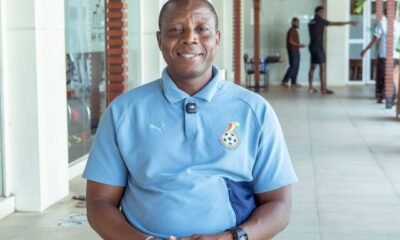
Head coach Kim Lars Bjorkegren may ring some changes to the team that played on Thursday. Caleb Yirenkyi hobbled off in the first game and is a doubt, while Thomas Partey is also a doubt for Monday’s return fixture.
Bjorkegren hinted at the pre-match press conference that there will probably be a couple of changes, with the players recovering well but with one more day to assess the squad.
If Partey and Yirenkyi miss out, the likes of Ibrahim Sulemana, Ibrahim Rash and Daniel Kofi Kyereh, who made his first major appearance since 2022 on Thursday could come into the side.
Brandon Thomas-Asante and Prince Adu Kwabena, who both came off the bench on Thursday, will also be pushing for a start as Ghana look to be more precise in the final third.
Kim LarsBjorkegren has been clear: the most important thing is to make sure Ghana take six points in this camp. Goal difference could be important in the end, but the focus is first on winning the game.
Ghana will be expected to start strong, keep the tempo high for 90 minutes, and be more dangerous in the final third, with more explosive runs into the box and more balls played forward.
Somalia, who now know Ghana better after Thursday’s game, will be looking to frustrate the Black Stars for as long as possible and hit on the counter. But Ghana’s second-half performance on Thursday showed total control, and the team will be confident of doing the same again.
A second win would give Ghana six points from six and put them in a strong position in the group, brightening their chances of making it to the next edition of the Africa Cup of Nations in Kenya, Tanzania and Uganda.
The belief is back after Thursday’s win. The fans in Takoradi were superb, cheering the team from start to finish, and the Black Stars will be looking to give them another night to celebrate on Monday. The match is scheduled for 3pm kick off at the Sekondi Sports Stadium.
GFA Communications
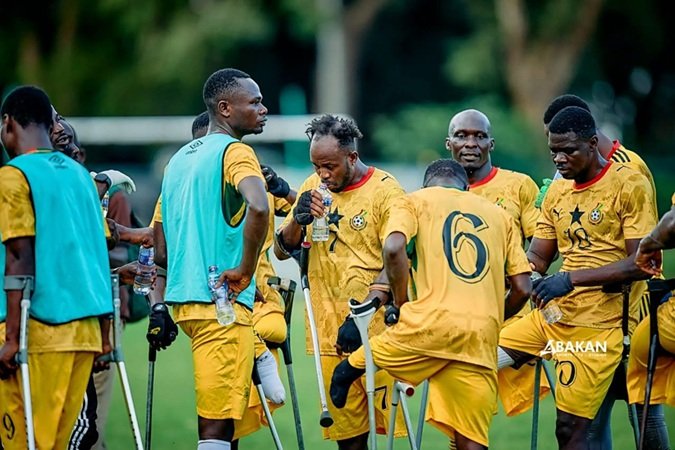
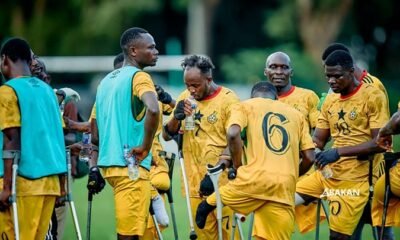
The two-time African champions take on Iraq on Monday, November 16, in their final Group D game at the 2026 WAFF Amputee Football World Cup in Mexico — and only a win will keep their hopes alive.
Stephen Richard Obeng’s side have just one point from two games. They opened their campaign with a 2-0 defeat to former world champions Angola, before fighting back to draw 1-1 with Colombia on Sunday.
That result gave them hope, but it has left them in a tight corner.
Angola and Colombia sit top of Group D with 4 points each. Ghana and Iraq are both on 1 point, which makes Monday’s clash a straight knockout for both teams.
Ghana must beat Iraq and hope for a favourable result in the Angola vs Colombia game. Even if they don’t finish in the top two, a win could still see them through as one of the best third-placed teams.
By Edem Mensah-Tsotorme