Hot!
GRDA responds to TUC and GRCL on Tema–Mpakadan railway operations

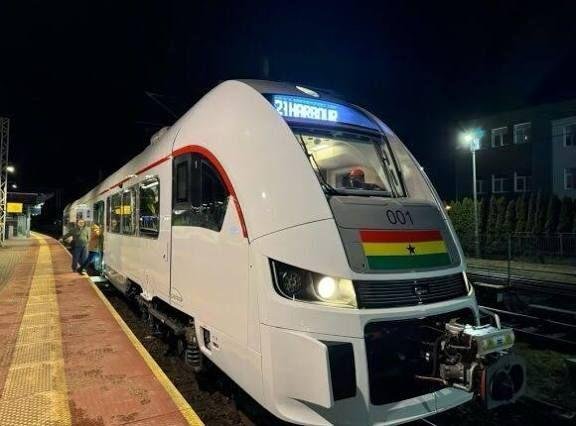
The Ghana Railway Development Authority (GRDA) has stated that the threats by the Trades Union Congress (TUC) and the Railway Workers’ Union of the Ghana Railway Company Limited (GRCL) to resist the operationalisation of the Tema–Mpakadan Standard Gauge Railway Line were based on a deliberate mislinking of salary arrears at GRCL to the start of proof-of-revenue services on the line.
The Authority indicated that neither the TUC nor GRCL had engaged it or the Ministry of Transport before issuing their threats.
It maintained that attempts to conflate GRCL’s internal management failures with GRDA’s lawful mandate were misplaced and risked undermining a strategic national investment worth USD 447 million.
According to the Authority, the Railways Act, 2008 (Act 779) vests all railway assets in GRDA and empowers it to develop, administer and regulate the sector, including operationalising newly constructed lines and conducting proof-of-revenue services.
It stressed that the start of operations on the Tema–Mpakadan line fell squarely within its statutory remit and that no operator, including GRCL, had inalienable rights over any railway line in Ghana.
GRDA further explained that under the open-access model, multiple public or private operators could apply for operating licences and slots.
It disclosed that 17 entities had submitted applications but GRCL was not among them, adding that the company neither possessed the requisite rolling stock for standard gauge operations nor had trained staff for the line.
The Authority gave background that the 97.7-kilometre Tema–Mpakadan line, completed in December 2024 at a cost of USD 447 million, formed a vital multimodal corridor linking Tema Port to Buipe via the Volta Lake and to Burkina Faso through the Tema–Ouagadougou corridor.
It said that international standards required passenger service trials to test systems such as signalling, train control, traffic management, station facilities and maintenance depots before full commercial operations.
GRDA reported that it had successfully completed four days of test runs and that proof-of-revenue services would commence on October 1, 2025.
The Authority noted that the line was funded through a USD 447 million loan from the Indian EXIM Bank on-lent to GRDA by the Ministry of Finance, which it must service through revenues generated from operations.
It said that the open-access model had been adopted to ensure fairness, competition and sustainability, with train traffic to be centrally managed by GRDA.
GRDA pointed to what it called systemic inefficiencies within GRCL. It said that despite heavy government investments, the company had failed to sustain operations, diverted funds, procured defective materials and engaged in the illegal sale of parts of the network without the Authority’s consent.
It listed issues such as derailments on the Western Line, abandonment of materials, empty rehabilitated stores, staff on foreign payrolls producing no value and unauthorised disposal of locomotives and wagons.
The Authority described as false the claim that GRCL’s predicament was its responsibility and said the evidence showed a consistent pattern of mismanagement and unlawful actions by GRCL itself.
It expressed disappointment that the TUC had failed to engage GRDA and the Ministry before issuing threats and called on the union to demand accountability from GRCL’s management instead of shielding them.
GRDA also raised concerns about acts of vandalism against point machines and signalling equipment recorded after TUC’s public declaration of intent to resist government’s railway agenda.
It warned that the TUC and its affiliates would be held accountable for any sabotage, destruction or disruption of railway infrastructure during the period of their declared action.
The Authority assured the public that the Tema–Mpakadan line, a strategic national asset, would commence proof-of-revenue operations on October 1, 2025, in line with government directives and Act 779.
It reiterated its resolve to deliver safe, reliable and efficient services and to safeguard the nation’s investment for the benefit of all Ghanaians.
By: Jacob Aggrey

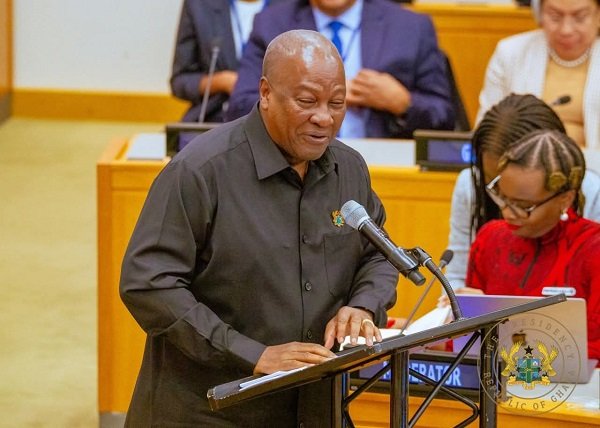
Photos from the High-Level Event on Reparatory Justice for the trafficking of enslaved Africans and the racialised chattel enslavement of African people, convened at the United Nations Headquarters, New York.
Delivering a powerful address, President John Dramani Mahama underscored the moral urgency of confronting historical injustices and advancing a global commitment to reparatory justice.
“The entire transatlantic slave trade was designed to deny African people their humanity,” the President stated.
Highlighting the significance of ongoing international efforts, he added:“This resolution allows us, as a global community, to collectively bear witness to the plight of the 18 million men, women, and children whose homes, communities, names, families, hopes, dreams, futures, and lives were stolen from them over the course of four centuries.”
In reaffirming the enduring truth of justice, President Mahama noted:
“Just because everybody is doing something doesn’t make it right. Slavery is wrong now, and it was wrong then. For as long as Africans have been trafficked and enslaved, there have been abolitionists who have spoken up against it.”
He further called for a deeper reflection on identity and dignity:
“We must also remember to reclaim our own humanity… when we absorb too much of the language of violence and erasure, our minds become enslaved.”

A member of the New Patriotic Party (NPP), Beatrice Siaw, has expressed mixed views about Ghana’s current leadership, saying she admires President John Dramani Mahama but is not fully satisfied with how the country is being governed.
Speaking in an interview on Metro TV on Tuesday, she said although she belongs to the NPP, she finds it difficult to criticise the President personally.
“I admire President Mahama, so it’s hard to speak against him. But I do love my party. I am impressed with the President, not necessarily impressed with how things are going” she said.
She acknowledged that the NDC has made efforts in managing the economy and improving some key indicators. She noted that the party appears determined to prove critics wrong after previously being voted out of office.
“They are trying to do a lot of things that Ghanaians thought they couldn’t do when they were in power,” she said.
However, she was quick to add that these efforts may not necessarily translate into electoral success in the next election cycle.
When asked whether the NDC’s performance could pose a strong challenge in 2028, she said she does not believe so, although she admitted there have been some improvements in certain areas.
“In some aspects, yes,” she said when asked if she had been impressed by the government’s performance.
By: Jacob Aggrey