Sports
Give us a Sports Minister of substance

- /home/u249204778/domains/spectator.com.gh/public_html/wp-content/plugins/mvp-social-buttons/mvp-social-buttons.php on line 27
Warning: Trying to access array offset on false in /home/u249204778/domains/spectator.com.gh/public_html/wp-content/plugins/mvp-social-buttons/mvp-social-buttons.php on line 27
&description=Give us a Sports Minister of substance', 'pinterestShare', 'width=750,height=350'); return false;" title="Pin This Post">
- Share
- Tweet /home/u249204778/domains/spectator.com.gh/public_html/wp-content/plugins/mvp-social-buttons/mvp-social-buttons.php on line 72
Warning: Trying to access array offset on false in /home/u249204778/domains/spectator.com.gh/public_html/wp-content/plugins/mvp-social-buttons/mvp-social-buttons.php on line 72
&description=Give us a Sports Minister of substance', 'pinterestShare', 'width=750,height=350'); return false;" title="Pin This Post">
It is that time of the political season where ‘Fellow’ Ghanaians will have to show their lobbying skills to catch the attention of a freshly elected and sworn-in president and his vice.
Like it is done in the legislature where ‘Honourables’ must work hard to get the attention of the Speaker, so must fellow Ghanaians scramble for space, swerve every obstacle to submit a Curriculum Vitae (CV).
Usually, one must be well connected to more powerful people closer to those on the corridors of power for a CV to land at the appropriate place.
The scramble at the end of the day is to be favoured and selected for a ministerial role. When one is successful and even cleared by the house of Honourables, the victor is likely to serve as a Minister of the state for a period only God knows.
For some, it is after this that they can beat the chest proudly and state “Yes, I have arrived.”
But it is mesmerising how the efforts of the ambitious ones can be thwarted by comments or suggestions from another set of fellow Ghanaians.
These kind of fellow Ghanaians are the ones that lacks the prerequisite to desire the aspirations of the ambitious group.
At least through various media platforms, they make their voices heard on who should be selected for which ministry and give reasons why.
This happens very often but as to whether it is heard at the corridors of power, it will be difficult to tell.
Happenings in the current political ‘cocoa’ season has been no exception. Certain offices have been inundated with a lot of these CVs that an announcement had to be made for it to stop.
It may have stopped but what will be difficult to stop, may be the lobbying and those offering words of advice on who should be selected and who should be ignored.
Ahead of the announcement of a Minister of Sports and recreation (MoSR), there have been a lot of conversation over who to consider for the post and what the person brings to the table.
Some have called for an abrasive leader, expecting him to be tough and have either a thick skin or develop a dead goat syndrome to deal with perceived ills in the sector.
Some have gone to the extent of choosing such people to specifically deal with some actions or persons at the Ghana Football Association (GFA); as if that is where all the problems of Ghana sports emanates from.
Some have come up with many other suggestions; all in a bid to get someone cut for the role of the Sports Minister.
This is gradually making the role of the Minister of sports and recreation as the most difficult one; and perhaps no longer education, finance and labour etc.
But whatever happens, the selectors must carefully consider the true needs of Ghana sports and have a good knowledge of it as well as it current administration globally.
If we say sports has become a business, the sports minister nominee must fathom what it means and what is required to make it so.
The nominee must know and accept that sports is not just football. Apart from football, Ghana has over 50 sports federations, all depending on the national cake for survival.
The decoupling of the youth from its functions and replaced by recreation should also aid the nominee in categorising these sports disciplines.
By the rule of competitive advantage, the nominee must decipher those with realistic chances of doing well to be pushed. What we need is a Minister of substance and be firm to all but fair.
By Andrew Nortey

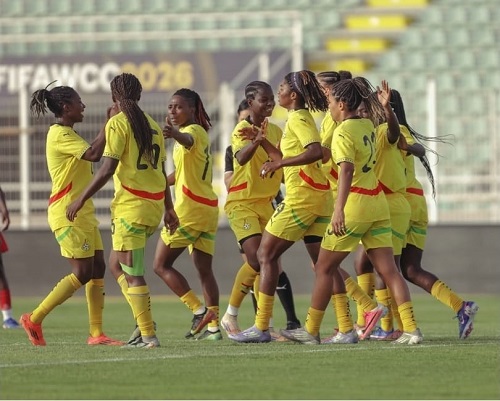
The Black Queens kick off their 2026 CAF Women’s Africa Cup of Nations journey on Wednesday, July 29, when they take on Cape Verde in their Group C opener in Morocco.
Coach Kim Lars Björkegren and his team go into the match full of confidence after weeks of intensive preparations.
The Queens held a successful pre-tournament training camp and played friendly matches to fine-tune ahead of the competition.
With morale high, Ghana’s senior women’s team will be targeting maximum points to get their campaign off to the perfect start.
The match is set for 5:00 PM GMT at the Moulay Rachid Stadium.
Football fans across Ghana will be watching closely, hoping the Queens can secure a positive result and lay the foundation for a memorable WAFCON 2026 run.
By Edem Mensah-Tsotorme

With the World Cup fever gradually dying down, attention would switch to other equally important competitions from now to the latter parts of the year.
Barely a week after the global football showpiece that saw Spain upstaged Argentina as World Champions, over 70 countries gathered in Glasgow, Scotland for the Commonwealth Games that is attracting hundreds of athletes from the Commonwealth community.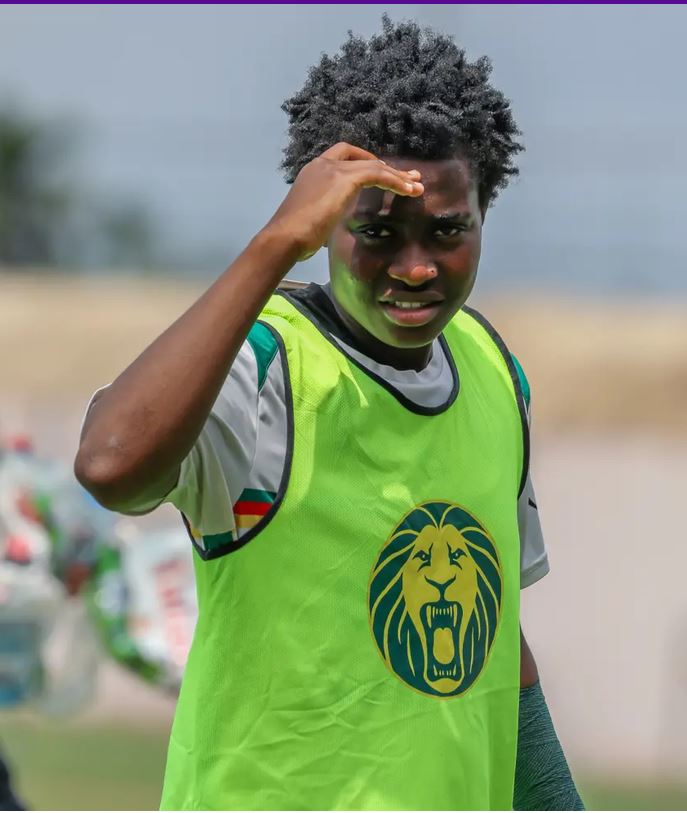
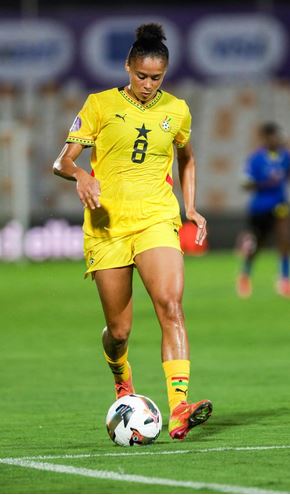
Equally, 16 top female national teams in Africa would commence competition for the bragging rights as African champions when the delayed Women’s Africa Cup of Nations 2026 kicks off in Morocco tomorrow.
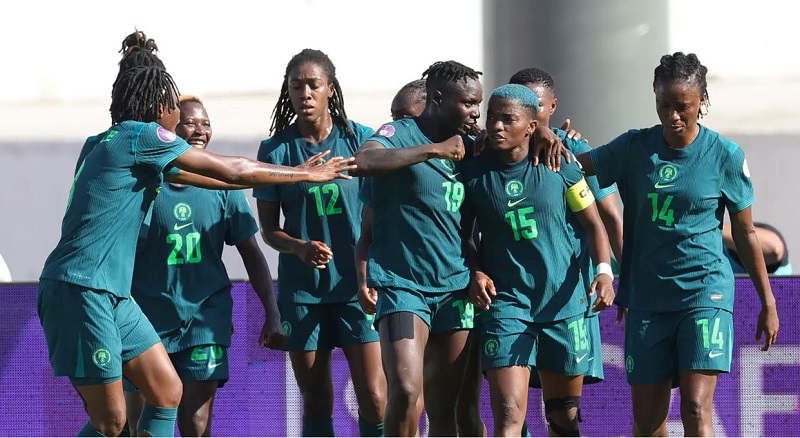
The Super Falcons of Nigeria are usually considered favourites for this showpiece, having shown the strength and character to dominate the game on the continent.
As defending champions, they come in strongly again, expected to face a more difficult sides like the Black Queens of Ghana, Zambia and Morocco who have been touted as possible teams to cause an upset.
Of the 16 qualified teams, nine featured at the previous edition held in 2024.
Botswana, the Democratic Republic of the Congo and Tunisia, who qualified in 2024, missed out this time, while Cape Verde and Malawi will make their first appearance in the tournament.
Today, The Spectator Sports takes a look at some of the teams expected to rub shoulders with the big guns in the female game.
Cameroon
After missing the previous edition, Cameroon returns to the CAF Women’s Africa Cup of Nations Morocco 2026 determined to re-establish themselves among Africa’s elite.
The Indomitable Lionesses, one of the continent’s most successful women’s national teams, secured a place at the expanded 16-team tournament after receiving a second chance through CAF’s revised qualification system.
Now, under newly appointed head coach Valentine Nguele and inspired by emerging midfield star Naomi Eto, Cameroon will be aiming not only to reclaim their place among Africa’s leading nations but also to secure qualification for the 2027 FIFA Women’s World Cup.
Cameroon boasts one of the richest histories in the Women’s Africa Cup of Nations.
The Indomitable Lionesses have reached the final on three occasions—in 2004, 2014 and 2016—but are still searching for their first continental title.
Their consistency has also been reflected in three third-place finishes in 2002, 2012 and 2018, giving Cameroon six podium finishes overall.
Only Nigeria and South Africa have accumulated more top-three finishes in the history of the competition, underlining Cameroon’s long-standing status among Africa’s leading women’s football nations.
Zambia
After finishing third in 2022 and falling short of expectations at the 2024 edition, Zambia head to the TotalEnergies CAF Women’s Africa Cup of Nations Morocco 2026 determined to establish themselves among Africa’s elite.
With one of the continent’s most feared attacking units and new head coach Nora Häuptle at the helm, the Copper Queens will be aiming to lift the Women’s AFCON trophy for the first time.
Barbra Banda remains one of the biggest names in African women’s football.
The Orlando Pride striker has established herself among the leading forwards in the National Women’s Soccer League (NWSL) and returns to international competition after recovering from a hip injury suffered late last year.
Powerful, direct and clinical in front of goal, Banda will once again spearhead Zambia’s attack as the Copper Queens pursue their first continental title.
Burkina Faso
Burkina Faso (Stallions Ladies) return to the competition determined to make history after missing the 2024 edition. Encouraged by an impressive qualifying campaign, the Stallions Ladies head to Morocco aiming to progress beyond the group stage for the first time.
Burkina Faso secured qualification with convincing victories over Burundi and Togo.
The Stallions Ladies defeated Burundi 5-1 on aggregate, following a commanding 4-1 first-leg victory before completing the job with a 1-0 win in the return fixture.
They carried that momentum into the final qualifying round against Togo, winning 2-0 in the first leg before sealing qualification with another 1-0 victory to complete a 3-0 aggregate success.
Nigeria
Reigning champions Nigerias head to Morocco 2026 looking to extend their remarkable record in the competition. With 10 continental titles to their name, the Super Falcons remain the most successful team in the tournament’s history..
Led by Captain Rasheedat Ajibade and head coach Justine Madugu, Nigeria once again begin the competition among the favourites.
Nigeria secured qualification to Morocco 2026 by defeating Benin 3-1 on aggregate in the second round of qualifying.
Having received a bye in the opening round, the Super Falcons took control of the tie with a 2-0 away victory in Cotonou.
They completed the job in Abeokuta, drawing 1-1 in the second leg after Ashleigh Plumptre opened the scoring before Benin equalised through Yasmine Djibril.
The result ensured another successful qualification campaign for the reigning African champions.
Cote d’Ivoire
After a 12-year absence from Africa’s biggest women’s football competition, Côte d’Ivoire returns to the TotalEnergies CAF Women’s Africa Cup of Nations aiming to re-establish themselves among the continent’s leading nations.
The Elephants secured an unexpected route back to the finals following the expansion of the tournament from 12 to 16 teams.
Now guided by experienced French coach Reynald Pedros and inspired by prolific striker Habibou Ouedraogo, Côte d’Ivoire believe they have the talent to challenge Africa’s established powers once again.
The Elephants were knocked out in the final qualifying round after a fiercely contested tie against Senegal. Neither side managed to score across the two legs, with Senegal eventually prevailing 5-4 on penalties to deny the Ivorians automatic qualification.
Following the expansion of the Women’s AFCON from 12 to 16 participating teams, CAF allocated the additional places based on the FIFA Women’s World Ranking.
⚽ Group A: Morocco, Algeria, Senegal, Kenya,
⚽ Group B: South Africa, Ivory Coast, Burkina Faso, Tanzania
⚽ Group C: Nigeria, Zambia, Egypt, Malawi
⚽ Group D: Ghana, Cameroon, Mali, Cape Verde
By Andrew Nortey