News
Ghana observes Founders’ Day

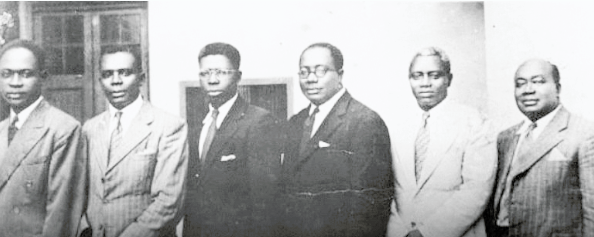
The list of men and women who fought tooth and nail to secure for Ghana the title of independence is not exhaustive. They included market women, ordinary people and businessmen like Paa Grant.
However, when the independence of Ghana is mentioned, six outstanding men come into sharp focus as having held the baton and took the freedom of Ghana to the finish line but others too in small or significant ways were part of the “freedom fight” and indeed deserve celebration.
The 4th of August; Founder’s Day since 2019 has become a day designated for such august memorial for our forefathers, especially the Big Six who were also the founding members of the first political party, the United Gold Coast Convention (UGCC) in Ghana, then Gold Coast; namely Ebenezer Ako-Adjei –founding member of UGCC, Edward Akufo-Addo – founding member of the UGCC and subsequently Chief Justice of Ghana and President of Ghana, Joseph Boakye Danquah – founding member of the UGCC, Kwame Nkrumah – Prime Minister of Ghana and first president of Ghana, Emmanuel Obetsebi-Lamptey, founding member of the UGCC and William Ofori Atta – founding member of the UGCC.
In a recent lecture to commemorate the day in Accra, the Speaker of Parliament Professor Aaron Mike Oquaye noted that, “A recap of the chronology of events showed that before the arrival of Nkrumah, some gallant men were taking steps to lead Ghana to independence. If something had not been founded, what was Nkrumah brought down for? If there was nothing, what was he to come and help to consolidate?”
According to him, “Nkrumah did not alone compose the classical sonata and constitute the orchestra which sang Ghana’s clarion call to independence in sweet melody, all in two months! The fathers of the nation were there already. They included Paa Grant, J.B. Danquah, Akufo-Addo, Ako Adjei, Obetsebi Lamptey and William Ofori-Atta.”
There has been a debate however, over whether or not Nkrumah should be credited with founding Ghana or not. The debate, is mostly between the Nkrumahist and the Danquah-Busia political traditions.
The debate stems from the March 2019 public holiday amendments HYPERLINK “https://en.m.wikipedia.org/wiki/Bill_(law)” bill which was proposed by the President, Nana Addo Danquah Akufo-Addo and subsequently passed into HYPERLINK “https://en.wikipedia.org/wiki/Law” \o “Law” law that 4th August be designated as Founders’ Day to recognise all other contributors in the independence struggle whilst 21st September (previously Founder’s Day) as Kwame Nkrumah Memorial Day. The Founders’ Day is reserved to celebrate the people( HYPERLINK “https://en.wikipedia.org/wiki/The_Big_Six_(Ghana)” \o “The Big Six (Ghana)” The Big Six) who led Ghana to independence whilst Kwame Nkrumah Memorial Day is reserved for Osagyefo Dr Kwame Nkrumah, the leader of the movement towards independence of Ghana to commemorate his birthday, the bill explained.
By Spectator Reporter


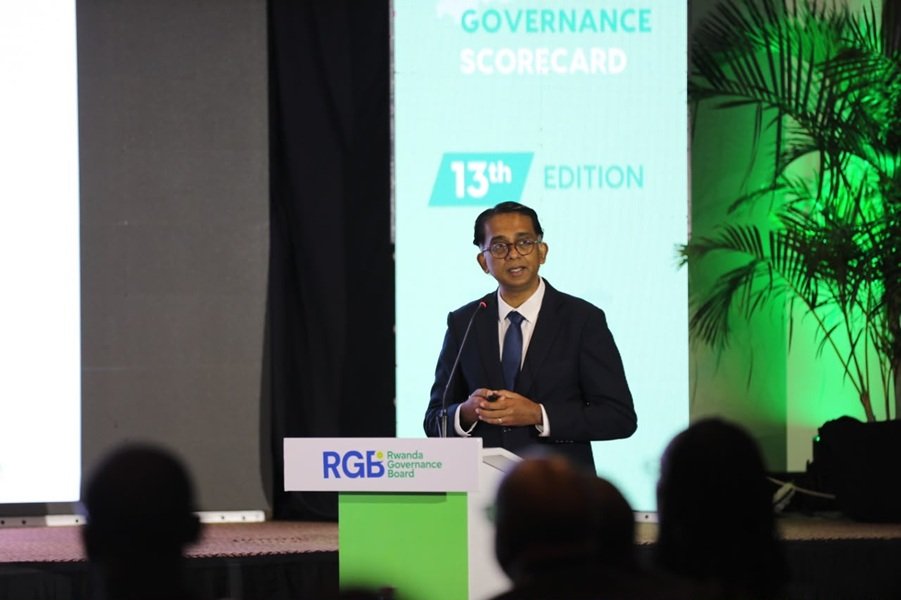
Ghana has made progress in the way it manages public resources and delivers services to citizens, with improvements in financial management and access to education and healthcare helping to raise its governance score.
The country ranked 92nd out of 133 countries worldwide and ninth in Africa in the 2026 Chandler Good Government Index (CGGI), according to a report released last Thursday.
The improvement offers a positive sign for Ghana, although the country still faces challenges in areas such as leadership, long-term planning and creating an attractive environment for businesses.
The index showed that Ghana’s performance in Financial Stewardship, which measures how governments manage public finances and maintain fiscal sustainability, almost doubled this year after declining between 2021 and 2024.
Its score in Helping People Rise, which looks at how government policies and services improve people’s lives, also increased for the second consecutive year, reflecting progress in areas including education and healthcare.
However, the country recorded declines in Leadership and Foresight and Attractive Marketplace, indicating areas where further attention may be needed.
Ghana’s performance comes at a time when several African countries are also making progress in governance. The report found that 71 per cent of African countries assessed in both 2025 and 2026 improved their overall scores.
Dinesh Naidu, Director of Knowledge at Chandler Governance Group, said the continent’s strongest gains were in financial management, followed by efforts to improve citizens’ lives.
He said the progress suggested that improvements in government capabilities were beginning to translate into tangible benefits, including better access to education and healthcare.
However, Africa continues to face significant challenges. Although average scores improved in six of the index’s seven pillars over the past year, the region’s overall average remains below its 2021 level.
The report also found that 23 of the 35 African countries assessed ranked outside the global top 100, while none made it into the top 50.
Globally, 61 per cent of the 120 countries assessed in both 2025 and 2026 recorded higher scores, representing the highest annual share of countries improving since the index began in 2021.
The Chandler Good Government Index assesses government capabilities and effectiveness across 133 countries, representing 94 per cent of the world’s population.
It uses 35 indicators grouped under seven pillars to help governments identify their strengths, recognise gaps and learn from the experiences of other countries.
Mr Naidu said rankings should not be treated as an end in themselves but as a guide to identifying areas that need improvement.
He said sustained progress depended on strong institutions, responsible use of public resources and the ability of governments to turn policies into meaningful outcomes for citizens.
For Ghana, the latest results point to progress in some important areas, while highlighting the need to strengthen other aspects of governance to ensure that improvements are felt in the daily lives of ordinary people.
By Esinam Jemima Kuatsinu
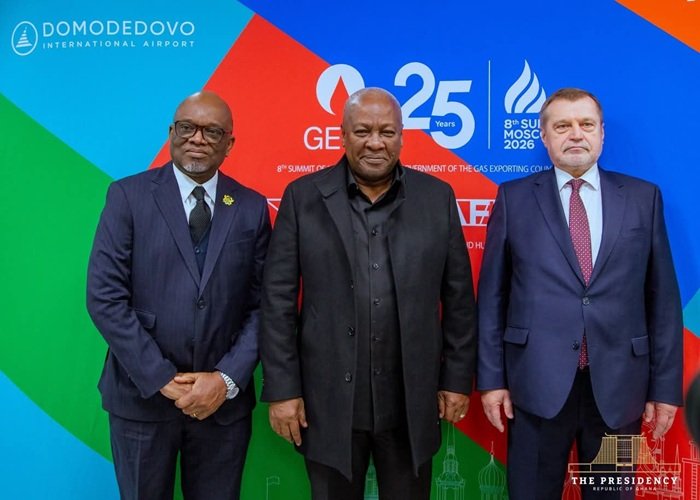
President John Mahama has arrived in Moscow, Russia, from Ethiopia to participate in the 3rd Russia-Africa Summit.
The summit is being hosted by Russian President Vladimir Putin.
During the visit, President Mahama will join fellow African leaders at the Economic and Humanitarian Forum and summit plenary sessions.
He is also scheduled to hold high-level bilateral talks with President Putin and attend a Kente exhibition organised by the Russia-Ghana Parliamentary Forum.
As part of the visit, the President will receive honorary doctorate degrees from the Russian University of Transport and the Peoples’ Friendship University of Russia.
He will also engage Russian businesses and state institutions to advance bilateral cooperation between Ghana and Russia.
By Edem Mensah-Tsotorme