Sports
Getting ready for domestic football

- /home/u249204778/domains/spectator.com.gh/public_html/wp-content/plugins/mvp-social-buttons/mvp-social-buttons.php on line 27
https://spectator.com.gh/wp-content/uploads/2020/11/Football.jpg&description=Getting ready for domestic football', 'pinterestShare', 'width=750,height=350'); return false;" title="Pin This Post">
- Share
- Tweet /home/u249204778/domains/spectator.com.gh/public_html/wp-content/plugins/mvp-social-buttons/mvp-social-buttons.php on line 72
https://spectator.com.gh/wp-content/uploads/2020/11/Football.jpg&description=Getting ready for domestic football', 'pinterestShare', 'width=750,height=350'); return false;" title="Pin This Post">
There is something in the air. There is football in the skies. It is domestic football.
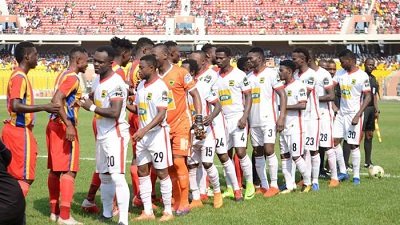
In the next few days, starting specifically on November 13, next week, local football will gush out from the feet of more than 180 players across the fields – all-too ready to feed an intensely starved local football contingent.
As you may have been aware, the government placed a ban on domestic football in March, this year, in the heat of the COVID-19 fatal outbreak – ultimately leading to the cancellation of the 2019/2020 season.
Ghanaians were utterly disappointed that their football had been frozen, but they had absolutely no choice. There was only a Hobson’s choice.
As a matter of fact, the Premier League was at the Match-Week 15 stage when it was suspended. All other national football competitions, including the men’s FA Cup, women’s Premier League and FA Cup competitions, second tier and third tier championships all similarly came to a halt.
Heartily, after seven prickly months in the ‘Covid-doldrums,’ the government on September 20 lifted the ban on contact sports including football, paving way for return of the Ghana Premier League (GPL).
As a safety measure, we were told fans were not going to be allowed to attend training sessions of their pet clubs. So far, that directive has been rudely flouted as fans have stormed club’s training grounds in their good numbers with government looking on, totally befuddled.
Per the directive, too, the stadia will be open to fans when the top flight commences, but only up to 25 per cent of a facility’s capacity. It would really be interesting to see how that order is stuck when it comes to the ‘Himalayan’ clash between sworn rivals – Asante Kotoko and Hearts of Oak.
These are issues that we ought to be profoundly concerned about as the league resumes next week; for we as a nation, cannot afford to roll back the clock of progress chalked in the fight against Covid-19. Truth is that, we are still in the woods and must not play games with the fatal epidemic that has claimed tens of thousands of lives across the world.
Having said that, it is admirable how the Ghana Football Association (GFA) has worked towards the resumption of the domestic game.
We have seen a lot of measures put in place by the FA including the COVID-19 testing of players and technical teams of Premier League clubs that started last week. Indeed, the testing of players and officials – a coalition between the GFA and the Government Covid-19 Task Force, according to the FA, is part of efforts being made to ensure that football is played in the safest possible way.
Delectably, we have also seen some refresher courses organised by the FA for the ‘Knights of the Whistle’ and workshop for Match Commissioners, venue media officers among others.
Speaking at one of its workshops, FA General Secretary, Prosper Harrison Addo, said the work of Match Commissioners was very important to the success of the competitions, hammering profusely on integrity of the game.
“Any Match Official who violates the ethical principles of the Association would be axed from the game under the “No Contact” and “Zero Tolerance for Corruption” Policies of the Association,” he said reassuringly.
That is the way to go.
Perhaps, the most alluring news for the Premier League ahead of the start was the capture of Ghana international Asamoah Gyan by Legon Cities, after signing a one-year contract. Truth is, Gyan – Africa’s top-most scorer in World Cup history, has added a lot of glamour to the premiership.
It is widely reported that he will pocket US$1million over the next four years with his annual returns standing at U$250,000. That is as attention-grabbing as motivating to the nation’s domestic football.
We cannot wait to see him in his famous No. 3 shirt!
PlainTalk With John Vigah


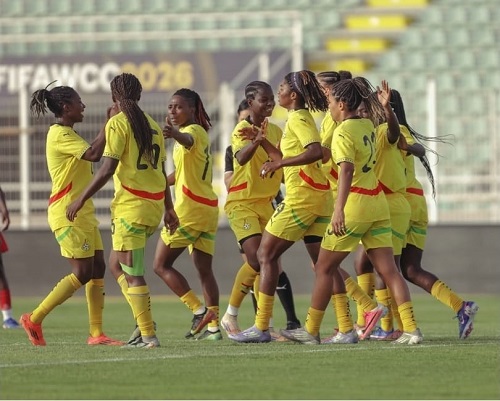
The Black Queens kick off their 2026 CAF Women’s Africa Cup of Nations journey on Wednesday, July 29, when they take on Cape Verde in their Group C opener in Morocco.
Coach Kim Lars Björkegren and his team go into the match full of confidence after weeks of intensive preparations.
The Queens held a successful pre-tournament training camp and played friendly matches to fine-tune ahead of the competition.
With morale high, Ghana’s senior women’s team will be targeting maximum points to get their campaign off to the perfect start.
The match is set for 5:00 PM GMT at the Moulay Rachid Stadium.
Football fans across Ghana will be watching closely, hoping the Queens can secure a positive result and lay the foundation for a memorable WAFCON 2026 run.
By Edem Mensah-Tsotorme
With the World Cup fever gradually dying down, attention would switch to other equally important competitions from now to the latter parts of the year.
Barely a week after the global football showpiece that saw Spain upstaged Argentina as World Champions, over 70 countries gathered in Glasgow, Scotland for the Commonwealth Games that is attracting hundreds of athletes from the Commonwealth community.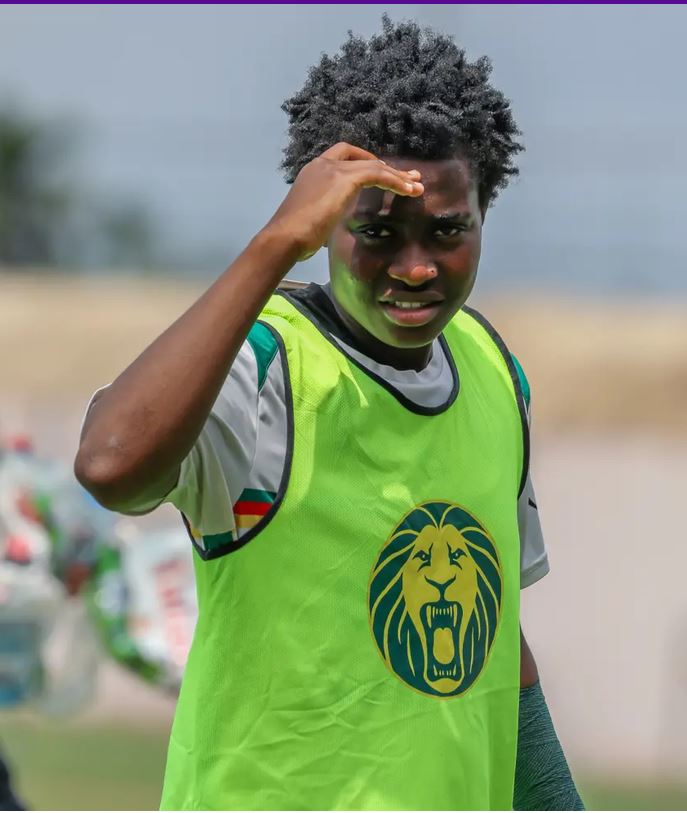
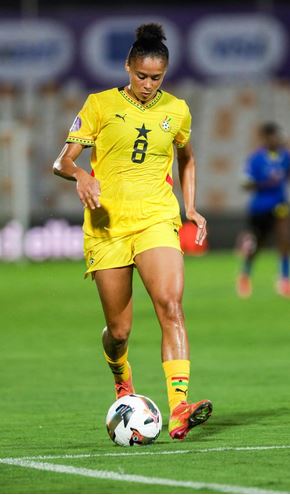
Equally, 16 top female national teams in Africa would commence competition for the bragging rights as African champions when the delayed Women’s Africa Cup of Nations 2026 kicks off in Morocco tomorrow.
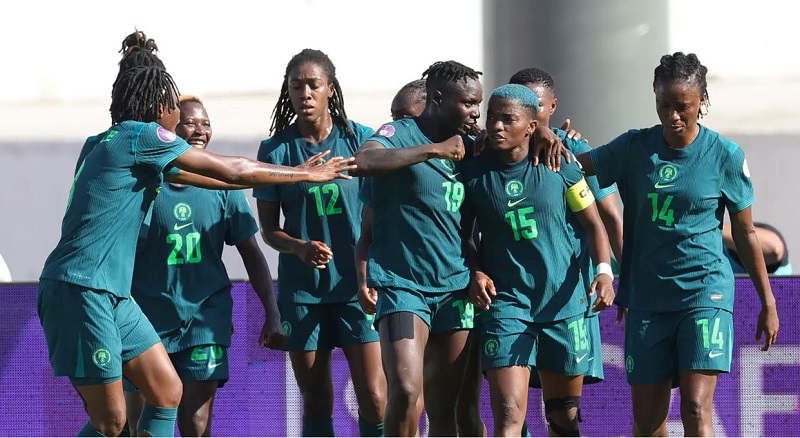
The Super Falcons of Nigeria are usually considered favourites for this showpiece, having shown the strength and character to dominate the game on the continent.
As defending champions, they come in strongly again, expected to face a more difficult sides like the Black Queens of Ghana, Zambia and Morocco who have been touted as possible teams to cause an upset.
Of the 16 qualified teams, nine featured at the previous edition held in 2024.
Botswana, the Democratic Republic of the Congo and Tunisia, who qualified in 2024, missed out this time, while Cape Verde and Malawi will make their first appearance in the tournament.
Today, The Spectator Sports takes a look at some of the teams expected to rub shoulders with the big guns in the female game.
Cameroon
After missing the previous edition, Cameroon returns to the CAF Women’s Africa Cup of Nations Morocco 2026 determined to re-establish themselves among Africa’s elite.
The Indomitable Lionesses, one of the continent’s most successful women’s national teams, secured a place at the expanded 16-team tournament after receiving a second chance through CAF’s revised qualification system.
Now, under newly appointed head coach Valentine Nguele and inspired by emerging midfield star Naomi Eto, Cameroon will be aiming not only to reclaim their place among Africa’s leading nations but also to secure qualification for the 2027 FIFA Women’s World Cup.
Cameroon boasts one of the richest histories in the Women’s Africa Cup of Nations.
The Indomitable Lionesses have reached the final on three occasions—in 2004, 2014 and 2016—but are still searching for their first continental title.
Their consistency has also been reflected in three third-place finishes in 2002, 2012 and 2018, giving Cameroon six podium finishes overall.
Only Nigeria and South Africa have accumulated more top-three finishes in the history of the competition, underlining Cameroon’s long-standing status among Africa’s leading women’s football nations.
Zambia
After finishing third in 2022 and falling short of expectations at the 2024 edition, Zambia head to the TotalEnergies CAF Women’s Africa Cup of Nations Morocco 2026 determined to establish themselves among Africa’s elite.
With one of the continent’s most feared attacking units and new head coach Nora Häuptle at the helm, the Copper Queens will be aiming to lift the Women’s AFCON trophy for the first time.
Barbra Banda remains one of the biggest names in African women’s football.
The Orlando Pride striker has established herself among the leading forwards in the National Women’s Soccer League (NWSL) and returns to international competition after recovering from a hip injury suffered late last year.
Powerful, direct and clinical in front of goal, Banda will once again spearhead Zambia’s attack as the Copper Queens pursue their first continental title.
Burkina Faso
Burkina Faso (Stallions Ladies) return to the competition determined to make history after missing the 2024 edition. Encouraged by an impressive qualifying campaign, the Stallions Ladies head to Morocco aiming to progress beyond the group stage for the first time.
Burkina Faso secured qualification with convincing victories over Burundi and Togo.
The Stallions Ladies defeated Burundi 5-1 on aggregate, following a commanding 4-1 first-leg victory before completing the job with a 1-0 win in the return fixture.
They carried that momentum into the final qualifying round against Togo, winning 2-0 in the first leg before sealing qualification with another 1-0 victory to complete a 3-0 aggregate success.
Nigeria
Reigning champions Nigerias head to Morocco 2026 looking to extend their remarkable record in the competition. With 10 continental titles to their name, the Super Falcons remain the most successful team in the tournament’s history..
Led by Captain Rasheedat Ajibade and head coach Justine Madugu, Nigeria once again begin the competition among the favourites.
Nigeria secured qualification to Morocco 2026 by defeating Benin 3-1 on aggregate in the second round of qualifying.
Having received a bye in the opening round, the Super Falcons took control of the tie with a 2-0 away victory in Cotonou.
They completed the job in Abeokuta, drawing 1-1 in the second leg after Ashleigh Plumptre opened the scoring before Benin equalised through Yasmine Djibril.
The result ensured another successful qualification campaign for the reigning African champions.
Cote d’Ivoire
After a 12-year absence from Africa’s biggest women’s football competition, Côte d’Ivoire returns to the TotalEnergies CAF Women’s Africa Cup of Nations aiming to re-establish themselves among the continent’s leading nations.
The Elephants secured an unexpected route back to the finals following the expansion of the tournament from 12 to 16 teams.
Now guided by experienced French coach Reynald Pedros and inspired by prolific striker Habibou Ouedraogo, Côte d’Ivoire believe they have the talent to challenge Africa’s established powers once again.
The Elephants were knocked out in the final qualifying round after a fiercely contested tie against Senegal. Neither side managed to score across the two legs, with Senegal eventually prevailing 5-4 on penalties to deny the Ivorians automatic qualification.
Following the expansion of the Women’s AFCON from 12 to 16 participating teams, CAF allocated the additional places based on the FIFA Women’s World Ranking.
⚽ Group A: Morocco, Algeria, Senegal, Kenya,
⚽ Group B: South Africa, Ivory Coast, Burkina Faso, Tanzania
⚽ Group C: Nigeria, Zambia, Egypt, Malawi
⚽ Group D: Ghana, Cameroon, Mali, Cape Verde
By Andrew Nortey