News
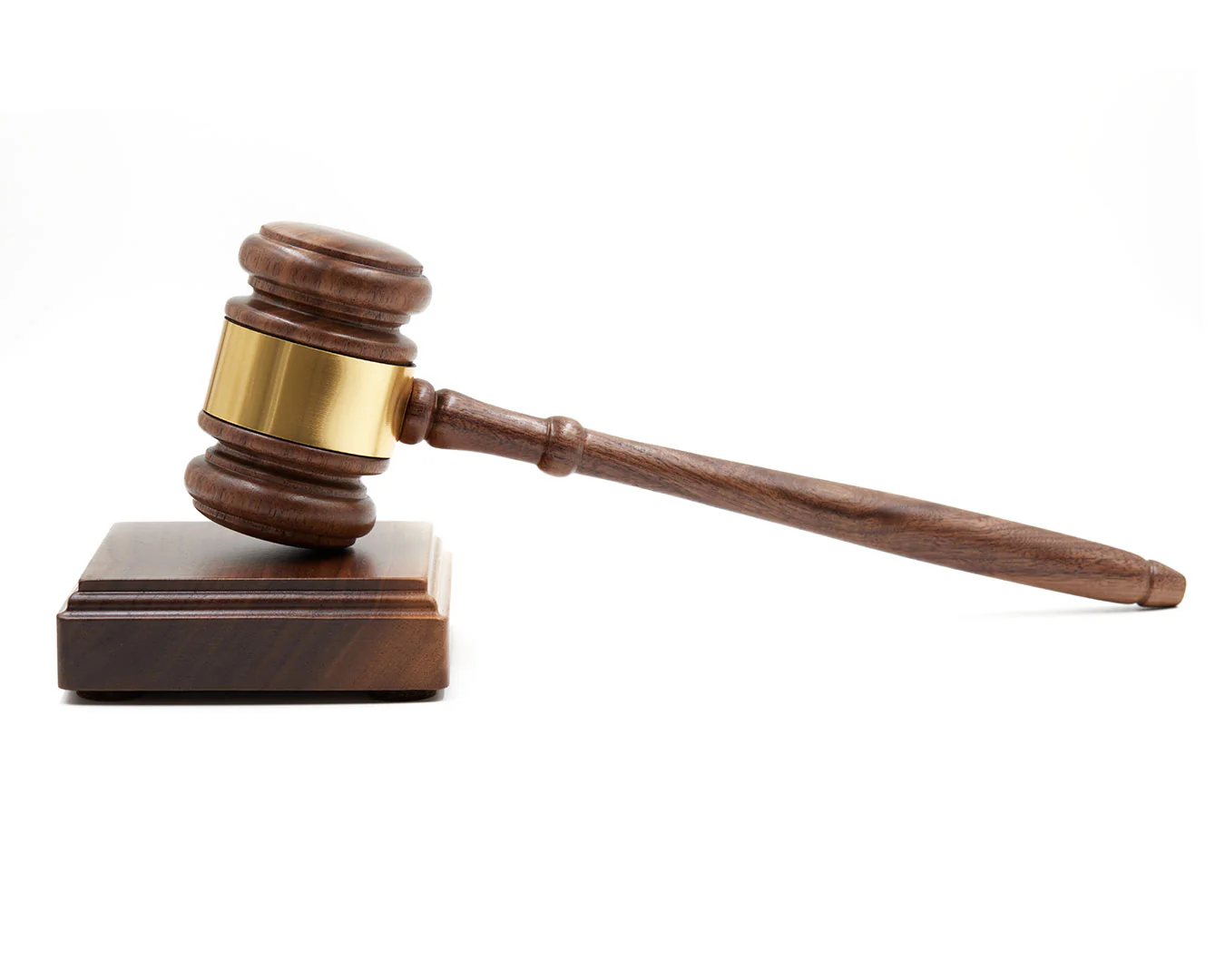
Found at last …Man 63 jailed for bread tricycle theft

- /home/u249204778/domains/spectator.com.gh/public_html/wp-content/plugins/mvp-social-buttons/mvp-social-buttons.php on line 27
https://spectator.com.gh/wp-content/uploads/2025/09/A-gavel-1000x600.webp&description=Found at last …Man 63 jailed for bread tricycle theft', 'pinterestShare', 'width=750,height=350'); return false;" title="Pin This Post">
- Share
- Tweet /home/u249204778/domains/spectator.com.gh/public_html/wp-content/plugins/mvp-social-buttons/mvp-social-buttons.php on line 72
https://spectator.com.gh/wp-content/uploads/2025/09/A-gavel-1000x600.webp&description=Found at last …Man 63 jailed for bread tricycle theft', 'pinterestShare', 'width=750,height=350'); return false;" title="Pin This Post">
What started as a simple act of assistance on a roadside turned into an elaborate theft that has hunted a Kumasi bread baker for months and ultimately land a 63-year-old man behind bars.
Oduro Zakaria, bread baker, never imagined that accepting help from a stranger would cost him his livelihood. On that February morning in 2024, the hardworking baker had loaded his tricycle with 114 freshly baked loaves worth Gh₵1, 680, ready for his usual delivery to customers at the Adehyeman lorry station.
As Zakaria navigated the busy Kumasi streets, his unregistered tricycle worth GH¢35,000, suddenly broke down. In that moment of vulnerability, what seemed like divine intervention appeared in the form of Adamu Alhassan.
“I’m a station master,” the 63-year-old trader assured the stranded baker. “Let me help you.”
Together, the two men pushed the heavy tricycle loaded with bread to the Kejetia MTN roundabout. Zakaria, grateful for the assistance, felt comfortable leaving his precious cargo in the care of his newfound helper while he searched for a mechanic.
“I thought I had met an angel,” Zakaria told friends. An hour later, when he returned with a mechanic, both his ‘angel’ and his entire livelihood had vanished into the bustling crowds of Kumasi.
The crushing realisation hit Zakaria like a thunderbolt. His helper was neither a station master nor even a worker at the station. He had been expertly conned by a man who preyed on his moment of need.
For months, Zakaria searched the streets of Kumasi, hoping against hope to spot either his tricycle or the man that stole his bread and tricycle.
On August 28, 2025, one and half years afterwards, fortune smiled on the baker. A witness spotted Alhassan at the very station where he had posed as an employee, and quickly alerted Zakaria.
Alhassan was arrested and handed over to the Ashanti Regional Anti-Armed Robbery Unit with his caution statement taken.
He confessed to selling Zakaria’s GH¢35,000 tricycle to a scrap dealer in Bremang for a measly GH¢700 – less than 2 per cent of its actual value.
The 114 loaves of bread? He had distributed them to random passers-by, perhaps in a twisted attempt to play the generous benefactor with stolen goods.
On September 12, the Kwadaso Circuit Court, presided over by Mr Jephthah Appau, sentenced Alhassan to five years imprisonment after he pleaded guilty to theft.
Police Chief Inspector David Opoku Kwabi, presenting the facts, painted a picture of calculated deception that exploited human kindness and trust.
For Zakaria, the sentence brings some closure, but it cannot restore the months of hardship he endured or the innocence lost in trusting a stranger’s offer of help.
Alhassan’s five-year sentence reflects not just the monetary value of what he stole, but the breach of trust that makes communities question the safety of helping strangers – or accepting help from them, an opinion leader indicated.
He added: “Sometimes, the most devastating crimes are not committed with weapons or violence, but with a smile and an offer to help.”
From Kingsley E. Hope, Kumasi






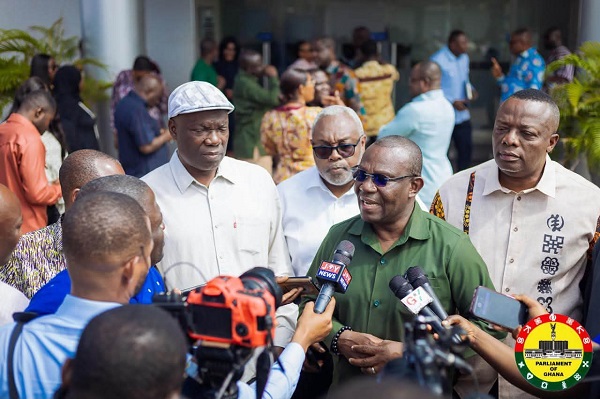
The Parliamentary Select Committee on Energy has appealed to the Ministry of Finance to release GH¢5.6 million to the Petroleum Commission to enable it to establish and operate a world-class data centre.
According to the Committee, access to the funds will strengthen the Commission’s capacity to manage critical upstream petroleum data and improve its operations.
Speaking during the appeal, Chairman of the Committee, Emmanuel Kwasi Bedzrah, said the move was crucial to efforts to revitalise Ghana’s upstream petroleum industry and increase oil production.
He noted that although investment and hydrocarbon production had declined in recent years, Parliament’s approval of an extension of the petroleum agreement to 2030 had attracted additional funding and contributed to an increase in production from about 80,000 to 120,000 barrels per day.
Meanwhile, concerns have been raised over repeated budget allocations for oil exploration in the Voltaian Basin.
Mr. Bedzrah stressed that funds approved for exploration must produce tangible results, adding that the Committee would require clear evidence of progress before supporting future budget allocations for the programme.
The appeal was made during a working visit to the Petroleum Commission as part of the Committee’s oversight activities to assess its operations and management procedures.
During the engagement, the Chief Executive Officer of the Petroleum Commission, Emeafa Hardcastle, took the Committee through the Commission’s working procedures and mandate, which includes regulating, managing and coordinating upstream petroleum activities.
She disclosed that since assuming office in 2025, government had pursued measures to reverse the decline in crude oil production, sustain output and reposition Ghana as an attractive destination for investment in Africa’s increasingly competitive petroleum sector.
In addition, she said government had secured fresh commitments of about US$35 billion to help revitalise the sector.
As part of the oversight exercise, the Committee is expected to conclude its monitoring visit with engagements at the National Petroleum Authority (NPA) and the Ghana Oil Company Limited (GOIL).
By Edem Mensah-Tsotorme
News
“No civilisation deserves to be annihilated” – Mahama calls for dialogue on global conflicts at UNGA 81
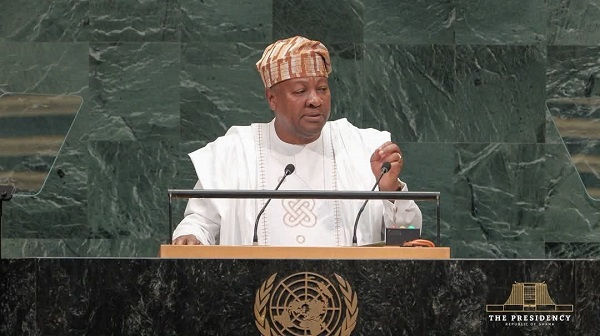
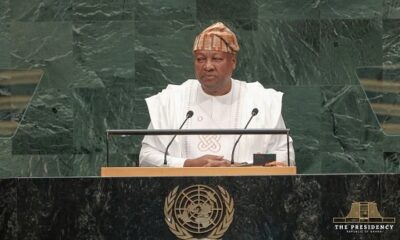
President John Dramani Mahama has called for solidarity and dialogue in resolving global conflicts, insisting that no civilisation deserves to be wiped out.
“No human civilisation deserves to be annihilated, certainly not a member state of the United Nations,” President Mahama stated in his address at the 81st United Nations General Assembly in New York.
He called for solidarity with nations facing terrorism, especially the Alliance of Sahel States (AES), and for a uniform approach to conflicts in Europe, the Middle East and Africa.
On the Middle East, the President called for a return to negotiations, saying “The current Middle East crisis is having a deleterious effect on the world economy.”
“I believe that dialogue can resolve even the most intractable of problems,” he added.
By Edem Mensah-Tsotorme