News
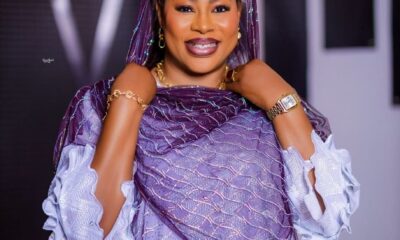
Elizabeth Amoaa, the changemaker in women’s health


- /home/u249204778/domains/spectator.com.gh/public_html/wp-content/plugins/mvp-social-buttons/mvp-social-buttons.php on line 27
https://spectator.com.gh/wp-content/uploads/2025/07/1001722287-1000x600.jpg&description= Elizabeth Amoaa, the changemaker in women’s health', 'pinterestShare', 'width=750,height=350'); return false;" title="Pin This Post">
- Share
- Tweet /home/u249204778/domains/spectator.com.gh/public_html/wp-content/plugins/mvp-social-buttons/mvp-social-buttons.php on line 72
https://spectator.com.gh/wp-content/uploads/2025/07/1001722287-1000x600.jpg&description= Elizabeth Amoaa, the changemaker in women’s health', 'pinterestShare', 'width=750,height=350'); return false;" title="Pin This Post">
In the global conversation around health equity, few voices resonate as powerfully as that of Elizabeth Amoaa.
Her work transcends advocacy; it is a live commitment to ensuring that women and girls around the world are not left behind when it comes to reproductive health and education.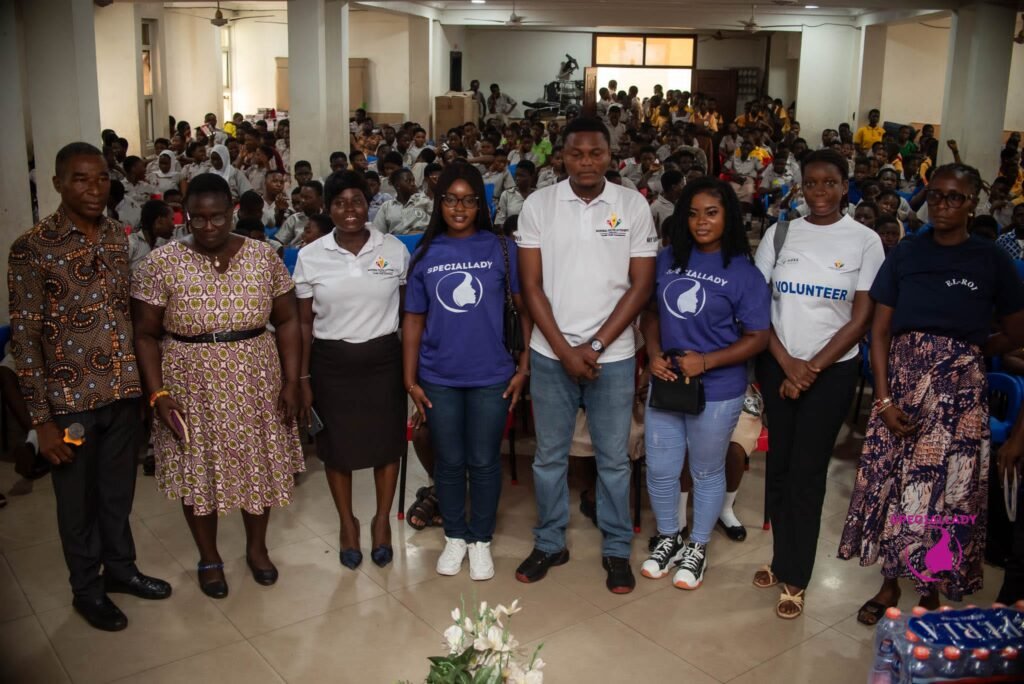
Elizabeth’s journey began not in a boardroom or a conference hall, but within the deeply personal landscape of her own medical challenges.
Living with uterus didelphys, a rare condition where a woman is born with two wombs, sometimes two cervixes and rarely two vagina canals, Elizabeth faced years of medical misunderstanding, misdiagnosis and silence.
Her eventual diagnoses of endometriosis and fibroids came only in her thirties, after years of suffering in silence.

Rather than retreat into bitterness or despair, Elizabeth found clarity in purpose.
That purpose would grow into Special Lady Awareness in Ghana and Special Lady Awareness Global Charity in UK, an initiative she launched to break long-held taboos surrounding gynaecological health.
With chapters in both the UK and Ghana, her organisations have become a lifeline for thousands of women and girls, offering education, advocacy and practical support in spaces where reproductive health is still whispered about, if acknowledged at all.
Through health forums and medical partnerships, Elizabeth has taken a once-private struggle and transformed it into a movement.
In the UK, she collaborates with civic leaders and medical professionals to host community education sessions, shining a light on complex conditions like endometriosis, fibroids etc.
In Ghana, her impact is felt directly through the donation of medical supplies, menstrual hygiene products and health workshops that reach deep into underserved communities.
Her leadership goes beyond logistics. It’s in the storytelling, the courage to write books like The Unspoken Identity – The Woman with Two Vaginas, now used as an educational tool in schools across continents.
It’s in her policy engagement, as she contributes to research projects like the UK’s Endo1000 project initiative and in her service roles, including past president of the Rotary Global Hub, now direct membership of Rotary Great Britain and Ireland.
But above all, Elizabeth’s influence lies in her refusal to let any woman feel alone in her health journey.
Her story reminds us that healthcare justice is not just about clinical access but it’s about dignity, representation and truth.
By confronting cultural stigma and empowering others to speak up, Elizabeth has shifted narratives and opened doors that had long been closed to countless women.
Her work invites us all to consider: What if reproductive health education were truly inclusive? What if access to basic supplies like sanitary pads didn’t depend on social background? What if every girl grew up understanding her body without fear or shame?
Elizabeth Amoaa is not just asking these questions rather, she’s building the answers.
Every voice counts. Every step forward matters. And in the movement that Elizabeth leads, there is space for everyone willing to stand for change.
Let us stand together and create a world where reproductive health is not hidden in whispers, but embraced with compassion, knowledge and support.
A world where women are seen, heard and healed.




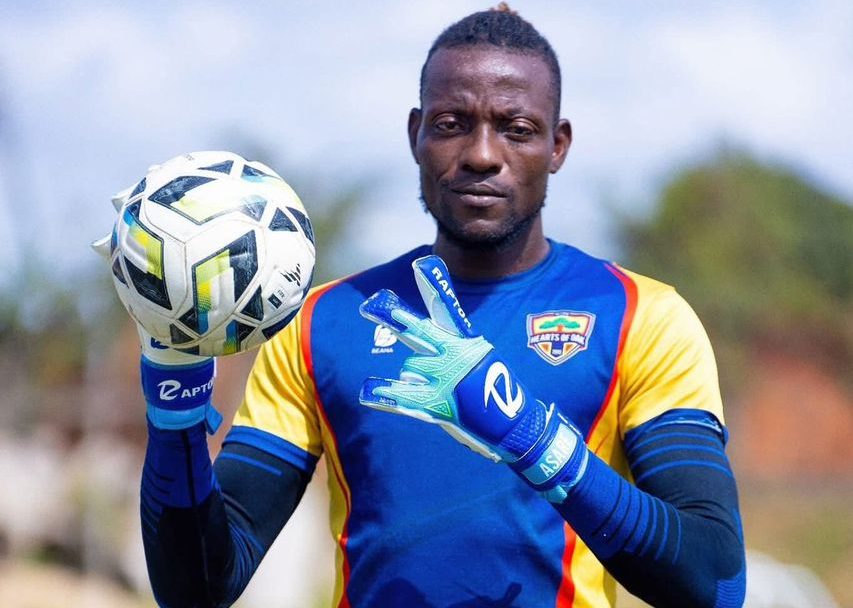
In other jurisdictions, the commencement of a new football season was one soccer fans would party about.
Having endured about a three-month period without action, fans become anxious about what the new season brings and how their respective teams would perform.
But that is not the case in Ghana, especially where the current Ghana Premier League (GPL) football season is expected to get underway today.
Unlike other places where fans would be fantasising and visualising about the new players and what they bring on board, Ghanaian fans have been occupied with discussions about the present state of infrastructure.
Obviously, the game thrives when stadia appear in good condition. When the pitches are in perfect shapes, it enhances play and brings out the best from the players.
Sadly, the state of the pitches in the country have left many questioning the preparedness for the season that also coincides with the start of AFCON qualifiers.
Currently, the pitch at the Accra Sports Stadium is closed for Premier League matches in readiness for the qualifiers.
Alternative ones like the University of Ghana Stadium is also not in the best of shape.
The Baba Yara Stadium in Kumasi is also a concern despite hosting the Democracy Cup. As a result, teams to be affected in the southern and northern sectors would turn their attention to the Abramkese and UG stadia, a situation that would take a toll on the surfaces.
The situation, therefore, raises questions over the country’s direction regarding the provision of sports infrastructure.
Apart from the Borteyman Sports Complex, which was constructed for the Africa Games, none of the facilities scattered across the country can be said to be in good shape to host local games; not to talk about high profile competitions.
This should be a wakeup call on the government to start initiating processes to ensure modern infrastructure were erected to put Ghana in a good position to host games without the unwarranted scrutiny of CAF.
This would come at a huge cost to the taxpayer but when the business aspect of that expenditure in considered, it should be a worthy outlay.
But the infrastructure challenges notwithstanding, the competition will kick start at Tema where Vision FC engages Young Apostles FC.
The Hearts of Oak versus Berekum Chelsea clash will lead tomorrow’s games pack that also sees debutants Debibi United and Port City FC engaged in battles against Asante Kotoko and FC Ashantigold, respectively.
In other games, Basake Holy Stars will welcome Swedru All Blacks; FC Samartex against Karela United; Heart of Lions versus Aduana FC and Bechem United against Goldstars.
Dreams FC will face Medeama SC at the Tuba astro turf on Monday.
By Andrew Nortey
SKIP THE QUEUE, TAP THE NEWS
You can now read the Ghanaian Times and The Spectator newspapers from the comfort of your device via TimesNewsPlus.
Join our WhatsApp Channel: https://whatsapp.com/channel/0029VbBElzjInlqHhl1aTU27
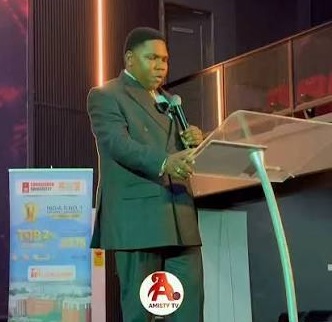
The 2026 Idea Challenge Pitch and media launch was held last Saturday at the Pentecost University in Accra.
It brought together innovators, entrepreneurs and stakeholders to promote creative ideas and solutions aimed at addressing societal challenges.
The initiative, organised by the Visionary Organisation Development and Entrepreneurial Club (VODEC) and National Emerging Leaders Economic Forum (NELEF) provided a platform for participants to showcase their ideas and highlight how innovation and creativity could be transformed into practical solutions.
The programme also sought to encourage young people to develop ideas that could contribute to national development and create opportunities for entrepreneurship.
Held on the theme: ‘building Africa’s future, emerging leaders driving inclusive growth and regional transformation,’ the event sought to serve as a strategic platform to transition youth talent from mere concepts into investable enterprises.
During the pitch session, shortlisted entrepreneurs presented viable business ideas which spanned critical sectors, including climate-smart agribusiness, sustainable waste management, digital technology, and assistive tech for persons with disabilities.
A member of the judging panel, Mr Blessed Amonoo, an Investment Analyst at the Ghana Amalgamated Trust Plc., praised the technical depth of the presentations.
“We are looking for scalability, market readiness, and projects that directly answer local problems,“ Mr Amonoo noted during the evaluation.
“The level of innovation displayed here proves that African youth possesses the answers to the continent’s economic riddles, provided they receive the right structural refinement.”
Finalists selected from this rigorous process will be officially announced and paired with corporate mentors at the flagship forum in September.
Speaking at the event, the Founder and Chief Executive of VODEC Africa, Mr. Daniel Asomani, urged African governments and financial institutions to systematically secure capital for youth-led startups.
Mr Asomani emphasised that Africa’s persistent brain drain can only be reversed if young minds find fertile ground to scale their enterprises locally.
“Our brilliant minds are leaving the shores of Africa not because they want to, but because the local ecosystem suffocates their dreams.”
“The Idea Challenge is our contribution to keeping this talent home but VODEC cannot do it alone. We need policy interventions, tax incentives for startups, and deliberate venture funding to turn these ideas into multi-million-dollarcorporations,” Mr Asomani stated.
By Desmond Aidoo
SKIP THE QUEUE, TAP THE NEWS
You can now read the Ghanaian Times and The Spectator newspapers from the comfort of your device via TimesNewsPlus.
Join our WhatsApp Channel: https://whatsapp.com/channel/0029VbBElzjInlqHhl1aTU27