News
ECONOMIC IMPACT OF COMMERCIAL MOTOR TRICYCLES IN OUR CITIES


Ordinarily, an attempt to analyse economic impact of any form of activity on a community would require that such an activity should be subjected to academic and scientific data analysis. However, a cursory look at such activities could also give one a fair and acceptable idea as to how those activities impact on the economic lives of the people in the community.
In recent times, the activities of operators of motor tricycles, popularly called “Pragia” or “Mahama can do”, for commercial purposes have come into sharp focus. Their operations have been hailed by many Ghanaians for various reasons. However, some other people in the transport sector have also sharply criticized them for some other reasons.
Until recently, the use of the tricycle was common in the northern part of the country. Indeed, the roads in the northern cities and towns are usually covered by swarms of motor bikes of all kind and sizes. Sometimes, the scene of several of them moving together in the same direction is worth mentioning. The interesting bit is where women are sometimes seen rubbing shoulders with the men, thereby exhibiting their riding skills to the admiration of many observers.
The common “Pragia” is predominantly coloured yellow (though some are in other colours such as red, blue, white and green); and apart from the rider (whom some patrons of the tricycle call ‘the driver’) the tricycle takes two or three other passengers. In fact, there are also some that have been slightly elongated in size such that they can take up to five persons.
Most patrons of these commercial tricycles find them very convenient to get onto and alight at any point. Not only that, they also pay a little less than what they would have paid for a taxi cab, Uber or trotro. Obviously, with that kind of engine, the fuel consumption so low, compared to a taxi cab, Uber or trotro. A major advantage “Pragia” has over the other internally operated commercial vehicles is that, due to its relatively small size, it can maneuver and go to every limited space and corner where a taxi cab, Uber or trotro cannot.
It is worth noting that it is not only men who are involved in this commercial transport business. There are also a few women who are occasionally spotted ridding “Pragia” and doing brisk business. Undoubtedly, these have created very large employment opportunities to the young men and women who have adopted the operations of “Pragia” as their occupation. The big question that easily comes to mind is, “where would all these energetic young men and women have been if these commercial tricycles were not available?”
Today, “Pragia” can be seen everywhere in our cities. The business is booming as it is attracting more of the youth who have become bread winners for their respective families. In effect, the “Pragia” business in the informal sector has indirectly reduced the levels of youth unemployment in the country and increased fiscal redistribution in the financial space within the country’s larger economy. Certainly, operations of “Pragia’ or “Mahama can do” can be said to have a positive economic impact on the country.
However, while this could be said to be solving one major unemployment problem, it is at the same time adversely affecting another section in the same transport industry. Indeed, taxi cab drivers especially are also complaining about sharp decline in their daily incomes that is affecting sales to their car owners as a result of the operations of the “Pragia” which fares are relatively less than the taxi cabs.
It therefore did not come to many as a surprise when some taxi drivers expressed satisfaction and joy when as part of measures to fight COVID-19, it was announced in some parts of the country that operators of “Pragia” should be suspended to observe social distancing. What that meant was that a large number of the youth were going to go back into unemployment, and that certainly was going to impact negatively on the economy.
Two options were then left to the men and women in the “Pragia” business. Either ignore the announcement and go ahead with the business as usual and risk the lives of their patrons or reduce the number of persons they take at a time to observe social distancing and enforce wearing of face mask by every passenger. They chose the latter. So now, the numbers of persons a “Pragia” takes at a time is two, and in the case of the elongated ones, the maximum number at a time is three instead of five.
“Pragia” has now come to be part of the transport system in Ghana. Their services have been economic and beneficial to many of the citizenry. Just like taxi cab or Uber, “Pragia” is patronized by both the lower and the middle class of the society. Fortunately, their operations are safer and more recognized than the operations of “Okada” which are almost always having problems with the police and other law enforcement agencies.
So to conclude, perhaps we must support the operations of the “Pragia” riders to boost economic growth and also create more job opportunities for the jobless.
BY JEMIMA Y. AMEWODE
A LEVEL 300 JOURNALISM STUDENT
GHANA INSTITUTE OF JOURNALISM

The professor who spends his days exploring the intricacies of African languages found himself at the centre of a different kind of lesson on Friday, October 2, 2026. 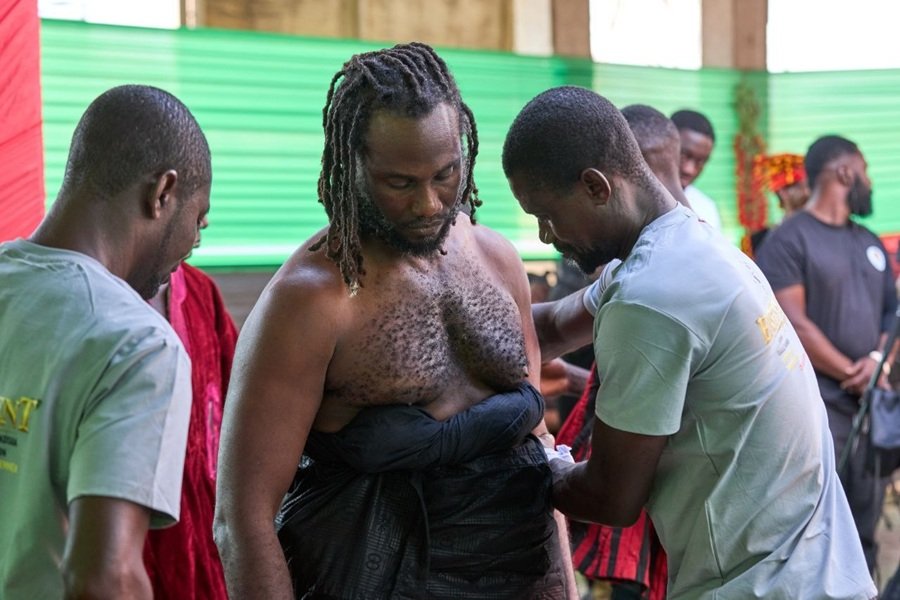
This time, there were no lecture notes, academic arguments or university classrooms. Instead, there was the weight of tradition, the rhythm of a community celebration and the solemnity of an oath at a royal palace.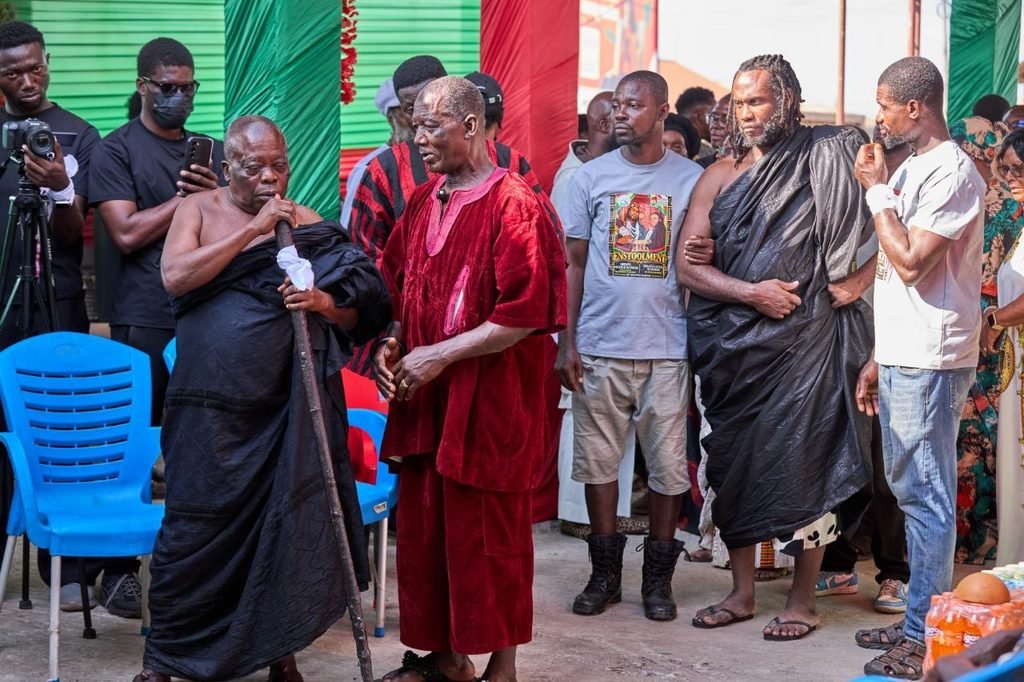
Professor Ọbádélé Kambon, a full Professor of African Linguistics at the University of Ghana, was enstooled as Apagyahene and Sunsum Ɔsahene of Akuapem Mampong in the Eastern Region in a ceremony that brought academia and traditional authority together.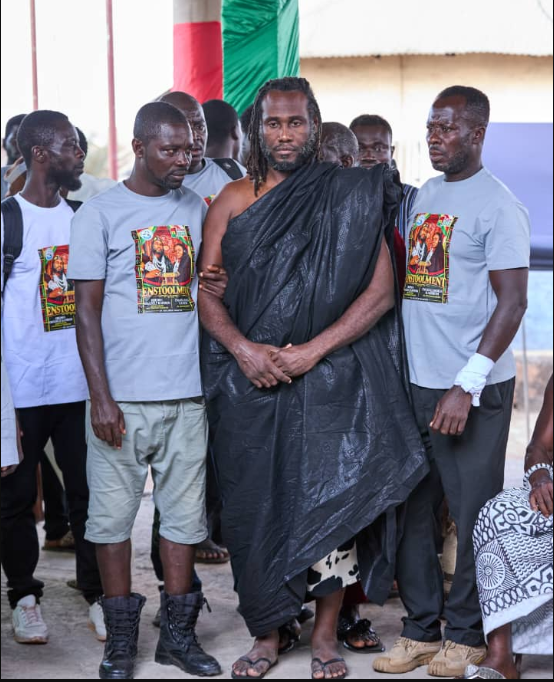
For the professor, the occasion was more than a new title. It was a moment that connected his academic interests in African languages and indigenous knowledge with the living traditions of an Akan community.
The day’s events unfolded through a series of customary observances. Kambon was first taken to the compounds of the Ɔkyeamehene and Gyasehene, where the preparations for his installation continued.
Then came the application of hyire, the white kaolin powder associated with traditional rites.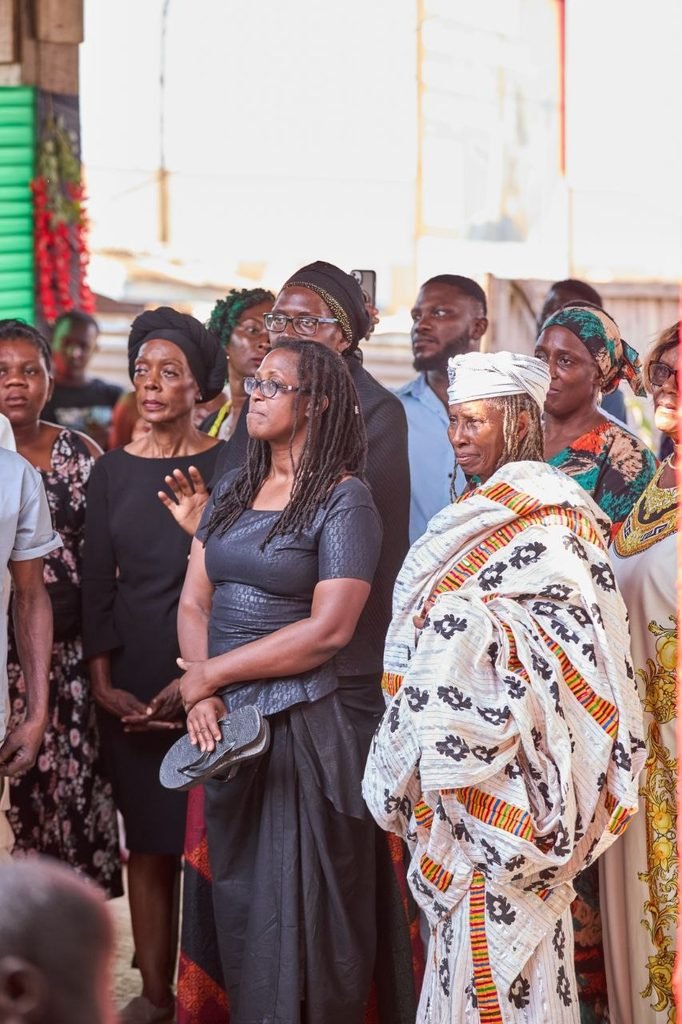
With the customary proceedings underway, the new chief was lifted onto the shoulders of celebrants and carried along the main thoroughfare of Akuapem Mampong.
The procession transformed the streets into a public stage for a ceremony rooted in the community’s traditional institutions.
There was something striking about the image, a university professor, accustomed to the measured language of academic discourse, being carried through the town in a display of traditional recognition.
Yet the celebration was not complete with the procession.
A ram was sacrificed at the Mamponghene’s compound before Kambon was taken to the palace, to swear the oath associated with his new offices.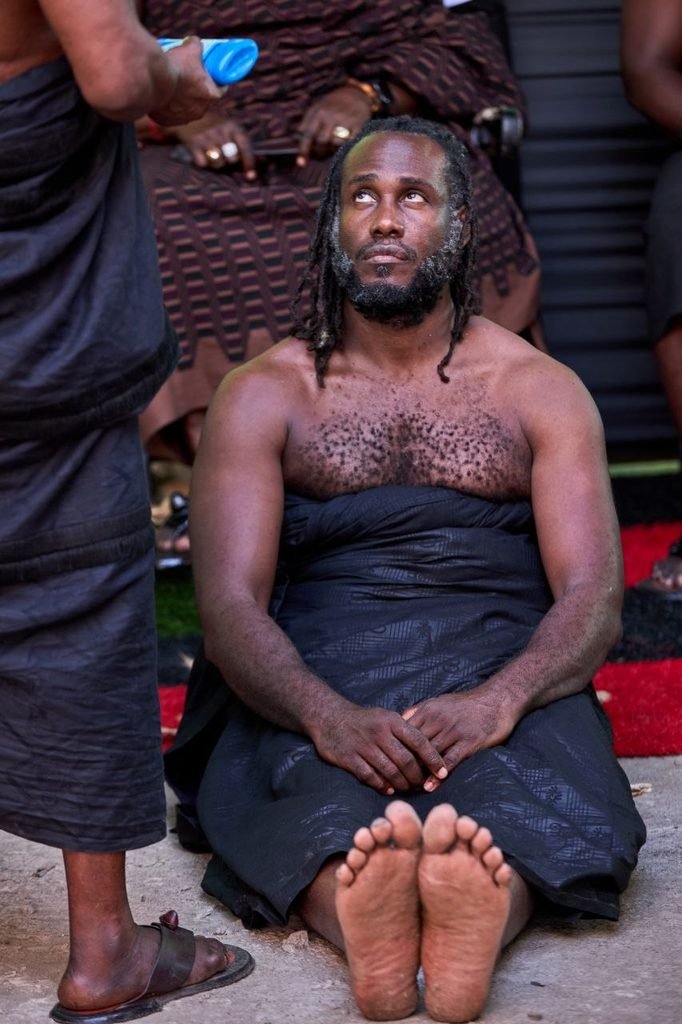

The ceremony brought him formally into his roles as Apagyahene and Sunsum Ɔsahene.
Beyond the colourful proceedings, the titles themselves carry layers of historical meaning.
Kambon in his research explores the historical connections between Apagya and Akan political and military organisation.
Accounts cited in his work linked Apagya to an asafo, or military company, while historical writing traces an Apagya stool in Asante to the reign of Opoku Ware I in the eighteenth century.
These historical associations offer a glimpse into the institutions that have shaped Akan society over generations, although they do not automatically define the precise responsibilities of the office in Akuapem Mampong.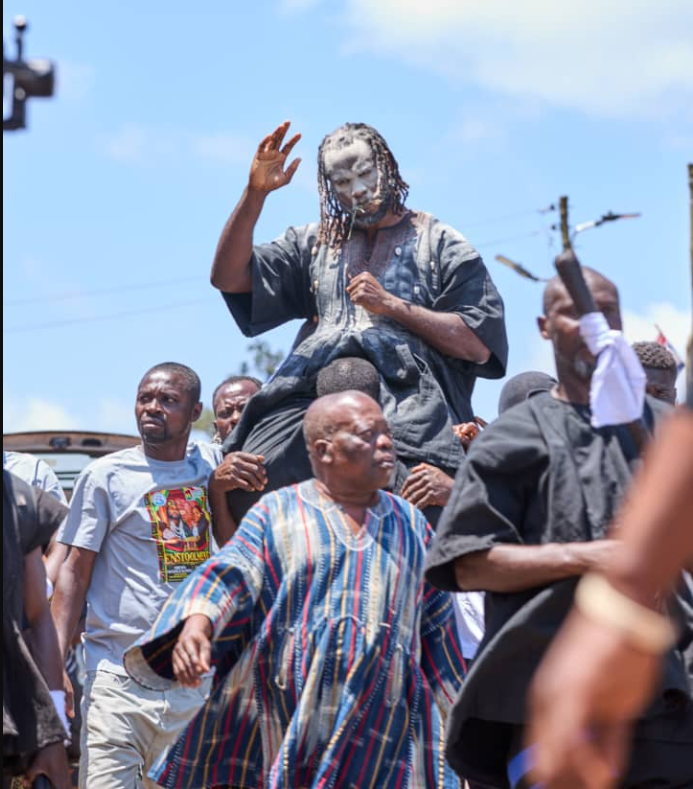
Kambon’s own professional life reflects a similar interest in preserving and examining African knowledge.
His work encompasses Akan language structure, naming practices across the Black world, proverbs and indigenous intellectual traditions.
Through Abibitumi, the platform he founded, he also promotes language learning, scholarship and cultural engagement.
But tradition was only one part of the story that day.
When the formal ceremony gave way to a reception, the occasion expanded into a celebration of three milestones: Kambon’s enstoolment, his promotion to full professor and his daughter Ama’s admission to the University of Ghana.
The gathering therefore carried a personal significance that went beyond the honours bestowed on one man. 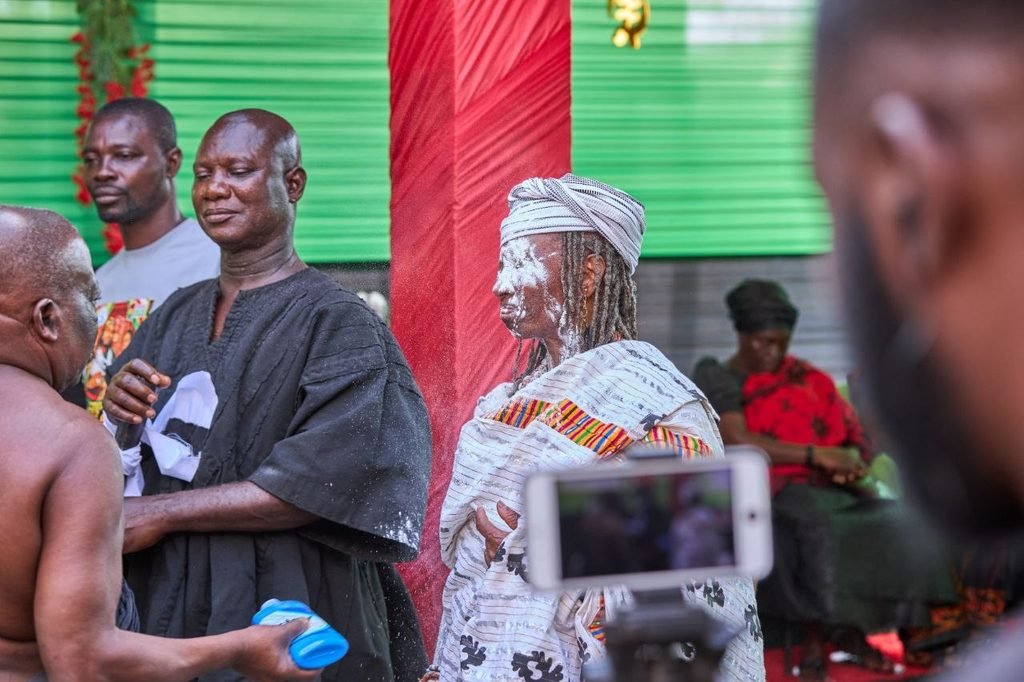
It celebrated professional advancement, the continuation of family aspirations and a connection to cultural heritage.
For a father, seeing a daughter gain admission to the same university where he holds a distinguished academic position offered another reason to celebrate.
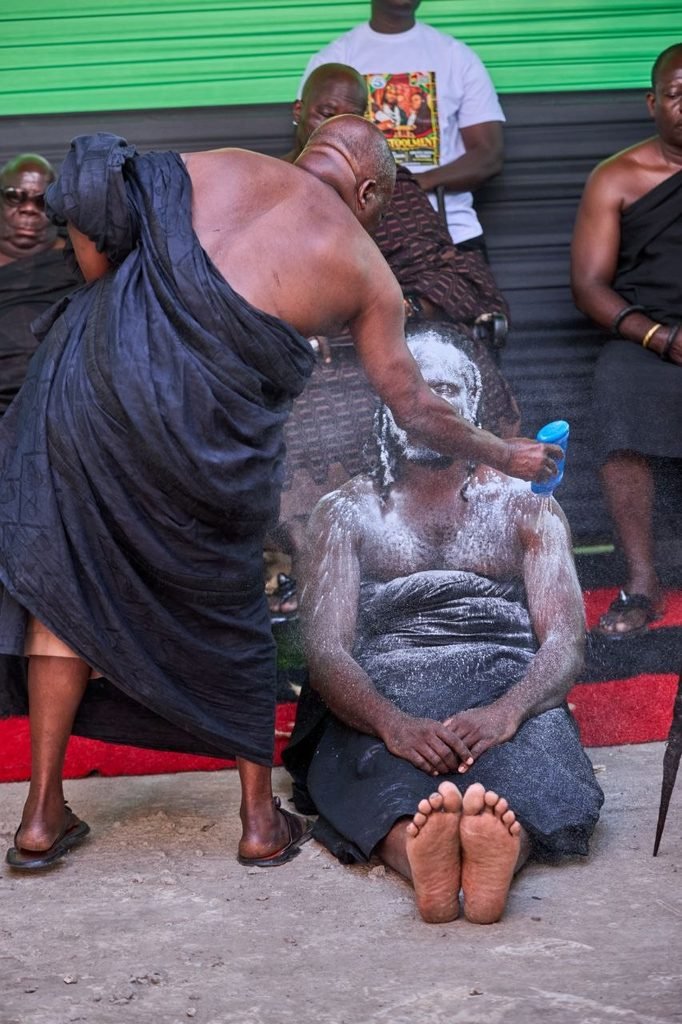
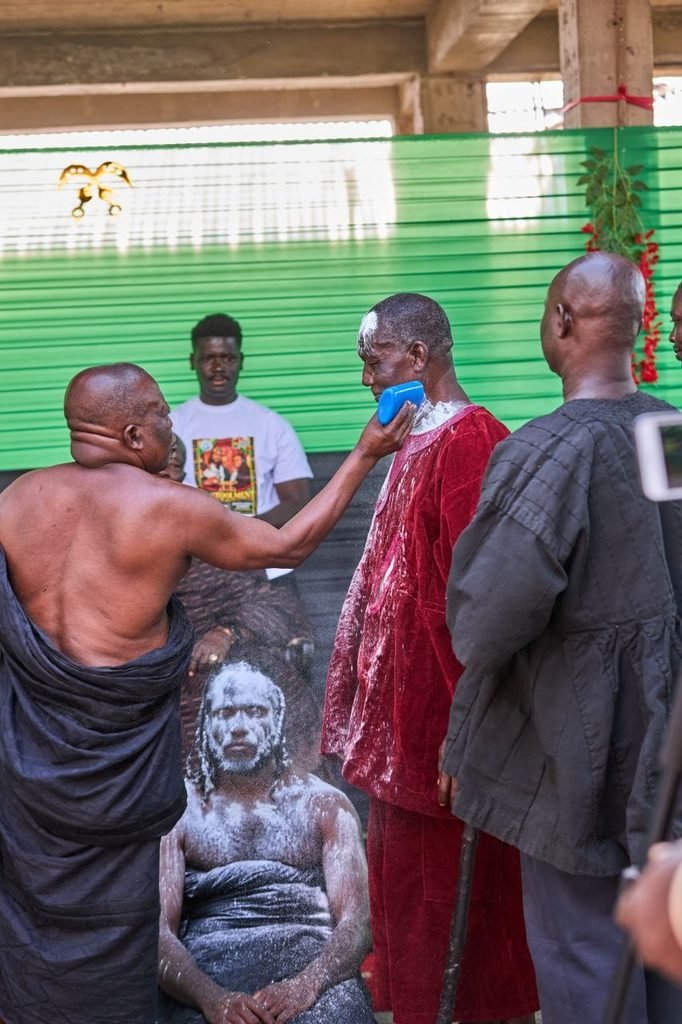
For the professor, the moment placed family achievement alongside his own professional and traditional milestones.
Kambon had already established a place in the traditional life of Akuapem Mampɔn through an earlier installation as Banmuhene Kyidɔmhene, recorded in 2017.
His latest enstoolment adds another chapter to that relationship.
In Akuapem Mampɔn, the day brought together the university, the palace and the family table in one celebration. And for Kambon, the journey from the lecture room to the traditional procession showed how scholarship, cultural responsibility and family achievement could converge in a single memorable occasion.
By Enoch Ntiamoah Siaw
SKIP THE QUEUE, TAP THE NEWS
You can now read the Ghanaian Times and The Spectator newspapers from the comfort of your device via TimesNewsPlus.
Join our WhatsApp Channel: https://whatsapp.com/channel/0029VbBElzjInlqHhl1aTU27
News
ASOHOM organises fundraising gala to protect Ghana’s water resources, support vulnerable communities


The Association of Spouses of Heads of Missions and International Organisations (ASOHOM) last Friday held the 2026 edition of its annual Charity Gala, at the Kempinski Hotel Gold Coast City, Accra under the theme ‘Woven Currents.’
It was attended by members of the diplomatic and international community, distinguished guests, corporate partners, and artists, friends of Ghana and supporters of ASOHOM’s charitable mission.
What was supposed to be a fundraiser turned into a perfect platform to celebrate friendship, culture and creativity.
Water was at the heart of this year’s message, said Sovanna Taliercio President, ASOHOM and Chairperson of its Fundraising Committee.
“Through art, music and live performance, the gala highlighted the vital connection between water, life and our shared future, while drawing attention to the importance of protecting Ghana’s water resources and supporting sustainable solutions for vulnerable communities,” a statement signed by Ms Taliercio said.
The evening featured a remarkable exhibition of Ghanaian contemporary art, live performances, an auction and raffle, alongside an elegant dinner and opportunities for guests to connect and support the cause.
She expressed gratitude to everyone who contributed to the success of the event— sponsors, artists, performers, partners, volunteers, ASOHOM members and, most importantly, every guest who chose to support its cause.
“Our fundraising efforts are ultimately about more than one evening. They are about transforming generosity into tangible support for communities in need. The funds raised through ASOHOM’s charitable initiatives will contribute to projects aligned with our humanitarian priorities and our commitment to supporting meaningful and sustainable development in Ghana,” she said.
She expressed pride at what ASOHOM represents: a community of women and men from across the diplomatic and international community who come together beyond their official roles to build bridges, strengthen partnerships and give back to the country we are privileged to call home.
She said the success of ‘Woven Currents’ was a testament to the power of collaboration, compassion and collective action and reminds that with togetherness, small contributions can create lasting impact.
By Spectator Reporter
SKIP THE QUEUE, TAP THE NEWS
You can now read the Ghanaian Times and The Spectator newspapers from the comfort of your device via TimesNewsPlus.
Join our WhatsApp Channel: https://whatsapp.com/channel/0029VbBElzjInlqHhl1aTU27