Hot!
EC deployes 44,000 officials for registration exercise

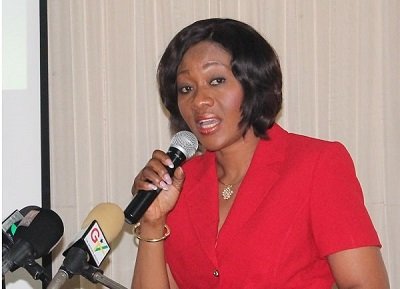
The Electoral Commission (EC) has deployed 44,000 registration officers across the country for the voter registration exercise which commences today.
The officials, according to Jean Mensa, Chairperson of the Commission, have been given the appropriate training to be able to carry out the exercise without challenges.
Addressing a press conference in Accra yesterday, she noted that the officers have additionally signed an oath to perform their duties in accordance with regulations guiding of the registration exercise to develop a credible register.
“We have recruited, trained and deployed over 44,000 staff into the field. We are confident of the training provided them to operate efficiently and professionally. As part of the training, we have drummed home the importance of instilling in them the principles of integrity, fairness, and transparency in all their activities throughout the registration process.
We have also introduced a code of conduct that spells out guidelines for their activities. As part of the recruitment exercise all temporary staff signed an oath pledging to abide by the rules and regulations governing their activities,” she stated.
Due to the outbreak of coronavirus (COVID-19) in the country, she said, the Commission in partnership with the Ghana Health Service, has further deployed 7, 000 health personnel to ensure strict adherence to the safety protocols.
She urged applicants to comply with the measures to curb the spread of the disease.
The EC, she noted was fully ready for the exercise with 8,000 voters’ biometric kits, which have been tested, already deployed to all the districts.
In addition, 5, 000 technicians would be on the field to provide assistance in the registration process.
She asked all applicants without a passport and Ghana Card to go through the guarantor system to register saying that it had been a trusted part of the registration process over the years despite being burdensome.
“We understand that it may seem like a burden having to find two registered persons to vouch for one’s identity as a Ghanaian and yet it seems to be the lesser of two evils. Although it may take a little more of your time and that of your guarantors, it will ensure that only persons who are guarantors and are 18 years old are enlisted on the voters register,” she said.
Defending the use of the guarantor system, Mrs Mensa said “the system has been part of the verification process for Ghanaians who were unable to provide documentation to prove their citizenship.
Recalling the use of the system in previous exercises, she said, 82.2 per cent of the 928,540 persons registered in 2014 by the commission used the guarantor system while in 2016, 92.5 per cent of the 1,046,067 registered used guarantors.
She noted that in continuous registration in 2016, 37,929 persons were registered with 93.1 per cent using guarantors, 99.5 per cent of 47,852 persons registered for the referendum in 2018 while 95.2 per cent of the 1,211,395 persons registered in the limited registration exercise used guarantors.
“My predecessors have applied this system in the past as they have sought to ensure that no one is disenfranchised for valid reasons beyond their control,” Mrs Mensa assured.
She urged all Ghanaians to participate in the new registration exercise adding that, “Ghanaians should join hands to ensure that every deserving person is able to register as a voter.”
She said since a credible register was the bedrock of any democracy, it was critical to maintain the integrity of the register and asked that any anomaly at any registration centre should be brought to the notice of the Commission.
Source: Ghanaian Times


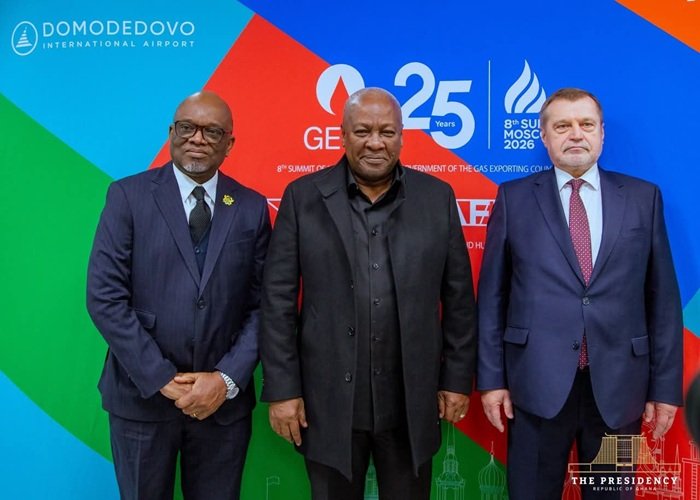
President John Mahama has arrived in Moscow, Russia, from Ethiopia to participate in the 3rd Russia-Africa Summit.
The summit is being hosted by Russian President Vladimir Putin.
During the visit, President Mahama will join fellow African leaders at the Economic and Humanitarian Forum and summit plenary sessions.
He is also scheduled to hold high-level bilateral talks with President Putin and attend a Kente exhibition organised by the Russia-Ghana Parliamentary Forum.
As part of the visit, the President will receive honorary doctorate degrees from the Russian University of Transport and the Peoples’ Friendship University of Russia.
He will also engage Russian businesses and state institutions to advance bilateral cooperation between Ghana and Russia.
By Edem Mensah-Tsotorme
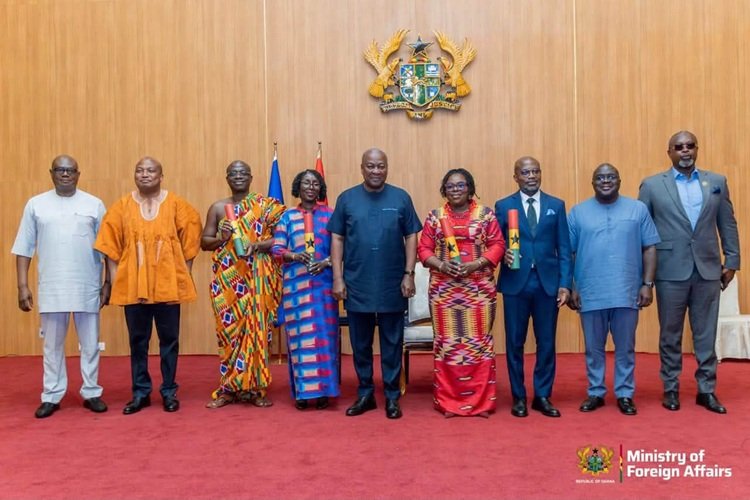
President John Dramani Mahama has commissioned four career diplomats as ambassador-designates to represent Ghana in four countries.
The commissioning ceremony took place on Friday, October 16, 2026.
The new envoys are Her Excellency Nana Antwiwaa Dodoo, Ambassador-Designate to Angola; His Excellency Louis Kwame Obeng, Ambassador-Designate to Qatar; Her Excellency Evelyn Korantemaa Ofosu-Amable, Ambassador-Designate to Israel; and His Excellency Jedidiah Reuben Adogla, Permanent Representative-Designate to Switzerland.
President Mahama charged them to advance Ghana’s national interests through strategic partnerships, economic diplomacy, investment mobilization, and expanded access to international markets.
He said Ghana’s diplomatic engagements must deliver tangible economic benefits, create jobs, and strengthen the country’s standing on the international stage.
The four envoys are career diplomats with over 27 years of experience.
On behalf of her colleagues, Her Excellency Nana Antwiwaa Dodoo thanked the President for the confidence reposed in them and pledged their commitment to emulate his leadership and deliver on the mandate given to them.
By Edem Mensah-Tsotorme