News
Draught game centres, potential spread of COVID-19?

One of the games which involves close contacts with the opponent is the draught game.
Arguably, it does not ensure the practice of strict adherence to the COVID-19 protocol of social distancing due to its close proximity nature.
This is because the board used for playing the game (usually positioned on the laps of the players), is placed between the two persons opposing each other, who sit less than a metre or three feet away from each other.
The situation is not different at the Tema Community One Community Centre area where many people made up of both young and old meet to play the game.
On several occasions where The Spectator has visited the place, at least 10 people have been found closely gathered with many of them not wearing nose masks.
The players and those cheering them on, including those who are the next to play, stand right behind the players cheering.
When one opponent succeeds in blocking the other by taking a significant number of the pieces of his contender which makes it impossible for the other to move, it drew noise from both supporting parties.
The players are also noted to speak on top of their voices to tease themselves as they jump and pick an opponent pieces.
With the closeness to each other without face masks, it obviously draws droplets which results in exchanges that has the potential to spread the coronavirus.
With the state of affairs, any coughing or sneezing which are often involuntary actions from the persons involved in the game, could compromise the health and safety of many.
There are no hand washing facilities or alcohol-based hand rubs at the venue, therefore anyone no matter how clean or dirty his hands are, just joins and handles the board or the pieces for playing the game which is also a recipe for the spread of the virus.
The Spectator is by this drawing the attention of all players and city authorities to as a matter of urgency put measures in place to right the potential wrongs so that the venue for the game does not become a fertile ground for the spread of the virus.
One may ask, in the event that one of the frequent visitors to the place contracts the virus, will he be willing to stop coming there or be bold enough to tell the others?
From Dzifa Tetteh Tay, Tema


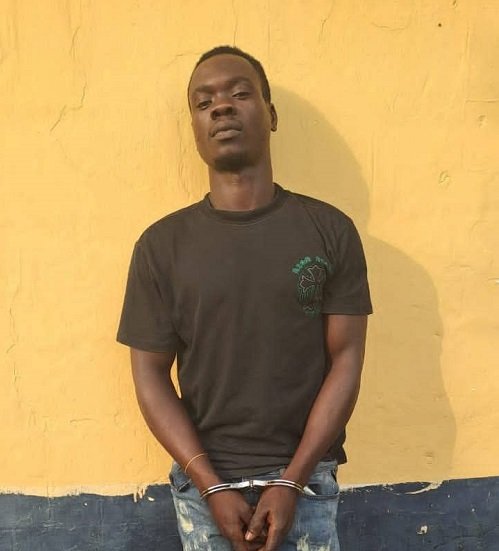
A 30-year-old man has been sentenced to 25 years imprisonment with hard labour by the Bekwai Circuit Court for his role in a 2022 robbery at a mining site at Manso Akwasiso in the Ashanti South Region.
The convict, Dominic Ofori, also known as Fanta, was arrested on 16th February 2026 after years on the run. He pleaded guilty before the Bekwai Circuit Court to robbery contrary to Section 149 of the Criminal Offences Act, 1960 Act 29, and was accordingly sentenced to 25 years imprisonment with hard labour.
On March 20, 2022, the Manso Adubia District Police received intelligence that a group of armed men from Manso Abodom were planning to attack a mining site at Manso Akwasiso to rob the owner of gold concentrate. Acting on the information, police mounted a coordinated operation and laid an ambush at the site.
At about 5:30 pm the same day, four-armed men arrived at the site, fired indiscriminately, and robbed the miners of their gold concentrate. The police team on surveillance intervened, resulting in an exchange of gunfire.
Three of the suspects, Abu Abubakar, Musah Latif, and Gideon Takyi, sustained gunshot wounds and were pronounced dead on arrival at St Martins Catholic Hospital at Agroyesum. Dominic Ofori escaped at the time but was later arrested and put before the court.
The Ashanti South Regional Police Command has assured the public of its continued commitment to combating violent crimes and bringing offenders to justice.
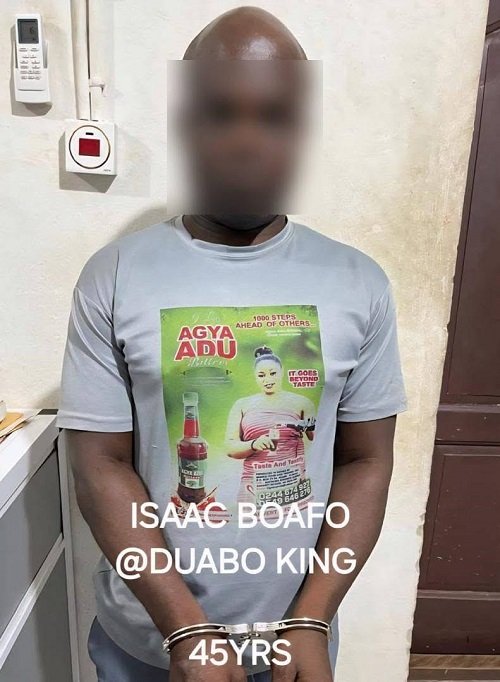
The Ashanti Regional Police Command has arrested 45-year-old Isaac Boafo, also known as “Duabo King,” for allegedly publishing false news intended to cause fear and panic.
Police said the arrest follows a viral TikTok video in which Boafo claimed that four officers at the Central Police Station in Kumasi engaged in inappropriate conduct with commercial sex workers during night patrols in Asafo.
Officers from the Police Intelligence Directorate (Ashanti Region) apprehended Boafo after receiving intelligence about the video.
During questioning, he admitted to creating the video to attract views and engagement online, and acknowledged that he could not prove the allegations.
Boafo also admitted making comments about the President of the Republic for content purposes and could not defend those statements.
He has been formally charged and is in detention as investigations continue.
The Ashanti Regional Police have warned the public against publishing or sharing false information on social media, noting that such acts can cause fear, panic, and damage reputations.
They said anyone found engaging in similar conduct will face legal action.
By: Jacob Aggrey