News
Don’t neglect menopausal wives for ‘side chicks’


“Elderly men must not abandon their peri-menopausal or menopausal wives for younger women,” Dr Francis Wuobar, a gynaecologist, has advised.
Rather, such men should support their partners through the physical and emotional challenges that come with the transition.
Dr Wuobar, a gynaecologist at the Eastern Regional Hospital, told The Spectator in an interview that many women during this phase of life experience a sharp drop in libido, vaginal dryness, hot flashes, joint pain, and extreme mood swings.
These symptoms often result in a sudden shift from an active sexual life to one filled with discomfort and emotional distress.
He noted that this change could create a strain in marriages, especially when male partners continue to have a stable or heightened sexual drive.
“Many men who don’t understand what their wives are going through tend to seek satisfaction outside the marriage, rather than offering support and empathy,” he stated.
Dr Wuobar further emphasised the importance of men using lubricants during intimacy and encouraging their partners to seek both medical and psychological help.
He also pointed out that many menopausal women feel neglected and unimportant, leading to depression and emotional withdrawal.
“There’s an urgent need to raise awareness about menopause and ensure that women are properly supported to live fulfilling lives, including sexually,” he stressed.
According to him, Ghana’s healthcare system tends to focus primarily on women of reproductive age, neglecting those transitioning into menopause.
“At the reproductive stage, society provides some guidance and support, but from reproduction to peri-menopause or menopausal stage, women are often left on their own. Society’s focus is on producing children, not what happens after,” he added.
Dr Wuobar criticised the lack of specialised clinics and educational programmes for menopausal women in Ghana.
“They go from reproductive age straight into menopause without preparation. They’re left to face the challenges alone, and many feel like they’ve outlived their usefulness,” he pointed out.
He proposed the establishment of dedicated menopause clinics to provide education, counselling, and medical care.
“Menopause doesn’t mean a woman should stop enjoying intimacy. The problem is often the lack of hormonal stimulation, which leads to dryness and painful sex. This discourages many women,” he said.
To address these issues, he recommended creating support groups in churches, mosques, and traditional communities, where women could share their experiences and mentor younger women.
He also advocated more public education and the inclusion of men in awareness programmes to foster understanding and compassion.
Moreover, Dr Wuobar also mentioned Hormone Replacement Therapy (HRT) as an effective treatment for some menopausal symptoms and suggested natural remedies like the consumption of Gorontula, a fruit known among Muslim women for enhancing vaginal lubrication and boosting libido.
He called on health stakeholders to give greater attention to peri-menopausal and menopausal women, creating an inclusive healthcare system that supports women at every stage of life.
From Ama Tekyiwaa Ampadu
Agyeman, Koforidua









Minority Leader in Parliament, Alexander Afenyo Markin, has appealed to members of the Majority caucus to stop displaying placards bearing the name and image of former Finance Minister Ken Ofori-Atta on the floor of Parliament and describing him as corrupt.
His appeal followed concerns raised by the Council of Elders of the New Patriotic Party and members of Mr Ofori Atta’s family over how his image was used on placards during the recent State of the Nation Address in Ghana.
Addressing the House, Mr Afenyo Markin explained that no court has found the former finance minister guilty of corruption and therefore cautioned against actions that could damage his reputation.
He indicated that although political disagreements are normal in Parliament, deliberately printing and displaying Mr Ofori Atta’s pictures in a negative manner, especially when the attention of the world was on the chamber during the address, was inappropriate.
Mr Afenyo Markin therefore appealed to the Majority leadership, particularly the Chief Whip, to ensure that such actions are controlled or stopped in the future to maintain peace in the House.
He revealed that the Council of Elders of his party had summoned him to ask what steps the caucus was taking in response to the incident.
The Minority Leader also acknowledged concerns raised by a member of Parliament who is a relative of the former finance minister and had persistently drawn attention to the issue in the chamber.
He stressed that Mr Ofori Atta remains a human being with a family and reputation that should not be unfairly attacked.
Mr Afenyo Markin added that he did not intend to litigate the matter but was making a respectful plea to the Majority leadership to end what he described as the continued persecution and attacks on the former finance minister’s name in the chamber.
By: Jacob Aggrey
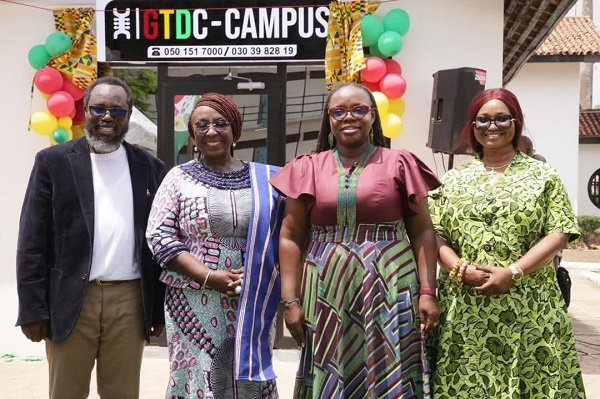
The Ghana Tourism Development Company, GTDC, under the leadership of Prof.Kobby Mensah has launched GTDC Campus Tourism Office at the University of Ghana.
The initiative aims to promote educational and domestic tourism by providing structured campus tour experiences showcasing key heritage sites, including the Archaeology Museum and the School of Performing Arts.
It will also offer students their first travel experience across the continent and inculcate in them love to visit Ghana’s heritage sites.
Addressing the gathering at the launch yesterday, the Minister of Tourism, Culture and Creative Arts, Abla Dzifa Gomashie, described tourism as a vehicle for education and heritage preservation, stressing that the sector must inspire citizens to value and protect national culture for future generations.
The minister highlighted tourism’s connection to disciplines such as history, the arts, economics and environmental science.
The minister further noted that the private sector is the engine of tourism economy, adding that the engines require fuel, which is talents.” by investing in these young people today, you are securing the quality, the innovation and competitiveness of our own industry for tomorrow.
She added that the establishment of the office represents a deliberate investment in the intellectual capital of the country.
The GTDC boss, Prof.Kobby Mensah, said,”at GTDC, we believe that if our tourism has to be sustainable, we have to promote domestic tourism and a very big part of it is getting students to appreciate tourism and helping them to organise tours.”
He added that the University of Ghana itself is a huge heritage site which must be explored.
Prof.Kobby Mensah noted that the initiative, which is one of many to be established across the country, is a joint partnership between GTDC and University of Ghana.
The Vice Chancellor of the University, Prof.Nana Aba Appiah Amfo, said the University is a custodian of heritage which goes beyond the structures and welcomed the establishment of the first Campus Tourism Office.
She was optimistic that the office would be put to good use to achieve the intended purpose.
The launch brought together Stakeholders reaffirming their commitment to nurturing future tourism and hospitality professionals.
By Edem Mensah-Tsotorme