Features
Divorce in Islam


In another instance, the Prophet (PBUH) recommended arbitration and family intervention in cases of marital disputes.
“If you fear dissension between the two, send an arbitrator from his family and an arbitrator from her family. If they both desire reconciliation, Allah will cause it between them” (Qur’an 4:35).
This Quranic text emphasises the importance of seeking reconciliation through family and community support.
Conditions and Rules of Divorce in Islam
Islam sets forth conditions and rules to ensure that divorce is handled responsibly:
Clear Intention: The decision to divorce must be made with a clear mind and sincere intention, free from anger or impulsivity.
The Waiting Period (Iddah): After pronouncing divorce, the wife must observe an iddah period, during which the husband can take her back if both agree. The iddah period is three menstrual cycles for a non-pregnant woman or until childbirth if she is pregnant.
Revocable and Irrevocable Divorce:
Revocable Divorce (Talaq-e-Raj’i): The husband can take back his wife within the iddah period if reconciliation is achieved.
Irrevocable Divorce (Talaq-e-Ba’in): After the third talaq, the divorce is final, and reconciliation is only possible through a new marriage contract if both agree.
Respect and Dignity: Islam commands respect and fairness during divorce proceedings, ensuring that both parties maintain dignity. Allah (SWT) advises:
“And live with them in kindness. For if you dislike them—perhaps you dislike a thing and Allah makes therein much good” (Qur’an 4:19).
This verse encourages respect, even if differences arise.
Rights to Seek Divorce by the Husband or Wife
Islam grants both spouses the right to seek divorce, although their procedures differ.
Rights of the Husband (Talaq): A husband has the right to initiate talaq, following Islamic procedures. He must observe fairness, fulfill his wife’s rights, and provide any outstanding mahr or iddah maintenance.
Rights of the Wife (Khula): A wife can seek divorce through khula, which involves returning part or all of her mahr to end the marriage. The Prophet (PBUH) permitted khula for the wife of Thabit ibn Qays (RA) when she requested separation.
“Then if you fear that they will not be able to keep [within] the limits of Allah, then there is no blame upon either of them concerning that by which she ransoms herself” (Qur’an 2:229).
Reasons for a divorce by both parties
In order to divorce a wife, a husband may not necessarily have to give a reason. However, in the case of a woman, she may initiate a Khula (Separation) for three reasons; her husband’s in ability to consummate the marriage, his failure to provide for her upkeep, and if the woman was married as a child or without her consent she can repudiate her husband when she reaches puberty (Mucai-Kattambo et al. 1995). In addition a woman can apply for a khula if she persistently faces domestic violent.
Divorce Under Legal Regimes: The Mohammedan Ordinance CAP 129
In Ghana, the Mohammedan Ordinance CAP 129 regulates Islamic marriages and divorces. It provides a formal legal framework for Muslims to marry, divorce, and remarry in line with Sharia principles. This ensures that divorce proceedings, rights, and responsibilities are recognized by law, protecting both parties’ rights according to Islamic teachings.
Remedies for a Wrongful Divorce
Reconciliation: Islam encourages reconciliation if a divorce was issued hastily. The Prophet (PBUH) often advised families to mediate, promoting forgiveness and mutual understanding.
Financial and Social Support: If a husband neglects his wife’s rights upon divorce, she can claim compensation, unpaid mahr, and iddah maintenance. Islam emphasises justice and fairness for divorced women to ensure they are not left destitute.
Community Support: The Muslim community is encouraged to provide support for divorced individuals, allowing them to reintegrate with dignity and support, upholding Islamic principles of compassion.
EFFECTS OF DIVORCE ON CHILDREN
One significant concern is the impact of divorce on children. Patel et al. (2008) in “The Harm of Talaq” note that children from broken homes face higher risks of emotional distress, academic challenges, and social instability. Parents must consider these effects when making decisions, ensuring the wellbeing of their children.
More precisely, children from broken homes are more likely to have poorer health; to do worse in madrassas and schools; less likely to attend the massajid; become hufaz and Islamic scholars; more likely to commit crime, to smoke and take drugs; to be unemployed and to die earlier than children who live with married parents. By divorcing parents have let loose a vicious cycle. Their children are more likely to repeat the cycle of unstable parenting which they had experienced and suffered (Patel et al., 2008).
In conclusion, divorce in Islam is a compassionate solution, regulated to ensure justice and respect. While it is permitted, it is only to be used as a last resort, with the utmost care and fairness. Islam emphasizes kindness, patience, and thoughtful reconciliation to resolve marital issues before resorting to divorce.
May Allah (SWT) guide us to act with wisdom and justice in our relationships and protect our families with love and mercy. Ameen.
References:
• Qur’an, Surah Al-Baqarah (2:229, 2:230, 2:231, 2:232, 2:236, 2:237), Surah An-Nisa (4:19, 4:35), Surah At-Talaq (65:4)
• Hadith from Sunan Abu Dawud (2178), Sahih Bukhari, Sahih Muslim
• Mohammedan Ordinance CAP 129
• Patel, A. A. et al., 2008), Blessings of Marriage (Harm of Talaq {Divorce), Page 278.
By Imam Alhaji Saeed Abdulai – 1BN Michel Camp, Tema







Public awareness campaigns have successfully cast breast cancer into the global spotlight, typically framed through a uniform lens of pink ribbons, early detection drives and triumphant stories of survival. While these initiatives have driven vital mammography compliance and research funding, they often perpetuate a sanitised narrative. Beneath the polished public messaging lie complex, less-discussed clinical realities and emotional burdens that patients, families and healthcare providers must navigate long after the initial medical milestones have passed.
Moving towards an honest discourse
Acknowledging these untold truths does not diminish the incredible advancements achieved in modern oncology; rather, it humanises the patient experience. Expanding our cultural understanding beyond the simplistic “warrior” trope allows for deeper institutional support, better long-term medical management and genuine empathy for the lifelong journey of survivorship.
When people see breast cancer in movies or awareness campaigns, they usually see a neat story: someone gets diagnosed, goes through treatment, rings a celebration bell and goes right back to normal.
In real life, the journey is much more complicated. Let us break down five “hidden truths” about breast cancer using everyday examples.
Truth 1: The “Post-Treatment Cliff” (Life after treatment)
What it means: Everyone thinks that once medical treatments, such as surgery or chemotherapy, are over, the patient instantly returns to their old self. In reality, that is when a whole new set of challenges begins.
The example: Imagine finishing a gruelling uphill marathon. You cross the finish line, but your legs are still shaking, you are exhausted, and everyone else goes home while you are left trying to recover. Many survivors deal with long-term side effects, such as constant tiredness, numbness in their fingers or swelling, called lymphoedema, for years.
Truth 2: Catching it early is great, but not a magic shield
What it means: Early detection saves lives, but some types of cancer are so aggressive that even a small tumour can behave like a runaway train.
The example: Think of weeds in a garden. If you spot a weed early, you can usually pull it right out. But certain aggressive “weeds” spread seeds everywhere or grow roots so fast that even finding them early does not stop them from trying to pop up somewhere else later.
Truth 3: The long, hard marathon of daily pills
What it means: For many survivors whose cancer is hormone-receptor-positive, treatment does not stop when surgery ends. They may have to take hormone-blocking pills every day for five to ten years.
The example: These daily pills act like security guards keeping the enemy away, but they can also bring troublesome side effects, such as joint stiffness, sudden hot flashes or weakened bones. Because of this, taking the medication can feel like a daily chore that reminds patients of the cancer for a decade.
Truth 4: People we forget about (Men and young adults)
What it means: Public campaigns often focus on older women. Because of this, other groups affected by breast cancer may be caught off guard.
The example: Men can develop breast cancer, too, because they are born with a small amount of breast tissue. However, because some men think it is a “women’s disease”, they may ignore an unusual lump in their chest for months, resulting in a later diagnosis. Young adults under 40 face a different shock, having to worry about fertility, having children and career interruptions right in the middle of building their lives.
Truth 5: The hidden price tag (Financial stress)
What it means: A medical diagnosis brings a heavy second burden: financial strain.
The example: Even with good health insurance, additional costs can pile up quickly, including specialised scans, genetic testing, expensive prescription drugs and taking weeks or months off work to recover. It can feel like dealing with two crises at the same time: trying to heal the body while worrying about bills.
Talking about these harder truths does not mean we should not celebrate survivors. It simply means we need to understand the real, full picture of what people go through.
By Robert Ekow Grimmond-Thompson
SKIP THE QUEUE, TAP THE NEWS
You can now read the Ghanaian Times and The Spectator newspapers from the comfort of your device via TimesNewsPlus.
Join our WhatsApp Channel: https://whatsapp.com/channel/0029VbBElzjInlqHhl1aTU27
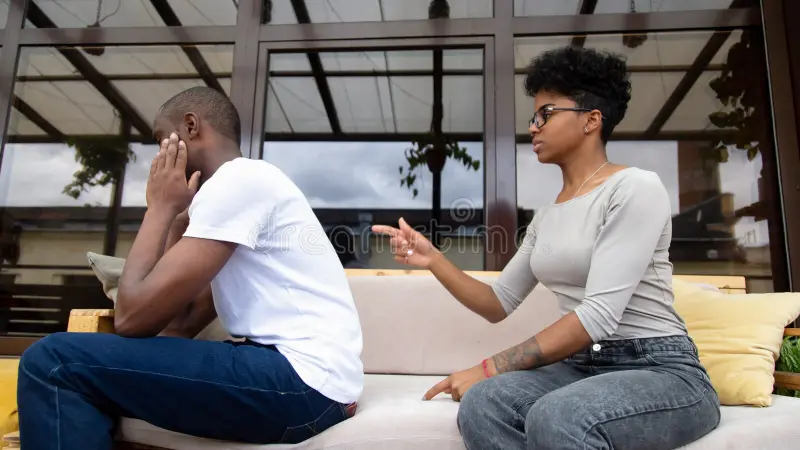
As soon as a married man becomes infected with the he-goat mentality, he is bound to forget that he has a wife.
It is often a tragedy because he can completely lose focus and generally start misbehaving. He considers his wife a headache, at best a pain in the neck.
The man has got a new girlfriend and is excited. And when he sees his wife, he wonders what she is doing in his home. Maybe she is only a stray dog in need of shelter. And Jesus Christ, won’t she just keep out of the way?
The married man who has gone into extramarital affairs is half the time engaged in mindless fantasy. He is engrossed in devising many ways to please his newfound lover. And if the girl is explosive in bed, the fantasy could spiral into the fourth dimension.
It could be that his wife is basically an “old layer” who can no longer take him to the heavens and back. The girlfriend, however, can take him on a trip into space, meandering through the galaxy of stars, down the Milky Way. It can be an experience of a lifetime.
Normally, after such a trip, the married man will forget that he even has a home and children. He becomes a fugitive.
What he needs is deliverance. So his wife will go to the pastor and tell him that her husband has developed very strange symptoms.
First, the man is behaving practically like a he-goat, sniffing desperately after young women. Secondly, he cannot find his way back home.
The pastor is likely to diagnose the ailment on the spot. He does not need to conduct a blood test to offer a prognosis. “It is the spirit of lust,” the man of God will say. “The Lord is in control.”
Sometimes prayers are effective, and the man heads back home. For very curious reasons, he remembers that he had lost his way. So he returns to his family, wondering what might have been happening to him. So long!
Other times, prayer worsens the case. It is not that the prayers are not being answered. God has only given the lecherous bloke a long rope on his own balls. It is as if the prayers drive him further and further away from the world of reason. For as long as three years, his soul is restless. It is in bondage!
The man forgets that the young girl he has been riding will one day marry and leave him in the cold. That day will surely come.
Now, when a married man is jilted by his girlfriend, he remembers that he has a wife. He had almost forgotten that he went and wedded a woman and called her his wife.
The jilted man will lick his wounds and trace his way back home. His wife would wonder whether he had lost his way. Anyhow, she will welcome him back home.
He becomes the loving husband he once was, and his wife is amazed. What might have happened to her man? Was he struck on the way to Damascus? Or on his way back?
When the man is sober, he will decide to calculate how much he has spent on that useless girl who said she was going to get married to some equally useless cockroach.
He realises that, in the short span of sexual enjoyment and extramarital bliss, he has lost all his lifetime savings, enough to build two-storey buildings.
Last Saturday, some youths who distinguished themselves in various endeavours were awarded at an excellence awards ceremony.
The males should always have it at the back of their minds that chasing women is what brings down both the weak and the strong, the poor and the rich, the lettered and the unlettered.
This article was first published on Saturday, August 26, 2006.
SKIP THE QUEUE, TAP THE NEWS
You can now read the Ghanaian Times and The Spectator newspapers from the comfort of your device via TimesNewsPlus.
Join our WhatsApp Channel: https://whatsapp.com/channel/0029VbBElzjInlqHhl1aTU27