News
Chief wants support for c’nities affected by dam spillage


- /home/u249204778/domains/spectator.com.gh/public_html/wp-content/plugins/mvp-social-buttons/mvp-social-buttons.php on line 27
https://spectator.com.gh/wp-content/uploads/2024/07/Chief.jpg&description=Chief wants support for c’nities affected by dam spillage', 'pinterestShare', 'width=750,height=350'); return false;" title="Pin This Post">
- Share
- Tweet /home/u249204778/domains/spectator.com.gh/public_html/wp-content/plugins/mvp-social-buttons/mvp-social-buttons.php on line 72
https://spectator.com.gh/wp-content/uploads/2024/07/Chief.jpg&description=Chief wants support for c’nities affected by dam spillage', 'pinterestShare', 'width=750,height=350'); return false;" title="Pin This Post">
Togbe Komla Sakpiti V
Togbe Komla Sakpiti V, the Dufia of Bakpa Awadiwoekome, has called for government’s urgent attention towards the various communities that were submerged during the Akosombo Dam spillage last year.
He expressed concern over the government’s inability to resettle and compensate the residents who lost their houses and businesses in the Bakpa Awadiwoekome enclave.
Togbe Sakpiti told the Ghana News Agency (GNA) that despite organising a precautionary spillage workshop on July 11, the government, through the Volta River Authority (VRA) failed to address the settlement of the flood victims.
Togbe stated that the impact of last year’s spillage on island residents in the Central Tongu District was destructive and lamented how the planned spillage of 50,000 cubic feet per second (CFS) of water by the VRA in coming weeks would affect them again.
Togbe urged the government to expedite resettlement projects across the district and provide a safe refuge for his people.
He called on all industry players to support in prioritising the welfare of the residents ahead of the upcoming spillage. –GNA


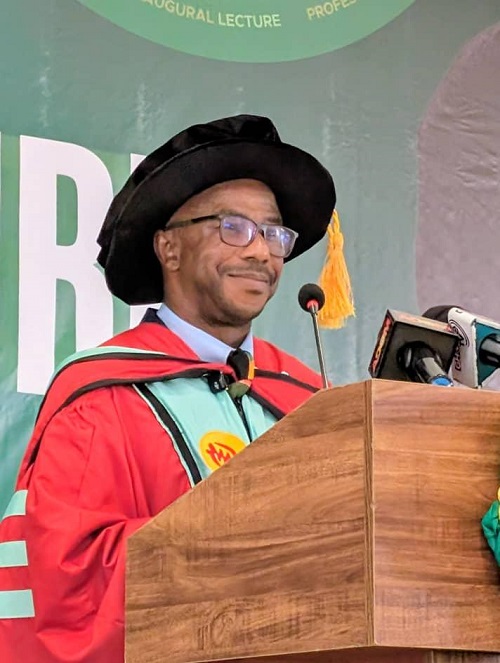
Many people have heard or even repeated the popular claim that because God gave mankind dominion over the earth, humans are free to consume anything they find in nature.
However, the Pro Vice-Chancellor of the University of Environment and Sustainable Development (UESD), Professor Edward Wiafe Debrah, says this widely held belief was a misconception that has contributed to the destruction of the environment and the depletion of natural resources.
Speaking on the relationship between religion, science and environmental conservation, Prof. Debrah explained to The Spectator in an exclusive interview that many Christians often cited Genesis 1:28, where God blessed humanity and instructed them to “be fruitful and multiply, fill the earth and subdue it; have dominion over the fish of the sea, the birds of the air and every living thing that moves on the earth.”
According to him, the verse had been wrongly interpreted to mean that people have unrestricted permission to consume every animal and natural resource on earth.
”The Bible did not ask mankind to destroy or exhaust creation. Dominion is about responsible leadership and stewardship, not exploitation,” he stressed.
He said God entrusted creation to humanity with the expectation that it would be managed wisely and preserved for future generations.
”Stewardship means nurturing what has been entrusted to you and being accountable to the Master one day. We must, therefore, use our natural resources wisely rather than consume everything without replacement,” he said.
Prof. Debrah pointed out that another misconception among some Christians was the belief that since the Bible spoke about the end of the world, there was little need to conserve the environment because no one knows when the earth would end.
He described this thinking as dangerous, explaining that no one knows when the end would come and, therefore, humanity had a responsibility to care for creation while it existed.
He also challenged the belief that animals cannot become extinct simply because human beings continue to exist despite people dying every day.
Drawing a distinction between human populations and wildlife, he explained that many animal species could disappear permanently if they were harvested without limits or conservation measures.
He cited indiscriminate hunting as an example, saying many hunters entered forests and killed whatever animals they found without considering whether the populations were sufficient to sustain future generations.
”If we continue consuming resources without strategic plans for replacement and conservation, we will eventually lose them,” he cautioned.
Prof. Debrah urged society to combine scientific knowledge with religious and cultural beliefs instead of relying solely on religious interpretations to address environmental challenges.
”We have to read and understand the Bible well while applying science to our culture and religion. Religious beliefs alone cannot solve all our environmental problems,” he stated.
He emphasised that biodiversity remained essential to human survival, noting that healthy ecosystems improve food quality, reduce diseases and help clean the air through trees that absorb carbon dioxide and other harmful gases.
Touching on agriculture, Prof. Debrah encouraged farmers to adopt sustainable farming practices that protect beneficial insects, especially bees, which naturally pollinate crops.
He mentioned that attempts at artificial pollination have proved costly, making natural pollination by insects a more practical and sustainable option.
”The irony is that we spray insecticides to kill every insect on our farms, including those that are beneficial. If we reduce indiscriminate use of insecticides, nature will regulate itself through the food chain, ensuring healthy ecosystems and improved crop production,” he said.
Prof. Debrah, therefore, appealed to the public to recognise that caring for nature was not contrary to faith but rather an important responsibility entrusted to humanity.
”The earth and its resources are gifts from God. Our responsibility is not to exhaust them but to protect and manage them wisely for ourselves and generations yet unborn,” he added.
By Ama Tekyiwaa Ampadu Agyeman, Koforidua
Senior High School (SHS) graduates have been challenged to pursue their dreams with courage, preparation and resilience as they prepare to take the next step in their educational and career journeys.
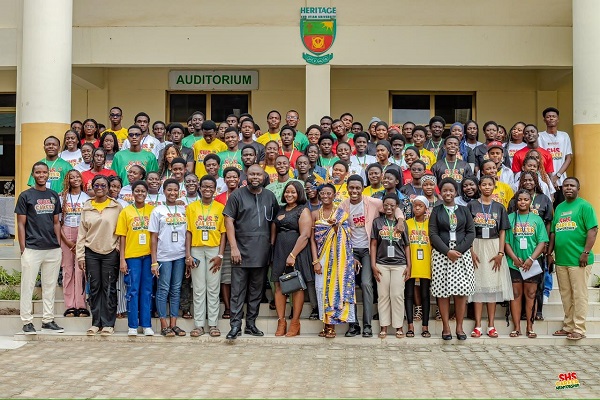
Broadcaster and Entertainment Journalist, Mr Kofi Hayford, gave the challenge when he addressed SHS graduates at a career mentorship programme hosted by Heritage Christian University at Amasaman on Saturday.
The event, which brought together hundreds of young people, provided participants with practical guidance on career choices, personal development and life after Senior High School.
Held on the theme, “Dream, Pursue, Achieve: Building your future with confidence,” the programme sought to equip the young people with the knowledge and mindset needed to navigate the opportunities and challenges ahead.
Mr Hayford told the graduates that success was built long before opportunities arrived and urged them to approach their future with confidence, discipline and a willingness to learn.
Quoting civil rights activist Malcolm X, he said, “Education is the passport to the future, for tomorrow belongs to those who prepare for it today.”
The broadcaster shared his personal journey into the media, explaining that his path to becoming one of Ghana’s recognisable broadcast voices was far from straightforward.
He disclosed that before joining Joy FM, he explored several career interests, including computer science, telecommunications, graphic design, acting, voice-over work and media production, as he searched for his true calling.
Mr Hayford encouraged the graduates to dream beyond their current circumstances, identify and develop their natural talents, and create opportunities rather than waiting for them to come their way.
He also urged them to make the best use of available resources, use social media positively, prepare consistently for opportunities and embrace continuous learning.
Organisers said the mentorship programme formed part of Heritage Christian University’s commitment to preparing young people academically, professionally and personally for the next phase of their educational journey.
Some participants expressed appreciation for the practical lessons and personal experiences shared during the programme, describing the session as an inspiring and valuable experience that had renewed their confidence as they prepared for the next chapter of their lives.

 Entertainment1 week ago
Miss Ghana 2026 winners presented to Tourism Minister
- News1 week ago
Eight Injured after Toyota Hiace somersaults on Tema–Akosombo highway
- Features1 week ago
Environmental stewardship is an act of worship: The Islamic response to climate change, environmental degradation (Part 3)