Hot!
Celebrating women of substance: Meet Very Rev. Dr Mrs Betty Frances Baidoo

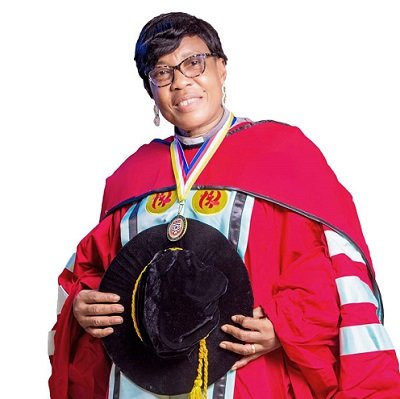


● Very Rev. Dr. Mrs Betty Frances Baidoo
As the voices calling for increased inclusion and opportunities for women get louder, a significant number of female professionals continue to prove their mettle in sectors which used to be the preserve of men.
This year’s International Women’s Day celebration was focused on helping bridge the gender gap in the digital space as the ratio of men to women in the area of technology remains unsatisfactory.
That notwithstanding, the day further presents an opportunity to recognise the social, economic, cultural and political achievements of women at all levels.
In the spirit of celebrating outstanding women, The Spectator puts the spotlight on Very Rev. Dr Mrs Betty Frances Baidoo whose hardwork and tenacity has resulted in her obtaining Doctor of Philosophy (PhD) in Guidance and Counselling.
She has been a Tutor/Educationist since 1984 and rose through the ranks at different institutions in different regions until the highest academic qualification was conferred on her last week.
BACKGROUND

Very Rev. Dr Mrs Baidoo is a woman of diverse talents and capabilities. In addition to being a Reverend Minister, she is a marriage consultant, love therapist and an expert in handling divorce cases. She was Assistant Headmistress (Administration) at St John’s Grammar School prior to her retirement from the Ghana Education Service.
Born, January 1, 1963 at Aburi Akuapim in the Eastern Region, she is the first of five females born into a priesthood family of which two other siblings are priests; her parents are the Rt Rev. E.K Baiden, a Methodist minister and Ms Rose Baidoo both of blessed memory.
She has been married to Mr Kingsely Baidoo for the past 34 years with five children and six grandchildren. The mother and counsellor has over the years dedicated herself to making a positive impact in her chosen career and help transform lives as a female priest in the Methodist Church Ghana.
Clearly, her hardwork and tenacity has paid off as she encourages other young women to aspire for greatness, irrespective of obstacles they may be confronted with.
Speaking to The Spectator after her Hooding Ceremony recently, the industrious woman of many parts, said women are supposed to complement the effort of men but they should still be willing to take bold steps and consider themselves competent in taking up leadership or managerial roles.
EDUCATION
Rev Dr Mrs Baidoo started her basic education at Mmofra Turom at Kumasi and then proceeded to Wesley Girls High School in Cape Coast where she completed and obtained a GCE ‘O’ Level Certificate in 1981 before proceeding to Wesley College, Kumasi, for the Teacher’s Certificate ‘A’ in 1984.
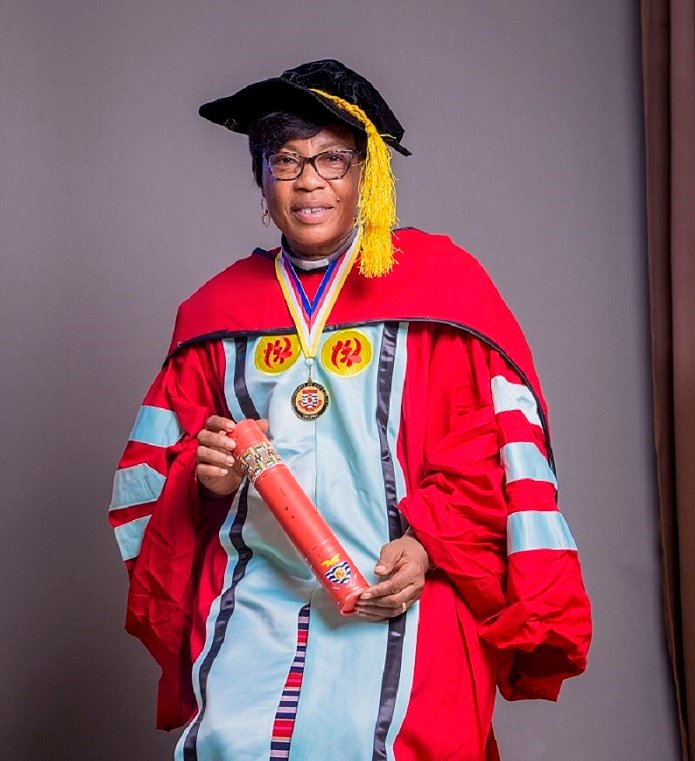
From 2000 to 2004, she studied at the University of Education, Winneba and graduated with Bachelor of Education (BED) in Home Economics. She continued teaching until 2010 when she started a Master of Philosophy (MPhil) course in Guidance and Counselling at the University of Education, Winneba and graduated in 2014.
Two years later, she began her Doctorate Degree in Guidance and Counselling at University of Cape Coast and graduated in 2021.
WORK EXPERIENCE
Rev. Dr Mrs Baidoo’s passion for teaching started at a tender age of 21 years at the Junior Secondary School at Dunkwa-On-Offin in the Central Region. She worked there for two years before moving to the Methodist Middle School at Takoradi in the Western Region.
Between 1990 and 1995, she was at the Rev. Grant JSS at Efiakuma, Takoradi before moving to Akim Oda in the Eastern Region, where she became a Class Teacher, at Freeman Junior High School (JHS).
She further spent seven years teaching at Apam Senior High School prior to becoming a Chaplain and Counsellor at St. Johns Grammar School in 2011.
At St. Johns Grammar School, she held different portfolios including being a Home Economics tutor, Acting Head of Home Economics Department, and Senior Housemistress. Between 2018 and 2020 she was Assistant headmistress (Domestic Welfare).
In 2020 she was elevated to the rank of Assistant Headmistress (Administration) at the same institution.
MINISTERIAL WORK
Currently handling the Anyaa Section of the Awoshie Circuit of the Methodist Church, Rev. Dr Mrs Baidoo has been the Auxiliary Minister at the Grace Society at Kwabenya.

She was the Caretaker Minister at Awortwi Pratt, Gomoa Ajumako Society from 2008 -2011 and went ahead to become the Auxiliary Minister at other church establishments in Accra including St John’s Society, Tantra Hill, Mt Zion Society, Dome, and the Allotey Memorial Society, Asofan.
Her ministerial work also saw her occupy Chaplain positions in local church Circuits such as SUWMA-Kwabenya Circuit, SUWMA-New Achimota Circuit, among others.
She again served as Chairperson of the Coordinating Office for Education and Youth Development, while doubling as Society Secretary of Christ’s Little Band at Apam from 2006 – 2010.
QUALITIES

Throughout her career, Rev. Dr Mrs Betty Frances Baidoo demonstrated excellent leadership and constantly implemented new ideas to help improve the standard of her students and staff. All of these were possible as a result of her effective communication and administrative skills, and the application of good judgment in all endeavours.
In 2009, she was adjudged Best Teacher, Vocational Division in the Gomoa-West Education Directorate. In 2010, she became the Best Teacher, Vocational Division in the Central Region.
She loves conducting research, reading, counselling, and ensuring discipline at all levels of social engagement. No wonder she became the Chairperson of the Disciplinary Committee at St. John’s Grammar School.
OTHER ENGAGEMENTS
Rev. Dr Mrs Baidoo chaired many committees and excelled in other capacities throughout her career. She chaired the Synod Committee of the Northern Accra Diocese of the Methodist Church and also led the COVID-19 team at St. John’s Grammar from 2020 to 2021.
She is a member of the Diocesan Advisory Team for Gender at the Northern Accra Diocese from 2020 to 2021, and was the Chairperson of the Coordinating Office for Social Service at New Achimota Circuit from 2018- 2022.
In 2011, she was a Member of the Counselling Committee at St. John’s Grammar School, and a Member of the Ghana National Association of Teachers (GNAT) Oversight Committee in Gomoa West District in the Central Region from 2009 to 2011.
She was Chairman of the Ghana Home Economics Association, in Gomoa West from 2009 to 2011, and GNAT Local Secretary, at Sekondi in the Western Region from 1992-1998, as well as School Guidance Coordinator at Freeman Junior High School at Akim Oda in the Eastern Region from 1998 to 1999.
By Ernest Nutsugah


The professor who spends his days exploring the intricacies of African languages found himself at the centre of a different kind of lesson on Friday, October 2, 2026. 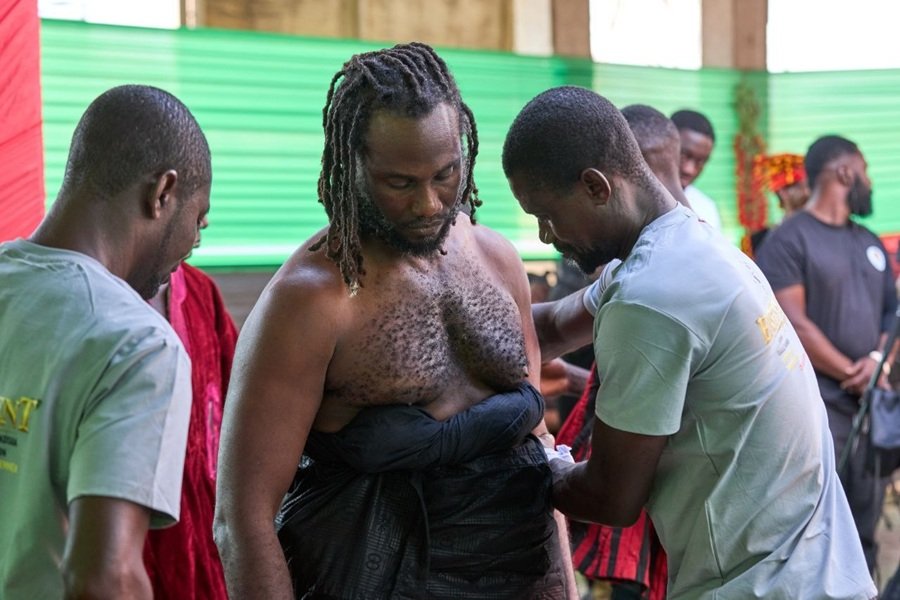
This time, there were no lecture notes, academic arguments or university classrooms. Instead, there was the weight of tradition, the rhythm of a community celebration and the solemnity of an oath at a royal palace.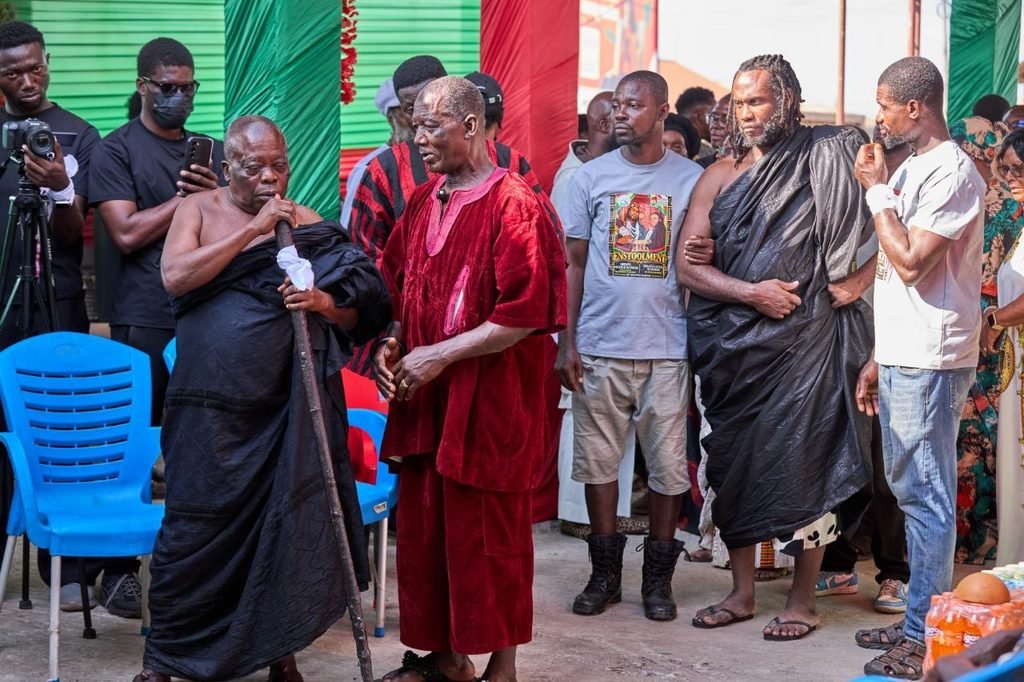
Professor Ọbádélé Kambon, a full Professor of African Linguistics at the University of Ghana, was enstooled as Apagyahene and Sunsum Ɔsahene of Akuapem Mampong in the Eastern Region in a ceremony that brought academia and traditional authority together.
For the professor, the occasion was more than a new title. It was a moment that connected his academic interests in African languages and indigenous knowledge with the living traditions of an Akan community.
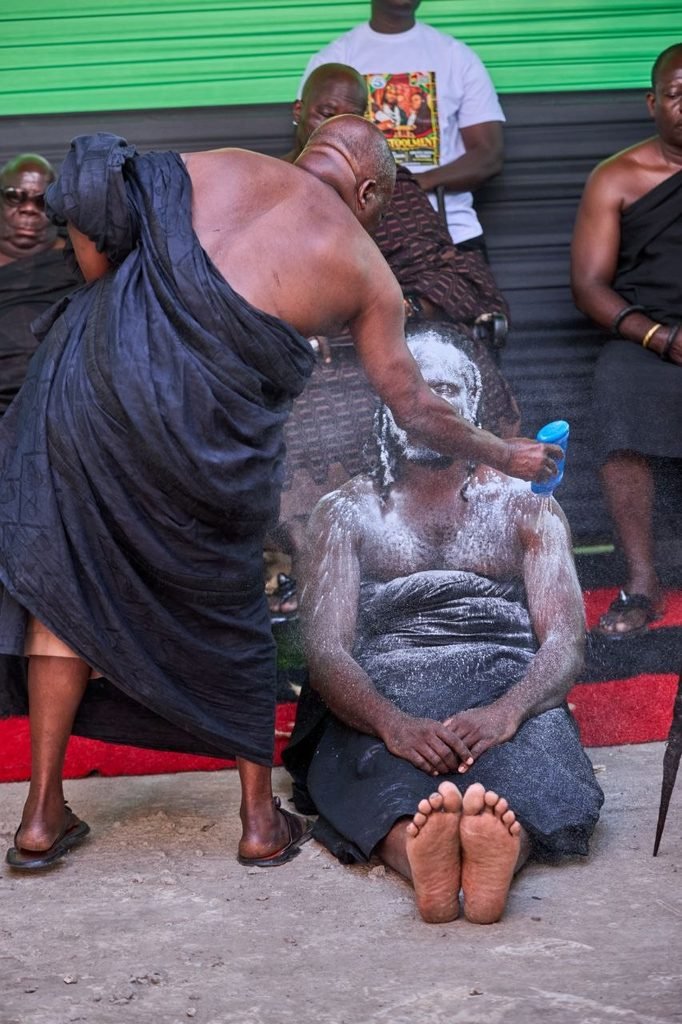
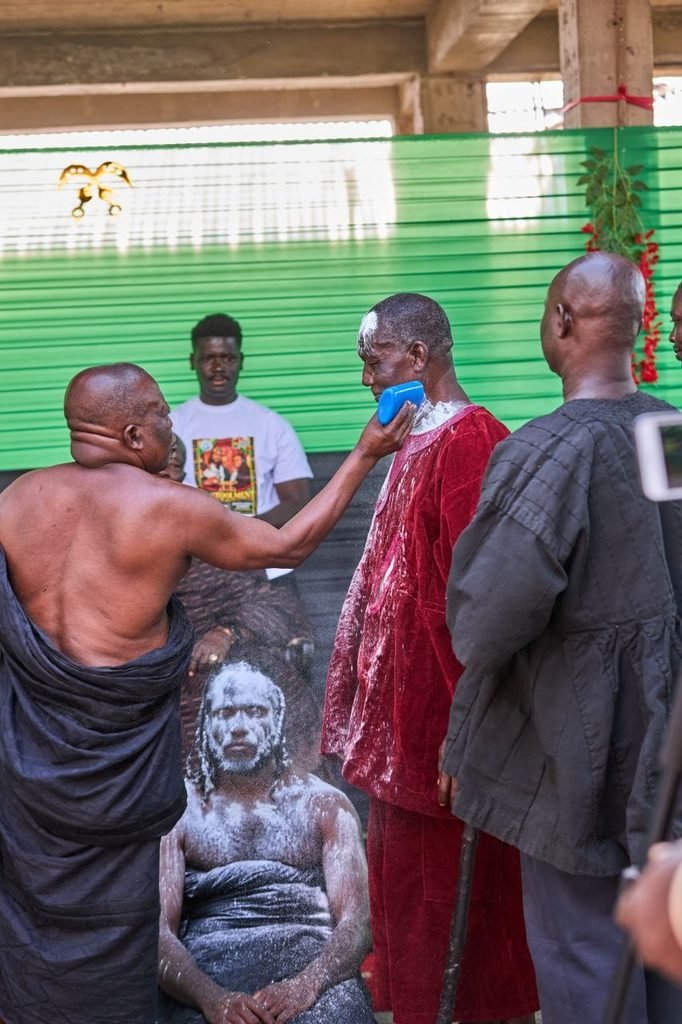
The day’s events unfolded through a series of customary observances. Kambon was first taken to the compounds of the Ɔkyeamehene and Gyasehene, where the preparations for his installation continued.
Then came the application of hyire, the white kaolin powder associated with traditional rites.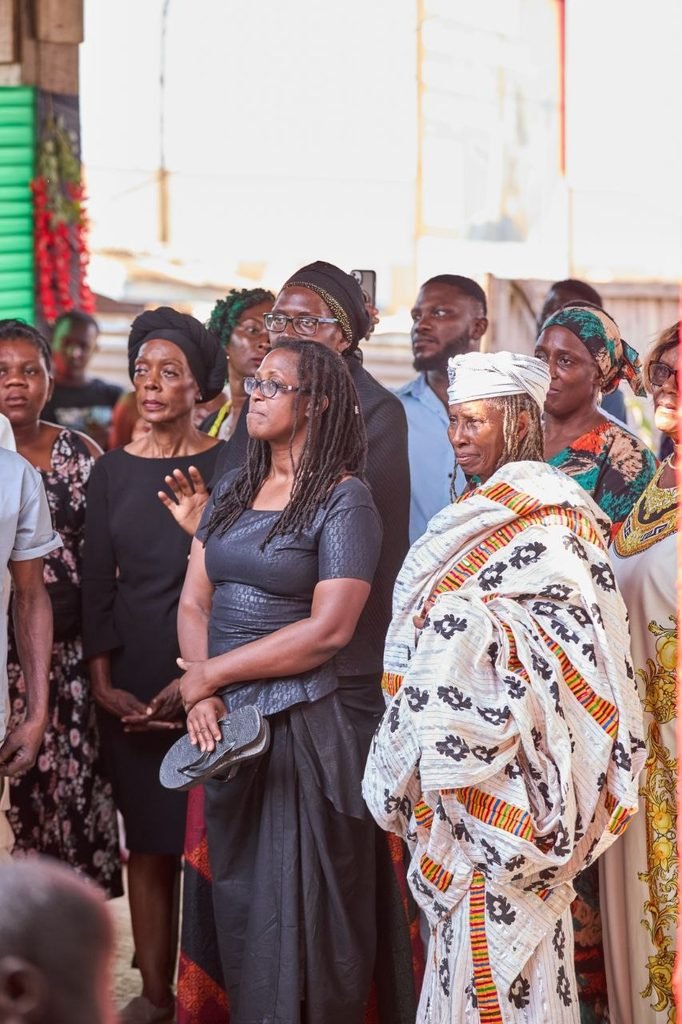
With the customary proceedings underway, the new chief was lifted onto the shoulders of celebrants and carried along the main thoroughfare of Akuapem Mampong.
The procession transformed the streets into a public stage for a ceremony rooted in the community’s traditional institutions.
There was something striking about the image, a university professor, accustomed to the measured language of academic discourse, being carried through the town in a display of traditional recognition.
Yet the celebration was not complete with the procession.
A ram was sacrificed at the Mamponghene’s compound before Kambon was taken to the palace, to swear the oath associated with his new offices.

The ceremony brought him formally into his roles as Apagyahene and Sunsum Ɔsahene.
Beyond the colourful proceedings, the titles themselves carry layers of historical meaning.
Kambon in his research explores the historical connections between Apagya and Akan political and military organisation.
Accounts cited in his work linked Apagya to an asafo, or military company, while historical writing traces an Apagya stool in Asante to the reign of Opoku Ware I in the eighteenth century.
These historical associations offer a glimpse into the institutions that have shaped Akan society over generations, although they do not automatically define the precise responsibilities of the office in Akuapem Mampong.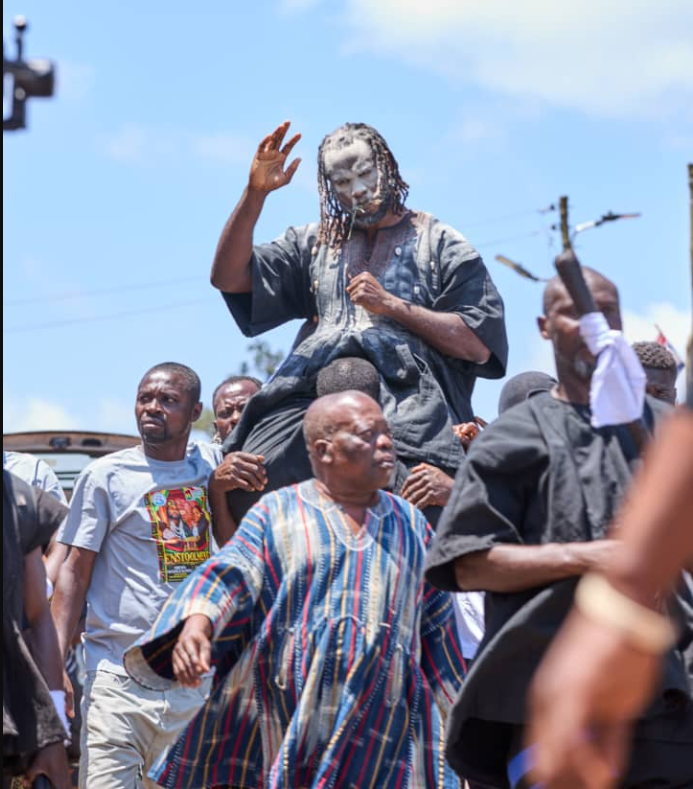
Kambon’s own professional life reflects a similar interest in preserving and examining African knowledge.
His work encompasses Akan language structure, naming practices across the Black world, proverbs and indigenous intellectual traditions.
Through Abibitumi, the platform he founded, he also promotes language learning, scholarship and cultural engagement.
But tradition was only one part of the story that day.
When the formal ceremony gave way to a reception, the occasion expanded into a celebration of three milestones: Kambon’s enstoolment, his promotion to full professor and his daughter Ama’s admission to the University of Ghana.
The gathering therefore carried a personal significance that went beyond the honours bestowed on one man. 
It celebrated professional advancement, the continuation of family aspirations and a connection to cultural heritage.
For a father, seeing a daughter gain admission to the same university where he holds a distinguished academic position offered another reason to celebrate.
For the professor, the moment placed family achievement alongside his own professional and traditional milestones.
Kambon had already established a place in the traditional life of Akuapem Mampɔn through an earlier installation as Banmuhene Kyidɔmhene, recorded in 2017.
His latest enstoolment adds another chapter to that relationship.
In Akuapem Mampɔn, the day brought together the university, the palace and the family table in one celebration. And for Kambon, the journey from the lecture room to the traditional procession showed how scholarship, cultural responsibility and family achievement could converge in a single memorable occasion.
By Enoch Ntiamoah Siaw
SKIP THE QUEUE, TAP THE NEWS
You can now read the Ghanaian Times and The Spectator newspapers from the comfort of your device via TimesNewsPlus.
Join our WhatsApp Channel: https://whatsapp.com/channel/0029VbBElzjInlqHhl1aTU27

Intercity STC Coaches Limited has interdicted a driver captured in a viral video allegedly hitting a Sprinter bus during an overtaking manoeuvre at Pokuase before driving away from the scene.
In a public notice, the company described the driver’s conduct as unacceptable, stressing that it did not reflect the safety standards and professionalism it upholds.
Management said it had commenced an immediate investigation into the incident and identified the driver, who has been interdicted pending the outcome of the disciplinary process.
The company added that it was awaiting an official report from the Pokuase Police Command to help establish the facts surrounding the incident.
STC reaffirmed its commitment to passenger safety and responsible road use, while thanking members of the public for bringing the incident to its attention.
Management assured the public that appropriate action would be taken following the investigation.
By: Jacob Aggrey