News
Ghana-Malta Relationship: Building a partnership for the future

- /home/u249204778/domains/spectator.com.gh/public_html/wp-content/plugins/mvp-social-buttons/mvp-social-buttons.php on line 27
https://spectator.com.gh/wp-content/uploads/2026/08/WhatsApp-Image-2026-08-28-at-17.31.18.jpeg&description=Ghana-Malta Relationship: Building a partnership for the future', 'pinterestShare', 'width=750,height=350'); return false;" title="Pin This Post">
- Share
- Tweet /home/u249204778/domains/spectator.com.gh/public_html/wp-content/plugins/mvp-social-buttons/mvp-social-buttons.php on line 72
https://spectator.com.gh/wp-content/uploads/2026/08/WhatsApp-Image-2026-08-28-at-17.31.18.jpeg&description=Ghana-Malta Relationship: Building a partnership for the future', 'pinterestShare', 'width=750,height=350'); return false;" title="Pin This Post">
When Ghana attained independence in 1957, it became an inspiration to other territories still under colonial rule. Ghana’s independence carried enormous symbolic importance across the world. At the time, Malta was debating its own constitutional future under British rule. Ghana’s Osagyefo Dr Kwame Nkrumah had a significant influence on Dom Mintoff, a leading Maltese political figure who would later serve as Prime Minister. Both belonged to a wider generation of post-colonial leaders seeking greater sovereignty and freedom from dependence on former colonial powers.
The work of these two prominent anti-colonial leaders helped create the foundations for formal diplomatic relations between Ghana and Malta, established on February 27, 1974. Malta subsequently joined the European Union on May 1, 2004, becoming its smallest member state by population. It is also a member of the Commonwealth and, despite its relatively small size, has long sought to punch above its weight internationally. In 2023, Ghana and Malta served together as elected members of the United Nations Security Council.
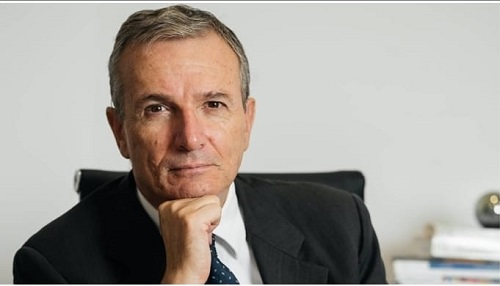
I recently met His Excellency Ronald Micallef, the High Commissioner of Malta to Ghana. Our instructive conversation provided an opportunity to take stock of the longstanding cordial relations between Ghana and Malta and to consider ways of strengthening political, economic and people-to-people ties. It came at a time when both countries are seeking to translate their longstanding diplomatic relationship into deeper practical cooperation.
The High Commissioner, who previously served as Malta’s resident Ambassador to Ethiopia and the African Union and as non-resident Ambassador to Rwanda and Djibouti, described his first year in Ghana as ‘a rollercoaster of a year’. ‘It has been a successful year. I finally feel I am beginning to integrate. It takes time to do that, bearing in mind that I came to Ghana from Ethiopia, from the highlands to the coast. We always say that Africa is one, but it is also 55 distinct countries. It is a mistake to think that you can leave the East, come to the West and simply settle in on day one. I am now beginning to settle and increasingly feel at home,’ he said.
Having worked in and with Africa for more than 35 years, High Commissioner Micallef reflected on the changes and different phases the continent has experienced. He became convinced of Ghana’s prospects during his first official visit to the country in 2017, as part of Malta’s first trade delegation to Ghana. His confidence in Ghana’s potential as a gateway to West Africa grew from conversations with leading figures across the country’s economic sectors during that mission.
High Commissioner Micallef regards a diplomat, above all, as someone who connects people. He outlined the priorities of the High Commission under his leadership: ‘The starting point is to establish what we share. We are both English-speaking countries and enjoy a dignified friendship that goes back beyond 1974, when we established diplomatic relations. We also share a historical legacy through the Commonwealth. The High Commission therefore wishes to build on these foundations by establishing closer bilateral links so that our two countries can prosper together, creating connections that are relevant not only today, but also for the future.’
He then identified four areas with particular potential for cooperation. ‘The first is transport, covering logistics, maritime affairs and aviation, where Malta has built a strong reputation. Artificial intelligence is the second area of focus. Given the opportunities it can create for young people, the third area is education, skills and job creation. The fourth is health.’
Malta is a leading Mediterranean destination, known for 7,000 years of history, Baroque architecture, clear turquoise waters and around 300 days of sunshine each year. The country welcomed more than four million inbound tourists in 2025, generating approximately €3.9 billion in total tourist expenditure. High Commissioner Micallef also discussed the scope for Ghana–Malta cooperation in tourism.
‘Tourism has evolved considerably, and Malta has extensive experience in tourism promotion, destination management, regulation, niche tourism, festivals, conferences and capacity-building. This could provide a useful basis for practical exchanges with Ghana,’ he said.
Ghana enjoys a positive reputation among the Maltese and has attracted growing interest from Maltese investors and businesses considering expansion into Africa. High Commissioner Micallef credited both his predecessor and the Ghana High Commission in Valletta for helping to build this momentum. ‘I am now seeking to take the relationship into new territory, particularly in areas in which Malta has developed strong expertise, including film, maritime affairs and logistics,’ he added.
The Governments of Ghana and Malta have recently advanced two initiatives. The first is Project ETHICS, an educational partnership developed in collaboration with Step Up Nigeria. Project ETHICS is a jointly developed and jointly owned partnership designed to strengthen ethics education and values-based learning among children and young people in Ghana. Its proposed areas of work include policy dialogue, teacher capacity-building, digital learning tools, story-based resources, pilot implementation in schools, and monitoring and evaluation.
The second is the Malta High Commission’s support for a longstanding Ghana–Malta partnership in higher education, particularly in the insurance sector. High Commissioner Micallef is also passionate about the role of culture and creativity in building lasting people-to-people connections. Trade remains another essential pillar. He welcomed the successful trade missions already held between Ghana and Malta and expressed his hope that more would follow.
In concluding our conversation, High Commissioner Micallef reflected on the principles guiding Ghana–Malta relations. ‘It is important to recognise our past. What connects us is a shared experience of nation-building and a common purpose: to make our countries viable while creating the best possible opportunities for our people. Beyond that history lies the future, particularly the opportunities presented by artificial intelligence. We should approach this future with Malta’s role as an EU member state and Ghana’s position as the host country of the Secretariat of the African Continental Free Trade Area firmly in mind.’
The outlook for relations between Ghana and Malta is highly positive. Both countries are expanding cooperation in trade, higher education and institutional partnerships, supported by a growing commitment to shared economic and social progress. This momentum is likely to strengthen under High Commissioner Micallef, an experienced educator, trade adviser and diplomat whose passion for culture and creativity informs his work as Malta’s representative to Ghana.
Story by Chris Koney
Chris is a thought leader in Marketing Communications, Stakeholder Relationship Management Professional and International Cooperation Specialist. Over the last fifteen (15) years, he has made tremendous impact within Africa’s corporate communications and creative arts sectors. He can be reached at chriskoney@gmail.com / +233 20 854 1480.

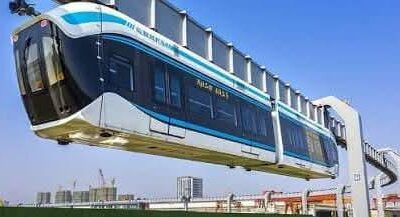


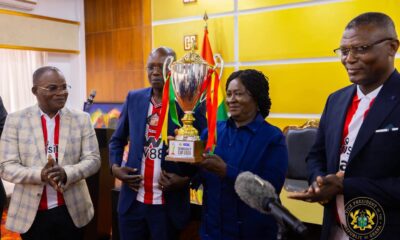



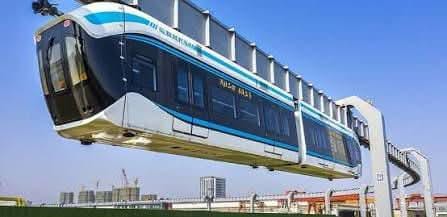
The Supreme Court has heard arguments in an application for interlocutory injunction filed by former GIIF CEO, Mr. Solomon Asamoah, the first accused person in the ongoing Skytrain scandal trial.
Mr. Asamoah has filed a certiorari application at the Supreme Court seeking to quash the High Court’s decision to dismiss his submission of no case, as well as an order quashing what he describes as a variation of his bail conditions.
Pending the determination of the certiorari application, he is asking the Supreme Court to injunct proceedings at the trial court.
The Attorney-General is opposed to both applications.
The Court, constituted by Justice Senyo Dzamefe, JSC, sitting as a sole judge of the Supreme Court, heard arguments from Mrs. Victoria Barth, counsel for the applicant, and Deputy Attorney-General, Dr. Justice Srem-Sai, and has adjourned the case to Monday, August 31, at 10 a.m. for a ruling.
The Ghana Tourism Authority (GTA) has extended the deadline for submission of event proposals for the 2026 edition of December in GH to Monday, September 7, 2026.
The extension gives event organisers, promoters, cultural innovators and experience creators additional time to submit concepts for inclusion in Ghana’s premier festive season.
This year’s December in GH calendar will run from December 1, 2026 to January 3, 2027, featuring culture, creativity, entertainment, heritage and unforgettable experiences.
According to the Authority, as a defining expression of the Black Star Experience, the season continues to evolve beyond a calendar of events into a nationwide cultural journey showcasing the rhythms, stories, flavours and expressions that make Ghana unique.
Selected events will form part of the official December in GH 2026 programme and will be integrated into the national campaign and amplified through GTA’s local and international promotional platforms.