News
Cancer cases among teachers on the rise …GNAT raises concern

- /home/u249204778/domains/spectator.com.gh/public_html/wp-content/plugins/mvp-social-buttons/mvp-social-buttons.php on line 27
https://spectator.com.gh/wp-content/uploads/2024/07/Christian-Adinkra-a-Board-Member-of-the-Cancer-Foundation.jpg&description=Cancer cases among teachers on the rise …GNAT raises concern', 'pinterestShare', 'width=750,height=350'); return false;" title="Pin This Post">
- Share
- Tweet /home/u249204778/domains/spectator.com.gh/public_html/wp-content/plugins/mvp-social-buttons/mvp-social-buttons.php on line 72
https://spectator.com.gh/wp-content/uploads/2024/07/Christian-Adinkra-a-Board-Member-of-the-Cancer-Foundation.jpg&description=Cancer cases among teachers on the rise …GNAT raises concern', 'pinterestShare', 'width=750,height=350'); return false;" title="Pin This Post">
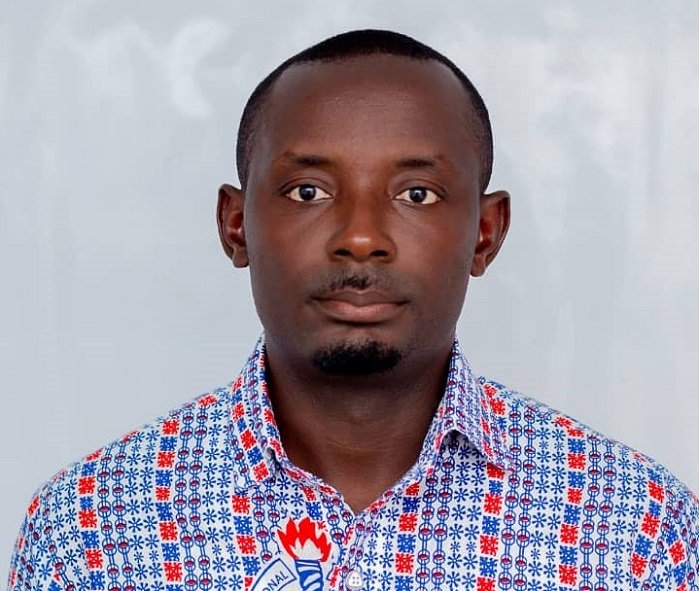
Christian Adinkra, a Board Member of the Cancer Foundation
The increasing cases of cancer patients in the country, particularly among teachers, has become a major concern for the Ghana National Association of Teachers (GNAT).
Officials of GNAT are worried about the increasing number of its members suffering from cancer, as data at the GNAT Cancer Foundation (GCF) revealed that GNAT cancer patients at the Sweden Ghana Medical Centre is 2,666 out of which 2,388 are in active service and 278 are retirees.
A Board Member of GCF and Madina-Adenta-Abokobi District GNAT Chairman, Mr Christian Adinkra, who made this known during an education programme in Ho on the devastating effects of cancer, stressed the need for regular screening for early detection and treatment.
According to Mr Adinkra, cancer cases were on the increase among teachers and with depletion of funds, there is the need to prioritise preventive education, treatment, and management sustainability.
He said currently, members of GNAT contribute GH¢5 a month to the Cancer Fund, which he observed was not sufficient in view of the increasing cost of treatment and management of cancer.
Mr Adinkra announced that in the Volta Region, the cases of cancer have shot up among teachers in the Ho District, Akatsi-North and the Hohoe Municipality.
“This should be a matter of concern to all. Regular screening remains the only solution to address the challenge,” he added.
The Chairperson of the Ho District of GNAT, which comprises of the Ho Municipality, Adaklu District, Agortime-Ziope District and the Ho-West District,
Ms Lois Tipong-Asare explained that teachers willingly visit the district office in Ho, to inform the office that they have cancer for the necessary support, which he attributed to regular education on the disease.
Ms Tipong-Asare explained that the beneficiaries of GCF are teachers and their spouses, two children under the age of 18 years and teachers who went on retirement from 2022.
She said as a result of regular education on the disturbing effects of cancer, many teachers and non-teachers were willingly checking their status through regular screening.
Ms Tipong-Asare said screening for cancer was not only meant for women but men as well because some men also suffer from breast cancer, and added that men during screening for cancer could be diagnosed with prostate cancer for early treatment.
From Samuel Agbewode, Ho

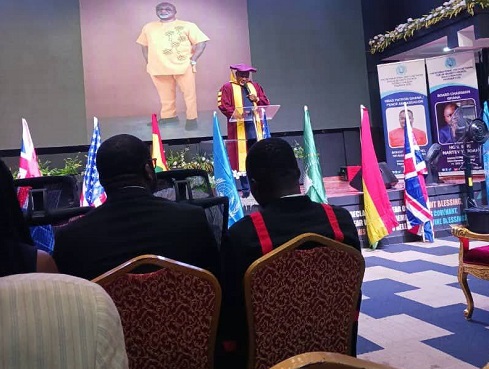
Global Board Chairman of the International Youth Network for United Nations Security Council Resolution (IYNUNSCR)2250, Hopeson Yaovi Adorye, has called on young people across the world to take deliberate action in building peace, justice, and sustainable development.
Delivering the keynote address at the IYNUNSCR2250 Global Youth Assembly held in Accra over the weekend, Mr. Adorye told the gathering of youth leaders that this generation stands at a “defining moment” in history.
He noted that while the world faces rising conflicts, violent extremism, climate pressures, cybercrime, and political polarization, young people are not just victims of these crises.
“The adoption of United Nations Security Council Resolution 2250 marked a historic turning point by recognizing that young people are simply victims of conflict but indispensable partners in conflict prevention, peacebuilding, mediation, reconciliation, and post-conflict recovery,” he said.
He stressed that peace cannot be taken for granted.
“Peace must be intentionally built. Peace must be protected. Peace must be sustained. More importantly, peace must include everyone,” Mr.Adorye stated.
He defined true peace as more than the absence of war, it exists where justice prevails, human rights are respected, institutions are accountable, and women and youth participate fully in decision-making.
“Without justice, peace remains fragile. Without development, peace remains temporary. Without inclusion, peace remains incomplete,” he added.
Turning to Africa, Mr.Adorye described the continent’s youthful population as its “greatest strategic asset” and not a burden.
“When governments invest in education, entrepreneurship, innovation, digital skills, healthcare, and good governance, young people become drivers of economic growth and democratic stability,” he said.
He warned that the absence of these opportunities creates frustration and conditions that threaten peace and security.
According to him, “Investing in youth is investing in peace. Investing in education is investing in national security. Investing in jobs is investing in stability.”
The Global Board Chairman urged delegates to move beyond advocacy and become practical agents of change. He challenged them to reject corruption, political violence, hate speech, tribalism, and misinformation.
“Let us use social media to educate rather than inflame. To unite rather than divide. The digital world should become a platform for peace, innovation, and global cooperation,” he said.
He further tasked IYNUNSCR2250 members to mentor vulnerable youth, promote mediation, advocate for peaceful elections, support environmental protection, and empower women and girls.
He further added that “History will judge our generation not by the challenges we inherited but by the solutions we created,” Hon. Adorye concluded. “May our voices become voices of reconciliation. May our actions become instruments of peace.”
The Assembly, hosted under the leadership of IYNUNSCR2250 Global President Her Excellency Rev. Dr. Lilian Sally Addo, brought together youth leaders, members of the Global Advisory Board, and distinguished guests to advance the youth, peace, and security agenda.
By Edem Mensah-Tsotorme
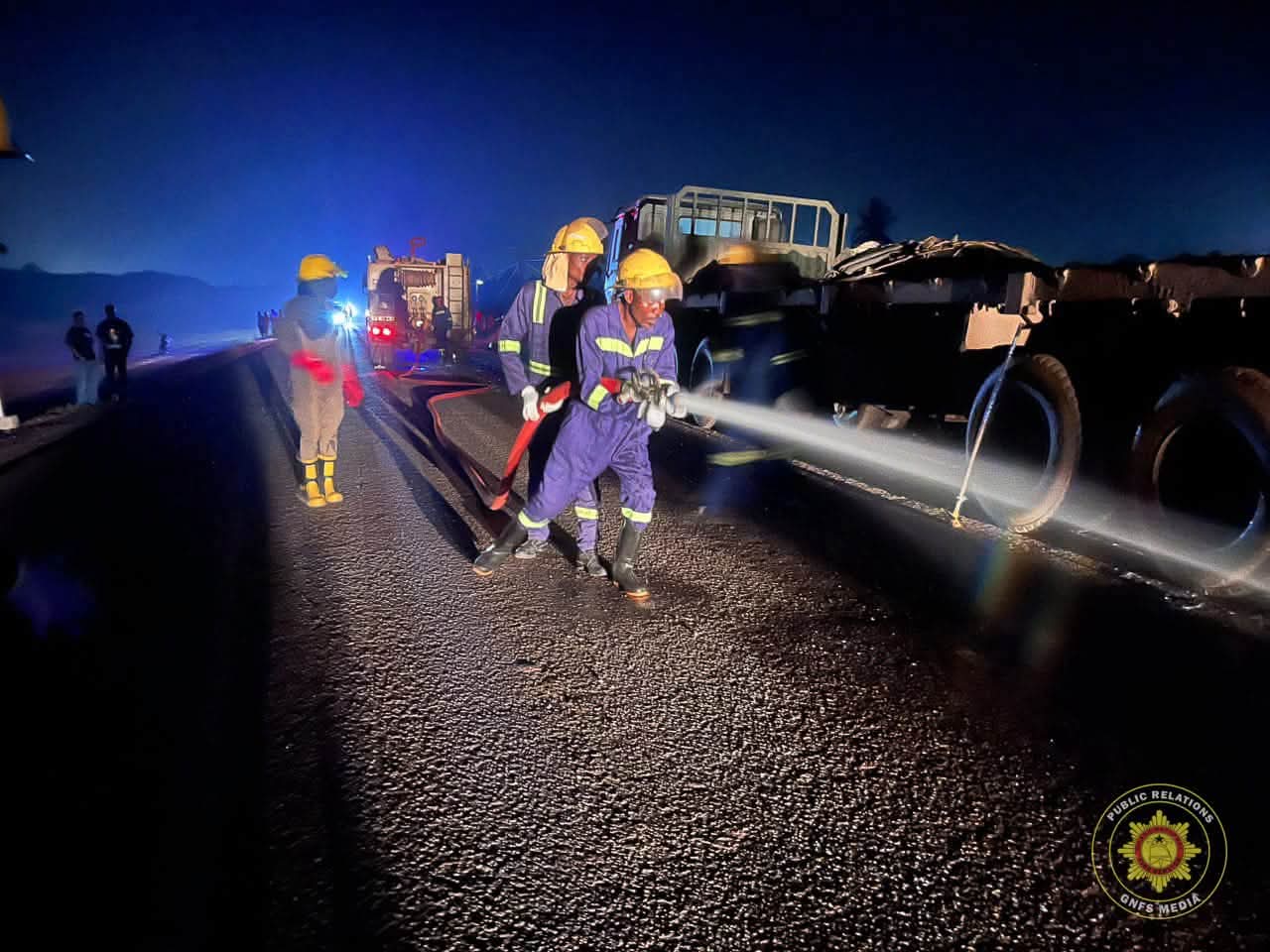
Two people have died and eight others sustained injuries following a road traffic accident at Dompoase, near Komenda on the Cape Coast-Takoradi highway on Thursday, July 31, 2026.
According to a statement from the Ghana National Fire Service, Central Region, the Komenda Fire Station received a distress call at 18:55hrs. Rescue personnel arrived at the scene 15 minutes later at 19:10hrs.
On arrival, fire officers found one person trapped in a crashed Toyota Hiace with registration number AS 6145-24.
The rescue team worked to extricate the victim, but the person was later pronounced dead at the scene.
Preliminary information indicates that 10 people were on board the Hiace at the time of the crash. Apart from the two fatalities, eight others sustained various degrees of injury.
Three of the injured were said to be in severe condition.
Personnel from the National Ambulance Service transported all the injured to the Elmina Polyclinic for medical care.
An eyewitness at the scene told officials that the accident occurred when an unidentified vehicle traveling from Takoradi towards Cape Coast* attempted to overtake another vehicle.
In an attempt to avoid a head-on collision, the Toyota Hiace, which was traveling from Cape Coast towards Takoradi, swerved and crashed into a broken-down truck with registration number GN 2491-14 that was parked by the roadside.
The Central Regional Fire Command has advised drivers to exercise patience and extra caution on the highway, especially during overtaking and in areas where broken-down vehicles may be present.
“Such incidents can be prevented if road users obey traffic regulations and remain alert,” the statement said.
The identities of the deceased have not yet been released pending notification of next of kin.
By Edem Mensah-Tsotorme