News
Canada and Ghana deepen ties


The Canadian High Commissioner to Ghana, Her Excellency Myriam Montrat, has met with the Minister for Gender, Children and Social Protection, Dr. Agnes Naa Momo Lartey, to explore areas of mutual interest and deepen collaboration on Gender Equality, Climate Action , and Social Protection.
Discussions were centered on the intersection of gender and climate change. Both parties recognized that women and girls are disproportionately affected by environmental challenges and agreed on the need for gender-responsive climate policies.
During the meeting, the Minister highlighted a number of legislative and policy priorities currently being advanced by the Ministry.
These include: the amendment of the Domestic Violence Act, the revised National Gender Policy, and the Social Protection Bill. All of which are expected to be submitted to Parliament.
She emphasized that these legal instruments are crucial to building an inclusive society that protects the rights of women, children, and vulnerable populations.
Dr. Agnes Naa Momo Lartey also spoke about plans to introduce legislation to provide a legal framework for the Ghana School Feeding Programme (GSFP), aimed at ensuring its sustainability and improving the nutritional quality of meals served to children.
The High Commissioner reaffirmed Canada’s commitment to working with Ghana on initiatives that empower women in climate-affected communities and support climate-smart livelihoods.
Both leaders reiterated the importance of collaborative efforts in combating domestic and gender-based violence, ensuring access to quality education and nutrition for children, and establishing systems that promote dignity, inclusion, and equal opportunity.

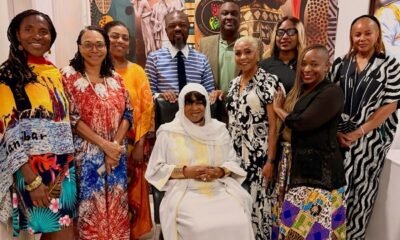






The Diaspora Affairs Office at the Office of the President has hosted a delegation of African diaspora women who are in Ghana ahead of a planned Presidential Conferment of Citizenship ceremony.
The Director of Diaspora Affairs, Kofi Okyere Darko, explained in a Facebook post that the visit was a gesture of appreciation by the delegation to the Government of Ghana for its continued efforts to reconnect Africans in the diaspora with their ancestral homeland.
He indicated that the ceremony, scheduled for next Monday, will officially grant Ghanaian citizenship to members of the delegation as part of the country’s broader engagement with the African diaspora.
The delegation was led by Erica Bennett, Founder of the Diaspora Africa Forum.
According to Mr Okyere Darko, her years of advocacy have played an important role in strengthening ties between Africa and people of African descent living abroad.
He noted that the group’s journey towards citizenship represents not only a legal process but also a cultural and spiritual return to their roots.
Also present at the meeting was Natalie Jackson, an attorney who is also expected to receive Ghanaian citizenship during the ceremony. She works closely with renowned civil rights lawyer Ben Crump.
Mr Okyere Darko emphasised that Ghana remains committed to strengthening relationships with the African diaspora and promoting unity, identity, and shared heritage among people of African descent worldwide.
By: Jacob Aggrey

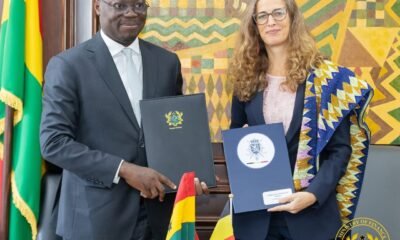
Ghana has signed a debt restructuring agreement with the Kingdom of Belgium as part of efforts to restore the country’s economic stability after the financial crisis that hit the nation in 2022 and 2023.
The Minister of Finance, Cassiel Ato Forson, today disclosed that he signed the agreement on behalf of the Government of Ghana.
He explained that Ghana experienced a very difficult period during the crisis, which forced the government at the time to declare a debt default.
However, he indicated that the country is now recovering and witnessing a significant economic turnaround.
According to him, stronger systems are also being put in place to ensure that Ghana does not return to such a situation again.
Dr Forson noted that the agreement with Belgium is the eighth deal Ghana has concluded with countries under the Official Creditor Committee as part of its external debt restructuring programme.
He expressed appreciation to the Government of Belgium for its support and partnership with Ghana during the process.
The Finance Minister thanked Carole van Eyll, Ambassador of Belgium to Ghana, for her role in strengthening relations between the two countries.
The agreement forms part of Ghana’s broader effort to restructure its external debts and stabilise the economy following the crisis.
By: Jacob Aggrey

 News1 week ago
Finance Minister outlines new gold policies to boost reserves and curb smuggling
- News2 days ago
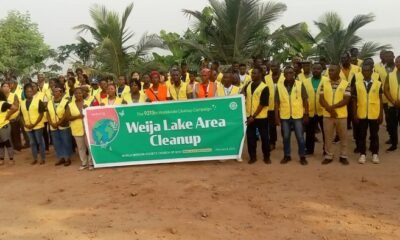
World Mission Society Church of God organises cleanup exercise
- News1 week ago
Sam George launches the 2026 Meteorological Awareness Month; presents the 2026 seasonal forecast for southern Ghana