News
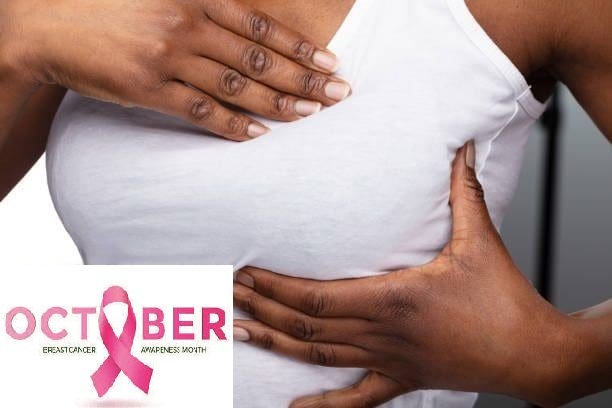
Busting the Myths, Saving More Lives

- /home/u249204778/domains/spectator.com.gh/public_html/wp-content/plugins/mvp-social-buttons/mvp-social-buttons.php on line 27
https://spectator.com.gh/wp-content/uploads/2025/10/October-is-breast-cancer-awareness-month.jpg&description=Busting the Myths, Saving More Lives', 'pinterestShare', 'width=750,height=350'); return false;" title="Pin This Post">
- Share
- Tweet /home/u249204778/domains/spectator.com.gh/public_html/wp-content/plugins/mvp-social-buttons/mvp-social-buttons.php on line 72
https://spectator.com.gh/wp-content/uploads/2025/10/October-is-breast-cancer-awareness-month.jpg&description=Busting the Myths, Saving More Lives', 'pinterestShare', 'width=750,height=350'); return false;" title="Pin This Post">
For many Ghanaian women and men, breast cancer remains a frightening and misunderstood disease.
Despite years of awareness campaigns, stigma, fear, and misinformation continue to stop people—especially women—from seeking help early, and those delays can be deadly.
One of the most common myths is that breast cancer only affects older women. In truth, even women in their 20s have been diagnosed. Another common misconception is that pain in the breast always signals breast cancer, or that no pain means safety. Both are false. Breast cancer can develop silently, without pain or visible signs.
Then there is the fear of knowing. Many women avoid screening because they think, “What I don’t know won’t hurt me.” But when it comes to breast cancer, what you don’t know can cost your life. Early detection remains the most powerful weapon against the disease. When found early, breast cancer is highly treatable, with survival rates above 90 per cent.
Health experts recommend that women perform a monthly breast self-examination (BSE), have a clinical breast examination (CBE) annually, and seek medical attention immediately if they notice a lump, discharge, or any changes in the breast’s shape, skin, or nipple area. For women aged 40 and above, experts also recommend a mammogram every one to two years, as this can detect changes long before they can be felt.
Women, Media and Change (WOMEC) believes that awareness must go beyond slogans—it must translate into action. By encouraging open conversations, supporting survivors, and challenging myths, we can save more lives.
Breast cancer is not a death sentence. Knowledge, courage, and early action make all the difference. Let us talk, test, and take charge, because every woman’s life is worth saving.
Feature Article by Women, Media and Change under its Nourish Ghana: Advocating for Increased Leadership to Combat Malnutrition Project
Join our WhatsApp Channel now!
https://whatsapp.com/channel/0029VbBElzjInlqHhl1aTU27







The Director of Legal Affairs of the New Patriotic Party (NPP), Gary Nimako Marfo, has questioned who will bear the cost of conducting presidential and parliamentary primaries following the Supreme Court’s ruling on the party’s delegate system.
Speaking to journalists, Mr. Nimako Marfo said he would not immediately comment on the ruling, adding that he wanted to wait for the full details before sharing his views.
“I don’t want to comment on it now. Let’s wait,” he said.
When asked about the Supreme Court’s decision that all members in good standing should vote in party elections, he shifted attention to the financial implications of implementing the ruling.
According to him, allowing all members in good standing to vote would increase the cost of organising internal party elections.
He questioned who would pay for the expanded electoral process.
“Who is going to pay for the cost of the elections?” he asked.
When a journalist suggested that political parties would bear the cost, Mr. Nimako Marfo replied, “Let’s wait and see.”
The comments come after the Supreme Court ruled that political parties should allow all members in good standing to vote in their internal elections, a decision that is expected to expand participation but also increase the financial and logistical demands of organising presidential and parliamentary primaries.
By: Jacob Aggrey

The Supreme Court of Ghana has declared the delegate system used by political parties to elect presidential and parliamentary candidates unconstitutional.
In a 5-2 majority decision delivered, the Court ruled that the long-standing system violates democratic principles and ordered all political parties to ensure every registered, card-bearing member participates in presidential and parliamentary primaries.
The ruling brings to an end decades of internal party elections conducted by a limited number of delegates.
The suit was filed by former Minister for Environment, Science, Technology and Innovation, Professor Kwabena Frimpong-Boateng; veteran politician Dr. Nyaho Nyaho-Tamakloe; and former Minister for Lands and Forestry, Dr. Christine Amoako-Nuamah.
The plaintiffs argued that the delegate system created inequality among party members by granting voting rights to a privileged minority while excluding ordinary members in good standing.
They told the Court that restricting voting rights to delegates was inconsistent with the democratic principles enshrined in the 1992 Constitution.
The Attorney-General’s Department supported the suit and urged the Court to adopt a “one member, one vote” approach.
In its submission, the State argued that political parties perform an important public function in Ghana’s democratic framework and that their internal electoral processes must reflect constitutional values of equality, participation and universal suffrage.
The Attorney-General further submitted that expanding voting rights to all registered members would strengthen accountability and deepen internal democracy within political parties.
The judgment means that going forward, presidential and parliamentary candidates will be selected by all registered members of a political party, instead of by delegates alone.
Political parties are expected to review their constitutions and structures to comply with the Court’s directive ahead of the 2028 general elections.
By Edem Mensah-Tsotorme