News
Bishop Salifu Amoako and 2 others re-arrested shortly after AG withdrew charges against them

- /home/u249204778/domains/spectator.com.gh/public_html/wp-content/plugins/mvp-social-buttons/mvp-social-buttons.php on line 27
Warning: Trying to access array offset on false in /home/u249204778/domains/spectator.com.gh/public_html/wp-content/plugins/mvp-social-buttons/mvp-social-buttons.php on line 27
&description=Bishop Salifu Amoako and 2 others re-arrested shortly after AG withdrew charges against them', 'pinterestShare', 'width=750,height=350'); return false;" title="Pin This Post">
- Share
- Tweet /home/u249204778/domains/spectator.com.gh/public_html/wp-content/plugins/mvp-social-buttons/mvp-social-buttons.php on line 72
Warning: Trying to access array offset on false in /home/u249204778/domains/spectator.com.gh/public_html/wp-content/plugins/mvp-social-buttons/mvp-social-buttons.php on line 72
&description=Bishop Salifu Amoako and 2 others re-arrested shortly after AG withdrew charges against them', 'pinterestShare', 'width=750,height=350'); return false;" title="Pin This Post">
Founder and General Overseer of the Alive Chapel International Church, Prophet Elisha Salifu Amoako, and two others have been rearrested by the Police shortly after they were discharged by the Circuit Court in Accra.
According to EIB Network’s Legal Affairs Correspondent, Murtala Inusah, who was at the Court, Bishop Salifu Amoako, his wife and Linda Bonsu Bempah were immediately rearrested when they stepped out of the Courtroom.
He added, however, that it was not immediately clear whether fresh charges would be brought against them.
On Monday, February 17, the Attorney General (AG), through Yaw Acquah, a State Attorney, informed the Circuit Court of the directive from the AG to withdraw the charge sheet to allow for further investigations.
According to him, the outcome of the further investigations will determine the direction of the matter.
Bishop Salifu Amoako, together with his wife Mouha Amoako, a banker, and one Linda Bonsu Prempeh, a Sales Assistant, were charged for “permitting an unlicensed person to drive”.
This led to the death of two young children after the 16-year-old driver killed two young children in a gruesome accident in Accra.
The accused pleaded not guilty and were admitted to bail by the Circuit Court in Accra in the sum of GH₵50,000 with two sureties each without justification.
In Court on Monday, February 17, the State Attorney said, “About the study of the document, it has been deemed necessary to allow the police to conduct further investigations to determine the direction the prosecution should take.”
According to him,“As such, we are before you this morning to withdraw the charge sheet against the three accused persons,” the State Attorney told the Court presided over by His Honour Samuel Bright Acquah.
Defence lawyers indicated that they do not oppose that request to have the charges withdrawn, saying, “If the prosecution wishes to withdraw charges brought against the accused persons, we have no objections.”
His Honour Samuel Bright Acquah, the presiding judge, before discharging them, said if the AG who initiated the action sought to withdraw, the Court would grant them as the defence did not object.
“If the Attorney General that brought the case is now praying for the withdrawal of the case, and the counsel of the accused persons are in support of the withdrawal, the court has nothing to say,” he added.
“The prayer for the Attorney General is granted, and the matter struck out as withdrawn. The accused persons are discharged,” Mr Bright Acquah stated.
Source: Myjoyonline.com

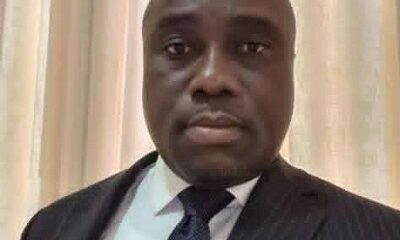



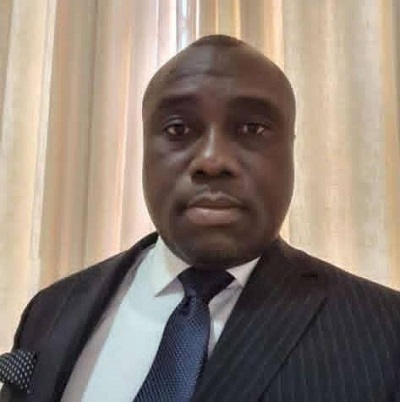
The Director of Legal Affairs of the New Patriotic Party (NPP), Gary Nimako Marfo, has questioned who will bear the cost of conducting presidential and parliamentary primaries following the Supreme Court’s ruling on the party’s delegate system.
Speaking to journalists, Mr. Nimako Marfo said he would not immediately comment on the ruling, adding that he wanted to wait for the full details before sharing his views.
“I don’t want to comment on it now. Let’s wait,” he said.
When asked about the Supreme Court’s decision that all members in good standing should vote in party elections, he shifted attention to the financial implications of implementing the ruling.
According to him, allowing all members in good standing to vote would increase the cost of organising internal party elections.
He questioned who would pay for the expanded electoral process.
“Who is going to pay for the cost of the elections?” he asked.
When a journalist suggested that political parties would bear the cost, Mr. Nimako Marfo replied, “Let’s wait and see.”
The comments come after the Supreme Court ruled that political parties should allow all members in good standing to vote in their internal elections, a decision that is expected to expand participation but also increase the financial and logistical demands of organising presidential and parliamentary primaries.
By: Jacob Aggrey
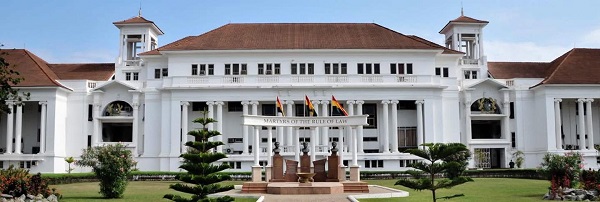
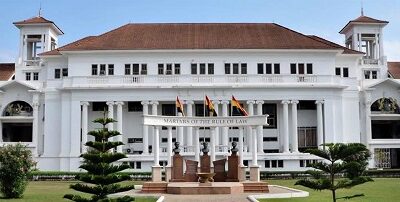
The Supreme Court of Ghana has declared the delegate system used by political parties to elect presidential and parliamentary candidates unconstitutional.
In a 5-2 majority decision delivered, the Court ruled that the long-standing system violates democratic principles and ordered all political parties to ensure every registered, card-bearing member participates in presidential and parliamentary primaries.
The ruling brings to an end decades of internal party elections conducted by a limited number of delegates.
The suit was filed by former Minister for Environment, Science, Technology and Innovation, Professor Kwabena Frimpong-Boateng; veteran politician Dr. Nyaho Nyaho-Tamakloe; and former Minister for Lands and Forestry, Dr. Christine Amoako-Nuamah.
The plaintiffs argued that the delegate system created inequality among party members by granting voting rights to a privileged minority while excluding ordinary members in good standing.
They told the Court that restricting voting rights to delegates was inconsistent with the democratic principles enshrined in the 1992 Constitution.
The Attorney-General’s Department supported the suit and urged the Court to adopt a “one member, one vote” approach.
In its submission, the State argued that political parties perform an important public function in Ghana’s democratic framework and that their internal electoral processes must reflect constitutional values of equality, participation and universal suffrage.
The Attorney-General further submitted that expanding voting rights to all registered members would strengthen accountability and deepen internal democracy within political parties.
The judgment means that going forward, presidential and parliamentary candidates will be selected by all registered members of a political party, instead of by delegates alone.
Political parties are expected to review their constitutions and structures to comply with the Court’s directive ahead of the 2028 general elections.
By Edem Mensah-Tsotorme