News
Away from Fantasy to Real life in the Chic Boss Collection


- /home/u249204778/domains/spectator.com.gh/public_html/wp-content/plugins/mvp-social-buttons/mvp-social-buttons.php on line 27
https://spectator.com.gh/wp-content/uploads/2025/10/WhatsApp-Image-2025-10-30-at-15.02.52.jpeg&description=Away from Fantasy to Real life in the Chic Boss Collection', 'pinterestShare', 'width=750,height=350'); return false;" title="Pin This Post">
- Share
- Tweet /home/u249204778/domains/spectator.com.gh/public_html/wp-content/plugins/mvp-social-buttons/mvp-social-buttons.php on line 72
https://spectator.com.gh/wp-content/uploads/2025/10/WhatsApp-Image-2025-10-30-at-15.02.52.jpeg&description=Away from Fantasy to Real life in the Chic Boss Collection', 'pinterestShare', 'width=750,height=350'); return false;" title="Pin This Post">
There is a point in a brand’s evolution where it must answer a rude but necessary question: can you dress a woman for her real life, not just for her fantasy? With Ranto Clothings’ “Chic Boss Collection,” released August 5, 2023 under Creative Director Bright Urhobo, we get a decisive answer and it is a YES!, with an attitude.
This look, in its apparent simplicity, is Ranto Clothings making its claim for the modern African working woman’s uniform. Not “the boss” as a cartoon stereotype with shoulder pads shouting, but the boss as a presence of calm, structured, intentional.
Let’s begin with the white shirt. We’ve seen endless iterations of the white button-down in fashion, but what Urhobo does here is different: he gives it a boardroom backbone without losing femininity.
The collar is classic, pointed, and deliberately not exaggerated. This matters. Too-wide collars slip into parody and “CEO costume.” Here we have proportion, cleanliness, and a refusal of drama.
The shirt is cut with enough volume in the sleeve and upper arm to move, this is not a constricting, taut, hyper-tailored men’s shirt forced onto a woman’s frame. The fit through the torso is relaxed rather than shrunken. You can tuck it without puckering. You can sit in it for eight hours.
And that, honestly, is radical. African women in professional spaces are too often encouraged to perform “seriousness” through discomfort: corseted waists, immobile peplums, “don’t breathe too hard or it will shift” blouses. Urhobo pushes against that. He offers authority through clarity instead of tightness.
The fabric, from what we can see, is a standard cotton or cotton blend, it is crisp, matte, with enough structure to hold a straight line down the placket but not so stiff it looks starched into aggression. The finish is clean, not glossy. This shirt doesn’t shout. It speaks.
Then we arrive at the trousers.
Black, high-rise, and cut in a subtly flared leg, they immediately recall a certain 1970s softness, those trousers that let women walk into formerly all-male rooms and not ask permission.
Except here, Urhobo switches the expected wool suiting fabric for what reads visually as faux leather or coated fabric. The result is interesting. He’s not just giving us “officewear.” He’s giving us officewear with a bite.
The fabric choice is key. A matte or semi-matte leather-like textile carries connotations: nightlife, edge, sexual agency. Putting that on a tailored trouser base pulls power downward into the hip and thigh. It takes away the old corporate instruction to neutralize the body. The body is not neutralized here. It is framed, seamed, and allowed.
Look closely at the construction: the trousers aren’t sloppy. There’s a defined waistband, a front closure with a visible button, and vertical seam detailing that runs along the leg.
That seaming is clever, it sculpts and lengthens without resorting to darts that would wrinkle on coated fabric. It also reins in the tendency leather-look trousers sometimes have to balloon at the knee or collapse at the ankle.
The leg shape opens gently below the knee. Not a dramatic bell-bottom and not skinny either. It’s a measured flare, the kind that balances the proportions of the body and works well with a heel. And yes, there is a heel.
From a distance, the look sketches a strong inverted triangle. The shoulders are held wide and square by the stance and cut of the shirt, the waist narrows, and the trousers fall in an elongated line to the floor. This is deliberate.
The “Chic Boss” woman is grounded. Her power sits in her stance, in the set of her legs, not only in her upper body.
Let’s talk fabrication again, because it’s the deciding element in whether this look is merely “basic pieces” or something more designed.
The Shirt fabric; breathable, functional, with enough honesty in its weave to feel like daywear, not “evening-white.” This keeps it in the realm of realism.
Trouser fabric; assertive, tactile, with a faint sheen. This injects fashion into what could otherwise be a Zara-level formula. It’s this textile decision that lifts the look into runway conversation. You’re not just looking at “white shirt + black pants.” You’re looking at tension between classic cotton and engineered gloss.
Urhobo understands that tension is the engine of modern dressing. The woman of 2023 (and let’s be honest, 2025, 2030) no longer has the patience for full looks that demand costume changes. She wants hybridity.
This look achieves this successfully because it’s believable. Editors can style fantasy, yes, but buyers invest in credibility. This is credible. Women can actually wear this. In Lagos. In London. In Nairobi. In Paris. It travels.
And it photographs well. The white shirt throws light up into the face. The black trousers pull the gaze down the line of the body. The sandal breaks the severity before it becomes authoritarian. In campaign shots and press runs, this reads as “approachable power,” which is precisely the commercial sweet spot.
If there is a critique and any collection that dares to call itself “Chic Boss” should invite critique, it is this: tailoring at this level begs for obsessive finishing.
The shirt cuffs, for instance, could become a signature if they were slightly exaggerated, French-cut, or if there was a subtle stitch detail that marked them as Ranto.
The trousers, too, could carry a barely visible monogram stitching at the seam or a signature hardware at the waistband button. That is how you build brand codes that last longer than a trend cycle.
But that is long-game thinking. This is a young brand doing the foundational work first.
By Hassan Ssentongo

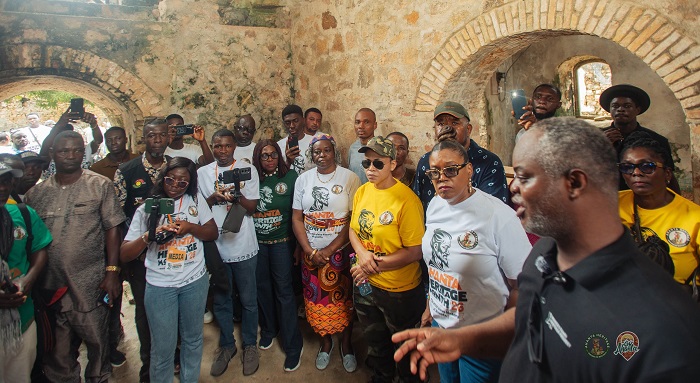
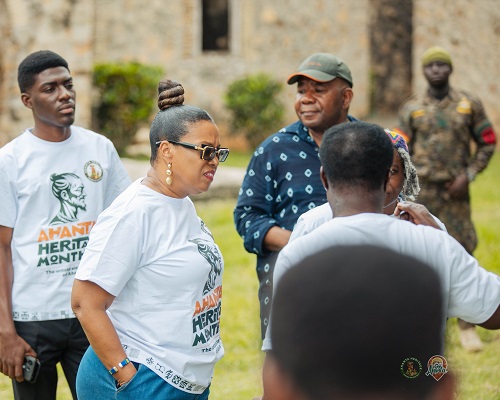
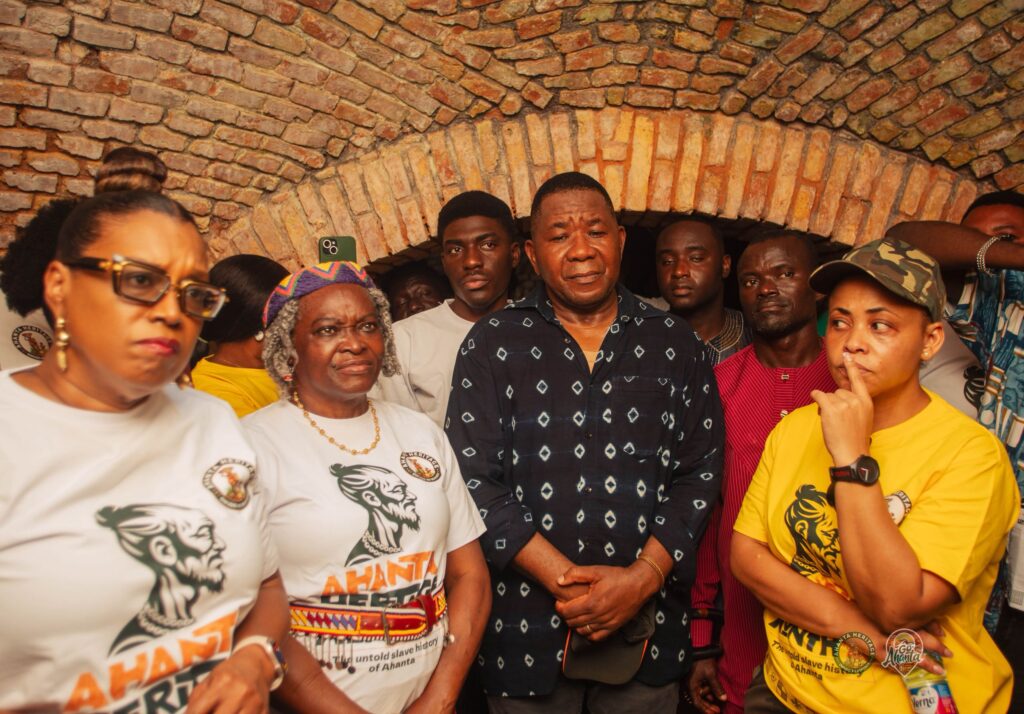
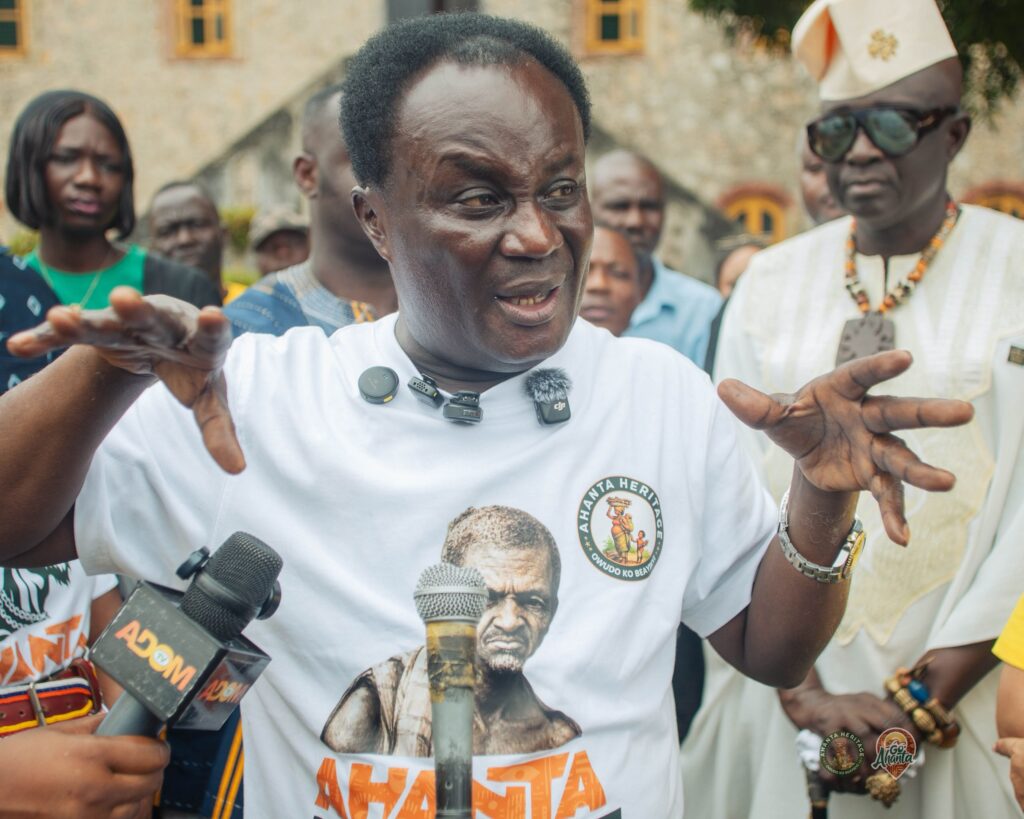
Ghana’s south-western coastline became the meeting point of history, diplomacy and cultural heritage on Saturday, July 26, 2026, as foreign diplomats, a senior UNESCO official and members of the international community embarked on a historic tour of Ahanta West’s centuries-old forts and landmarks during the 2026 Ahanta Heritage Month celebrations.
The Ahanta Heritage Month spanned throughout the whole of July 2026.
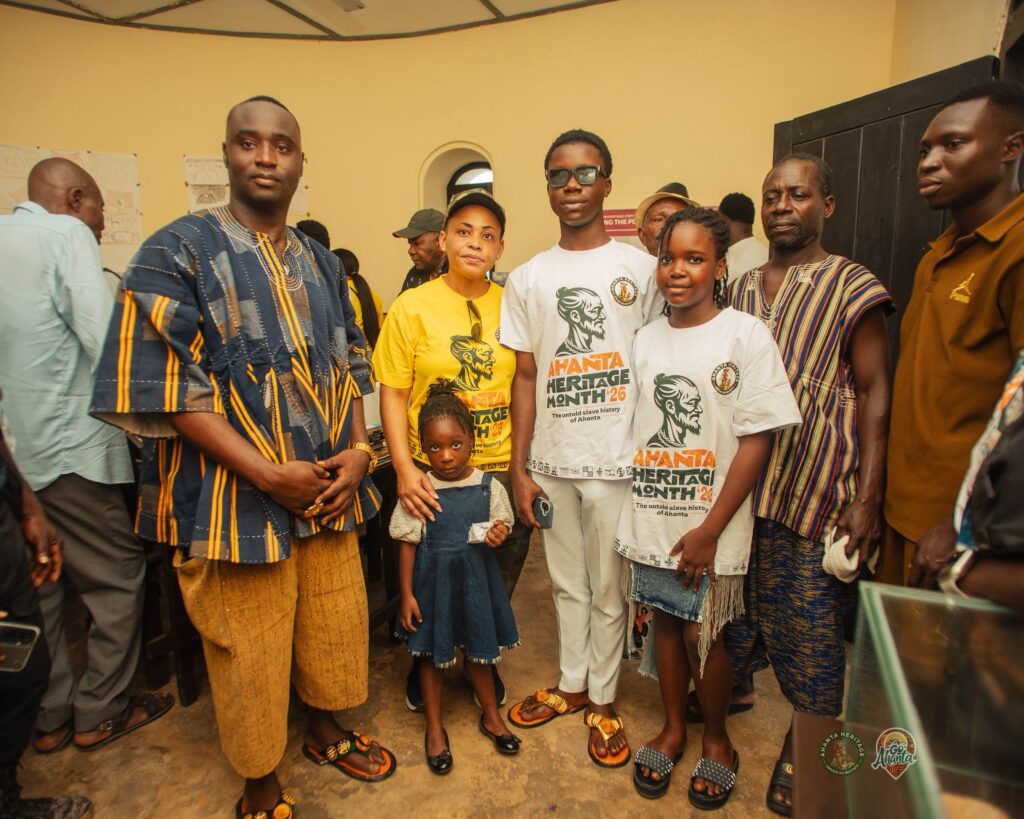
The tour, one of the flagship events of the 2026 Ahanta Heritage Month celebrations, brought together ambassadors, traditional leaders, heritage enthusiasts, and a vibrant contingent of students and young people from schools across the Ahanta West Municipality.
The intergenerational and multicultural gathering transformed the excursion into a powerful journey of remembrance, education and cultural diplomacy.
Organised by the Member of Parliament for Ahanta West, Mavis Kuukua Bissue, the carefully curated itinerary took participants to the historic Fort Gross Friedrichsburg at Princes Town, the iconic Cape Three Points, and Fort Batenstein in Butre before concluding with a courtesy call on the Chief of Butre at his palace.
The tour began at Fort Gross Friedrichsburg, one of the least-known but most historically significant European forts on Ghana’s coastline.
Constructed in the late seventeenth century by the Brandenburg African Company, the imposing fortress remains one of the few colonial forts on the Gold Coast built by a German state, rather than the Portuguese, Dutch or British powers that dominated much of the coast.
Perched majestically above Princes Town, the fort offers sweeping views of the Atlantic Ocean and stands as a silent witness to centuries of trade, diplomacy and conflict.
From Princes Town, the delegation travelled to Cape Three Points, mainland Ghana’s southernmost tip, where participants enjoyed panoramic views from the historic lighthouse while taking refreshments against the breathtaking backdrop of the Gulf of Guinea.
Renowned for its dramatic coastline, pristine rainforest and maritime significance, the location offered visitors a glimpse into the natural landscape that shaped centuries of seafaring and commerce along Ghana’s western coast.
The final stop carried profound historical symbolism. At Fort Batenstein in Butre, visitors explored the former administrative headquarters from which Dutch colonial authorities managed their relations with the Ahanta Kingdom.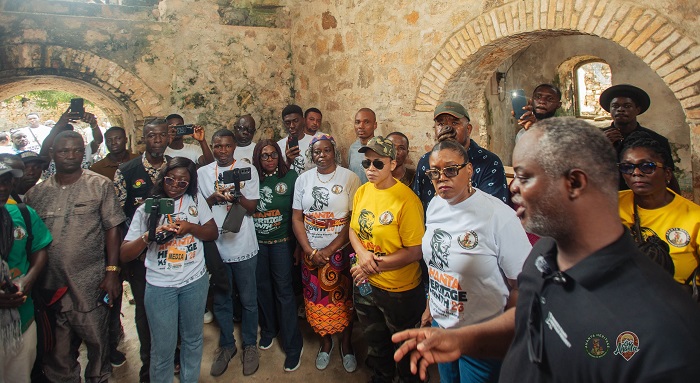
The fort remains forever linked to one of the defining moments in Ahanta history, the resistance and subsequent execution of Otumfuo Nana Badu Bonsu II in 1838.
The delegation concluded its visit with a traditional courtesy call on the Chief of Butre, honouring the customs of the historic Ahanta state.
The heritage tour attracted an impressive international delegation, highlighting growing global interest in Ghana’s historical role in the transatlantic slave trade and its enduring connections with the African diaspora.
Among the distinguished participants were Barbados’ High Commissioner to Ghana, H.E. Juliette Bynoe-Sutherland, Suriname’s Ambassador to Ghana, H.E. Fidelia Graand-Galon, and UNESCO’s Representative to Ghana, Edmond Moukala N’Gouemo, whose organisation continues to champion the preservation of Ghana’s forts and castles as World Heritage Sites and enduring symbols of shared human history.
Also joining the delegation was the Divisional Chief of Agona, together with heritage officials who guided participants through the historical significance of each location.
Interwoven with the diplomatic delegation were busloads of schoolchildren, students and youth from the Ahanta West Municipality, many visiting the forts for the very first time as well as members of Ghana’s international community.
Their participation underscored the organisers’ commitment to making heritage education accessible to younger generations while fostering greater cross-cultural understanding.
The sequence of destinations was deliberately designed to tell the complete story of Ahanta’s engagement with European powers from the establishment of fortified trading posts in the seventeenth century, through the strategic maritime importance of Cape Three Points, to the tragic events surrounding the resistance of Nana Badu Bonsu II at Butre.
The tour also served as a prelude to the unveiling of a bronze statue in honour of the revered Ahanta king at Agona Nkwanta the following day, providing visiting dignitaries with valuable historical context before participating in the official commemorative ceremonies.
For Mavis Kuukua Bissue, the driving force behind the Ahanta Heritage Month initiative, the heritage tour represents a broader vision of repositioning Ahanta West as one of Ghana’s premier heritage tourism destinations.
By showcasing the municipality’s remarkable collection of European forts alongside globally recognised sites such as Cape Coast and Elmina Castles, the initiative seeks not only to preserve an important chapter of Ghana’s history but also to strengthen cultural and historical ties with nations across the African diaspora whose stories remain inseparably linked to this historic coastline.
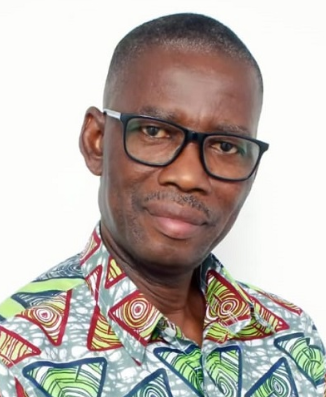
The Member of Parliament (MP) for Wa West, Mr Peter Lanchene Toobu, has called for calm and urged the Ghana Police Service to conduct a thorough and impartial investigation into the death of Abu Tijani, popularly known as “master one”, who reportedly died while in police custody.
The MP made the call at a press briefing in Wa on Thursday, describing the incident as one that had generated public concern and underscoring the need for transparency to maintain public confidence.
Mr Toobu said the death of Abu Tijani, who had been declared wanted in connection with the protracted Lassia Tuolu-Kendeu conflict and was arrested on July 25, 2026, should be investigated in accordance with the laws of Ghana.
He also appealed to the Office of the Attorney-General and Ministry of Justice to ensure the fair, impartial and expeditious prosecution of all cases arising from the conflict, stressing that justice must be served without fear or favour because “crime is individualistic and not communal.”
The MP recounted that the communal conflict, which erupted on June 15, 2024, claimed three lives, left several people injured, destroyed properties and disrupted the long-standing peaceful coexistence between the two communities.
He explained that although security agencies restored calm and a mediation process led by the Upper West Regional Minister and Chairman of the Regional Security Council (REGSEC), Charles Lwanga Puozuing, had made progress, the process suffered a setback after two young men from Bakpateng near Lassia Tuolu were murdered in Kendeu on November 23, 2025.
According to Mr Toobu, police arrested 10 suspects following the incident, with nine later granted bail while one remained in custody in connection with the alleged murders. Further investigations subsequently identified additional suspects, including Abu Tijani, who had evaded arrest until his apprehension in July this year.
The MP said he visited Wechiau on Wednesday to assess the security situation, where he met the Paramount Chief and his Council of Elders, received security briefings and inspected a house that had been set ablaze by some youth during the disturbances.
Expressing condolences to families who had lost relatives in the conflict, Mr Toobu said the communities should not continue to lose their young people to violence, adding that poverty, disease, unemployment, deprivation and illiteracy remained the real enemies confronting the area.
He urged residents to refrain from spreading unverified information, inflammatory comments and hate speech, particularly on social media, warning that rumours could further inflame tensions.
Mr Toobu further appealed to the factions involved in the conflict to return to the mediation table under the auspices of REGSEC, saying lasting peace could only be achieved through dialogue, compromise and reconciliation.
He also called on the people of Lassia Tuolu, Kendeu, Wechiau and neighbouring communities to cooperate with security agencies and reject reprisal attacks, while commending the security personnel for their professionalism and sacrifice in protecting lives and property.
The MP appealed to traditional authorities, religious leaders, women, youth groups and civil society organisations to become ambassadors of peace and work together to restore trust and promote lasting peace in Wa West.
A statement issued by the Upper West Regional Police Command on Tuesday said the suspect, had been on its wanted list after allegedly evading arrest on May 11, 2026, and going into hiding despite appeals through the Paramount Chief of Wechau and community elders for him to assist investigations.
Police said he resisted arrest when he was eventually apprehended, injuring two officers before being subdued.
During interrogation, the suspect allegedly admitted involvement in the case and told investigators that the two victims were initially buried in Wechau before he and his alleged accomplices exhumed and reburied the bodies across the Black Volta River in Burkina Faso to conceal the crime.
Police later escorted him to the alleged original burial site, about three kilometres west of Wechau, but an excavation yielded no human remains. He reportedly maintained that the bodies had been moved days after the initial burial.
The statement said that while investigators were later escorting the suspect to identify the location of one of his alleged accomplices along the Nakore Road, he complained of a severe headache.
The operation was halted and he was rushed to the Seventh Day Adventist (SDA) Hospital in Wa, where he was admitted at about 1:00 p.m. but was pronounced dead at 4:37 p.m. despite receiving medical treatment.
BY GORDON WELLU