News
Auditor-General rejects MPs salary arrears…They seek redress in court


- /home/u249204778/domains/spectator.com.gh/public_html/wp-content/plugins/mvp-social-buttons/mvp-social-buttons.php on line 27
https://spectator.com.gh/wp-content/uploads/2020/05/ARREARS-Mr-Domelevo.jpg&description=Auditor-General rejects MPs salary arrears…They seek redress in court', 'pinterestShare', 'width=750,height=350'); return false;" title="Pin This Post">
- Share
- Tweet /home/u249204778/domains/spectator.com.gh/public_html/wp-content/plugins/mvp-social-buttons/mvp-social-buttons.php on line 72
https://spectator.com.gh/wp-content/uploads/2020/05/ARREARS-Mr-Domelevo.jpg&description=Auditor-General rejects MPs salary arrears…They seek redress in court', 'pinterestShare', 'width=750,height=350'); return false;" title="Pin This Post">
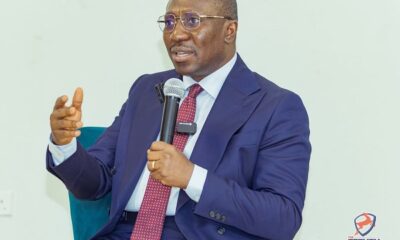
The Auditor-General has rejected a request by the Chief of Staff for an audit verification to be conducted for the payment of salary arrears to be given to more than 200 former and current Members of Parliament (MP).
Daniel Domelevo, the Auditor-General, explained that the request made by the former MPs was invalid and amounted to a conflict of interest because most of the beneficiaries were either serving as members of the current government, including the president and the Chief of Staff or were still in parliament.
In a letter dated May 8, 2020, the Auditor-General had however, stated that because some MPs on list for salary arrears were under investigation for receiving double salaries, it would not be right to pay any further monies to them.
The Chief of Staff, Akosua Frema Osei-Opare’s request was based on a letter from a group known as Forum for Former Members of Parliament (FFMPs), some of whom left Parliament more than 10 years ago.
They are requesting payment of arrears of salaries and emoluments amounting to more than GH¢29.7 million owed its members by the State, and won’t give up on its demands and will seek redress at appropriate quarters.
Mr Domelevo cited case of conflict of interest since some beneficiaries of payment of supposed salary arrears were occupants of various positions in executive arm of the government, whom he described as ‘the approving authority’.
But David Apasera, former MP for Bolgatanga Central Constituency in the Upper East Region for Peoples National Convention (PNC) and leader of Forum, said they were not moved by the decision of the Auditor-General, saying, “ Options are there if you have an entitlement and the government is refusing you your entitlement, you can go through right quarters for redress.
“The appropriate quarters are there, we can go to for redress, we are not bothered by opinion of Auditor-General, if Auditor-General had time to listen to us, he would have understood our case, nobody told us to come up with issue, we took it up on our own, we didn’t go to discuss with Chief of Staff, we did it on our own because it is legitimate,” Mr Apasera bemoaned.
For his part, Majority Leader, Osei Kyei-Mensah-Bonsu was unhappy with the Auditor-General’s decision to reject the Chief of Staff’s request for conduct of an audit verification that would pave way for payment of salary arrears to be made to more than 200 former and current MPs.
He, however, clarified contrary to Auditor-General’s assertion, just about four MPs from Majority would have benefitted from payments and described it as unfortunate comment to come from the Auditor General and Majority who would otherwise come for consideration were only three or four but the Minority have many.
“It is my considered opinion former MPs are not entitled to what they are asking for, but it also came to me as surprise our former MPs are making such request at time of pandemic which has taken the entire world by surprise,” Mr Kyei-Mensah-Bonsu said. -citinewsroom.com


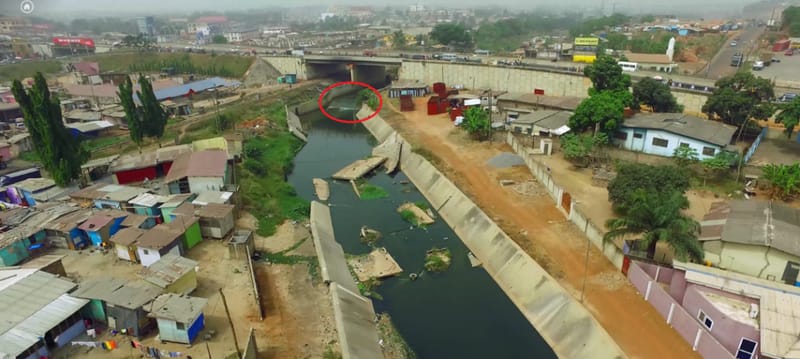
Construction of a major underground stormwater drain along the Dr. Busia Highway within the Kaneshie enclave will commence on September 7, 2026.
The Project Coordinator for the Greater Accra Resilient and Integrated Development (GARID) Project, Dr. Kwadwo Ohene Sarfo, announced this at a special media briefing on Wednesday.
According to him, the works will involve the construction of a double-cell underground rectangular drain measuring approximately 10 metres wide and 1.95 kilometres long, stretching from Pamprom Junction to First Light Junction.
The new drain will replace the existing two 1.2-metre diameter pipes, which are inadequate to carry the volume of stormwater in the area.
Dr. Sarfo said the drain will connect at one end to the recently completed section within the Accra Academy campus and at the other end to the existing drain at Pamprom Junction.
He said the construction is expected to run from September 2026 to October 2027.
The project forms part of government’s broader flood prevention and mitigation programme aimed at addressing perennial flooding in Accra.
By Edem Mensah-Tsotorme
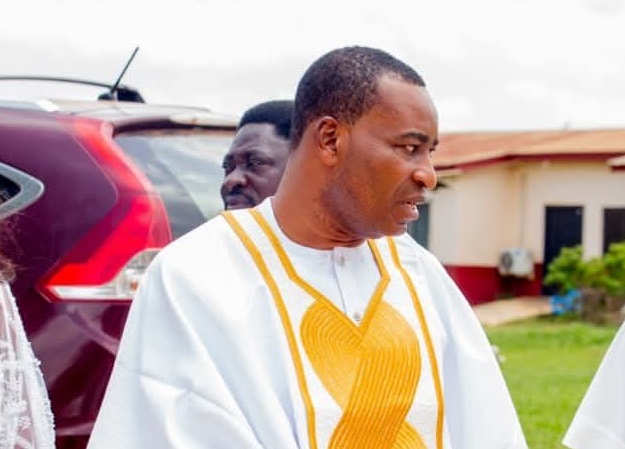
The former Ashanti Regional Chairman of the New Patriotic Party (NPP), Bernard Antwi Boasiako, popularly known as Chairman Wontumi, has withdrawn from the party’s National Chairmanship race.
In a statement issued yesterday, Chairman Wontumi who is currently serving a 20-year jail term said his decision was driven by his love for the party and his unwillingness to let his personal circumstances distract the NPP from its rebuilding efforts.
“There are moments in the life of a man when the heart wants to continue, but duty demands sacrifice. Moments when one must quietly set aside personal ambition, not because the dream has died, but because the family he loves must not be made to carry his burden. Today, I find myself at such a painful moment,” he wrote.
He disclosed that after many nights of prayer, sober reflection and consultations with his family, legal team, party elders, campaign team and trusted supporters, he concluded that his present situation must not become an additional burden on the NPP.
“This is not the decision my heart desired, but sometimes, true love requires us to release what we deeply want in order to protect what we love even more,” he added.
Recounting his years of service, Chairman Wontumi said he had served the party with everything within him, walking through heat and rain, travelling to remote communities and standing with the grassroots in both victory and defeat.
“For many years, I have served the NPP with everything within me… The NPP is not merely a political party to me. It is my family. It is my home. It is a cause to which I have dedicated a significant part of my life,” he stated.
He explained that the party, already carrying the pain of electoral defeat and the huge responsibility of preparing for the future, should not be made to carry his personal weight.
“That is why I cannot allow my present situation or personal ambition to distract the party from the difficult work of rebuilding. I cannot ask the party to carry my weight when it is already carrying the pain of defeat and the enormous responsibility of preparing for the battle ahead. I would rather carry this pain quietly than allow the party I love to suffer because of me,” he said.
He further sympathized with his supporters across the 16 regions, acknowledging that the decision would be painful for many who had sacrificed for his campaign.
“To my teeming supporters across all sixteen regions, I know this message will hurt. I know many of you will read it with tears in your eyes because I understand the sacrifices you have made for this journey,” he said.
By Edem Mensah-Tsotorme