News
Amnesty warns of a ‘lost Nigerian generation’

Rights group Amnesty International is warning that Nigeria must address more than 10 years of neglect of an entire generation of children in the country’s north-east.
The area has been severely affected by the Boko Haram insurgency.
In a 91-page report, the global watchdog said children living in Boko Haram-controlled areas were subjected to torture, floggings and sexual abuse.
While mostly accusing the Islamist militant group of atrocities, it also criticised the army.
It said the security forces held “children in conditions amounting to torture in military detention”.
Amnesty International highlighted a flawed reintegration programme for alleged former fighters known as Safe Corridor.
It receives funding from the European Union and other international donors.
Amnesty says that those in the programme have no access to legal representation, and are often held for extended periods.
The Nigeria military is yet to respond to allegations of torture and unlawful detention of children, in the report.
The UN Children’s Agency, UNICEF, says that between September 2017 and May 2019, it reported the release of more than 1,700 children after being cleared of links with jihadists.
Meanwhile, Amnesty International is calling on the Tunisian authorities to halt the prosecution of blogger Emna Chergui, whose trial is set to begin on Thursday.
The 27-year-old blogger is being prosecuted for sharing a satirical post about coronavirus on her social media account that looks like a verse from Islam’s holy book, the Koran.
If convicted, Ms Chergui could face a prison sentence of up to three years.
Imitating a Koranic text is considered a violation of something that is deemed to be sacred.
The image, which was reportedly designed and originally shared by an Algerian atheist who lives in France, contains text that says the virus came from China and tells people to wash their hands.
In a statement, Amnesty’s North Africa director Amna Guellali said the right to freedom of expression extended to what “some might consider shocking or offensive”.
She called on the Tunisian government to amend the law “so they are compliant with human rights”.
In early May, when the post was first shared during the fasting month of Ramadan and while the country was still largely under lockdown, it caused a stir online.
The head of one political party condemned it without naming her, saying the state had a duty to protect what was sacred in the same way it did to prohibit apostasy and incitement to hatred – but he called for a punishment other than imprisonment.
-BBC



Search and rescue operations are ongoing following a structural collapse at the Experimental D/A School in Accra Newtown.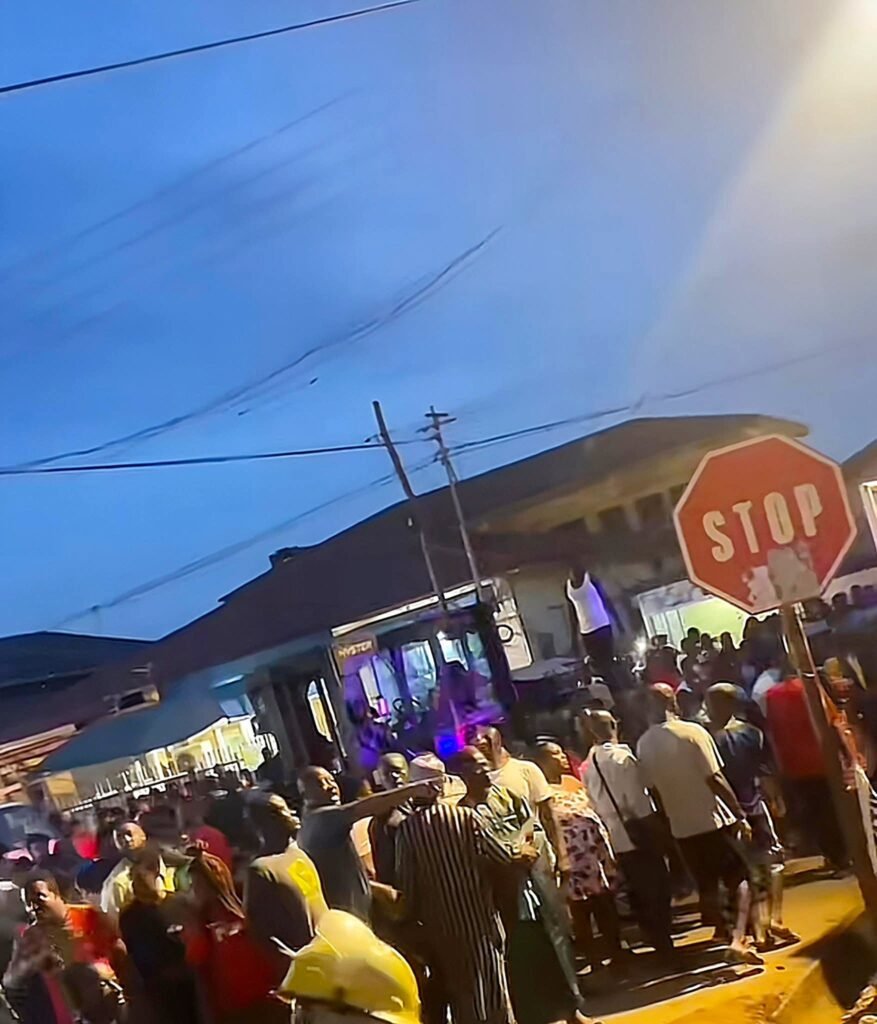


The Ghana National Fire Service (GNFS) confirmed that emergency teams were deployed to the scene to assist victims who may be trapped under the debris.
In an update, the service indicated that personnel from the Ghana Police Service, the National Ambulance Service and the National Disaster Management Organisation (NADMO) are workin7g together to manage the situation and rescue affected persons.
It noted that the area has been cordoned off by the police to prevent members of the public from entering the scene and interfering with the operation.
According to the GNFS, the coordinated effort is aimed at ensuring that all trapped victims are safely rescued as quickly as possible.
The service advised residents and the general public to stay away from the area to allow emergency teams to carry out their work without obstruction.
The service added that further updates will be provided as the situation develops.
By: Jacob Aggrey

The New Times Corporation (NTC), publishers of The Ghanaian Times and The Spectator, on Wednesday held a staff get-together to commemorate the Ghana Month celebration.
The event was also to strengthen teamwork and bonding. It was attended by management members and staff from various departments.
The staff were engaged in activities such as apple eating, musical chairs competition, pick and act, and other interesting games.
Speaking at the gathering, the Chairperson of the Corporation’s Interim Management Committee (IMC), Dr (Mrs) Charity Binka, emphasised the importance of unity and collaboration in achieving organisational goals. She urged the staff to put aside their differences, work together, and also create a positive working environment.
In a welcome address, the Editor of The Spectator, Mrs Georgina Naa-Maku Quaitoo, urged the staff to have fun as “we climax the Ghana Month celebration with this get-together.”


The Acting Editor of The Ghanaian Times, Mr David Adadevoh, commended the staff for coming out in their numbers to join in the celebration and called for unity to transform the fortunes of the Corporation.
By Linda Abrefi Wadie
Join our WhatsApp Channel now!
https://whatsapp.com/channel/0029VbBElzjInlqHhl1aTU27


 News4 days ago
Agona West NDC demands unqualified apology from Paul Adom-Otchere over alleged misleading editorial
- News1 week ago
Eid not only moment of celebration but call to sustain values of discipline – President Mahama
- News3 days ago
Gyankroma Akufo-Addo Denies $25m Interchange Painting Claim, Threatens Legal Action