Features
Akan constituency MP Engr. Yao Gomado, a definition of selfless leadership

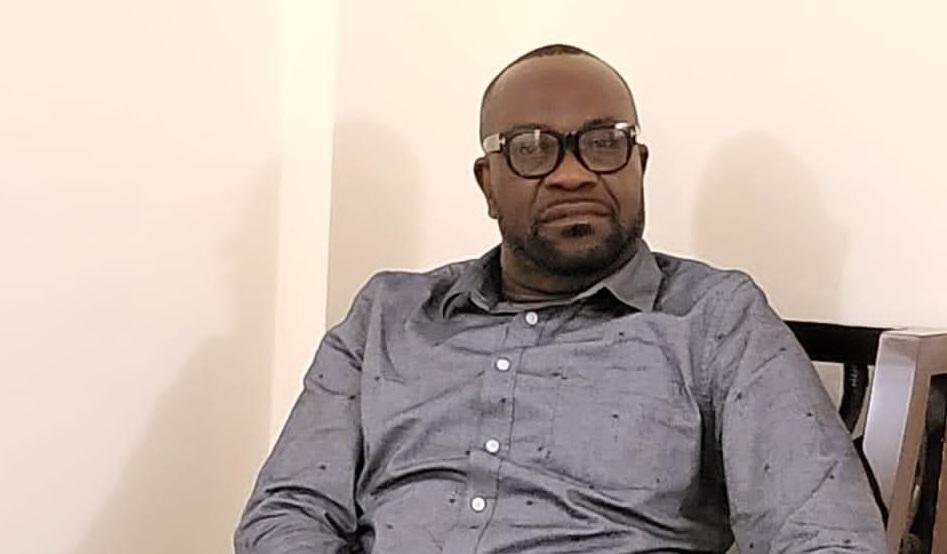
Engr. Yao Gomado
From denying himself the luxury and prestige of riding in a V8 Landcruiser vehicle like other Members of Parliament (MPs), to rather invest in the wellbeing of his constituents, Akan Constituency MP in the Oti Region, Engr. Yao Gomado, is setting an example as far as selfless leadership is concerned.
Voted into power in 2020 on the ticket of the National Democratic Congress (NDC), Engr. Gomado easily won the 2024 primaries to contest for another four years, owing to his unmatched track record as a first timer in areas including health, education, roads and most significantly, portable water for his constituents.
To address the acute water challenge within the constituency, Engr, Gomado with support from some non-governmental organisations, constructed 52 manual and 39 mechanised boreholes during his first term.
He also organised six consecutive free eye screening exercises which benefitted over 11,000 constituents and fully paid for surgeries for several people referred to the St. Joseph and St. Theresa Hospitals to restore their sights.
He also ensured the provision of ultramodern facilities at the St. Theresa Hospital Eye Clinic to operate efficiently.
On education, Engr. Gomado provided laptops, desktops and printers to the Kadjebi district directorate of the Ghana Education Service (GES), donated 43-inch flat-screen television sets to the Kadjebi-Asato Senior High School (SHS), Dodi-Papase Senior High Technical School and Ahamansu Islamic Senior High School in order to ensure students were abreast of current news across the globe.
He also donated 1,440 mathematical sets to candidates of the 2021 Basic Education Certificate Examination (BECE) as well as 1,260 and 1,600 sets to the 2022 and 2023 BECE candidates, respectively, aside organising Special Mock Examination with supervision from the GES to improve BECE results.
With the interventions, the results improved from 21 per cent in 2021 to the currently (2023) 70.7 per cent with expectation of an increase this year.
On roads, Engr. Gomado reshaped the Dapaa Junction via Dodo-Amanfrom to Dodo-Fie feeder roads as well as Dodo-Amanfrom to Dodi-Atta Kofi portions, using his four-year salary as collateral to purchase equipment for the construction.
Born on October 20, 1966, Mr Gomado started school at the Agbozome AME Zion Primary School and wrote his Common Entrance exams in 1978 after which he enrolled in the Royal Technical Institute (ROTECO) in Nungua where he studied Electrical Engineering Practice between 1978 and 1982.
He then went to Takoradi Polytechnic now Takoradi Technical University to study Electrical Engineering Technician Part Two in 1983.
While studying at ROTECO, young Gomado was living at Tema Community 5 and would usually walk to and from school since there was no money for transportation.
“I connect the beach road to Tema from Nungua through the Regional Maritime University (RMU) then the Regional Maritime Academy, and always admired the officers in the Navy uniform and students in the cadet uniform. That was where my dream of becoming a Marine Engineer was nursed. Eventually I gained admission to the Maritime Academy in 1985 to pursue Marine Electrical Engineering and graduated in 1987,” he narrated.
He began his career as a Merchant Navy Personnel with a Singaporean company before his national service at Akosombo Volta Lake Transport Company where he was attached to a German company that build the current tug boats and cargo barges that transport goods from the Akosombo port to Buipe.
Owing to his technical background, he was promoted to Junior Electrical Engineer in five months ahead of the 12 months mandatory cadetship and rose to Senior Marine Electrical Engineer.
From 1989 to 2011, Mr Gomado had sailed waters across the globe as Marine Electrical Engineer with shipping companies including Neptune Orient Lines, Singapore, Pacific Carriers Limited, Singapore and its sister company, PSM Perkapalan Sdn. Bhd, Malaysia.
In 2011, he decided to settle in Ghana and build his career since he had attained much experience and his expertise were needed at ports and shipyards/drydocks across the continent.
While in Ghana, he was instrumental in the contribution of the FPSO Evans Attah-Mills and J.A Kufuor in 2016 and 2017 respectively, as he was in charge of the calibration of welding and fabrication equipment working with Seaweed Engineering Limited in Takoradi.
Mr Gomedo then built a hotel in 2018 at Klagon in Accra where he hosted the executives of the Akan Constituency who were in the capital for Congress.
Moved by his generosity, the executives invited him to join the party and contest in the 2020 primaries where he won to begin his political life.
For him, it has been a smooth journey and looking forward to another four years of service to his people and making their livelihoods better.
He is also looking forward to contributing to the reduction of unemployment by the John Mahama led admiration with focus on the maritime sector as done in other developed countries owing to his experience in the sector for over 25 years.
“Universities must begin to provide courses that will provide immediate jobs for the youth, otherwise, they must be scrapped to avoid the many unemployed graduate situations in Ghana,” he advocated.
Mr Gomado is happily married with three children and describes himself as a politician, a musician, businessman and marine engineer who was inducted by the Institute of Engineering and Technology, Ghana in 2017.
He loves music and was in a band for some time. He released an album in 2007, and scheduled to release another one in coming days. He also loves football and athletics.
By Michael D. Abayateye


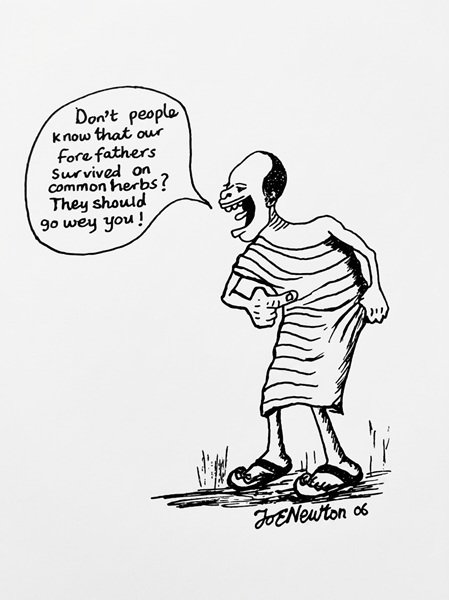
THE typical itinerant salesman in Sikaman is a herbalist. He is normally a slim macho with the capacity to perambulate the expanse of area covering the triangle of Accra-Tema-Ashiaman. In short, he can walk a total of 60 miles a day, marketing a product that cures every disease, including poverty. 
The door-to-door herbal pharmacist advertises his product by word of mouth. He has nothing to do with the Food and Drugs Board (FDB). After all, his concoctions do not feature on FM stations.
Those herbalists who cannot walk to propagate the herbal gospel, liaise with drivers of mass transportation and their mates. They are, therefore, given the chance to sell their products on Benz buses that ply the routes.
Normally, the herbalist starts his sales message with a prayer and Bible study. He asks the passengers to bow down their heads in supplication to God the father, the son, the Holy Spirit.
When a herbalist asks the passengers to close their eyes and bow their heads, Moslems on board naturally feel offended. They feel that the herbalist has no right to assume that every passenger is a Christian. They think such an assumption is an affront to Islam.
So a Moslem on board will raise the hand for a point of order. He’ll remind the herbalist that it would be in his own interest to mind his language.
“Be careful the way you address people in a public place. Not every person here is a Christian,” he’d state assertively.
Of course, the herbalist will promptly ignore him, but would all the same “watch” his tongue. Who knows whether or not the Moslem brother is inspired by Quoranic zeal to defend the tenets of Islam to the hilt?
When he starts saying, “Wallahi!” and “Inshallah!” it could be the beginning of proclaiming Islam as supreme, a point which must be driven home with talibanic precision.
So the herbalist must tread carefully lest he steps on fire.
The herbalist could even add a measure of mirth to it all, by announcing that Christians on board today have very interesting company on the journey, but that should not detract from the business of the day.
The Moslem brother will weigh the words carefully and offer a wry smile.
He must be careful the occasion does not degenerate into the use of semantics and proverbial oration to deride his conviction that public utterances must be mindful of religious sensibilities. He has made his point very clear and expects that it is taken in good faith in the interest of a peaceful journey.
The herbalist will now open the New Testament and preach salvation, stating clearly that salvation can come only through Jesus Christ and NOBODY else.
The Moslem brother will now start twitching his moustache. The visible and almost revolutionary reflexes of his upper lip can be an indication that sentiments have begun superseding reason, and the outcome could well be tragic now shift uneasily in his seat.
The time has come for him to also express his right to the religion of his fore-bears. He’ll put his hand into his pocket and rise to his feet. The time has indeed come!
This article was first published on Saturday, September 9, 2006
When the cause of a particular problem like sickness, disease, sudden illness, a social issue etc. are not known, it stands to reason that resolving it becomes a huge challenge.
Citizens would understand the government when public announcements are made to the effect that government is trying to find a solution to the issue, even though it is taking a while for it to be resolved because citizens are rational beings.
On the other hand, if the solution to a particular issue is known to everybody but the government for whatever reason, is dragging its feet in resolving it, citizens become frustrated and begin to lose trust in their leaders.
One such issue is the heavy traffic along a section of the Kasoa – Odokor road. A short stretch of bad road between the traffic light at the Weija Government Hospital and the entrance to the entrance of the overhead that leads to the N1, is the cause of the problem but nothing is being done about it, day after day, week after week, month after month. Thus is clearly unacceptable.
Another issue that requires urgent attention is the lack of pavements along a lot of streets in parts of the various Municipal Assemblies. Exercise is a prerequisite for long life and healthy living and for those of us who it has become a way of life, this issue of people putting up structures right to the edge of the drains beside the roads, are making life difficult for us.
We are compelled to walk along the roads, putting our lives at serious risk. Pedestrians should never be compelled to compete with vehicles on our streets and roads. Roads and streets are made for vehicles and pavements are made for pedestrians. That is the norm. Any attempt to normalise a situation where pedestrians are mingling with vehicles is insanity.
It is the road regulations that makes it so and therefore district or municipal assemblies are to take responsibility and ensure that spaces for pavements are not encroached upon. Citizens have rights that must be protected by their leaders and making pavements available to pedestrians, is one of them.
When we hear of teachers having sex with students, it appears it is something recent. It is not a new phenomenon. It has been there since Adam. Perhaps this issue is getting much attention due to the proliferation of social media. It was an open secret in times past when Teachers were in relationships with female students and some married them immediately after completion of school.
Some teachers were also known to be having unholy interactions with female pupils but due to the times that these acts occurred, human rights issues and the awareness around it, allowed such unscrupulous teachers to get away with their crimes.
Now we are in a different era and so a Headmaster is now in hot waters. He is alleged to have raped about 19 female students and as usual, some officials tried to cover it up and are also in hot waters and their actions or inactions in the matter are under investigation.
Why the man has been allowed to roam freely without being arrested is simply mind boggling. It appears that the law applies differently, depending on who you are. This issue came to public attention sometime in August this year, yet the police had not arrested or invited this man for question regarding the rape allegation.
It has come out that he is a Constituency Secretary of the ruling party and the question in the public domain is that, is it because he is a political figure that is why he is still walking around without questioning? I believe in the rule of law so let us hold our breadth and let the proper thing be done.
The police must however be seen to be active in this matter. God bless.
SKIP THE QUEUE, TAP THE NEWS
You can now read the Ghanaian Times and The Spectator newspapers from the comfort of your device via TimesNewsPlus.
Join our WhatsApp Channel: https://whatsapp.com/channel/0029VbBElzjInlqHhl1aTU27