News
Ahafo yet to record COVID-19 positive case … as national hits 7,303

The Ahafo Region is now the only one out of the 16 administrative regions in the country that has not recorded any COVID-19 case although the national tally has reached 7,303.
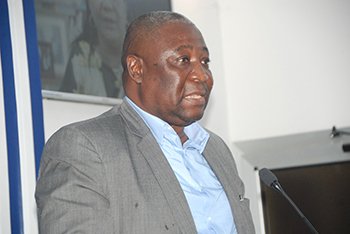
This was after its counterpart, the Bono East Region, recorded its first case this week, according to the Director of Public Health at the Ghana Health Service, Dr Badu Sarkodie.
At yesterday’s COVID-19 briefing in Accra, he said details would be made public in the ensuing days because information about the new case was received moments before the briefing.
As of May 26, Dr Sarkodie said 2,412 patients had recovered with the death toll at 34, bringing the active cases (persons known to be living with the virus currently) to 4,857.
He said the national tally went up after 186 new cases were recorded in 31 districts in four regions; Greater Accra had 140, Central-23, Ashanti -14 and Eastern, nine.
He said 14 of the active cases were severely ill but not on ventilators while three were critically ill.
Greater Accra, he said, continues to have the highest number of cases of 5,148 Ashanti – 1,099; Central- 360, Western Region – 344, Eastern- 117, Western North Region – 62 and Volta-59.
According to the director of public health, the Northern Region had recorded 36 cases, Oti – 26, Upper East Region-26, Upper West– 22North East– 2; Savannah– and Bono one each.
He described that fact that Tema and Obuasi, which had earlier been declared as hotspots for the virus, had not record any new cases, an indication that response actions by the management team were yielding results.
Asked why the country’s daily cases were not declining sharply, Dr Sarkodie explained that it was because people were not strictly adhering to the hygienic protocol.
He, therefore advised the public to play their part to reduce cases.
On the Wednesday’s mishap on the GHS website, in which the case count was changed after less than an hour, he said it was a technical error and he apologised for it.
BY JONATHAN DONKOR


The Diaspora Affairs Office at the Office of the President has hosted a delegation of African diaspora women who are in Ghana ahead of a planned Presidential Conferment of Citizenship ceremony.
The Director of Diaspora Affairs, Kofi Okyere Darko, explained in a Facebook post that the visit was a gesture of appreciation by the delegation to the Government of Ghana for its continued efforts to reconnect Africans in the diaspora with their ancestral homeland.
He indicated that the ceremony, scheduled for next Monday, will officially grant Ghanaian citizenship to members of the delegation as part of the country’s broader engagement with the African diaspora.
The delegation was led by Erica Bennett, Founder of the Diaspora Africa Forum.
According to Mr Okyere Darko, her years of advocacy have played an important role in strengthening ties between Africa and people of African descent living abroad.
He noted that the group’s journey towards citizenship represents not only a legal process but also a cultural and spiritual return to their roots.
Also present at the meeting was Natalie Jackson, an attorney who is also expected to receive Ghanaian citizenship during the ceremony. She works closely with renowned civil rights lawyer Ben Crump.
Mr Okyere Darko emphasised that Ghana remains committed to strengthening relationships with the African diaspora and promoting unity, identity, and shared heritage among people of African descent worldwide.
By: Jacob Aggrey

Ghana has signed a debt restructuring agreement with the Kingdom of Belgium as part of efforts to restore the country’s economic stability after the financial crisis that hit the nation in 2022 and 2023.
The Minister of Finance, Cassiel Ato Forson, today disclosed that he signed the agreement on behalf of the Government of Ghana.
He explained that Ghana experienced a very difficult period during the crisis, which forced the government at the time to declare a debt default.
However, he indicated that the country is now recovering and witnessing a significant economic turnaround.
According to him, stronger systems are also being put in place to ensure that Ghana does not return to such a situation again.
Dr Forson noted that the agreement with Belgium is the eighth deal Ghana has concluded with countries under the Official Creditor Committee as part of its external debt restructuring programme.
He expressed appreciation to the Government of Belgium for its support and partnership with Ghana during the process.
The Finance Minister thanked Carole van Eyll, Ambassador of Belgium to Ghana, for her role in strengthening relations between the two countries.
The agreement forms part of Ghana’s broader effort to restructure its external debts and stabilise the economy following the crisis.
By: Jacob Aggrey

 News1 week ago
Finance Minister outlines new gold policies to boost reserves and curb smuggling
- News1 week ago
Sam George launches the 2026 Meteorological Awareness Month; presents the 2026 seasonal forecast for southern Ghana
- Hot!1 week ago
Breaking: Footballer who killed two children in Abesim handed lifetime sentence