News
Absa celebrates separation programme from Barclays

Absa Group, one of Africa’s largest financial services providers, is celebrating substantial completion of its separation programme from Barclays PLC, three years after the start.
The separation, one of the largest and most complex corporate programmes of its kind, followed Barclays PLC’s 2016 decision to reduce its shareholding in the African group to a minority position.
Barclays became the majority shareholder in Absa in 2005 and the two groups subsequently integrated systems, processes and policies over time.
“We are closing an important chapter in the more-than-100-year history of the Absa Group as we wind up the last few elements of separation,” Absa Group Chief Executive Daniel Mminele said in a statement issued in Accra.
“We emerge from this chapter as a proudly independent African bank, strengthened and enriched by our experience as part of the UK group. We have a great foundation to build on and full control to make the decisions that are in the best interest of our customers and other stakeholders across all the African markets we operate in,” he said.
Barclays PLC contributed R12.6 billion (approximately $1 billion at the time) in 2017 towards the three-year separation programme, which comprised mainly Information Technology and brand projects, and which commenced on 6 June 2017.
The programme involved, among others, the largest single data and system migration in Africa as customers in nine countries were switched to a new online banking platform, improving customer experience through greater stability and upgraded user interfaces in several countries.
More than 1,000 branches, 10,000 Automate Teller Machines, close to 16,000 email addresses, several million customer cards, as well as thousands of uniforms, signage, forms, buildings and stationery were rebranded. At its peak, nearly 1,300 employees and contractors were dedicated to the separation programme.
“The initiatives undertaken have fundamentally improved Absa’s resilience, systems and capabilities, benefitting both employees and customers alike,” Mr Mminele said.
“I have been extremely impressed with how diligently and disciplined the colleagues have carried out this mammoth of a project, unparalleled on the continent in terms of size and complexity. We take great pride in having substantially completed the separation from Barclays PLC within budget and inside agreed timelines,” he said.
Absa Engineering Services Chief Executive, Paul O’Flaherty who leads the separation programme said, “The programme carried material risks, including potential large-scale banking system failures and customer attrition.”
“We worked closely with stakeholders including regulators across our presence markets to mitigate risk. We are proud to say that separation has been substantially completed in a safe and successful way,” he said.
BY TIMES REPORTER


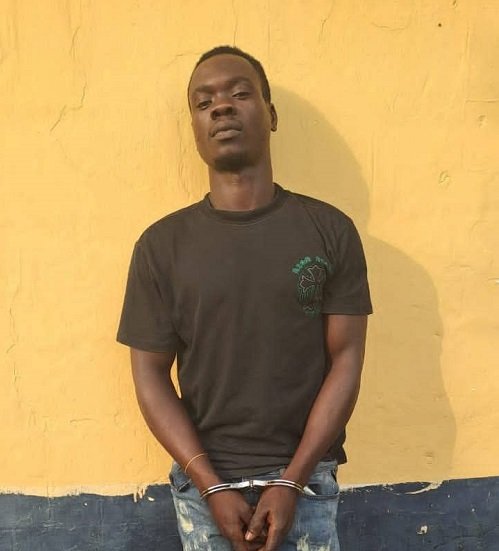
A 30-year-old man has been sentenced to 25 years imprisonment with hard labour by the Bekwai Circuit Court for his role in a 2022 robbery at a mining site at Manso Akwasiso in the Ashanti South Region.
The convict, Dominic Ofori, also known as Fanta, was arrested on 16th February 2026 after years on the run. He pleaded guilty before the Bekwai Circuit Court to robbery contrary to Section 149 of the Criminal Offences Act, 1960 Act 29, and was accordingly sentenced to 25 years imprisonment with hard labour.
On March 20, 2022, the Manso Adubia District Police received intelligence that a group of armed men from Manso Abodom were planning to attack a mining site at Manso Akwasiso to rob the owner of gold concentrate. Acting on the information, police mounted a coordinated operation and laid an ambush at the site.
At about 5:30 pm the same day, four-armed men arrived at the site, fired indiscriminately, and robbed the miners of their gold concentrate. The police team on surveillance intervened, resulting in an exchange of gunfire.
Three of the suspects, Abu Abubakar, Musah Latif, and Gideon Takyi, sustained gunshot wounds and were pronounced dead on arrival at St Martins Catholic Hospital at Agroyesum. Dominic Ofori escaped at the time but was later arrested and put before the court.
The Ashanti South Regional Police Command has assured the public of its continued commitment to combating violent crimes and bringing offenders to justice.
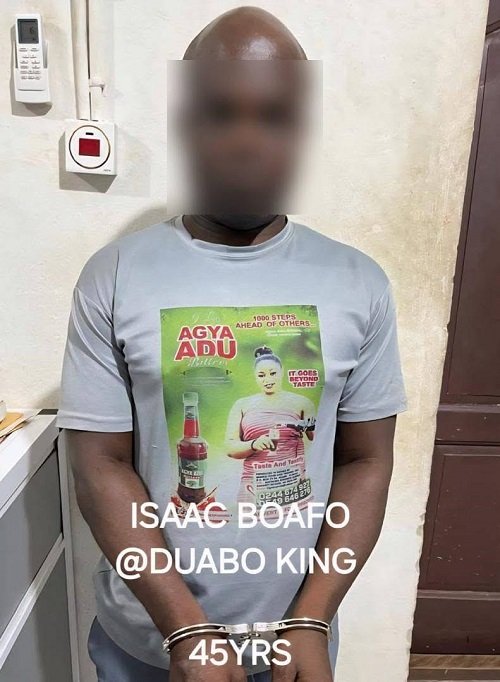
The Ashanti Regional Police Command has arrested 45-year-old Isaac Boafo, also known as “Duabo King,” for allegedly publishing false news intended to cause fear and panic.
Police said the arrest follows a viral TikTok video in which Boafo claimed that four officers at the Central Police Station in Kumasi engaged in inappropriate conduct with commercial sex workers during night patrols in Asafo.
Officers from the Police Intelligence Directorate (Ashanti Region) apprehended Boafo after receiving intelligence about the video.
During questioning, he admitted to creating the video to attract views and engagement online, and acknowledged that he could not prove the allegations.
Boafo also admitted making comments about the President of the Republic for content purposes and could not defend those statements.
He has been formally charged and is in detention as investigations continue.
The Ashanti Regional Police have warned the public against publishing or sharing false information on social media, noting that such acts can cause fear, panic, and damage reputations.
They said anyone found engaging in similar conduct will face legal action.
By: Jacob Aggrey