News
A Year On: Ghana democracy at crossroads- Afenyo Markin laments

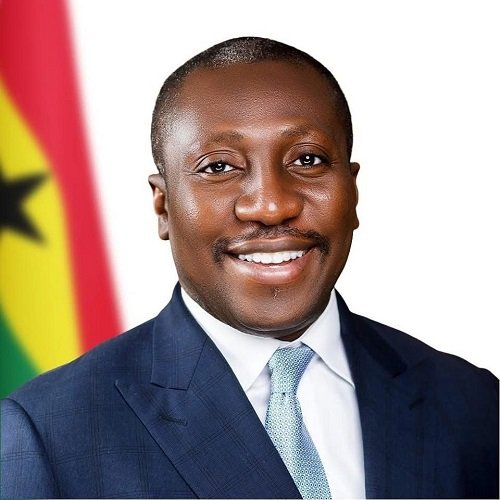
Minority Leader in parliament, Alexander Osahen Afenyo Markin has raised concerns about the direction of the country one year after the 2024 general election, warning that Ghana’s democracy may be under threat if current governance trends are not checked.
In a statement reflecting on the year since Ghanaians voted for change, he noted that while the New Patriotic Party hoped for victory, the people chose differently and the outcome was respected as the will of the electorate.
He stressed that winning power comes with responsibility and not the freedom to govern without caution.
The Minority Leader argued that the removal of key public officials reflected a worrying pattern.
These included the dismissal of workers from state institutions, the exit of the Chief Justice, and ongoing processes affecting the Electoral Commission leadership and the Office of the Special Prosecutor.
He described the development as retribution rather than renewal and questioned the government’s promises on jobs and the 24 hour economy.
Addressing President John Dramani Mahama directly, he urged him to use his rare second return to office to build a legacy of development rather than removals.
He explained that global history shows that leaders who return to power after defeat are few, stressing that such an opportunity should lead to transformation that benefits citizens.
He encouraged the President to invest in technology, artificial intelligence and modern economic growth models to position Ghana for global competition.
He warned that no country will wait for Ghana while others advance through digital innovation.
The statement further pointed to youth unemployment and frustration, noting that campaign foot soldiers who worked hard during elections have been left disappointed.
He warned that ignoring young people could lead to instability.
He urged the media to uphold its watchdog duty by speaking up against constitutional breaches rather than seeking comfort in silence.
He explained that the Minority wants the government to succeed because national progress benefits everyone, not only one political side.
The Minority Leader maintained that although democracy is not perfect, it remains the best system since it allows peaceful correction through elections.
He encouraged citizens to trust the ballot and not violence.
He encouraged President Mahama to resist party hawks and focus on national development, stating that the world is watching how Ghana uses this moment in history.
He called on leaders across the political divide to remember they are custodians of the Republic and must work to protect the nation’s democratic future.
He concluded by urging young people not to lose hope, stressing that change comes through democratic processes, and reminding all leaders that Ghana’s stability depends on responsible governance, unity and development oriented action.
By: Jacob Aggrey










A member of the National Democratic Congress (NDC), Dr. Sammy Ayeh has picked up nomination forms to contest for the position of Deputy National Communications Officer position.
Announcing his intention, Dr. Ayeh said he is offering himself to help communicate the party’s vision clearly and connect its message with the aspirations of Ghanaians.
He expressed deep gratitude to the party’s National Communications Officer, Lawyer Sammy Gyamfi, describing him as an able leader on whose shoulders he has risen.
“His exceptional leadership, mentorship and confidence in me have shaped my journey and strengthened my resolve to serve,” Dr. Ayeh stated.
He said if elected, he will seek to build on that foundation by strengthening research-driven communication, empowering grassroots communicators, and enhancing strategic media engagement.
Dr. Ayeh humbly appealed to party members and supporters for their support.
By Edem Mensah-Tsotorme

The Data Protection Commission has called on the Minority Caucus in Parliament, the Ministry of Foreign Affairs, JoyNews and other media houses to protect the personal information of 1,964 Ghanaians evacuated from South Africa.
In a press release issued on Tuesday, October 20, 2026, the Commission expressed concern over the public disclosure of the evacuees’ personal details, including their names, signatures and records of financial assistance received.
It warned that making such information public could expose the affected individuals to identity theft, fraud and other forms of harm, especially given the threats to their safety that some of them may have faced.
The Commission explained that the 1992 Constitution protects the dignity and privacy of every individual. It also cited the Data Protection Act, 2012 (Act 843), which sets out rules for the lawful collection, use and disclosure of personal information.
While acknowledging the importance of transparency, parliamentary oversight, the right to information and press freedom, the Commission stressed that these principles do not automatically justify the unrestricted publication of personal details.
It said the disclosure of the records by the Minority Caucus, the Ministry of Foreign Affairs, JoyNews and other media organisations must be assessed based on the law, the purpose of the disclosure and the privacy rights of the individuals involved.
The Commission further noted that although the Ministry of Foreign Affairs and Parliament are registered data controllers in good standing, their registration does not exempt them from their legal responsibilities under the Data Protection Act.
It has therefore urged all the parties involved to take appropriate steps to protect the affected individuals, including immediately restricting access to or removing personal details from publicly available records where their continued disclosure is not legally justified.
The Commission announced plans to conduct a regulatory review to determine whether the disclosures had a lawful basis, what safeguards were applied and whether the privacy rights of the evacuees had been adequately protected.
It said it would engage the relevant parties as part of the review and take appropriate regulatory action if any breach of the law is established.
The Commission reiterated that protecting personal information and respecting human dignity must remain central to efforts to promote public accountability.
By: Jacob Aggrey