News
‘A listening ear, healing balm for mental patients’

The Founder and President of Trust Jesus Mental Health Foundation (TJMHF) has called on Ghanaians to give a listening ear to people suffering from mental illness.
She indicated that active listening is a powerful clinical tool that “reduces stress, offers greater trust and improvement in their health conditions.”
Madam Mary Wormenor made this call when members of the TJMHF presented some food items to patients at the Pantang Hospital as part of the Foundation’s efforts to show love to patients of mental health institutions in Ghana.
Madam Wormenor observed that listening done well could be more healing than any clinical technique, and that “people who feel heard are 40 per cent likely to seek professional help later on because they know their struggles are valid.”
The Patron of TJMHF, Dr Mrs Adelaide Ferguson, asked government to reconsider the cost of treatment of mental illness in Ghana since the amounts clients paid was on the high side, and that “may push majority of mentally challenged people to the streets.”
Dr Mrs Ferguson, who is also the Women’s Ministry Director of the Meridian Ghana Conference of the Seventh Day Adventist Church, said, “The big surprise was to know that they have to purchase their own drugs which are very expensive, yet such persons may not have capacity to pay.”
She, therefore, advocated for free mental health treatment as a measure of ensuring a smooth mental health delivery in Ghana.
TJMHF visits mental homes every year to assist in mental health delivery.
The visit to Pantang was the seventh outreach of the foundation since its inception in 2019.
The project, dubbed “Smile on a person with Mental illness,” takes place every December, leading the foundation to visit all the psychiatric institutions in the country.
The Mission of Trust Jesus Mental Health Foundation provides relief to persons with mental illness through benevolence and the saving knowledge of Christ.
Its vision is to be the hub for championing mental health care in Africa and beyond. In recognition of efforts of the Foundation, the president of TJMHF was awarded Triumph Mental Health Champion of the year 2025 at the just-ended Triumph Women’s Awards.
Receiving the items, a Senior Nursing Officer at Pantang Hospital, Madam Florence Okpoti, thanked the foundation for the donation, saying efforts impacted positively on health delivery. –GNA
Join our WhatsApp Channel now!
https://whatsapp.com/channel/0029VbBElzjInlqHhl1aTU27



THE 2026 Akwambo Festival at Gomoa Amoanda in the Ga East District has been held with a call for unity, peace, and collective action towards local development.
The festival, celebrated under the theme: ‘Unity, Peace and Development,’ provided a platform for community leaders and residents to highlight critical challenges affecting health, education, water, and sanitation in the area.
The durbar took place on Saturday at the Town Square of Gomoa Amoanda, attracting chiefs, elders, and residents from across the district.
Addressing the gathering, the Odikro of Gomoa Amoanda, Nana Kofi Budu Sersah IV, appealed for urgent government and stakeholder support to address the lack of a CHPS compound, reliable drinking water, proper school infrastructure, and additional teachers.
He disclosed that land had been allocated for the construction of a CHPS compound and called for support from the government, corporate bodies, and benevolent individuals.


Touching on sanitation, Nana Budu Sersah IV noted that the construction of a public toilet had stalled due to financial constraints and appealed for assistance to complete the project.
Representing the Central Regional Minister, Eduamoah Ekow Panyin Okyere, the District Chief Executive for Gomoa East, Margaret Naana Ackom, pledged government support for key development initiatives.
She announced a donation of 20 bags of cement for the public toilet and assured further assistance for other projects once land was made available.
The Prampimhene of the Awutu Traditional Area in the Central Region, Nana Okromansah Klordey I, who also serves as the Mankrado of Pakro Akuapim in the Eastern Region under the stool name of Nana Ntow Amoah II, expressed concern over rising drug abuse among youth.
By Stephanie Birikorang
Join our WhatsApp Channel now!
https://whatsapp.com/channel/0029VbBElzjInlqHhl1aTU27

THE Ofankor–Nsawam road commuters appear to have breathe a sigh of relief over the progress of work on the road project which has reached 81 per cent completion.
A visit by The Spectator to the project site revealed that a significant portion of the road had already been asphalted, while most of the storm drains and culverts had been completed.
In addition, the various flyovers and pedestrian footbridges were at different stages of completion.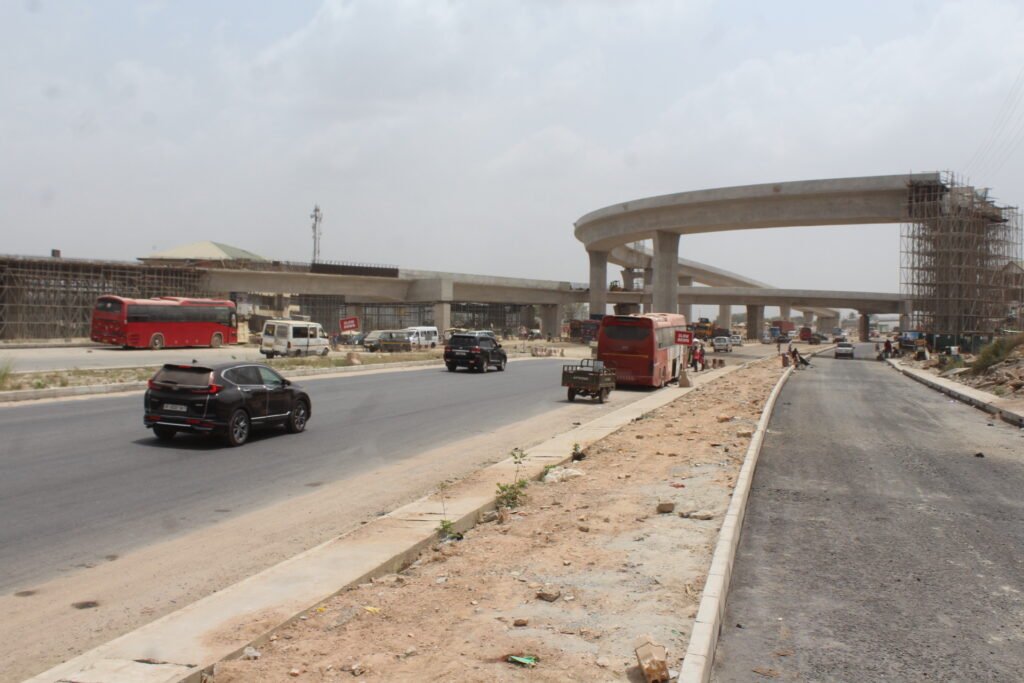


This appears to be the best news for commuters that ply the road daily as information indicated that the project would be completed on schedule.
According to the Chief Resident Engineer, Kwabena Bempong, steady progress had been made across the 33.4-kilometre stretch.
He expressed the hope that the remaining works would be delivered within the revised timeline, subject to the resolution of outstanding land issues at Nsawam Junction.
The Ofankor–Nsawam road forms part of National Route Six (N6), a major arterial highway linking Accra to the northern parts of the country and extending further to the Sahelian regions of West Africa.
The project scope includes the construction of four major interchanges at Amasaman, Pobiman, Medie and Nsawam Junction, alongside service roads and other ancillary facilities and is valued at $346.5 million.
By Kingsley Asare
Join our WhatsApp Channel now!
https://whatsapp.com/channel/0029VbBElzjInlqHhl1aTU27