Features
Ghana: Homosexuals becoming ‘endangered species’?

- /home/u249204778/domains/spectator.com.gh/public_html/wp-content/plugins/mvp-social-buttons/mvp-social-buttons.php on line 27
https://spectator.com.gh/wp-content/uploads/2021/10/Alban-Bagbin-Speaker-of-Parliament-Pro-HOMO-BILL.jpg&description=Ghana: Homosexuals becoming ‘endangered species’?', 'pinterestShare', 'width=750,height=350'); return false;" title="Pin This Post">
- Share
- Tweet /home/u249204778/domains/spectator.com.gh/public_html/wp-content/plugins/mvp-social-buttons/mvp-social-buttons.php on line 72
https://spectator.com.gh/wp-content/uploads/2021/10/Alban-Bagbin-Speaker-of-Parliament-Pro-HOMO-BILL.jpg&description=Ghana: Homosexuals becoming ‘endangered species’?', 'pinterestShare', 'width=750,height=350'); return false;" title="Pin This Post">
Just last Monday night, 18th October, 2021, two suspected Lesbian, Gay, Bisexual, Transgender, Queer and Intersex (LGBTQI+) practitioners were reportedly beaten to death in Tamale when they were “caught red-handed in the act.”
Reportedly, the angry mob who allegedly lynched the two suspected LGBTQI+ practitioners also severely assaulted two other suspects who were later “carried” to the police station by sympathetic eye-witnesses.
The four suspected LGBTQI+ practitioners were allegedly “caught in the act” behind the offices of GBC-Radio Savannah in Tamale.

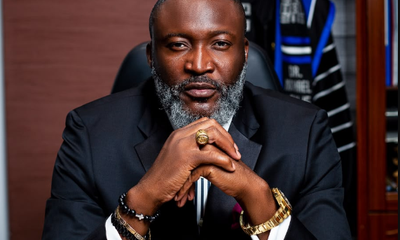
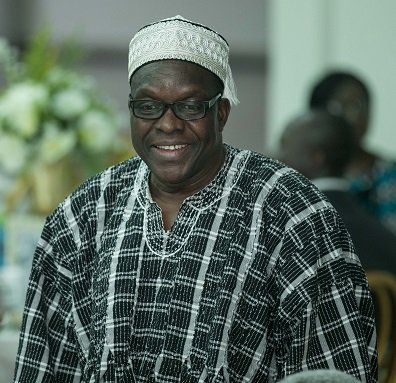
Kwasi Prempeh, CDD
(anti- ‘HOMO BILL’)

of the ‘HOMO BILL’)
Reportedly, the “acts” of the four suspects, all male, attracted some Volta River Authority (VRA) workers in the area, who raised an alarm, thus, attracting a huge crowd to the scene.
The four LGBTQI+ suspects were said to be stark-naked and ‘doing their own thing’ in an uncompleted building when they were stumbled upon by the VRA staff who were working behind the offices of GBC-Radio Savannah.
Reporting the incident on Rainbow FM (87.5) , Prince Kwame Tamakloe said that the Crime Officer at the police station, Deputy Superintendent of Police (DSP) Prosper Ananga, confirmed the story and advised residents in Tamale to desist from taking the law into their own hands.
He said, DSP Ananga, however, lamented that the activities of homosexuals had increased in the area.
Readers, taking a cue from what has just happened in Tamale and juxtaposing it with the raging national conversation on Ghana’s ‘Homosexual Bill’ currently before Parliament; can one comfortably predict that when the bill is passed into law, Ghana will be better-off?
The national debate on the ‘HOMO BILL’ is heating up . The Bill is yet to be passed. And already, two suspected homosexuals have been ‘sacrificed’ on the altar of ‘indecency’ and ‘tradition’. And the other two ‘lucky’ suspects are ‘licking their wounds in hell.’
The ‘HOMO BILL’ before Parliament is titled: Promotion of Proper Human Sexual Rights and Ghana’s Family Values Bill, 2021. And it prescribes stiffer punishment against homosexuality in the country.
The ‘HOMO BILL’ proscribes dissemination of ideas, images, and symbols of any kind that promotes homosexuality and prohibits support by an individual or organisation for a homosexual group in Ghana.
Eight Members of Parliament introduced the ‘HOMO BILL’ in Parliament in August 2021. The Bill imposes between five and 10 years imprisonment for violations.
Homosexual conduct is already criminalised by Ghana’s existing criminal laws.
Section 104 (1) (b) of Ghana’s Criminal Offences Act, 1960 (Act 29) abhors consensual same-sex intercourse and prohibits it.
Indeed, the only mode of sexual intercourse which does not offend Ghanaian law, is sexual intercourse through the vagina by penal penetration.
Really, currently, many Ghanaians strongly believe that the ‘HOMO BILL’ must be passed to strengthen the existing laws, so as to halt the emerging ‘modern colonisation’ of Africa via ‘rotten’ homosexual behaviours.
What then is homosexuality? It is a romantic attraction or sexual behaviour between members of same-sex or gender.
As a matter of fact, there exists a very strong opposition against the emerging LGBTQI+ community in Ghana. They include some religious institutions, traditional rulers and teacher unions. They strongly argue that homosexuality is not a RIGHTS issue and, therefore, support the ‘HOMO BILL’ in Parliament.
Just about 20 Ghanaian intellectuals and professionals are, however, vigorously expressing their disapproval of the Bill.
They contend that some of the provisions of the ‘HOMO BILL’ violate Ghana’s 1992 Constitution; particularly the chapter on Human Rights as spelt out in the Constitution.
An Afrobarometer survey conducted in 2014, however, indicated that over 90 per cent of Ghanaians are vehemently against homosexuality. And the outcome of the survey endorses the general belief of many Ghanaians about the nation’s family values.
“I dare say that in Ghana, any chief who gives shelter to any homosexual in any community, will be destooled without any notice,” a linquist who wants to remain anonymous, he said.
According to the linquist: “Ghanaian traditional gods strongly believe in ‘life’ and ‘procreation’, ” adding that “the gods vehemently abhor sexual activities of homosexuals; to the extent that it is a curse for homosexuals to be flaunting their activities on our sacred space.”
Joshua Ashun-Aikins, a political science student of the University of Cape Coast also says; “any political party in Ghana which will make a mistake by just promising to legalise the activities of LGBTQI+ in the country, will consign itself straight to the grave.
“Because Ghanaians will surely not vote for that political party to win power. Instead, the party will be mocked and tagged, ‘trumu-trumu’ party.”
Around the world, for instance, the legal status of polygamy, which is commonly practised in Africa, varies. Some countries outlaw, accept or encourage polygamy.
So, in the same way, homosexuality and same-sex behaviours may be outlawed, accepted or encouraged by certain countries across the globe.
From the foregoing, therefore, would the passage of the ‘HOMO BILL’ into law, strengthen the hands of its proponents to ‘terrorise’ homosexuals in the country? Or would such a law rather encourage homosexuals to tilt towards ‘ proper human and sexual rights’ and guide them to practise Ghana’s family values?
Readers, over to you now!!!
Contact email/ WhatsApp of author:
asmahfrankg@gmail.com (0505556179)
By G. Frank Asamah

On Sunday, August 13, 2026, the Church of Pentecost (COP) International, Finland, held an impressive church service in Helsinki in honour of and to welcome Prophet Benjamin Arthur as the new National Head.
The well-attended service formally ushered in Prophet Arthur who takes over from Apostle Francis Owusu Kwaah, who has been the National Head since November 2020 and whose tenure as the National Head ended last month.
Prophet Arthur arrived in Finland from the UK where he has held many positions in the church to replace Apostle Owusu Kwaah who moves back to the UK.
A touching welcome and powerful ministration
The church service was officiated by Apostle Seth Samuel Asante, the National Head of the Church of Pentecost, USA.
It was a touching welcome church service and ministration at a well-attended event. In attendance were many religious leaders from other churches or missions, as well as dignitaries.
Apostle Asante had the honour to introduce Prophet Arthur to the whole congregation as the new National Head in Finland. He was joined by other church leaders and officers from UK, USA, and Finland to pray for Prophet Arthur and handed him over to COP Finland as their new National Head to a huge applause.
Earlier, Apostle Asante delivered a powerful and touching sermon that highlighted a message of salvation and the importance of knowing, loving and serving God with one’s whole heart. He entreated the audience to love God and do His work to glorify his name.
Stirring up understandings from the hymns: “My faith has found a resting place…” and “Guide me O Thou great Jehovah…,” as well as a number of quotations from the Bible, the Apostle gave a powerful preaching on the need to build one’s faith in God.
Response from the new National Head
In response, Prophet Benjamin Arthur preached the power of prophecies and God’s plan for redemption. He entreated all to believe in God’s power especially through prophecies to save mankind. The glory of the Lord shall be revealed, he noted and add: “The blood of Jesus is not shed in vain”.
Surrounded by his beloved wife, Mrs Eugenia Arthur, and their three children, Prophet Arthur expressed gratitude to the members of the church for the resounding welcome they have accorded him as he starts to embark on his role and duty as the National Head.
He recognised the exploits and excellent leadership roles of his predecessors, Apostle Edmund Appiah (who was the first National Head) and Apostle Francis Owusu Kwaah.
COP’s future and growth in Finland
The Church of Pentecost in Finland was established over 25 years ago. It started in September 2000 as a prayer group with a small number of devoted persons in Helsinki (see www.copfinland.fi).
The group grew fast and there was the need to secure a new place of worship in the Helsinki area. The Church has grown and spread to other towns and cities in Finland.
Today, in Helsinki alone there are two branches of the Church. There is the Akan Assembly where worship is done mostly in the Twi language. The other branch is the English Assembly (or the PIWC) which is attended by other nationalities and African immigrants aside Ghanaian immigrants.
The COP Finland has become very formidable in the religious space in the Ghanaian community in Finland.
It has thus played a prominent role in the religious or spiritual existence of its members, as well as in people’s social lives as a key aspect of integration into the Finnish society.
The church continues to grow and, for example, it has been one of the major channels through which the Ghana Union Finland (GUF), an association for Ghanaian immigrants in Finland, has made more contacts with members of the Ghanaian immigrant community.
With Dr Perpetual Crentsil
SKIP THE QUEUE, TAP THE NEWS
You can now read the Ghanaian Times and The Spectator newspapers from the comfort of your device via TimesNewsPlus.
Join our WhatsApp Channel: https://whatsapp.com/channel/0029VbBElzjInlqHhl1aTU27
Features
Responding to religious insults with faith, wisdom and restraint …The Prophetic Model for Muslim–Christian Peace and Coexistence(Part 1)

All praise belongs to Allah, Lord of the worlds. We praise Him, seek His help and forgiveness, and seek refuge in Him from the evil within ourselves and from our evil deeds.
May His Peace and Blessings be Upon the Noble Prophet Mohammed, his household, companions and all righteous people till the Last Day. Ameen
GHANA, WE MUST NOT ALLOW A MOMENT OF ANGER TO DESTROY DECADES OF PEACE
My dear brothers and sisters in Ghana.
Today I speak about something that should concern every Muslim, every Christian and every responsible Ghanaian.
Recent events involving controversial statements about Prophet Muhammad (pbuh), the arrest of an Islamic cleric accused of making statements advocating violence, and the arrest of a Christian preacher over alleged derogatory comments concerning the Prophet (pbuh) have generated considerable national concern. The Ghana Police Service has said the matters are under investigation and that due process will apply.
And now, reports of an alleged assault on a detained pastor have added another troubling dimension to the matter.
Let us be very clear:
Ghana is not at war.
Muslims are not at war with Christians.
2 | P a g e
Christians are not at war with Muslims.
For generations, we have lived together, traded together, worked together, attended the same schools, built communities together and, in many Ghanaian families, even married across religious lines.
Therefore, we must not allow the reckless words or actions of a few individuals to destroy the peace built by generations.
WHEN SOMEONE INSULTS THE PROPHET (PBUH), WHAT DOES ISLAM EXPECT
FROM ME?
This is the question we must answer.
Not: “How angry am I?”
But: “What does Allah require from me?”
Not: “What can I do to my enemy?”
But: “What did Prophet Muhammad (pbuh) do when his enemies hurt him?”
This distinction is crucial.
Islam does not teach us to abandon our faith when we are provoked.
Islam teaches us how to behave because we have faith.
Allah says:
“Do not let the hatred of a people cause you to depart from justice. Be just; that is nearer to righteousness.” (Qur’an 5:8).
Notice the greatness of Islam.
Allah does not say, “Be just when people respect you.”
He says, be just even when you hate what they have done.
Therefore: An insult does not give me permission to become unjust.
The author is the Chief Imam of Katamanso Municipal and Certified Counsellor and Governance Expert
By Imam Alhaji Saeed Abdulai