News
Don’t delay payment of LEAP grants to beneficiaries – SEND Ghana


- /home/u249204778/domains/spectator.com.gh/public_html/wp-content/plugins/mvp-social-buttons/mvp-social-buttons.php on line 27
https://spectator.com.gh/wp-content/uploads/2021/09/Dr.-Emmanuel-Ayifah.jpg&description=Don’t delay payment of LEAP grants to beneficiaries – SEND Ghana', 'pinterestShare', 'width=750,height=350'); return false;" title="Pin This Post">
- Share
- Tweet /home/u249204778/domains/spectator.com.gh/public_html/wp-content/plugins/mvp-social-buttons/mvp-social-buttons.php on line 72
https://spectator.com.gh/wp-content/uploads/2021/09/Dr.-Emmanuel-Ayifah.jpg&description=Don’t delay payment of LEAP grants to beneficiaries – SEND Ghana', 'pinterestShare', 'width=750,height=350'); return false;" title="Pin This Post">
The Deputy Director of SEND Ghana, Dr. Emmanuel Ayifah, has appealed to the government not to delay the payment of cash grants to beneficiaries under the Livelihood Empowerment Against Poverty (LEAP) programme.
He said the “consistent delay” in payment of the grant was worsening the plight of the beneficiaries hence government must take urgent steps to settle all arrears for 2021.
Dr. Ayifah, speaking in an interview with The Spectator, said there were delays in payment of the grant in January 2021 and that payments starting from April to August 2021 were still in arrears.
He said that, as a result of the delay in payment, some beneficiaries had resorted to borrowing, which was not “appropriate considering the financial standing of these vulnerable persons.”
“In 2019, SEND Ghana made a similar appeal to the government to pay the beneficiaries on time and our call was heard but, unfortunately, this same trend is occurring this year.
“The GH¢ 64 paid per household is already insufficient and the delay is worsening their plight. Some of them continue to live on the benevolence of others and this is a problem,” he noted.
For effective social protection delivery, Dr. Ayifah said government should, in the 2022 Budget Statement and Economic Policy, consider establishing a fund to support and sustain social protection programmes.
“Apart from LEAP, it is important to provide funding for other social protection programmes in general. When the fund is established, other persons in the private sector may contribute to it just as they did for the COVID-19 fund,” he added.
Dr. Ayifah again identified lack of comprehensive data as one of the reasons social interventions did not reach “the right beneficiaries.”
He said available data indicated that there were 2.7 million extremely poor persons in the country but beneficiaries of social intervention policies such as LEAP were fewer than this figure.
He, therefore, urged the government to “focus on completing the Ghana National Household Registry” so there would be a comprehensive data on the number of poor persons in the country.
“Only five out of the 16 regions have complete data in the Registry. This means we are left with a lot more to be done,” he said.
SEND Ghana wants the Ministry of Gender, Children and Social Protection to fast-track passage of the social protection bill so that issues regarding social interventions and social protection could be effectively managed.
By Ernest Nutsugah


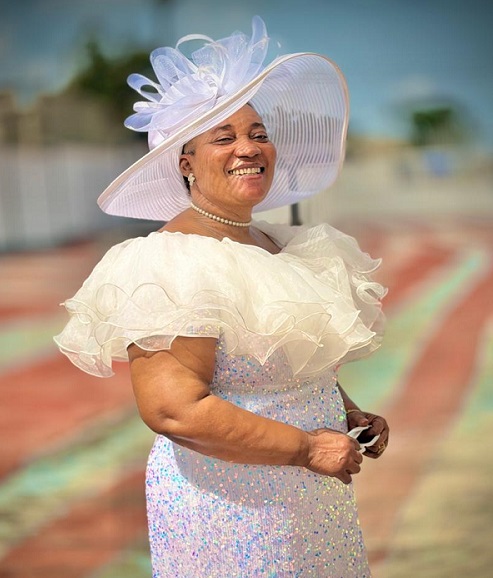
A Prophet and General Overseer of Jesus Prayer Ministry at Ejisu Asuasi, Kumasi, and Pig Farm, Accra, Rt. Rev. Dr Mrs Grace Frimpong-Boateng, has urged Ghanaians to pray fervently to avert any disaster that would endanger many.
“God hears prayers, and intercessory prayers will provide your family safety and protection so you can live long and enjoy life in this world,” she added.
Rt. Rev. Dr Mrs Frimpong-Boateng was speaking with The Spectator in an interview last week.
According to her, she had a revelation that there would be a tragedy that will harm many people, however, effective prayers can avert it.
She said that the Ghana Meteorological Agency (GMet) predicted another heavy downpour from Thursday to Sunday following the recent torrential rain that devastated Accra and other areas. However, strong intercessory prayers prevented the prediction, which would have been catastrophic.
She claims that whenever she shares something that God has revealed to her, she does not receive widespread support from people to join her in effective intercession.
As a result, she has urged everyone including members of parliament, cabinet ministers, traditional authorities, religious leaders, and other citizens to exercise caution and pray fervently in order to avoid premature death.
According to Rt. Rev. Dr Mrs Frimpong-Boateng the recent downpour in Accra which claimed lives and destroyed property was unusual.
“The sea was irritated because of certain rituals performed and caused it to spew forth, exposing the dirt.” There are still some rites in the sea, and they will definitely surface,” she disclosed.
“Let’s pray that God would burn and destroy the things that have contaminated the sea,” she indicated.
By Spectator

The Adentan Circuit Court has convicted a mason for stealing a four-year-old boy from Kpedze in the Volta Region and bringing him to Accra.
David Kpandoyo, 25, a Togolese national, pleaded guilty to a charge of child stealing.
The court, presided over by Mrs Angela Attachie, convicted him on his own plea and adjourned sentencing to July 14, 2026.
Kpandoyo told the court that he had gone to a drinking spot to consume alcohol when the child approached him.
He said he gave the boy some money, took him home, and could not remember what happened afterwards because he was intoxicated.
Assistant Commissioner of Police (ACP) Patience Mario, assisted by Chief Inspector Jacob Nyarko, led the prosecution.
The prosecution said the complainant, Mr Bismark Gbago, is a 52-year-old painter residing at New Legon in Accra.
The victim’s mother, Ms Patience Ablordefey Afefa, is a 25-year-old hairdresser living at Kpedze in the Volta Region with the victim, a Kindergarten One pupil.
The prosecution said Kpandoyo also resided at New Legon, where he worked as a mason.
It said the victim went missing at Kpedze on July 1, 2026, at about 18:00 hours.
On July 3, at about 6:30pm, the complainant reported to the New Legon Police that he had found the four-year-old boy wandering around the area and that the child was unable to identify his home.
The prosecution said that on July 4, at about 4 p.m., the complainant informed the Police that after announcements were made within the community, Kpandoyo came forward claiming that the boy was his son.
The complainant and Kpandoyo subsequently went to the police Station to identify the child.
However, Kpandoyo was unable to produce the child’s birth certificate or lead the Police to the child’s mother.
Later that day, the police received a flyer bearing the name and telephone numbers of the victim’s mother, together with the child’s photograph, indicating that he had gone missing from Kpedze.
The police contacted the victim’s mother and asked her to report to the New Legon Police Station with the child’s birth certificate and weighing card because another person was claiming to be the child’s parent.
On July 6, the victim’s mother and her relatives reported to the Police Station and stated that they did not know Kpandoyo.
During investigations, Kpandoyo admitted in his cautioned statement that the victim was not his child.
He further confessed that while working at Kpedze, he stole the boy and brought him to Accra. –GNA