Features
Is Ghana nurturing criminals and cannibals?

The crime wave in the country is on the ascendency in recent times with a number of armed robberies and murders being experienced in most communities across the country. Hardly a day passes with the country not recording some form of robberies involving mostly the youth.
It appears that the security network in the country continues to be weak, hence the robbers try to capitalise on the situation to terrorise innocent and defenceless citizens and rob them of their personal belongings.
FREQUENT KILLINGS OF INNOCENT CHILDREN FOR RITUALS
Apart from these robberies, innocent people, especially children are being killed indiscriminately either for ritual purposes or their body parts being traded for reasons best known to the perpetrators of these heinous crimes. We hear of reports trending on social media about body parts being used by chop bar operators to prepare food for customers without their knowledge.
Ritual murders which were things of the past seem to be rearing their ugly heads in recent times in this country. We heard of the Kasoa ritual murder in the Central Region on April 3, 2021, in which a 10-year-old boy was allegedly murdered by two suspected teenagers at a place known as Coca Cola near Lamptey Mills. According to reports the deceased, identified as Ishmael Mensah, was lured to an uncompleted building and murdered by the two suspected teenagers. That case is still pending before the law courts.
THE INFAMOUS CASE OF KOFI KYINTO AND OTHER MURDERS
The infamous case in the mid 1980s of a nine-year-old boy Kofi Kyinto who was beheaded by his uncle for ritual purpose as well as many ritual murder cases recorded in the western part of the country are still fresh in our minds. One cannot lose sight of Sefwi Boako, a farming community in the Sefwi Wiawso municipality of the Western Region where in May 2015, suspected cases of three people including an eight-year-old girl were murdered in cold blood for ritual purposes. Some vital parts of their bodies were missing when they were discovered.
Indeed, those frequent murders during that period, put the Sefwi area in a negative lime light and earned it a bad name as haven for ritual murders. Those from Sefwi area during that time, did not want to be associated with the town because of the negative development in the area. That was the period when the country, especially the western part was viewed internationally as not safe for habitation. However, with time, that negative viewpoint was erased and since then, Ghana has been an enviable destination of foreigners as they travel regularly to the country to transact business, especially in the Sefwi area which is noted for cocoa, timber and other mineral resources.
BACK TO PRIMITIVE YEARS
It appears that this country is again descending into that primitive years when people especially the youth were killed for ritual purposes by people who were interested in making quick money out of that wicked and callous practices.
The recent murder case at Abesim in the Bono Region of the country involving a 28-year-old man, Richard Appiah which has been a major topic for discussions in the media, has sent shivers down the spines of Ghanaians. The case is currently pending before the Kaneshie District Court in Accra.
The accused was alleged to have murdered Louis Agyeman and Stephen Boateng and buried some of the body parts at a farm. The court presided over by Madam Ama Adomako Kwakye, did not take the plea of the accused who had no legal representation when he appeared before it on September 15, 2021.
BACKGROUND OF ABESIM MURDER CASE
A police incident report published online revealed that the accused on Friday, August 20, went out with his stepfather’s son and never returned. He was subsequently arrested on suspicion of knowing the whereabouts of the deceased.
The police together with the complainant and the accused proceeded to the house where the accused resides at Alaska Abesim. Suprisingly, police found the deceased lying in a supine position in one of the rooms. The Crime Scene Management team led by the Regional Crime Officer, Superintendent Kenedy Edusei and the Sunyani District Police Commander, Deputy Superintendent of Police Francis Humado conducted a thorough search in the house. The search unveiled another dead body having been cut into pieces and kept in a double door fridge in one of the rooms. Meanwhile, three people have been arrested in connection with the case.
GHANAIANS DEMAND THOROUGH INVESTIGATIONS
This is a sensitive case which should not be allowed to die prematurely and we urge the police to do a thorough investigation into the case and unravel the full circumstances and arrest all those involved in the case for the law to take its course. The public will be interested to know what the body parts being kept in the fridge are meant for because it seems cruel to store these items in the freezer. Besides, the background of the suspects should be investigated to know whether they are involved in this illegal business.
This is a worrying signal for this country as the outside world will think negative about Ghana and, therefore, will reconsider decisions of doing brisk business in a country where human’s are killed and body parts kept in fridges for other things.
COUNTRY’S IMAGE BEING DENTED
The future of this country and the image are not anything good to write about because of the get-rich-quick attitude of our youth. They are not ready to engage in meaningful work to make earns meet. They are only interested in engaging in all forms of dirty and obnoxious practices to make a living. They can go at length to sacrifice lives if that can make them survive and that is dangerous for our country. It is a fact that the cost of living in this country is difficult or hard and people especially the youth are struggling it out to fend for themselves and their families. However, that should not be the reason innocent lives should be sacrificed to make a living.
CAUTION TO PATRONS OF FOOD JOINTS
This particular incident must serve as a caution and a guide to people who patronise food joints and chop bars in the country. Operators of some of these joints are capable of using all kinds of meat including human parts to prepare food for their patrons. We need to pay particular attention and be conscious of our eating joints and chop bars in order to avoid some of these wicked and callous behaviours from operators of these chop bars as well as these food vendors.
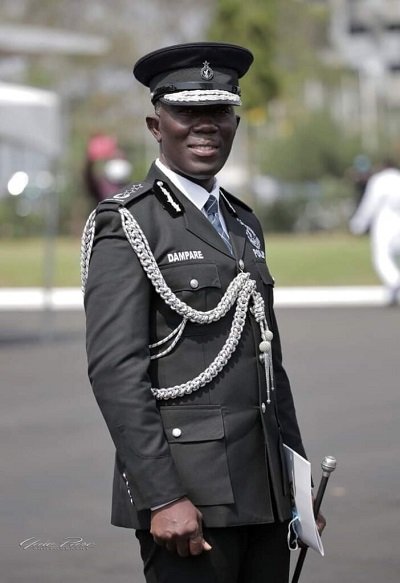
Indeed, the Acting Inspector-General of Police (IGP), COP George Akuffo Dampare has a difficult task to accomplish in order to stem the tide of this crime wave in our country. However, knowing the calibre of person he is and with the support from his team of officers and the public in general, he will be able to accomplish that task. We wish him all the best.
By Charles Neequaye
Contact email/WhatsApp of author:
0277753946/0248933366


I experienced something on Monday, June 15, that really frustrated me. I had to go to the ministries but I could not get up early that day so I decided to pick a taxi and get to the Tuba Junction.
When I got there I realised that Traffic had built up from the Toll Booth towards Accra. After a while I got a Taxi and it was when we got to a certain spot on the road, that I realised why there was a traffic jam.
There is a short stretch of the road where each time it rains heavily, loose material run down the hill onto the road, blocking one side of the road. Vehicles from Kasoa to Accra are then forced to move into one of the lanes of those going towards Kasoa from Accra.
The two lane road from Accra to Kasoa becomes a single carriage way. That was the reason for the traffic jam from the toll booth onwards.
This has been a perineal problem and yet, no permanent solution has been found till date. The area falls under Ga South and even though, a new MCE has taken over, the technocrats are still there and so the problem is not new to them.
There is therefore no excuse for the inability of the Ga South Metropolitan Assembly to resolving the problem on that stretch of the road. Apart from the Ga South Metropolitan Assembly, another institution that must be held accountable is the Ghana Highways Authority.
The Highways Authority cannot say they are unaware of this issue. The fact that the problem falls within the area of responsibility of the Ga South Assembly, does not relieve the Ghana Highways Authority, of their responsibility of ensuring that our highways are maintained in a motorable state at all times.
A collaboration between the Ghana Highways Authority and The Ga South Municipal Assembly is required for a permanent resolution of the problem.
There was another traffic jam at a place called Atala about 250 metres to the traffic light at Old Barrier as a result of an issue similar to the one close to the toll booth, that I talked about earlier.
When we got to Weija junction, we encountered another traffic jam. The cause of this jam was a bad condition of road about 80 metres from the traffic light at Ga South Hospital heading towards Accra.
Due to the bad nature at that section of the road, vehicles are compelled to slow down resulting in a traffic jam stretching all the way to Weija Junction.
I started wondering if that short stretch of road cannot be sorted on one Sunday when traffic is usually light. When we got to the traffic light at Odorkor, there was another issue.
When the traffic light shows green, there is a slow down because there is a big pothole or should I say manhole in the outer lane, right at the traffic light. Vehicles in the outer lane are compelled to swerve into the second lane thereby causing a traffic to slow down and resulting in a traffic jam.
It is very important to take into account the effect of traffic jam on the national economy. If we are able to assess the value of the loss to the economy of the nation, I believe the issue of traffic jam will be prioritised.
Imagine persons working at various Government Organisations like Registrar General’s Department, Ghana Ports and Habours Authority, Ghana Revenue Authority, CEPS etc. and lives at Kasoa and whose job is to collect revenue for the state and is held up in traffic.
Just imagine the effect their lateness to work will have on the economy if you consider the delays in say clearing of goods at the port and as a result traders cannot sell their goods for government to generate the required taxes.
Let us deal with the traffic jams on our streets to promote economic growth. God bless.
By Laud Kissi-Mensah
Mortality is an inherent aspect of life, a universal experience that has sparked philosophical, theological, and scientific inquiry throughout human history.
This article aims to provide a comprehensive and nuanced exploration of mortality, acknowledging the complexity of the topic and the diverse perspectives surrounding it.
The biological imperative
From a biological standpoint, death is a natural part of the life cycle. It serves as a mechanism for the evolution of species, allowing for the passing on of genetic material and the adaptation to environmental changes.
Evolutionary perspective: Death allows for the recycling of resources, promoting the survival and adaptation of species.
Life span and senescence: Cellular aging and the limitations of biological systems contribute to mortality.
Philosophical and existential perspectives
Existentialism: Emphasises individual freedom and responsibility in the face of mortality.
Meaning and purpose: The finite nature of life can prompt individuals to seek meaning and purpose.
The human condition: Mortality is a fundamental aspect of the human experience, shaping our perceptions and values.
Cultural and spiritual views
Afterlife and spirituality: Many cultures and religions believe in an afterlife or spiritual continuation.
Rituals and mourning: Cultural practices surrounding death reflect the significance of mortality in human experience.
Legacy and remembrance: The impact of one’s life can transcend mortality.
Ethical considerations
End-of-life care: Ethical debates surround issues like euthanasia, assisted dying, and palliative care.
Quality of life: Balancing the value of life with the quality of life is a complex ethical issue.
Resource allocation: Societal decisions about healthcare and resource distribution involve considerations of mortality.
Psychological impact
Grief and loss: The experience of mortality can evoke profound emotional responses.
Fear and anxiety: The awareness of mortality can lead to existential anxiety.
Appreciation and gratitude: Recognising mortality can foster appreciation for life.
Conclusion
Mortality is a multifaceted aspect of human existence, influencing how we live, relate, and find meaning. Understanding and acknowledging mortality can prompt deeper reflections on life and our place in the world.
By Robert Ekow Grimmond-Thompson