News
AMA announces August clean-up exercise, warns traders against opening shops

- /home/u249204778/domains/spectator.com.gh/public_html/wp-content/plugins/mvp-social-buttons/mvp-social-buttons.php on line 27
https://spectator.com.gh/wp-content/uploads/2026/07/WhatsApp-Image-2026-07-28-at-14.43.16.jpeg&description=AMA announces August clean-up exercise, warns traders against opening shops', 'pinterestShare', 'width=750,height=350'); return false;" title="Pin This Post">
- Share
- Tweet /home/u249204778/domains/spectator.com.gh/public_html/wp-content/plugins/mvp-social-buttons/mvp-social-buttons.php on line 72
https://spectator.com.gh/wp-content/uploads/2026/07/WhatsApp-Image-2026-07-28-at-14.43.16.jpeg&description=AMA announces August clean-up exercise, warns traders against opening shops', 'pinterestShare', 'width=750,height=350'); return false;" title="Pin This Post">
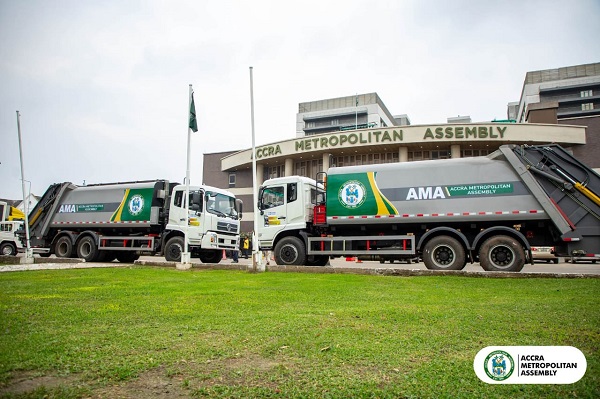
The Accra Metropolitan Assembly (AMA) has announced that the August edition of the National Sanitation Day clean-up exercise will be held on Saturday, August 1, 2026, from 6:00 a.m. to 12:00 noon across the capital.
In a statement issued on Monday, July 27, 2026, the Assembly directed traders, shop owners, transport operators, market leaders, corporate institutions, organisations and residents to keep their shops and business premises closed during the exercise.
The AMA explained that the clean-up would focus on desilting drains, clearing choked gutters and waterways, sweeping public spaces and evacuating refuse.
According to the statement, the exercise will take place in all sub-metros, electoral areas, markets, lorry parks, communities, business districts and other public spaces within the metropolis.
The Assembly indicated that the exercise forms part of its efforts to improve environmental sanitation, protect public health, prevent flooding and encourage residents to take responsibility for keeping the city clean.
It called on all residents and business operators to participate actively by cleaning their surroundings, desilting drains, clearing frontage areas and removing refuse.
The AMA warned that strict enforcement measures would be applied during the exercise.
It stated that persons who fail to participate, obstruct the exercise or engage in trading activities during the clean-up period would be arrested, fined, prosecuted before the sanitation court or sanctioned under the Assembly’s bye-laws.
The Assembly therefore urged all stakeholders to cooperate fully and support the clean-up exercise to promote a cleaner, healthier and safer Accra.
By: Jacob Aggrey






The Director of Legal Affairs of the New Patriotic Party (NPP), Gary Nimako Marfo, has questioned who will bear the cost of conducting presidential and parliamentary primaries following the Supreme Court’s ruling on the party’s delegate system.
Speaking to journalists, Mr. Nimako Marfo said he would not immediately comment on the ruling, adding that he wanted to wait for the full details before sharing his views.
“I don’t want to comment on it now. Let’s wait,” he said.
When asked about the Supreme Court’s decision that all members in good standing should vote in party elections, he shifted attention to the financial implications of implementing the ruling.
According to him, allowing all members in good standing to vote would increase the cost of organising internal party elections.
He questioned who would pay for the expanded electoral process.
“Who is going to pay for the cost of the elections?” he asked.
When a journalist suggested that political parties would bear the cost, Mr. Nimako Marfo replied, “Let’s wait and see.”
The comments come after the Supreme Court ruled that political parties should allow all members in good standing to vote in their internal elections, a decision that is expected to expand participation but also increase the financial and logistical demands of organising presidential and parliamentary primaries.
By: Jacob Aggrey
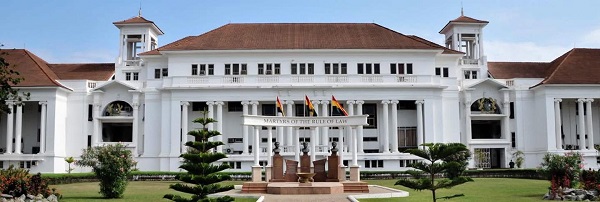
The Supreme Court of Ghana has declared the delegate system used by political parties to elect presidential and parliamentary candidates unconstitutional.
In a 5-2 majority decision delivered, the Court ruled that the long-standing system violates democratic principles and ordered all political parties to ensure every registered, card-bearing member participates in presidential and parliamentary primaries.
The ruling brings to an end decades of internal party elections conducted by a limited number of delegates.
The suit was filed by former Minister for Environment, Science, Technology and Innovation, Professor Kwabena Frimpong-Boateng; veteran politician Dr. Nyaho Nyaho-Tamakloe; and former Minister for Lands and Forestry, Dr. Christine Amoako-Nuamah.
The plaintiffs argued that the delegate system created inequality among party members by granting voting rights to a privileged minority while excluding ordinary members in good standing.
They told the Court that restricting voting rights to delegates was inconsistent with the democratic principles enshrined in the 1992 Constitution.
The Attorney-General’s Department supported the suit and urged the Court to adopt a “one member, one vote” approach.
In its submission, the State argued that political parties perform an important public function in Ghana’s democratic framework and that their internal electoral processes must reflect constitutional values of equality, participation and universal suffrage.
The Attorney-General further submitted that expanding voting rights to all registered members would strengthen accountability and deepen internal democracy within political parties.
The judgment means that going forward, presidential and parliamentary candidates will be selected by all registered members of a political party, instead of by delegates alone.
Political parties are expected to review their constitutions and structures to comply with the Court’s directive ahead of the 2028 general elections.
By Edem Mensah-Tsotorme