Relationship
Beyond hangover: How alcoholism affects mental health, children, marriage –Part 1

- /home/u249204778/domains/spectator.com.gh/public_html/wp-content/plugins/mvp-social-buttons/mvp-social-buttons.php on line 27
https://spectator.com.gh/wp-content/uploads/2026/07/Alcoholism-affects-mental-health-of-sober-spouse.jpg&description=Beyond hangover: How alcoholism affects mental health, children, marriage –Part 1', 'pinterestShare', 'width=750,height=350'); return false;" title="Pin This Post">
- Share
- Tweet /home/u249204778/domains/spectator.com.gh/public_html/wp-content/plugins/mvp-social-buttons/mvp-social-buttons.php on line 72
https://spectator.com.gh/wp-content/uploads/2026/07/Alcoholism-affects-mental-health-of-sober-spouse.jpg&description=Beyond hangover: How alcoholism affects mental health, children, marriage –Part 1', 'pinterestShare', 'width=750,height=350'); return false;" title="Pin This Post">
Marriage is meant to be a place of rest. A place where two people face the world together, not where one person battles the world alone while the other battles a bottle.
As a marriage counsellor and mental health professional in Accra, I have sat with wives who say, “The man I married disappears every evening,” and husbands who whisper, “I don’t know who I am living with anymore.”
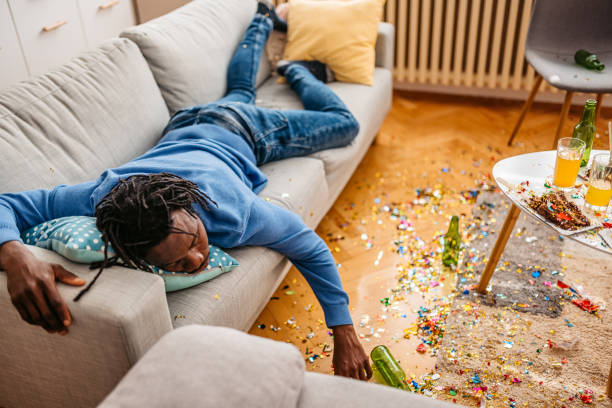
They are not just describing drinking. They are describing alcoholism-and its slow, painful erosion of mental health, trust, and family life.
Let us be clear: Alcohol use is not the same as alcoholism. Many Ghanaians drink socially at funerals, weddings, and weekends without harm. Alcoholism, also called Alcohol Use Disorder, is when drinking becomes compulsive, despite consequences to health, job, and relationships.
The World Health Organisation (WHO) estimates that alcohol contributes to over three million deaths yearly worldwide, and in Ghana, alcohol-related harm is a growing public health concern.
The hangover fades by morning. The damage to marriage and children does not. This article is for every spouse, parent, and child living “beyond the hangover.”
A. How alcoholism affects the mental health of the sober spouse
What it looks like at home: You never know which version of your partner will come through the door. Sober, loving, and apologetic one night. Angry, absent, or abusive the next.
The psychological impact:
1.Chronic anxiety: You live in a state of “walking on eggshells.” Your nervous system never relaxes because you do not know if tonight will bring peace or chaos.
2. Depression and hopelessness: Years of broken promises, “this is the last time,” create emotional exhaustion. You grieve the spouse you married while they are still alive.
3. Codependency: You start managing their life -calling their boss, hiding bottles, lying to family. Your identity becomes “the fixer,” not a wife or husband.
4. Loss of self-worth: Constant criticism, neglect, or blame makes you question, “Am I not enough to make them stop?”
Research from the National Institute on Alcohol Abuse and Alcoholism shows that spouses of people with alcohol use disorder have significantly higher rates of anxiety, depression, and stress-related illnesses than the general population.
B. How alcoholism affects children: The invisible victims
Children do not drink, but they drown in the effects. I call them “the forgotten casualties of the bottle.”
7 ways children are wounded:
1. Emotional neglect: An alcoholic parent is physically present but emotionally absent. Children learn that their needs come second to alcohol.
2. Fear and insecurity: Fights, shouting, broken furniture, or police visits create a home that feels unsafe. The child’s brain stays in “survival mode.”
3. Role reversal: The oldest child becomes “the little parent” -cooking, calming siblings, lying for the parent. Childhood is lost.
4. Academic decline: Concentration, memory, and school performance drop because home is chaotic, not a place for homework and rest.
5. Shame and secrecy: “Don’t tell anyone daddy was drunk.” Children carry the family secret and feel isolated from friends.
6. Risk of addiction: Children of alcoholics are four times more likely to develop alcohol problems themselves. They learn coping through substances, not words.
7. Attachment wounds: They struggle to trust, form healthy relationships, or believe they deserve love as adults.
A child’s brain is still developing. Living with an alcoholic parent is a form of chronic childhood stress that affects emotional regulation for life.
Source:
Counsellor Prince Offei, founder of CPAC, is a leading Mental Health Professional, Marriage Counsellor, Published Author, ADR Expert/Arbitrator, and Spectator Newspaper Columnist. He writes weekly on relationships, marriage, parenting, special needs support, and their connection to mental health and psychological well-being.
For therapy, counselling, mediation, or enquiries, contact Counselor Prince & Associates Consult (CPAC) in Accra on 0559850604 or 0551428486.
Website: https://princeoffei22.wixsite.com/website

Raising children is one of the toughest and most fulfilling jobs in the world and the one for which you might feel the least prepared.
Here are some child-rearing tips that can help you feel more fulfilled continued from last week.
3. Set limits and be consistent with your discipline
Discipline is necessary in every household. The goal of discipline is to help children choose acceptable behaviors and learn self-control. They may test the limits established for them, but they need those limits to grow into responsible adults.
Establishing house rules helps kids understand your expectations and develop self-control. Some rules might include: no TV until homework is done, and no hitting, name-calling, or hurtful teasing allowed.
A common mistake parents make is not following through with consequences. You cannot discipline children for talking back one day and ignore it the next. Being consistent teaches what you expect.
4. Make time for your kids
It is often hard for parents and kids to get together for a family meal, let alone spend quality time together. But there is probably nothing children would like more.
Get up 10 minutes earlier in the morning so you can eat breakfast with your child or leave the dishes in the sink and take a walk after dinner children who are not getting the attention they want from their parents often act out or misbehave because they are sure to be noticed that way.
5. Be a good role model
Young children learn a lot about how to act by watching their parents. The younger they are, the more cues they take from you. Before you lash out or blow your top in front of your child, think about this: Is that how you want your child to behave when angry? Be aware that you are constantly being watched by your kids. Studies have shown that children who hit usually have a role model for aggression at home.
Model the traits you wish to see in your children: respect, friendliness, honesty, kindness, tolerance. Exhibit unselfish behaviour. Do things for other people without expecting a reward. Express thanks and offer compliments. Above all, treat your kids the way you expect other people to treat you.
6. Make communication a priority
You cannot expect children to do everything simply because you, as a parent, “say so.” They want and deserve explanations as much as adults do. If we do not take time to explain, children will begin to wonder about our values and motives and whether they have any basis. Parents who reason with their kids allow them to understand and learn in a nonjudgmental way.

Friendship is a gift. Laughter with friends, weekend “vibes,” and social connections keep us human. But what happens when the club, the chop bar, the “girls’ night,” or the “boys’ hangout” becomes more important than the home you promised to build?
As a marriage counsellor, I meet couples who do not fight about money or in-laws. They fight about time. One partner says, “You’re always out.” The other says, “You’re just boring and controlling.” Behind those words is a painful truth: Excessive partying and socialising can become emotional infidelity — not with a person, but with a lifestyle.
Research from the Journal of Marriage and Family shows that couples who spend less than five hours of focused time together weekly report higher dissatisfaction, lower intimacy, and increased risk of separation. The issue is not social life. The issue is imbalance.
This article is for every husband, wife, fiancé, and fiancée who feels lonely in a marriage full of people. Beyond the vibes is a home that needs you.
7 ways excessive partying and socialising break a marriage
1. Emotional neglect becomes normal
Marriage thrives on daily connection — a 10-minute talk, shared meals, checking in after a hard day. When one partner is always out, the other learns to stop sharing. Over time, “How was your day?” feels pointless because the answer is always, “You weren’t there.”
Emotional neglect is silent, but it kills intimacy faster than shouting.
2. Trust erodes in the absence
Constant nights out, unanswered calls, “I forgot my phone,” and coming home late create suspicion. Even if there is no cheating, the marriage becomes policed by fear. The sober spouse starts checking phones, counting money, and living with anxiety. Trust grows in presence, not absence.
3. Parenting becomes one-person work
When one partner is always socialising, childcare, homework, and bedtime stories fall on one person. Resentment grows: “I’m married, but I’m parenting alone.” Children also notice which parent is absent. They learn that home is not the priority.
4. Financial strain and broken priorities
Weekly clubbing, bottles, fuel, and “contributions” drain family budgets. School fees are delayed, rent is late, but there’s always money for “vibes.” This creates a second crisis: financial conflict. The message sent is, “Friends get my best money; family gets my leftovers.”
5. Intimacy and sex life die
You cannot build romance in 10 minutes before sleep. Excessive nights out mean couples stop touching, talking deeply, and laughing together. The bedroom becomes cold. Over time, couples become roommates who share a surname but not a life.
6. “We” becomes “me”
Marriage is a team. But when decisions, weekends, and identity are centered on friends, the marriage loses its “we.” The social partner says, “My boys are planning a trip,” not “Let’s plan as a family.” The other spouse feels like an outsider in their own home.
7. Mental health declines for both partners The partner at home feels abandoned, depressed, and less valuable. The partner always out feels guilty, defensive, and addicted to external validation. Both end up emotionally exhausted. Studies show that social isolation within marriage increases depression risk for both spouses, even when one is socially overactive