Nutrition
The true cost of free healthcare: Why NHIS must cover essential nutrition services

- /home/u249204778/domains/spectator.com.gh/public_html/wp-content/plugins/mvp-social-buttons/mvp-social-buttons.php on line 27
Warning: Trying to access array offset on false in /home/u249204778/domains/spectator.com.gh/public_html/wp-content/plugins/mvp-social-buttons/mvp-social-buttons.php on line 27
&description=The true cost of free healthcare: Why NHIS must cover essential nutrition services ', 'pinterestShare', 'width=750,height=350'); return false;" title="Pin This Post">
- Share
- Tweet /home/u249204778/domains/spectator.com.gh/public_html/wp-content/plugins/mvp-social-buttons/mvp-social-buttons.php on line 72
Warning: Trying to access array offset on false in /home/u249204778/domains/spectator.com.gh/public_html/wp-content/plugins/mvp-social-buttons/mvp-social-buttons.php on line 72
&description=The true cost of free healthcare: Why NHIS must cover essential nutrition services ', 'pinterestShare', 'width=750,height=350'); return false;" title="Pin This Post">
Ghana’s National Health Insurance Scheme (NHIS) has transformed healthcare access for millions of people. Since its establishment, the scheme has reduced out-of-pocket health spending and increased the use of healthcare services. For many families, an NHIS card means the difference between seeking treatment and delaying care. Yet this promise of accessible healthcare encounters significant limitations when families face nutrition emergencies.
Consider a mother whose child develops severe acute malnutrition (SAM). This life-threatening condition affects an estimated 68,000 children in Ghana and carries a mortality risk up to nine times higherthan that of well-nourished children. The good news is that SAM can be treated effectively. Ready-to-Use Therapeutic Food (RUTF), a peanut-based therapeutic food that allows children with uncomplicated malnutrition to recover through community-based treatment. Recovery rates typically range between 75 and 90 per cent, with very low mortality when treatment is delivered early. RUTF is not an experimental intervention. It is included in Ghana’s Essential Medicines List and the Standard Treatment Guidelines, and health workers across the country are trained to use it.
Yet RUTF is not covered under the NHIS benefits package.
This means that even when a mother holds a valid NHIS card, the scheme may cover consultation fees and routine medicines but not the one treatment that could save her child’s life. Access often depends on whether a donor-funded program happens to be operating in her district. If supplies run out, or if her district is not part of a project, treatment may simply not be available. This is the hidden cost of healthcare that appears free on paper but remains inaccessible in practice.
The pattern repeats with maternal nutrition. An estimated 37 to 63 per cent of pregnant women in Ghana experience anemia, depending on the stage of pregnancy. While iron and folic acid supplements help address two nutrients, pregnancy increases the body’s demand for many more vitamins and minerals. Multiple Micronutrient Supplements (MMS) provide 15 essential vitamins and minerals in a single daily tablet. Evidence shows that MMS can reduce low birth weight by about 12 per cent, preterm birth by about 11 per cent, and small-for-gestational-age births by around 8 percent.
Despite these benefits, access remains limited. A full course of MMS during pregnancy costs about $2.50 in public-sector procurement, yet current pilot programs reach only a small fraction of pregnancies. Most pregnant women enrolled in NHIS receive antenatal consultations and iron-folic acid tablets, but comprehensive micronutrient supplementation is not yet routinely available through the system. As a result, women who can afford supplements from private pharmacies may receive more comprehensive care, while others rely on more limited options. These gaps create what economists call “false savings”.
When children with severe malnutrition cannot access RUTF early, their condition may worsen, requiring costly hospitalisation and medical care. When pregnant women lack adequate micronutrient support, complications during pregnancy and childbirth can generate healthcare costs far greater than the cost of prevention.
In other words, excluding essential nutrition interventions from NHIS may appear to save money in the short term, but it often raises healthcare costs later while worsening health outcomes. The encouraging news is that the infrastructure to address this gap already exists. A large majority of mothers with young children in Ghana are already enrolled in NHIS. Health facilities have trained staff, established antenatal care systems, and experience delivering nutrition services.
What remains is a policy decision. Integrating RUTF and MMS into the NHIS benefits package would ensure that families enrolled in the scheme can access these essential services when they need them most.
Healthcare that appears free but excludes life-saving nutrition services is healthcare that fails at critical moments. Including these interventions under NHIS would not simply expand the benefits package. It would complete the promise of universal health coverage, ensuring that Ghanaian mothers and children receive the care they need to survive and thrive.
Feature article by Women, Media and Change under its Nourish Ghana: Advocating for Increased Leadership to Combat Malnutrition project

Ingredients
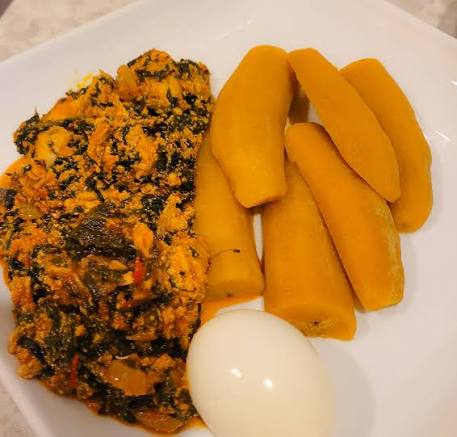
-Cocoyam leaves (Nkontomire)
-Palm oil
-Ripped Plantain
-2 Large smoked salmon
-1 cowhide (wele)
-1 cup of Egusi
– Momoni
-3 fresh eggs
-2 large onions
-2 large tomatoes
-Pepper
-Ginger
-Garlic
Method
-Wash cocoyam leaves thoroughly under running water
-Cut cocoyam leaves into stripes and wash for the second time
-Blend tomatoes, onion, pepper, ginger, and garlic together
-Put sauce pan on fire and heat palm oil
-Add blended ingredients and allow to cook for about 5 minutes
– Wash salmon, wele and cut into cubes and add to stew
-Add salt
-Add eggs to egusi in a bowl to form paste and add it to stew
-Add to stew and allow to simmer for seven minutes
-Add cocoyam leaves to stew and allow it to cook for sometime
-Wash, peel plantain and cut into shapes
-Cook for some time (Pour water out and serve with stew)
By Linda Abrefi Wadie
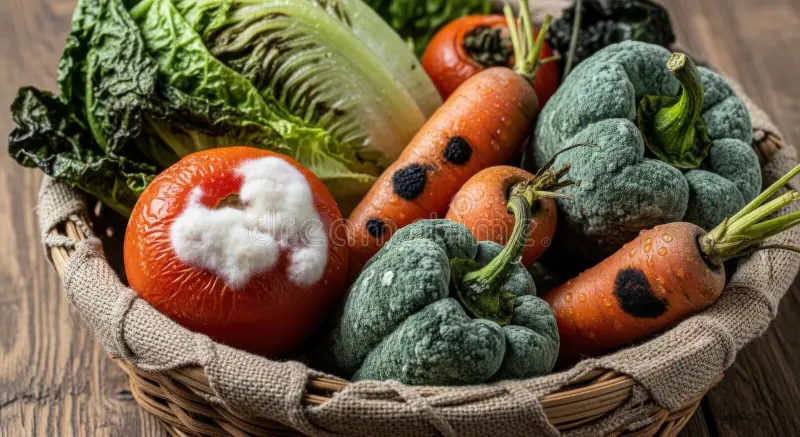
Every year, Ghana produces thousands of tonnes of nutritious food but a significant share of it never reaches a plate. Fruit spoils before it’s sold. Vegetables rot in transit. Grains are ruined by poor storage. Conversations about nutrition often focus on growing more food but reducing what’s lost or wasted after harvest may be one of the fastest ways to improve food security and nutrition, without farming a single extra acre.
The cost of losing nutritious food
Fresh fruit and vegetables spoil the fastest, and without adequate storage, cooling, or transport, farmers are often forced to sell at rock-bottom prices or watch their harvest go to waste. That squeezes farmers’ incomes and shrinks the supply of nutritious food reaching local markets. As supply falls, prices rise, pushing healthy food further out of reach for the low-income households that need it most.
Nutrition begins beyond the farm gate
Cutting post-harvest losses means more nutritious food reaches families without needing more farmland or higher yields. When tomatoes, mangoes, and leafy greens are preserved through better storage, drying, or processing, they stay available and affordable for longer. Better handling also protects nutritional quality itself, so the vitamins and minerals in food aren’t lost before it ever reaches a consumer.
Supporting farmers supports nutrition
Many farmers still lack access to storage facilities, cold chains, processing equipment, and reliable transport. Strengthening these systems is a win on both ends: farmers earn more from what they grow, and households gain more affordable access to nutritious food. Local processing, such as turning surplus fruit into juices, dried fruit, or purees, can extend shelf life and cut waste even further.
What needs to change?
Reducing food loss takes coordinated action:
• Government: invest in rural roads, storage infrastructure, irrigation, and agricultural extension services.
• Private sector: expand cold storage, food processing, and distribution networks.
• Research institutions: keep developing better post-harvest preservation technology.
• Consumers: plan meals, store food properly, and make safe use of leftovers.
Looking ahead
As Ghana works to tackle malnutrition in all its forms, cutting food loss deserves a place at the top of the agenda. Growing more food matters, but making sure the food already grown actually reaches families, safely and affordably, matters just as much.
Every basket of tomatoes saved, every crate of mangoes preserved, and every bag of grain protected from spoilage adds up to better nutrition, stronger livelihoods, and a more resilient food system for the future.
Feature article by Women, Media and Change under its Nourish Ghana: Advocating for Increased Leadership to Combat Malnutrition project