News
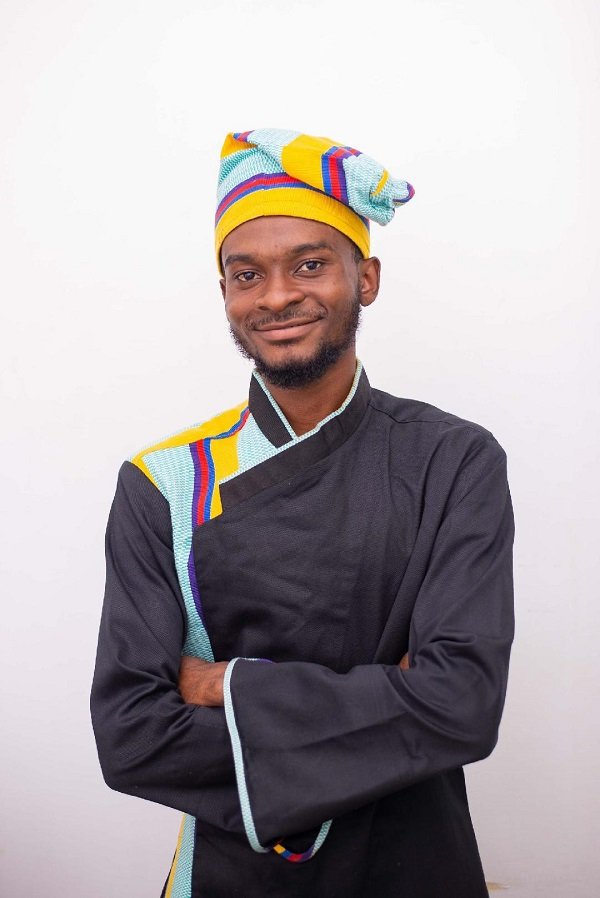
Putting Northern cuisine on the world menu: Chef Abiro’s journey

- /home/u249204778/domains/spectator.com.gh/public_html/wp-content/plugins/mvp-social-buttons/mvp-social-buttons.php on line 27
https://spectator.com.gh/wp-content/uploads/2026/02/Chef-Abiro-600x600.jpg&description=Putting Northern cuisine on the world menu: Chef Abiro’s journey', 'pinterestShare', 'width=750,height=350'); return false;" title="Pin This Post">
- Share
- Tweet /home/u249204778/domains/spectator.com.gh/public_html/wp-content/plugins/mvp-social-buttons/mvp-social-buttons.php on line 72
https://spectator.com.gh/wp-content/uploads/2026/02/Chef-Abiro-600x600.jpg&description=Putting Northern cuisine on the world menu: Chef Abiro’s journey', 'pinterestShare', 'width=750,height=350'); return false;" title="Pin This Post">
From Bolgatanga in Ghana’s Upper East Region, Chef Abiro Seidu Napaana of Zuarungu is redefining what it means to cook and take pride in one’s heritage. His mission: to elevate Northern Ghanaian cuisine onto the global stage.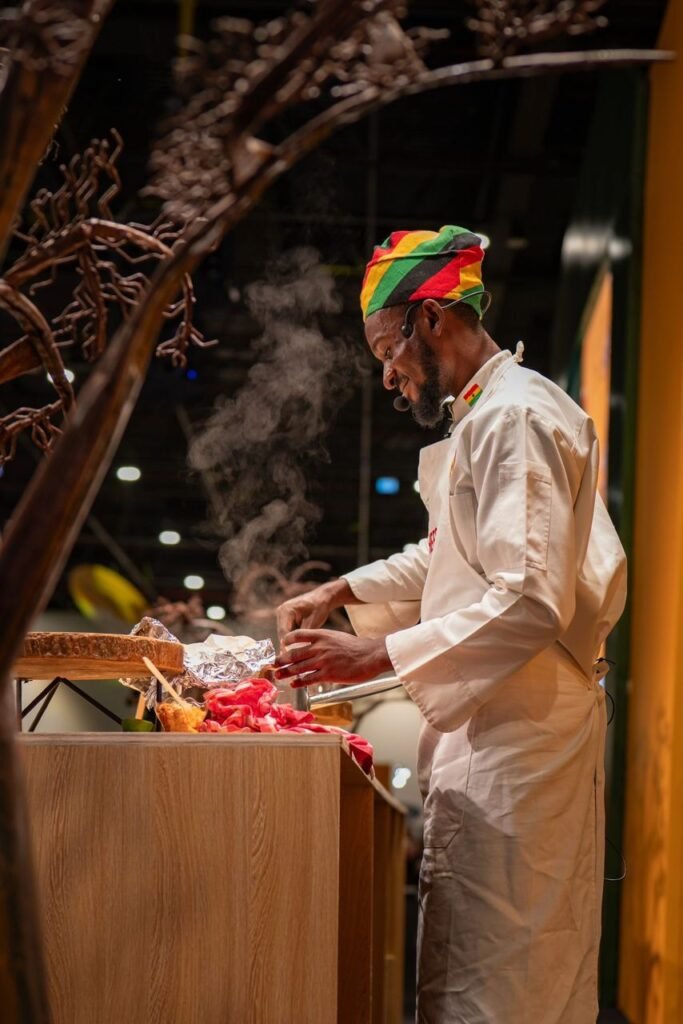
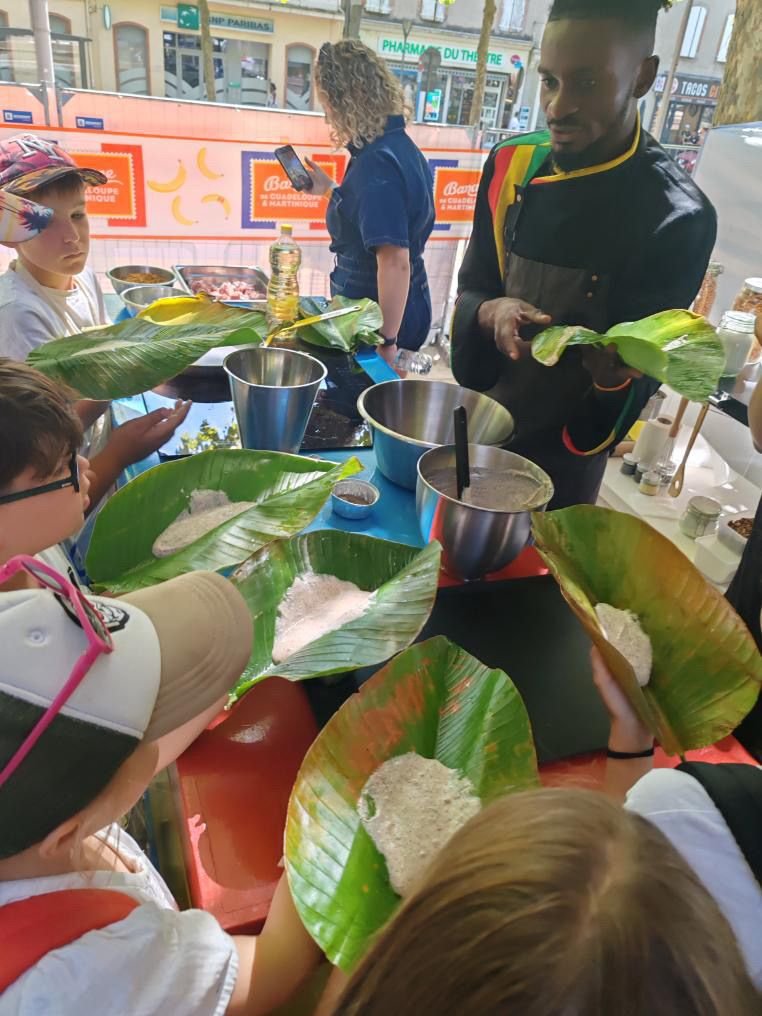
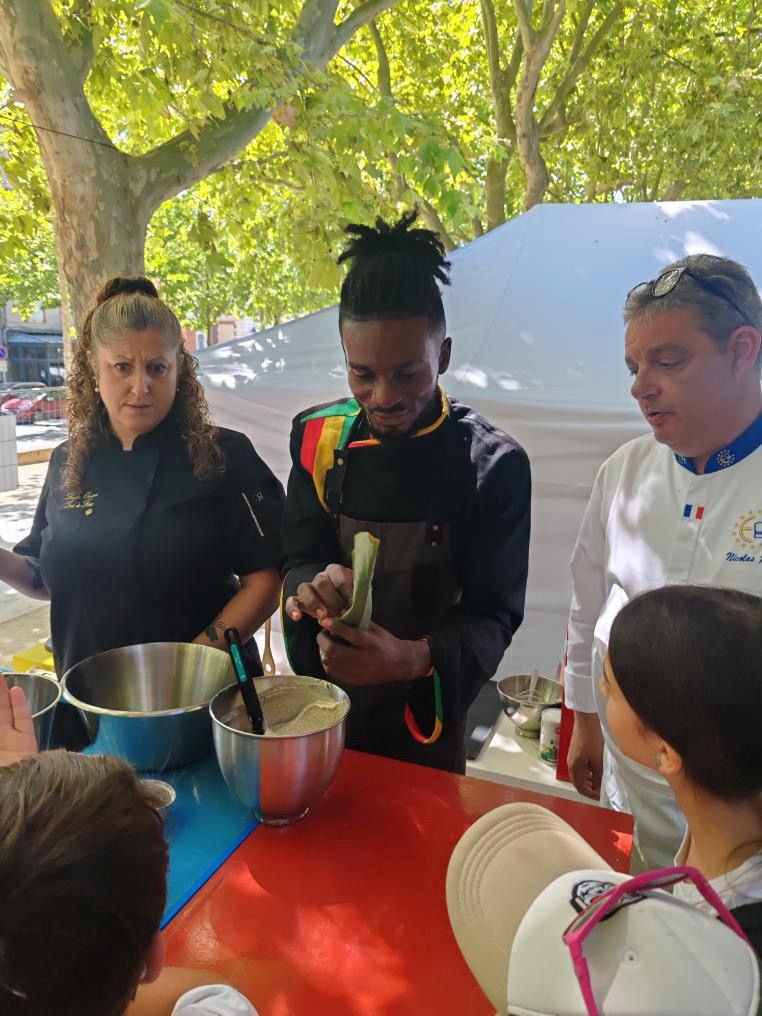
Raised in a household that emphasized gender equality, Abiro began cooking as a responsibility rather than rebellion. In a region where cooking is traditionally assigned to women, his early interest was unusual, but it quickly became a passion.
At Bolgatanga Senior High School, Abiro chose Home Economics over General Science, placing him among just five boys in his class. Despite bullying and skepticism from peers, he excelled academically, proving his capabilities and earning respect.
Abiro pursued Hotel, Catering, and Institutional Management at university, graduating in 2019. He noted that culinary schools often prioritized international cuisines—French, Italian, Mexican, and Chinese—while sidelining Ghanaian dishes. Determined to champion local cuisine, he joined the Ghana Food Movement, an organization promoting indigenous foods.
Focusing on Northern Ghanaian cuisine, Abiro highlights its nutrient-dense, climate-adapted dishes, such as wasawasa (millet-based) and tuo zaafi (soups with dried okra). To make these visually appealing, he reimagines traditional meals using modern plating techniques, maintaining authenticity while attracting contemporary audiences.
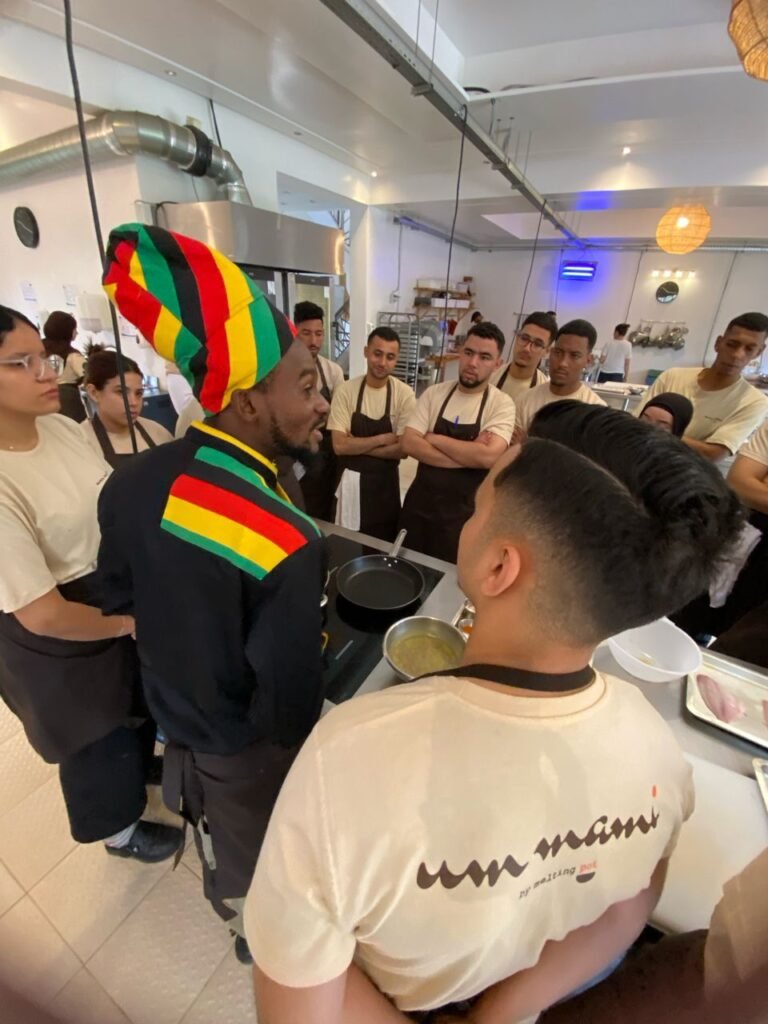
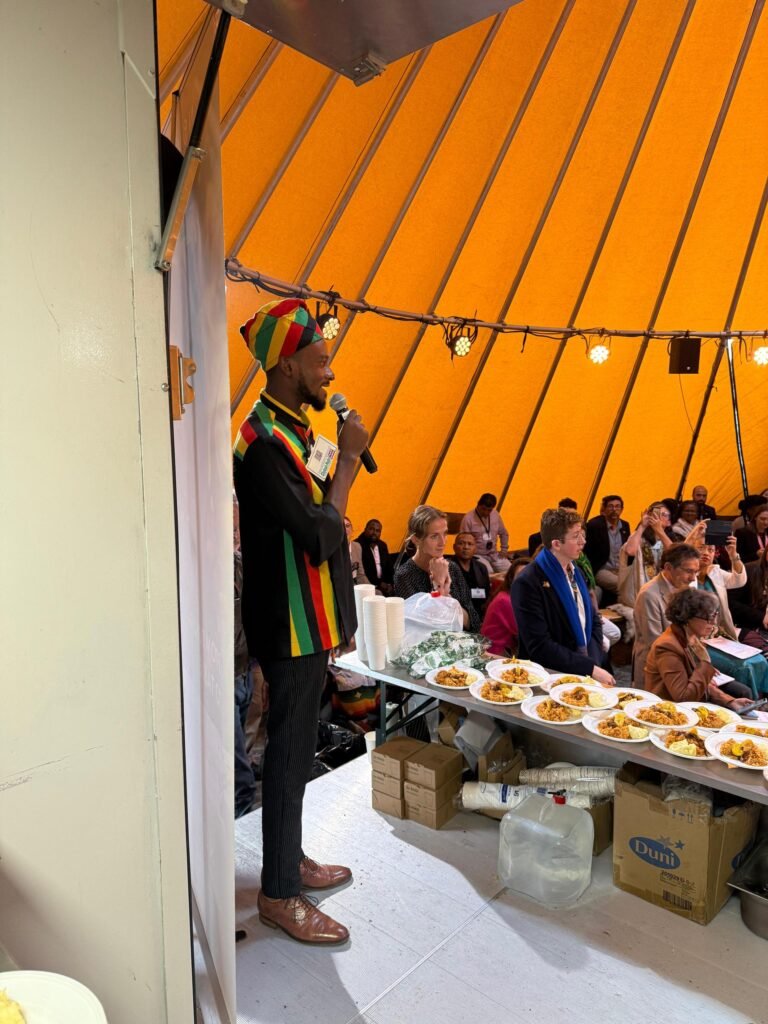
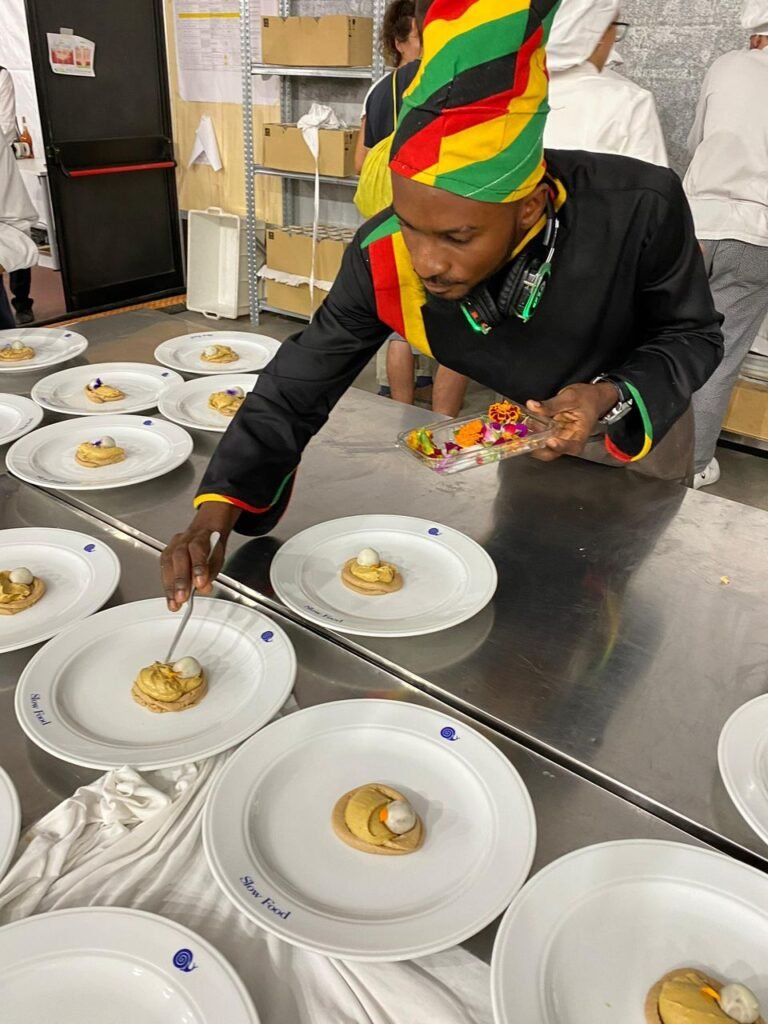
His work has gained international recognition. He has conducted cooking demonstrations in Italy, France, Morocco, Algeria, Senegal, and Canada, showcasing Ghanaian staples rather than continental dishes. For four consecutive years, he has represented Northern Ghanaian cuisine in Rome through programmes linked to the Food and Agriculture Organisation (FAO).
Abiro also advocates for climate-resilient crops like fonio and millet, highlighting their potential to combat food insecurity and lifestyle diseases such as diabetes and hypertension. He believes Northern Ghanaian cuisine, rich in fibre, micronutrients, and plant proteins, will become central to global conversations on sustainable and healthy eating.
As Head Chef of the Ghana Food Movement, Abiro sees himself not just as a cook but as a cultural ambassador. His message to young chefs: success is possible when rooted in indigenous cuisine.
“I came from Zuarungu in the Upper East. If I can travel the world cooking Northern Ghanaian food, then any young chef who believes in their heritage can do the same,” he says.
For Chef Abiro, the kitchen is a platform for identity, pride, and transformation—one beautifully plated dish at a time.
By Esinam Jemima Kuatsinu
Join our WhatsApp Channel now!
https://whatsapp.com/channel/0029VbBElzjInlqHhl1aTU27







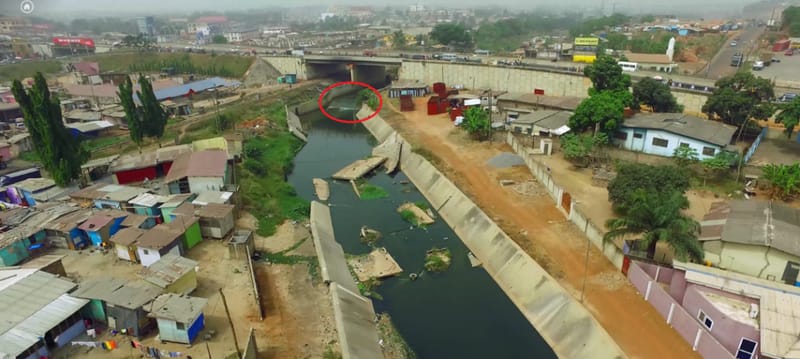
Construction of a major underground stormwater drain along the Dr. Busia Highway within the Kaneshie enclave will commence on September 7, 2026.
The Project Coordinator for the Greater Accra Resilient and Integrated Development (GARID) Project, Dr. Kwadwo Ohene Sarfo, announced this at a special media briefing on Wednesday.
According to him, the works will involve the construction of a double-cell underground rectangular drain measuring approximately 10 metres wide and 1.95 kilometres long, stretching from Pamprom Junction to First Light Junction.
The new drain will replace the existing two 1.2-metre diameter pipes, which are inadequate to carry the volume of stormwater in the area.
Dr. Sarfo said the drain will connect at one end to the recently completed section within the Accra Academy campus and at the other end to the existing drain at Pamprom Junction.
He said the construction is expected to run from September 2026 to October 2027.
The project forms part of government’s broader flood prevention and mitigation programme aimed at addressing perennial flooding in Accra.
By Edem Mensah-Tsotorme
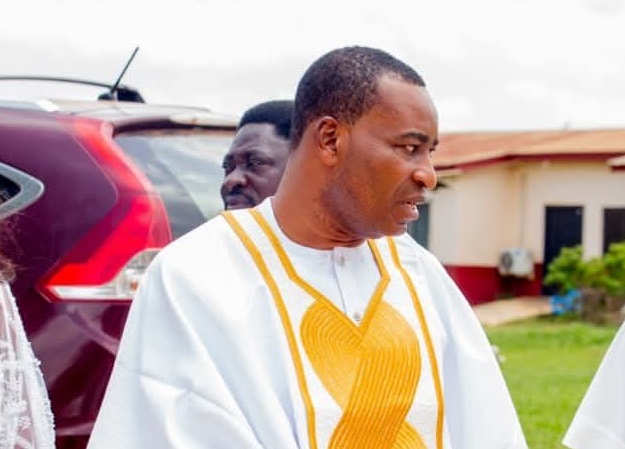
The former Ashanti Regional Chairman of the New Patriotic Party (NPP), Bernard Antwi Boasiako, popularly known as Chairman Wontumi, has withdrawn from the party’s National Chairmanship race.
In a statement issued yesterday, Chairman Wontumi who is currently serving a 20-year jail term said his decision was driven by his love for the party and his unwillingness to let his personal circumstances distract the NPP from its rebuilding efforts.
“There are moments in the life of a man when the heart wants to continue, but duty demands sacrifice. Moments when one must quietly set aside personal ambition, not because the dream has died, but because the family he loves must not be made to carry his burden. Today, I find myself at such a painful moment,” he wrote.
He disclosed that after many nights of prayer, sober reflection and consultations with his family, legal team, party elders, campaign team and trusted supporters, he concluded that his present situation must not become an additional burden on the NPP.
“This is not the decision my heart desired, but sometimes, true love requires us to release what we deeply want in order to protect what we love even more,” he added.
Recounting his years of service, Chairman Wontumi said he had served the party with everything within him, walking through heat and rain, travelling to remote communities and standing with the grassroots in both victory and defeat.
“For many years, I have served the NPP with everything within me… The NPP is not merely a political party to me. It is my family. It is my home. It is a cause to which I have dedicated a significant part of my life,” he stated.
He explained that the party, already carrying the pain of electoral defeat and the huge responsibility of preparing for the future, should not be made to carry his personal weight.
“That is why I cannot allow my present situation or personal ambition to distract the party from the difficult work of rebuilding. I cannot ask the party to carry my weight when it is already carrying the pain of defeat and the enormous responsibility of preparing for the battle ahead. I would rather carry this pain quietly than allow the party I love to suffer because of me,” he said.
He further sympathized with his supporters across the 16 regions, acknowledging that the decision would be painful for many who had sacrificed for his campaign.
“To my teeming supporters across all sixteen regions, I know this message will hurt. I know many of you will read it with tears in your eyes because I understand the sacrifices you have made for this journey,” he said.
By Edem Mensah-Tsotorme