News
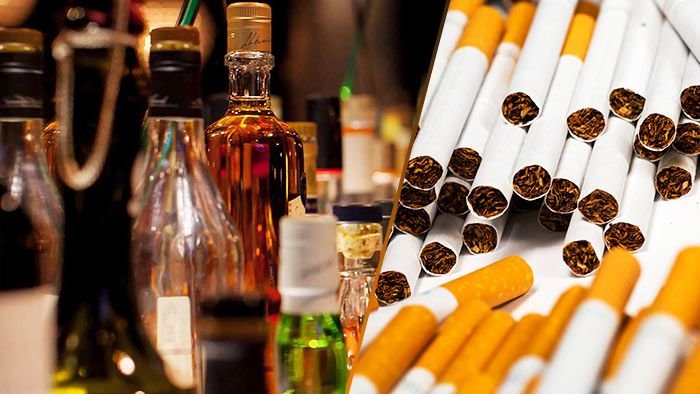
Increase taxes on tobacco, alcohol, sugary products — WHO

- /home/u249204778/domains/spectator.com.gh/public_html/wp-content/plugins/mvp-social-buttons/mvp-social-buttons.php on line 27
https://spectator.com.gh/wp-content/uploads/2026/01/Some-alcoholic-and-tobacco-products.jpg&description=Increase taxes on tobacco, alcohol, sugary products — WHO', 'pinterestShare', 'width=750,height=350'); return false;" title="Pin This Post">
- Share
- Tweet /home/u249204778/domains/spectator.com.gh/public_html/wp-content/plugins/mvp-social-buttons/mvp-social-buttons.php on line 72
https://spectator.com.gh/wp-content/uploads/2026/01/Some-alcoholic-and-tobacco-products.jpg&description=Increase taxes on tobacco, alcohol, sugary products — WHO', 'pinterestShare', 'width=750,height=350'); return false;" title="Pin This Post">
The World Health Organisation (WHO) has urged countries to increase taxes on tobacco, alcohol, and sugary drinks to protect public health.
At a virtual press conference on Tuesday, held during the launch of WHO’s two new global reports on taxes on sugary drinks and alcoholic beverages, Dr Tedros Adhanom Ghebreyesus, WHO Director-General, said the organisation is supporting countries to sustain health services and mobilise domestic resources to reduce aid dependency.
“One of the most effective tools available to governments is health taxes on tobacco, alcohol, and sugary drinks. Such taxes have consistently been shown to reduce consumption of harmful products, prevent disease, and ease the burden on overstretched health systems,” he highlighted.
Dr Ghebreyesus said that health taxes generate reliable revenue that governments could invest in health, education, and social protection.
In 2024, WHO launched its “3 by 35 Initiative,” aimed at supporting countries to increase the real prices of tobacco, alcohol, and sugary drinks through health taxes by 2035.
Dr Ghebreyesus stressed that health taxes are not a “set it and forget it” solution, noting that they must be carefully designed and regularly adjusted to remain effective.
The two new global reports show that in most countries, taxes on alcoholic beverages and sugary drinks remain too low, poorly structured, infrequently updated, and rarely aligned with public health objectives. They indicate that alcoholic beverages and sugary drinks have become more affordable over time, even as noncommunicable diseases, injuries, and related healthcare costs continue to rise.
The taxation approach aligns with Ghana’s efforts to boost revenue for health financing amid rising noncommunicable diseases. In 2023, Ghana implemented a 20 per cent tax on sugar-sweetened beverages, including sodas, energy drinks, and sweetened juices, through the Excise Duty Amendment Act. The measure sought to curb consumption and promote health.
The WHO cited evidence from several countries demonstrating the impact of well-designed health taxes. In the Philippines, a major tobacco and alcohol tax reform in 2013 increased revenues more than fivefold, enabling the expansion of national health insurance coverage to over 15 million poor families.
In Lithuania, a sharp increase in alcohol taxes in 2017 was followed by an almost five per cent reduction in all-cause mortality the following year. In the United Kingdom, a sugary drinks tax introduced in 2018 reduced sugar consumption, generated £338 million in revenue in 2024 alone, and was linked to lower obesity rates among girls aged 10 and 11, particularly in deprived communities.
WHO said that in 2024, countries including Malaysia, Mauritius, Slovakia, Sri Lanka, and Vietnam introduced or increased taxes on tobacco, alcohol, and sugary drinks. In 2025, India introduced a new excise duty on tobacco, while Saudi Arabia implemented a tiered excise tax on sugary drinks, with higher rates for products containing more sugar.
WHO said it looks forward to supporting more countries, including those in Africa, to design and implement effective health taxes as part of broader efforts to protect public health and build resilient, self-financed health systems. -GNA
Join our WhatsApp Channel now!
https://whatsapp.com/channel/0029VbBElzjInlqHhl1aTU27





The Ghana Police Service, through the Motor Traffic and Transport Department (MTTD), will commence full implementation of its automated traffic law enforcement programme, TRAFFITECH-GH, from October 1, 2026.
According to the Service, the programme forms part of efforts to address indiscipline on Ghana’s roads and improve compliance with road traffic laws and regulations.
TRAFFITECH-GH will use cameras and Personal Data Assistant (PDA) devices to detect traffic offences and support the enforcement of road traffic regulations.
Under the programme, detected offences will be reviewed and Electronic Notices of Violation (ENV) issued to vehicle owners or drivers through SMS. The notice will indicate the offence committed and the prescribed fine.
The Service has therefore urged all motorists, drivers and vehicle owners to comply with road traffic regulations and support the implementation of TRAFFITECH-GH to promote safer roads and reduce road traffic crashes and casualties.
By Edem Mensah-Tsotorme

Entrepreneur, Henry Brew Gardner has officially declared his intention to contest for the position of Agona West Constituency Youth Organizer of the National Democratic Congress (NDC) in the upcoming constituency elections.
In a declaration statement, Mr. Gardner said he is stepping forward with humility, courage and commitment to the progress of the constituency.
“I am stepping forward because Agona West deserves a Youth Wing that is active, united, organized, visible, disciplined, and ready to work,” he stated.
According to him, his decision to serve the NDC in Agona West is not for personal glory but a call to service, to unite the youth, strengthen the grassroots and build a formidable youth front capable of winning elections.
“Our youth are not merely the future — we are the energy, strength, voice, and engine of our party today. We must therefore create a youth wing where every young person feels valued, heard, represented, and empowered to contribute,” he added.
Mr. Gardner said he believes in leadership that listens, engages, builds bridges and puts collective interest above personal ambition.
He outlined his vision to organize the grassroots, mobilize the youth, strengthen structures, promote unity, identify opportunities, support young people and build a stronger political force in every branch and ward of Agona West.
“I am not coming to divide. I am coming to unite. I am not coming to compete with our youth. I am coming to work with them. I am not coming for a title. I am coming to serve,” he declared.
He called for prayers, support and guidance, rallying the youth with the message: “Agona West Youth, Our Time Is Now!”
By Edem Mensah-Tsotorme

 Entertainment1 week ago
Sarkodie to SarkNation: You don’t have to tear someone down to prove your loyalty
- Entertainment1 week ago
“Without principle, advice is just an opinion” – Stonebwoy replies Sarkodie
- News5 days ago
Ghanaian journalist celebrates Texas town’s ‘Eden of the Far West’ tag after mayor’s nod