Nutrition
Integrating RUTF Into NHIS: Strengthening Health Systems and Protecting Ghana’s Future

- /home/u249204778/domains/spectator.com.gh/public_html/wp-content/plugins/mvp-social-buttons/mvp-social-buttons.php on line 27
Warning: Trying to access array offset on false in /home/u249204778/domains/spectator.com.gh/public_html/wp-content/plugins/mvp-social-buttons/mvp-social-buttons.php on line 27
&description=Integrating RUTF Into NHIS: Strengthening Health Systems and Protecting Ghana’s Future', 'pinterestShare', 'width=750,height=350'); return false;" title="Pin This Post">
- Share
- Tweet /home/u249204778/domains/spectator.com.gh/public_html/wp-content/plugins/mvp-social-buttons/mvp-social-buttons.php on line 72
Warning: Trying to access array offset on false in /home/u249204778/domains/spectator.com.gh/public_html/wp-content/plugins/mvp-social-buttons/mvp-social-buttons.php on line 72
&description=Integrating RUTF Into NHIS: Strengthening Health Systems and Protecting Ghana’s Future', 'pinterestShare', 'width=750,height=350'); return false;" title="Pin This Post">
Malnutrition remains one of the most significant barriers to Ghana’s long-term development. While its effects are most visible in childhood illness and mortality, its consequences extend far beyond the health sector, affecting education outcomes, labor productivity, and economic growth.
Severe Acute Malnutrition (SAM), in particular, demands urgent policy attention due to its direct link to preventable child deaths. At the center of the solution lies Ready-to-Use Therapeutic Food (RUTF) and the need for its inclusion in the National Health Insurance Scheme (NHIS).
NHIS has played a critical role in expanding access to healthcare by reducing out-of-pocket expenditures and improving utilization of services. However, the exclusion of RUTF exposes a structural weakness in the system.
When families cannot access treatment for SAM through NHIS, the burden of care shifts back to households already struggling with poverty and food insecurity.
RUTF is not a luxury commodity; it is an essential medicine for malnutrition. Its formulation allows children to be treated at home, reducing hospitalization costs and improving adherence. Evidence from Ghana and other countries shows that community-based management of acute malnutrition is both effective and scalable when adequately financed.
Failure to integrate RUTF into NHIS creates inefficiencies across the health system. Facilities cannot plan effectively, health workers face ethical dilemmas, and monitoring of outcomes becomes fragmented. By contrast, NHIS coverage would allow for standardized protocols, better data collection, and improved quality of care.
Importantly, integrating RUTF into NHIS would reduce Ghana’s dependence on donor funding for a core child survival intervention.
While development partners play a valuable role, reliance on external funding for essential services poses sustainability risks. National ownership through NHIS financing would ensure continuity of care and long-term impact.
The economic case is equally compelling. Studies consistently show that investments in nutrition yield some of the highest returns in development, often exceeding returns from infrastructure projects. Children who receive timely treatment for malnutrition are more likely to complete school, earn higher incomes, and contribute to national growth.
As Ghana advances its Universal Health Coverage agenda, it is imperative that nutrition interventions are fully integrated into health financing decisions.
Leaving RUTF outside NHIS sends the message that malnutrition is a peripheral issue rather than a core determinant of health and development.
Policymakers have the opportunity to correct this imbalance. Integrating RUTF into NHIS would strengthen the health system, protect vulnerable children, and safeguard Ghana’s future workforce. It is a policy decision grounded in evidence, equity, and national interest.
Key Policy Recommendations: The Ministry of Health and NHIA should immediately commission a costing study to integrate RUTF into the NHIS benefits package by 2027. Parliament’s Health Committee should prioritize oversight of this integration, with quarterly progress reports.
The National Health Insurance Authority must allocate 2-3% of its annual budget to nutrition interventions, including RUTF coverage for all diagnosed SAM cases. District health directorates should establish standardized RUTF distribution protocols, with digital tracking systems to monitor utilization and outcomes.
Finally, the Ghana Health Service should launch a nationwide training programme for health workers on community-based management of acute malnutrition, ensuring quality service delivery from hospital to household level.
Feature article by Women, Media and Change under its Nourish Ghana: Advocating for Increased Leadership to Combat Malnutrition project
Join our WhatsApp Channel now!
https://whatsapp.com/channel/0029VbBElzjInlqHhl1aTU27


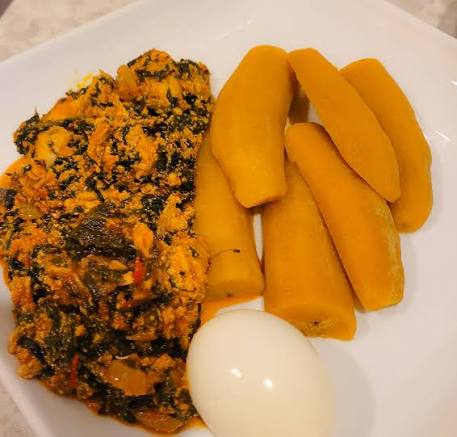
Ingredients
-Cocoyam leaves (Nkontomire)
-Palm oil
-Ripped Plantain
-2 Large smoked salmon
-1 cowhide (wele)
-1 cup of Egusi
– Momoni
-3 fresh eggs
-2 large onions
-2 large tomatoes
-Pepper
-Ginger
-Garlic
Method
-Wash cocoyam leaves thoroughly under running water
-Cut cocoyam leaves into stripes and wash for the second time
-Blend tomatoes, onion, pepper, ginger, and garlic together
-Put sauce pan on fire and heat palm oil
-Add blended ingredients and allow to cook for about 5 minutes
– Wash salmon, wele and cut into cubes and add to stew
-Add salt
-Add eggs to egusi in a bowl to form paste and add it to stew
-Add to stew and allow to simmer for seven minutes
-Add cocoyam leaves to stew and allow it to cook for sometime
-Wash, peel plantain and cut into shapes
-Cook for some time (Pour water out and serve with stew)
By Linda Abrefi Wadie
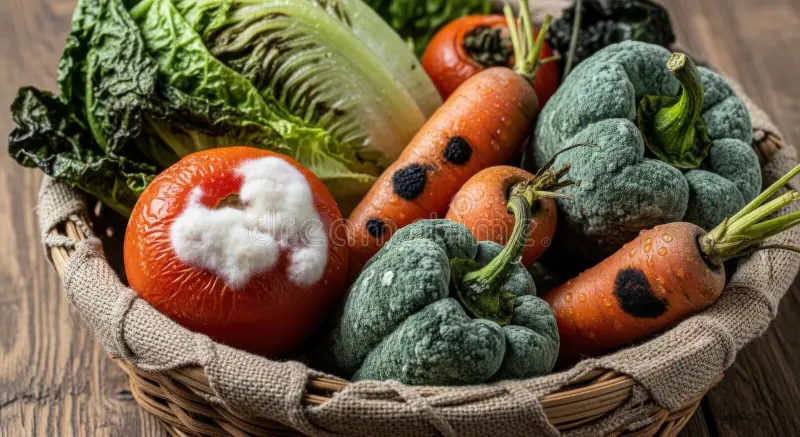
Every year, Ghana produces thousands of tonnes of nutritious food but a significant share of it never reaches a plate. Fruit spoils before it’s sold. Vegetables rot in transit. Grains are ruined by poor storage. Conversations about nutrition often focus on growing more food but reducing what’s lost or wasted after harvest may be one of the fastest ways to improve food security and nutrition, without farming a single extra acre.
The cost of losing nutritious food
Fresh fruit and vegetables spoil the fastest, and without adequate storage, cooling, or transport, farmers are often forced to sell at rock-bottom prices or watch their harvest go to waste. That squeezes farmers’ incomes and shrinks the supply of nutritious food reaching local markets. As supply falls, prices rise, pushing healthy food further out of reach for the low-income households that need it most.
Nutrition begins beyond the farm gate
Cutting post-harvest losses means more nutritious food reaches families without needing more farmland or higher yields. When tomatoes, mangoes, and leafy greens are preserved through better storage, drying, or processing, they stay available and affordable for longer. Better handling also protects nutritional quality itself, so the vitamins and minerals in food aren’t lost before it ever reaches a consumer.
Supporting farmers supports nutrition
Many farmers still lack access to storage facilities, cold chains, processing equipment, and reliable transport. Strengthening these systems is a win on both ends: farmers earn more from what they grow, and households gain more affordable access to nutritious food. Local processing, such as turning surplus fruit into juices, dried fruit, or purees, can extend shelf life and cut waste even further.
What needs to change?
Reducing food loss takes coordinated action:
• Government: invest in rural roads, storage infrastructure, irrigation, and agricultural extension services.
• Private sector: expand cold storage, food processing, and distribution networks.
• Research institutions: keep developing better post-harvest preservation technology.
• Consumers: plan meals, store food properly, and make safe use of leftovers.
Looking ahead
As Ghana works to tackle malnutrition in all its forms, cutting food loss deserves a place at the top of the agenda. Growing more food matters, but making sure the food already grown actually reaches families, safely and affordably, matters just as much.
Every basket of tomatoes saved, every crate of mangoes preserved, and every bag of grain protected from spoilage adds up to better nutrition, stronger livelihoods, and a more resilient food system for the future.
Feature article by Women, Media and Change under its Nourish Ghana: Advocating for Increased Leadership to Combat Malnutrition project