News
Attorney-General questions equipment purchases in Exim Bank loan case

- /home/u249204778/domains/spectator.com.gh/public_html/wp-content/plugins/mvp-social-buttons/mvp-social-buttons.php on line 27
https://spectator.com.gh/wp-content/uploads/2025/12/WhatsApp-Image-2025-12-22-at-20.07.04-1000x600.jpeg&description=Attorney-General questions equipment purchases in Exim Bank loan case', 'pinterestShare', 'width=750,height=350'); return false;" title="Pin This Post">
- Share
- Tweet /home/u249204778/domains/spectator.com.gh/public_html/wp-content/plugins/mvp-social-buttons/mvp-social-buttons.php on line 72
https://spectator.com.gh/wp-content/uploads/2025/12/WhatsApp-Image-2025-12-22-at-20.07.04-1000x600.jpeg&description=Attorney-General questions equipment purchases in Exim Bank loan case', 'pinterestShare', 'width=750,height=350'); return false;" title="Pin This Post">
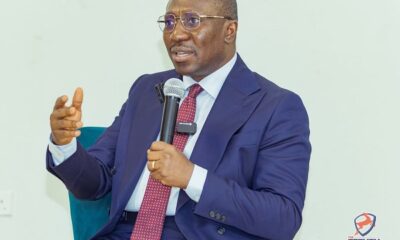
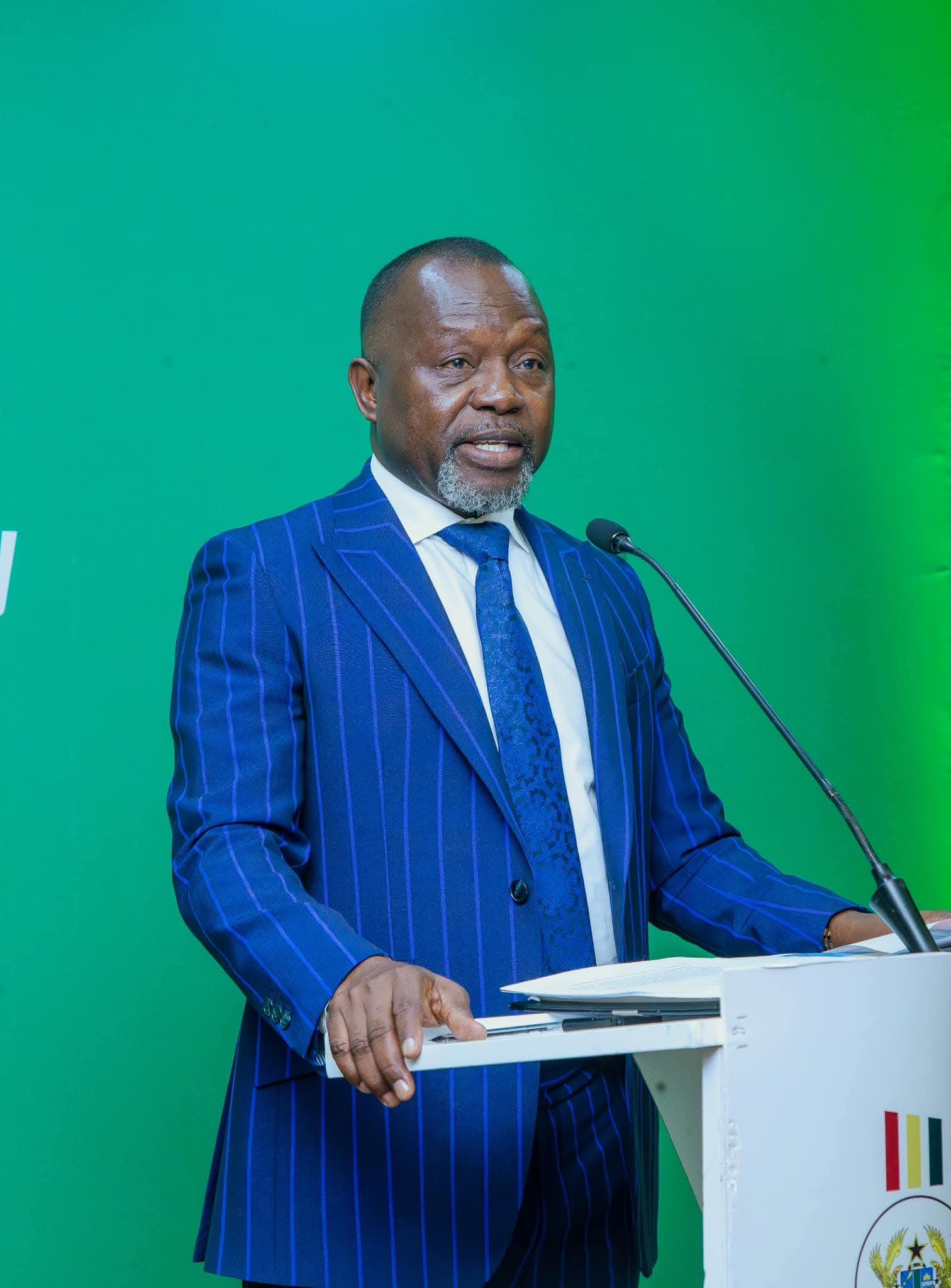
The Attorney-General and Minister of Justice, Dominic Ayine, has disclosed troubling findings from investigations into a loan facility granted by the Ghana Exim Bank to Wontumi Farms Limited, a company linked to Bernard Antwi Boasiako, popularly known as Chairman Wontumi.
At the Government Accountability Series, Mr. Ayine said investigations showed that Chairman Wontumi did not buy any equipment with funds disbursed to him under the loan agreement, even though the money was released for that specific purpose.
He explained that under the terms of the loan, all equipment purchased was supposed to be registered in the joint names of Ghana Exim Bank and Wontumi Farms Limited.
However, this did not happen because no equipment was bought. According to him, investigators were also unable to trace any of the equipment Mr. Boasiako claimed he had purchased.
The Attorney-General revealed that although Chairman Wontumi submitted receipts to Exim Bank as proof of purchase, the documents were later found to be forged.
During interrogation, Mr. Boasiako told investigators that he bought what he described as “secondhand brand new” equipment and insisted that all receipts and related documents had been submitted to the bank.
Ghana Exim Bank has denied this claim. The bank stated that neither Wontumi Farms Limited nor Chairman Wontumi submitted any genuine documents covering the purchase of the required equipment, apart from the forged receipts identified during investigations.
Mr. Ayine provided further details, explaining that as part of the loan application process, Wontumi Farms Limited submitted a proforma invoice to Exim Bank on December 15, 2017.
The invoice listed farm equipment such as tractors, combine harvesters, corn seeder machines and wellington boots, which were to be used to execute the project.
He said the loan application was for GHS18 million and was meant to support maize cultivation on 100,000 acres of land, while also creating jobs for the youth.
After the loan was processed, Exim Bank demanded proof that the equipment had been purchased.
On March 18, 2018, Chairman Wontumi submitted a document from Kas-Sama Enterprise, indicating the purchase of equipment valued at GHS4 million.
However, investigations showed that the items listed on the document included a bulldozer and an excavator, which raised further questions.
Mr. Ayine disclosed that Chairman Wontumi had earlier approached Kas-Sama Enterprise, an industrial equipment dealer, and obtained an invoice with a promise to return later to complete the purchase.
According to the Attorney-General, Chairman Wontumi never went back to buy the equipment. Instead, he altered the invoice by removing the word “invoice” and replacing it with “receipt,” making it appear as though payment had been made.
This forged receipt was then submitted to Exim Bank as proof that the equipment had been purchased after the loan disbursement.
The owner of Kas-Sama Enterprise confirmed to investigators that the only document issued to Wontumi Farms Limited was an invoice, not a receipt.
He also said he never received any payment and did not hear from Chairman Wontumi again, despite making several follow-up calls.
Investigators also noted that the so-called receipt stated “50 days to supply and 1 year guarantee and service,” which clearly indicated that the document was a proforma invoice and not evidence of payment.
Mr. Ayine also raised concerns about the status of Wontumi Farms Limited at the time the loan application was submitted.
He said that although the company applied for the GHS18 million loan in December 2017 and submitted what was described as a board resolution, the company had not yet been registered.
Investigations established that Wontumi Farms Limited was incorporated on December 14, 2017, and issued a certificate to commence business on the same day.
This meant the company did not exist at the time the loan application was submitted by its sole shareholder and director.
The Attorney-General said the findings raise serious concerns about the use of public funds and form part of government’s broader efforts to promote transparency and accountability under the Government Accountability Series.
By: Jacob Aggrey







Deputy National Women Organiser of the New Patriotic Party (NPP), Mimi Duah, has openly declared her support for Mavis Hawa Koomson as the next National Women’s Organiser of the party.
In a statement endorsing Hawa Koomson’s candidature, Ms Duah outlined four key reasons why she believes the former MP and Minister of State is best placed to lead the party’s women’s wing.
According to her, Hawa Koomson is a motherly figure who rose from the grassroots and is widely noted for her forgiving nature and ability to foster unity.
“She is a true grassroots mother who easily forgives, fosters unity, provides guidance and arbitrates to ensure all aggrieved party women are brought on board to ensure a unified women’s wing,” she stated.
Ms Duah also pointed to Hawa Koomson’s vast experience, having served as a Constituency Women’s Organiser, Member of Parliament and Minister of State, noting that the experience positions her to provide effective leadership as National Women’s Organiser.
She further described Hawa Koomson as capable of making the women’s wing resourceful, through her extensive network and business contacts, to lobby for logistics, training and financial support for women organisers at all levels.
Lastly, she said the NPP as an opposition party needs fearless, bold and assertive leadership at the women’s front to inspire regional, constituency and polling station women organisers as the party reorganises towards the 2028 elections.
“We need a Women’s Organiser who has been tested, who is bold, who understands grassroots women, and who can lead us to victory in 2028. Hon. Mavis Hawa Koomson is that leader,” she stressed.
By Edem Mensah-Tsotorme
News
Tourism, Culture and Creative Arts Minister inaugurates Ghana-Korea Heritage Project Steering Committee
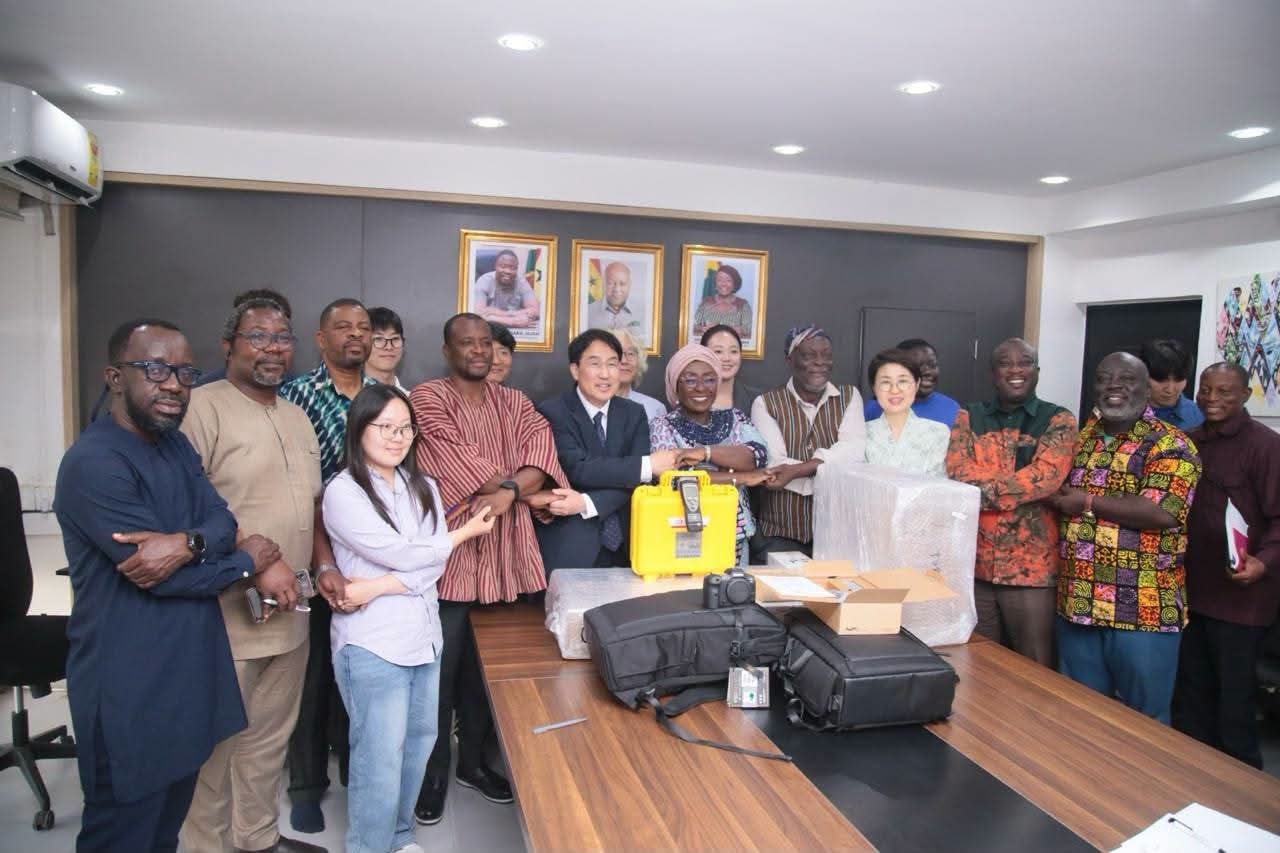
Tourism, Culture and Creative Arts Minister, Abla Dzifa Gomashie, has inaugurated the Ghana-Korea Heritage Project Steering Committee to provide strategic oversight for a five-year programme focused on preserving Ghana’s heritage sites and strengthening their resilience to climate change.
The project will support climate-risk mapping, digital surveying and 3D modelling, joint research, capacity building, community engagement and modern monitoring technologies.
Korea is also providing specialised equipment, including drones, 3D scanners, digital microscopes, thermal imaging cameras and GPS survey instruments, to enhance Ghana’s capacity to scientifically assess, document and conserve heritage structures.
The partnership, which will run through 2030 and beyond, is expected to deepen Ghana-Korea cultural ties while promoting sustainable, technology-driven and climate-adaptive heritage management for future generations.
By Edem Mensah-Tsotorme