Editorial
Nanvili Community Urgently Needs Good Educational Infrastructure

Basic education is widely considered a fundamental human right for all children, regardless of their community, age, or background. Providing good educational infrastructure is critical, as it directly influences educational quality, academic performance, and overall community development. The physical environment of schools shapes the future of children, who are the leaders of tomorrow.
However, the Nanvili Community School in the Mion district of the Northern Region faces severe infrastructural challenges, negatively affecting teaching and learning. The school serves five surrounding communities, with a total of 58 pupils. Observations during a visit revealed that the classrooms have deteriorated so badly that many children have stopped attending classes.
The poor condition of classrooms and lack of desks has made teaching and learning extremely difficult. More concerning is that the three gate-free classrooms are filled with goat and sheep droppings, creating a health hazard for pupils. During the rainy season, teachers and students are often cut off from the school due to bad roads and flooding, leading to weeks of suspended teaching activities, which further affects academic performance.
The Assemblyman for the area, Mr. Dawuni Mutawakil, expressed worry that pupils from Nanvili are expected to compete with their counterparts in urban areas who have access to better facilities. He emphasized the urgent need to provide desks and adequate classroom space to separate the merged classes.
The Chief of Nanvili, Abu Kassim, also appealed to the government and non-governmental organizations to assist the community. He noted that the current state of the school discourages children from nearby communities from attending, further highlighting the need for urgent intervention.
The Spectator joins local leaders in calling for immediate action to improve infrastructure and provide furniture, ensuring quality education for children in the Nanvili community.
By Geoffrey Buta, Nanvili, Northern Region
Spectator
Join our WhatsApp Channel now!
https://whatsapp.com/channel/0029VbBElzjInlqHhl1aTU27


Dear Editor,
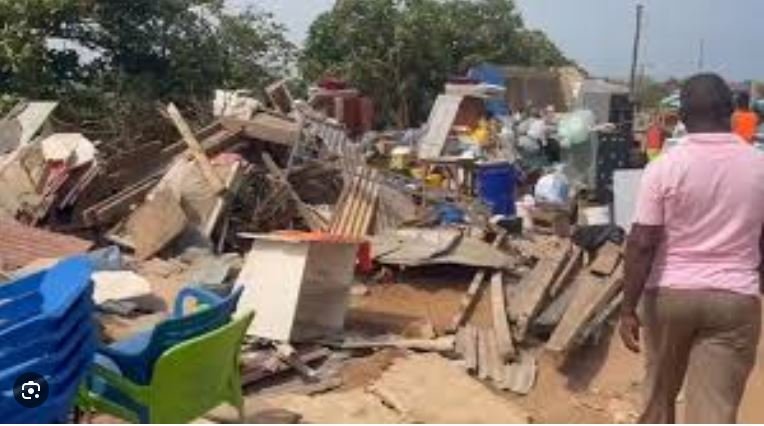
I wish to use this esteemed platform to urge the traditional councils of Osu and La to call for independent investigation into the recent demolition exercise at Kaajaano.
The exercise rendered hundreds homeless.
Information about the reason for the demolition has been scanty with those desiring to know feeding heavily on social media posts.
One particular name –Jato, has been associated with it but under whose instruction the exercise was carried is also not known.
Sadly, instead of getting to know who ordered the demolition and for what reasons, traditional authorities of Osu and La have been embroiled in a tug-of-war over ownership of the said land.
This is premature. At this moment, they should call for investigation into the exercise to know the people behind it.
When that is done, then discussions about the owners of the site can begin. That would end the posture of the two neighbouring town which has the potential to turn into something else.
Ataa Osa Mensah,
Osu
Dear Editor,
I wish to use your respected platform to draw the attention of the Bank of Ghana (BoG) to the behaviour of traders and some drivers about the use of lower denomination coins, specifically the 20 and 10 pesewas.
About two weeks ago, I read in your sister newspaper, The Ghanaian Times about this problem and the caution that followed from the BoG and some economic analysts.
The warning they gave was that the continuous rejection of the notes could create pricing problems which can eventually affect inflation.
I thought that would put to bed that practice or refusal to accept the coins when given out as change or use to pay for particular service.
Unfortunately, the problem still persist among traders, drivers, customers and passengers alike. Only last week, there was as altercation in the Accra Central area where a woman refused to accept five 20 pesewas note totaling one cedi.
As the argument continued, the trader decided not to sell to the customer again after by-standers explained to her that it was still a legal tender and those that refused it could become offenders.
This is an issue the BoG and other regulatory agencies must go and explain to the people and let them know that it is unlawful not to accept a currency that is still in use.
It nothing was done, it could create a much more serious problems.
Mary Osei Badu,
Swedru