Profile
Peter Nkansah Wiafe: Fashioning inclusivity with creativity and purpose


- /home/u249204778/domains/spectator.com.gh/public_html/wp-content/plugins/mvp-social-buttons/mvp-social-buttons.php on line 27
https://spectator.com.gh/wp-content/uploads/2025/09/Peter-Nkansah-Wiafe-Photoroom-500x600.png&description=Peter Nkansah Wiafe: Fashioning inclusivity with creativity and purpose', 'pinterestShare', 'width=750,height=350'); return false;" title="Pin This Post">
- Share
- Tweet /home/u249204778/domains/spectator.com.gh/public_html/wp-content/plugins/mvp-social-buttons/mvp-social-buttons.php on line 72
https://spectator.com.gh/wp-content/uploads/2025/09/Peter-Nkansah-Wiafe-Photoroom-500x600.png&description=Peter Nkansah Wiafe: Fashioning inclusivity with creativity and purpose', 'pinterestShare', 'width=750,height=350'); return false;" title="Pin This Post">
For Peter Nkansah Wiafe, fashion is more than fabric, thread, and stitches. It is a calling to solve problems and make a difference.
Over the past four years, the young Ghanaian designer has been using his creative skills not only to build a thriving career but also to touch the lives of people often overlooked by mainstream society.


Through his flagship initiative, Fashion for Special People, Peter has dedicated himself to designing clothes and creating inclusive fashion experiences for children and young people with special needs, including students from schools for the Deaf and the Blind.
In an interview with The Spectator in Accra New Town, on Monday, he was of the view that fashion is not just about beauty, glamour, or trends; it is a basic human necessity, just as important as food.
“Without designers, we are nothing,” he says with conviction. “Everyone wears clothes every day, and everyone deserves to feel good in what they wear. These children deserve that dignity, too.”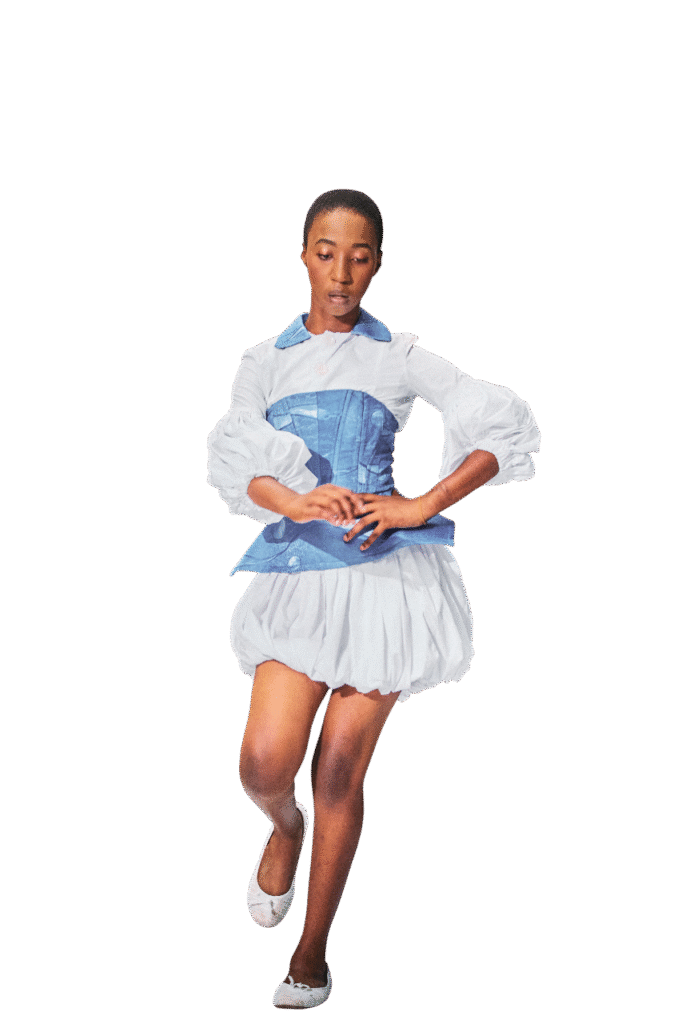
Fashion for special people started as a simple idea and as a tool to bring joy, confidence, and empowerment to children with disabilities.
It began as annual visits to the Dzorwulu Special School to design clothes and stage mini fashion shows. It has grown into a broader movement.
Beyond creating garments, Peter and his team also teach basic skills such as modeling, hand-weaving, and introductory sewing. “We don’t just dress them,” he explains.
“Modeling helps them gain confidence. Hand-weaving and sewing give them practical knowledge. It is about inclusion, empowerment, and proving that they are capable.”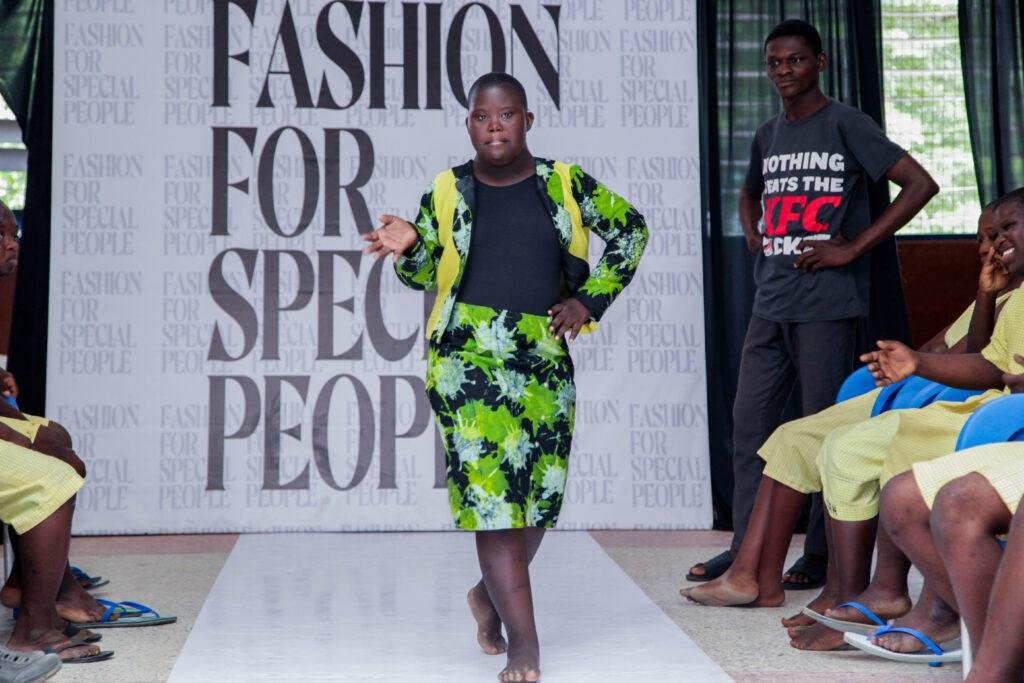
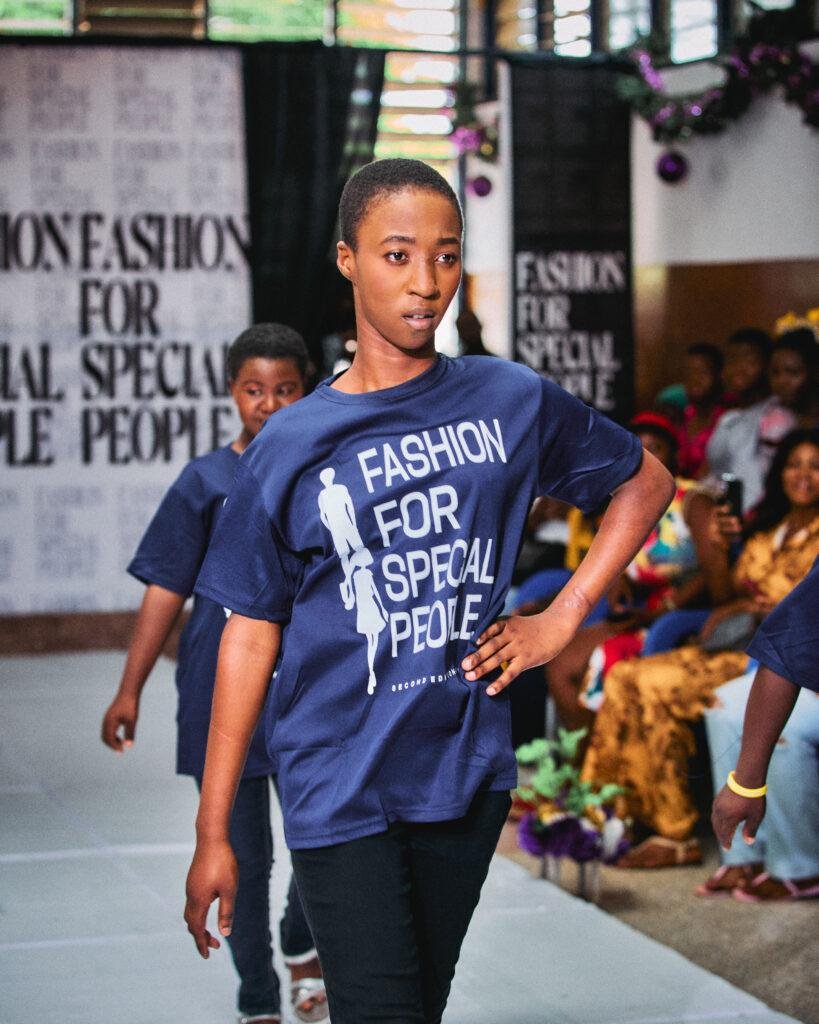
The initiative has been running consistently for four years. This November, it will extend to the Akropong School for the Blind.
“The first time we went to take their measurements, I was amazed, “they walked confidently by following sound. Watching them was inspiring. I can’t wait to see them on the runway, and I believe the audience will be just as inspired,” he said.
Roots and education
Peter’s passion is rooted in his upbringing. Born into a family of six, he is the second child, of four children. He completed St. Peter’s Junior High School in 2004 and St. Peter’s Secondary School in 2007 before pursuing Sales and Marketing Management at Ho Technical University between 2010 and 2013.
After national service in 2014, he worked at Assemblies of God Printing Press and later in insurance, building a career in sales.
On paper, nothing in his educational journey pointed toward fashion. But his inspiration had been quietly growing since childhood.
This early influence deepened during his nine years as a professional model. While studying at Ho Technical University, he modeled for the fashion department and was often backstage watching designers bring creations to life.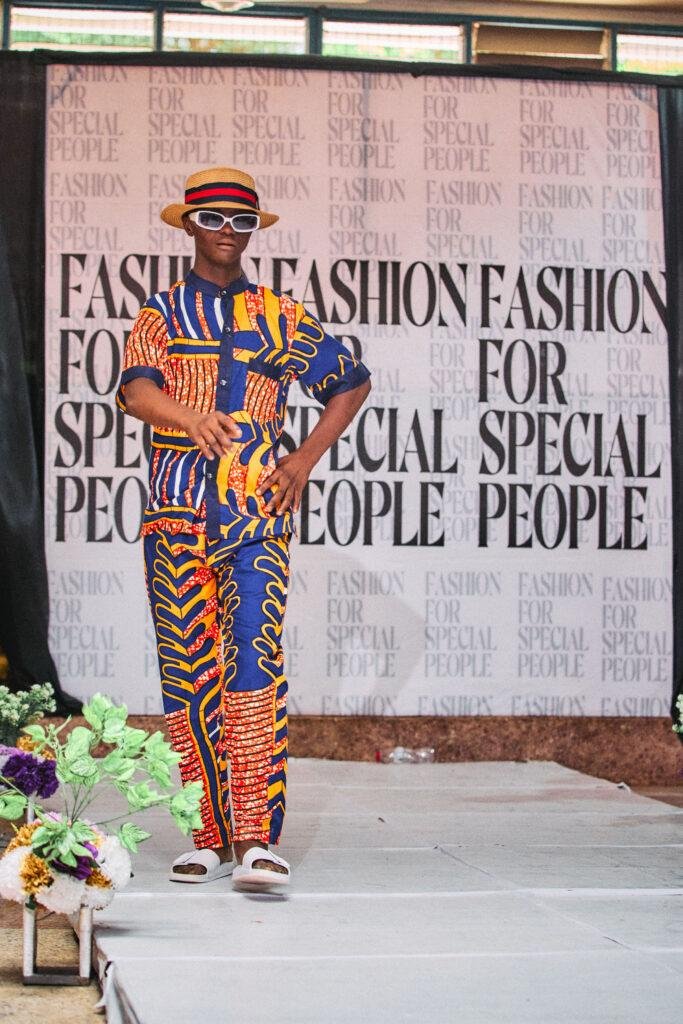
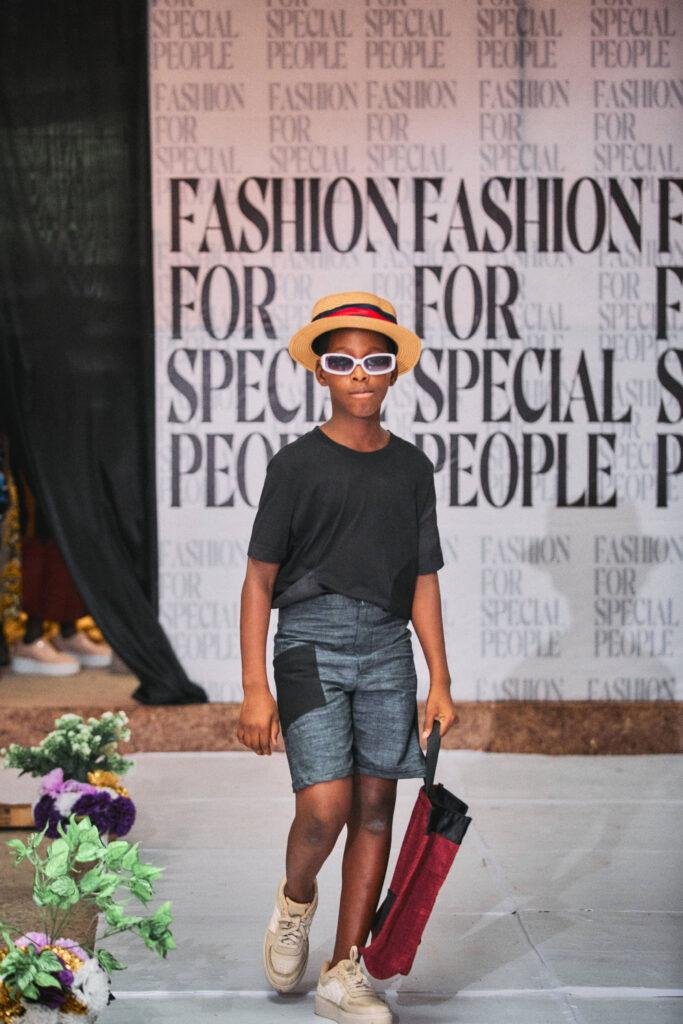
Later, he joined professional modelling agencies, walking runways for numerous designers and gaining exposure at major shows such as Glitz Fashion Week and Global Fashion Week.
Training and transition
In 2020, Peter enrolled at Riohs College of Design for a six-month fashion course.
It was a turning point. Balancing his corporate job with evening classes was difficult, so he resigned to fully commit.
After completing his course, he was invited back as an assistant instructor. Within a year, he was promoted to full instructor, and today he serves as Head of Instructors, mentoring aspiring designers and shaping the next generation of fashion talent.
Among his career highlights, Peter’s graduation collection was selected out of 150 students for the runway at Glitz Africa Fashion Week, one of the continent’s premier fashion events.
Since then, he has showcased his collections at multiple platforms, steadily building his reputation in the industry.
Truly Black
Peter’s brand, Truly Black, carries deep personal meaning. During his modelling career, he was nicknamed “Nana Black” because of his rich dark complexion.
“I am proudly African and proudly Black. My complexion, my heritage, it’s all part of who I am. That’s why I chose Truly Black as my brand name. It celebrates authenticity and strength.”
Challenges and resilience
Like many social projects, Fashion for Special People faces significant challenges, especially funding. Sponsorships are difficult to secure, leaving Peter to rely largely on personal resources and the goodwill of fellow designers he has trained or worked with.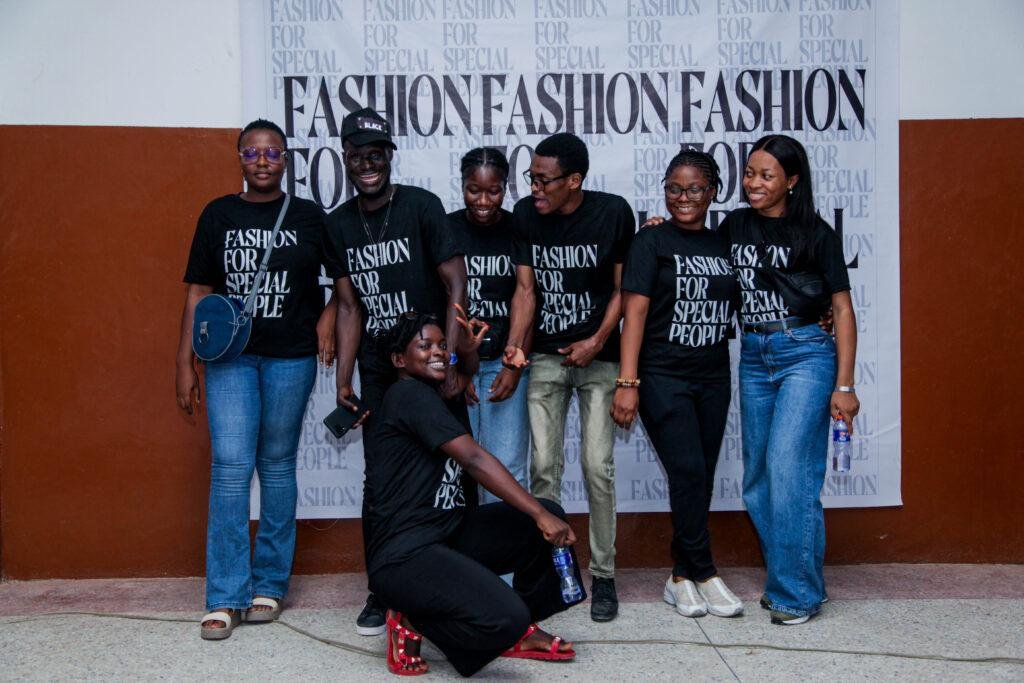
He stressed the importance of collaboration. “I can’t do this alone. That is why I reach out to other designers, and thankfully, many have been willing to help.”
Vision
Looking ahead, Peter hopes to expand Fashion for Special People into a larger non-governmental organisation that reaches more communities across Ghana.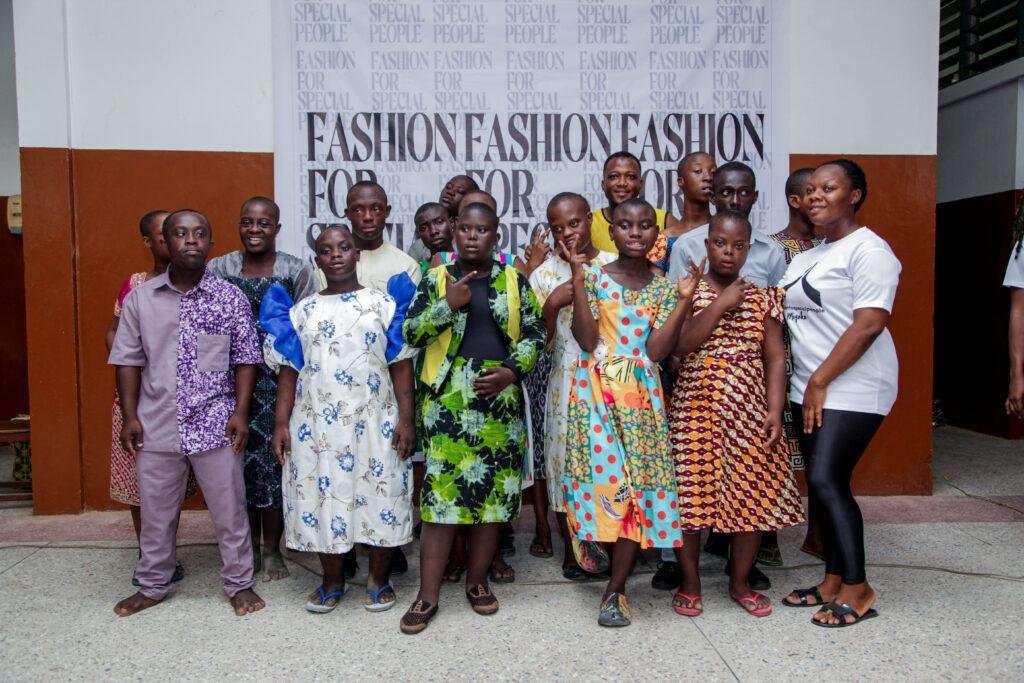
His dream is to create a sustainable model that combines fashion education, skills training, and empowerment for people with disabilities.
For Peter Nkansah Wiafe, fashion is not just a career, it is a language of empowerment, dignity, and transformation.
By Esinam Jemima Kuatsinu
Join our WhatsApp Channel now!
https://whatsapp.com/channel/0029VbBElzjInlqHhl1aTU2





From humble beginnings to building an enterprise with global ambitions, Michael L. Bartlett-Vanderpuye’s journey is a story of discipline, independence, resilience and the belief that businesses should be built to outlive their founders.
Long before he became the Group Chairman of M&C Group, Michael L. Bartlett-Vanderpuye was building from modest beginnings.
His entrepreneurial journey did not start in a sophisticated corporate office or with a large team behind him.
At one stage, he was working from his room with limited resources, focused on turning an idea into a viable business.
That beginning became an important part of his philosophy: build the business first, then let the infrastructure grow with it.
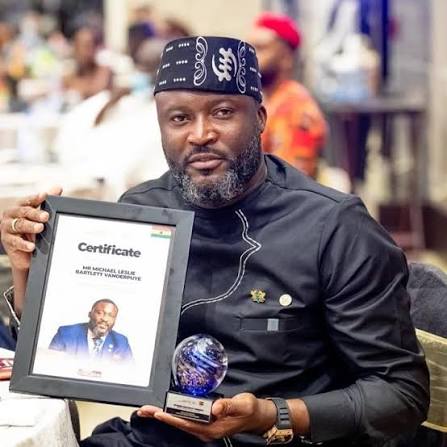
Michael’s early experiences shaped his determination to become an entrepreneur. After university and periods of professional employment, including banking, accounting, marketing, packaging and logistics, he developed a deeper understanding of how businesses operate and how different industries connect.
His exposure to mining advisory work, property and other commercial opportunities broadened his perspective and helped him identify opportunities beyond a single sector.
But the journey was far from easy.
He recalls the uncertainty of sending proposal after proposal without knowing which one would eventually open a door.
Even after establishing an office in East Legon, some people assumed he was working for someone else because they could not imagine that the business belonged to him.
The confidence and corporate presence associated with success today were built through years of uncertainty, rejection, experimentation and persistence.
His evolution from working out of a room to leading M&C Group reflects a broader philosophy that has guided his business life: do not build an image before you build the substance.
For Michael, entrepreneurship is not simply about owning a company. It is about learning how to turn knowledge, relationships, opportunities and resources into sustainable value.
He believes professionals in every field can develop an entrepreneurial mindset by creating assets, building networks, investing in opportunities and developing additional sources of value alongside their careers.
That philosophy has influenced the way he approaches business expansion. Rather than viewing companies as isolated entities, Michael sees opportunities to create connections between industries, people and services.
Strategic partnerships, in his view, can create greater value than treating every other business as a competitor.
His approach has also been shaped by research and international exposure. He argues that entrepreneurs must understand the markets they enter rather than simply copy businesses they see succeeding elsewhere.
Behind every successful enterprise, he believes, are structures, regulations, relationships, research and decisions that may not be immediately visible from the outside.
As his business interests have grown, so has his ambition. M&C Group represents a significant chapter in that evolution, reflecting his drive to build an enterprise that extends beyond a single venture.
His vision is rooted not merely in personal wealth, but in creating businesses capable of generating employment, developing people, building partnerships and contributing to the wider economy.
Michael is particularly concerned about the role of the private sector in addressing unemployment and creating sustainable opportunities. For him, a successful business should ultimately do more than enrich its owner. It should employ people, develop skills, support suppliers and create opportunities that extend beyond the founder.
That long-term perspective is central to his understanding of success.
He is cautious about equating visibility with achievement. In an age where social media can make a business appear larger than it is, Michael believes the real measure of an enterprise lies in its systems, customers, assets, operations and results. The brand should be supported by substance.
His personal journey has therefore become a lesson in patience and discipline. The man who once had to convince people that the business was actually his now speaks about building systems, protecting capital, understanding markets and thinking beyond the immediate reward.
And his ambitions do not stop with the present generation.
Michael describes legacy as something that should extend beyond his children to future generations. His objective is to build something sustainable-something that can continue creating value after he is no longer at the centre of it.
From a modest room and limited resources to the boardroom and the development of a growing business group, Michael L. Bartlett-Vanderpuye’s story is ultimately about building before displaying, learning before expanding and creating something designed to last.
His journey is a reminder that global ambition does not necessarily begin with global resources. Sometimes, it begins with little more than an idea, discipline, persistence and the willingness to start where you are. – MyStoryMagazine
Profile
Stitching Technical, Vocational skills to greatness …The inspiring story of Mrs Joyce Neenekwor Pechi-Anim

For many years, Technical and Vocational Education and Training (TVET) was perceived as an option for people who were not academically inclined.
However, as society evolves, vocational skills have become an important driver of economic growth, creating jobs and empowering people to build successful enterprises.
One woman demonstrating the power of vocational skills is Mrs Joyce Neenekwor Pechi-Anim, Founder and Chief Executive Officer of Joycelyn Fit Fashion, Cake and Décor, popularly known as JFit, in Koforidua.
With more than 26 years’ experience in fashion design, cake artistry, catering, event decoration, planning and vocational training, Mrs Pechi-Anim has built a thriving enterprise serving government institutions, corporate organisations and individuals across the Eastern Region and beyond.

Her journey began at age 18 after she completed her training at St Annie’s Vocational Institute at Nuaso.
Encouraged by Mr Alfred Yaw Kissi, then Eastern Regional Secretary of the Ghana National Tailors and Dressmakers Association (GNTDA), she moved to Koforidua at age 21 to pursue her dream.
But success did not come wrapped in a ribbon.
She first operated from the porch of her rented apartment at Koforidua-Ada. As customers increased, she began searching for a shop. A grateful client promised to provide one but Joyce had to wait and repeatedly follow up for seven months before the promise was fulfilled.
The shop she eventually received was small, but her ambition was not.
She continued sewing, took on apprentices and built a reputation for creativity, discipline and, above all, keeping her word.
“If I tell you to come for your dress at 7 a.m. on Thursday, I mean it. By the time clients come, it is ready,” she told The Spectator in an interview.
That simple principle of punctuality became one of the hallmarks of her business.
Her passion for empowering others also grew.
Through her vocational school, Mrs Pechi-Anim has trained more than 300 apprentices, about 100 of whom are now established in fashion, hospitality and the creative industries in Koforidua, Accra, Nkawkaw, Krobo Odumase and beyond.
Never content to remain in one lane, she ventured into cake artistry in 2016, enrolling at Flora Cakes and Décor for nine months. She later expanded into event decoration, planning and catering.
She later pursued other vocational courses in Ghana and Lagos.
Her portfolio included major assignments such as the decoration of the late Dr Omane Boamah’s one-week celebration in Koforidua, Eastern Expo 2026 and the Eastern Regional Hospital’s centenary celebration.
Her work has earned her more than 30 awards and certificates of honour, including Outstanding Woman CEO of the Year, 2025, presented to her by the Ghana Art Choice and Business Industry in June 2026,
Beyond business, Mrs Pechi-Anim has held leadership positions, including National Vocational Training Institute (NVTI) Examiner, Secretary for the Ghana National Tailors and Dressmakers Association (GNTDA) from 2000 to 2010, and currently, Treasurer. She is also a Council Member of the Ghana National Chamber of Commerce and Industry.
She attributed her success to discipline, hard work, creativity and excellent customer service, while encouraging young people to acquire skills and use social media to market their talents.
Yet, behind the accolades was a woman who knows the difficult side of entrepreneurship.
She recalled apprentices stealing work materials, customers refusing to pay outstanding balances after events and others attempting to damage her reputation by portraying her services as too expensive.
Through all these challenges, she said discipline, hard work, integrity and excellent customer service have kept her moving.
For Mrs Pechi-Anim, vocational education is no longer a second choice.
“I have nurses and other salaried workers coming to learn skills to build careers and support themselves financially,” she said.
She revealed that she has a dream to build a much bigger vocational school, where she would train young children from age three upwards to enable them acquire vocational skills at a tender age.
She believes that would help them to use the skill to support themselves financially throughout their lives to supplement their academic goals.
She, therefore urged parents to support children who show interest in vocational training rather than forcing them into careers they do not enjoy.
She also advised young people to acquire a skill and use technology to their advantage.
In an era dominated by social media, she encouraged the youth to showcase their work online instead of using the platforms solely for entertainment.
She revealed that she used social media to market JFit and has embraced Artificial Intelligence (AI) tools to improve her work.
Married to Mr Richard Pechi-Anim since 2009 and a mother of three, Mrs Pechi-Anim believed her story demonstrated that success can be stitched together, one skill, one client and one determined step at a time.
She called on the government to create platforms for successful people in the TVET sector to share their stories and inspire others.
For her, the sewing machine that once sat on a humble porch has become more than a tool. It has been an instrument of enterprise, empowerment and hope.
From Ama Tekyiwaa Ampadu Agyeman, Koforidua
SKIP THE QUEUE, TAP THE NEWS

You can now read the Ghanaian Times and The Spectator newspapers from the comfort of your device via TimesNewsPlus.
Join our WhatsApp Channel: https://whatsapp.com/channel/0029VbBElzjInlqHhl1aTU27

 Entertainment1 week ago
Fiifi Coleman Productions adapt ‘I Told You So’ stage play into feature film
- News1 week ago
48 Engineer Regiment to be major sub-contractor on Accra-Kumasi Expressway, $2bn ready- Prez Mahama
- Entertainment6 days ago
Rhythms On Da Runway returns November 28 with 16th edition themed ‘Unbound’