News
Over 7,000 girls drop out of school in E/R


- /home/u249204778/domains/spectator.com.gh/public_html/wp-content/plugins/mvp-social-buttons/mvp-social-buttons.php on line 27
https://spectator.com.gh/wp-content/uploads/2025/07/ChatGPT-Image-Jul-18-2025-09_36_59-AM.png&description=Over 7,000 girls drop out of school in E/R', 'pinterestShare', 'width=750,height=350'); return false;" title="Pin This Post">
- Share
- Tweet /home/u249204778/domains/spectator.com.gh/public_html/wp-content/plugins/mvp-social-buttons/mvp-social-buttons.php on line 72
https://spectator.com.gh/wp-content/uploads/2025/07/ChatGPT-Image-Jul-18-2025-09_36_59-AM.png&description=Over 7,000 girls drop out of school in E/R', 'pinterestShare', 'width=750,height=350'); return false;" title="Pin This Post">
From 2010 to 2012, a total of 7,256 girls dropped out of school across six districts in Ayensuano, Afram Plains North and South, Birim North, Upper Manya, and Upper West Akim of the Eastern Region, according to statistics released by the Ghana Education Service (GES).
The Ghana Statistical Service (GSS) also reported that a significant number of girls remained out of school at both the primary and secondary levels, a trend that continued to raise alarm among education stakeholders and child protection advocates.
At a recent adolescent sexual and reproductive health workshop held in Koforidua by the National Youth Authority (NYA), the Deputy Eastern Regional Director of Programmes of the NYA, Ms Priscilla Owusu, who disclosed this expressed deep concern over the growing rate of girl-child school dropouts.
She attributed the troubling trend to a combination of factors, notably teenage pregnancy and poor parental supervision.
“About 33.69 per cent of the dropout cases are directly linked to adolescent girls becoming pregnant, often due to a lack of parental guidance and control,” Ms Owusu stated.
“When girls face such situations, many lose their confidence and find themselves marginalised and unable to return to school. They become less privileged and are denied the opportunity to fulfill their potential,” she pointed out.
She stressed the importance of confronting societal stigmas that alienated girls who become pregnant or drop out of school.
According to her, these stigmas often discouraged them from returning to the classroom and reintegrating into society.
Additionally, she noted that grassroots involvement was crucial in reversing the dropout trend and empowering adolescent girls with the tools to succeed.
Also addressing participants at the workshop, Mr Raymond Teye Djimajor, Head of Programmes and Counselling at the Department of Community Development, highlighted a growing lapse in parental responsibility.
He explained that increasingly, parents were leaving the task of moral and emotional guidance to schools and religious institutions.
“Are these girls safe in their schools?” he questioned. “Do they have access to the counselling, support systems, and resources they need within their schools, churches, or communities?”
Again, Mr Djimajor stated that while teachers and religious leaders have roles to play, the primary responsibility lied with parents and guardians.
He, therefore, called on civil society organisations, faith-based groups, and traditional authorities to join forces in protecting the rights and development of adolescents.
He urged the implementation of coordinated community-based initiatives focused on guidance, counselling, and life skills training for girls, noting that without these interventions, the region risks witnessing even higher dropout figures in the coming years.
He called for a collaborative effort by all stakeholders to ensure every girl in the Eastern Region has the opportunity to stay in school, avoid early pregnancy, and reach her full potential in a supportive environment.







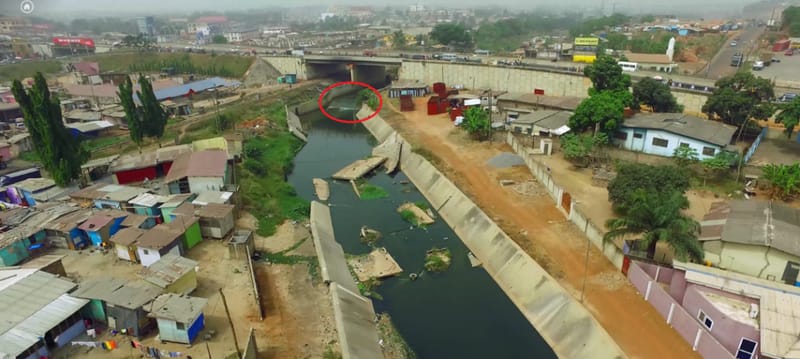
Construction of a major underground stormwater drain along the Dr. Busia Highway within the Kaneshie enclave will commence on September 7, 2026.
The Project Coordinator for the Greater Accra Resilient and Integrated Development (GARID) Project, Dr. Kwadwo Ohene Sarfo, announced this at a special media briefing on Wednesday.
According to him, the works will involve the construction of a double-cell underground rectangular drain measuring approximately 10 metres wide and 1.95 kilometres long, stretching from Pamprom Junction to First Light Junction.
The new drain will replace the existing two 1.2-metre diameter pipes, which are inadequate to carry the volume of stormwater in the area.
Dr. Sarfo said the drain will connect at one end to the recently completed section within the Accra Academy campus and at the other end to the existing drain at Pamprom Junction.
He said the construction is expected to run from September 2026 to October 2027.
The project forms part of government’s broader flood prevention and mitigation programme aimed at addressing perennial flooding in Accra.
By Edem Mensah-Tsotorme
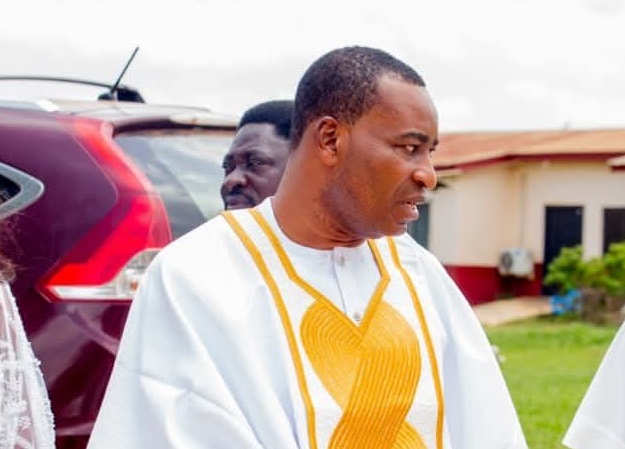
The former Ashanti Regional Chairman of the New Patriotic Party (NPP), Bernard Antwi Boasiako, popularly known as Chairman Wontumi, has withdrawn from the party’s National Chairmanship race.
In a statement issued yesterday, Chairman Wontumi who is currently serving a 20-year jail term said his decision was driven by his love for the party and his unwillingness to let his personal circumstances distract the NPP from its rebuilding efforts.
“There are moments in the life of a man when the heart wants to continue, but duty demands sacrifice. Moments when one must quietly set aside personal ambition, not because the dream has died, but because the family he loves must not be made to carry his burden. Today, I find myself at such a painful moment,” he wrote.
He disclosed that after many nights of prayer, sober reflection and consultations with his family, legal team, party elders, campaign team and trusted supporters, he concluded that his present situation must not become an additional burden on the NPP.
“This is not the decision my heart desired, but sometimes, true love requires us to release what we deeply want in order to protect what we love even more,” he added.
Recounting his years of service, Chairman Wontumi said he had served the party with everything within him, walking through heat and rain, travelling to remote communities and standing with the grassroots in both victory and defeat.
“For many years, I have served the NPP with everything within me… The NPP is not merely a political party to me. It is my family. It is my home. It is a cause to which I have dedicated a significant part of my life,” he stated.
He explained that the party, already carrying the pain of electoral defeat and the huge responsibility of preparing for the future, should not be made to carry his personal weight.
“That is why I cannot allow my present situation or personal ambition to distract the party from the difficult work of rebuilding. I cannot ask the party to carry my weight when it is already carrying the pain of defeat and the enormous responsibility of preparing for the battle ahead. I would rather carry this pain quietly than allow the party I love to suffer because of me,” he said.
He further sympathized with his supporters across the 16 regions, acknowledging that the decision would be painful for many who had sacrificed for his campaign.
“To my teeming supporters across all sixteen regions, I know this message will hurt. I know many of you will read it with tears in your eyes because I understand the sacrifices you have made for this journey,” he said.
By Edem Mensah-Tsotorme